
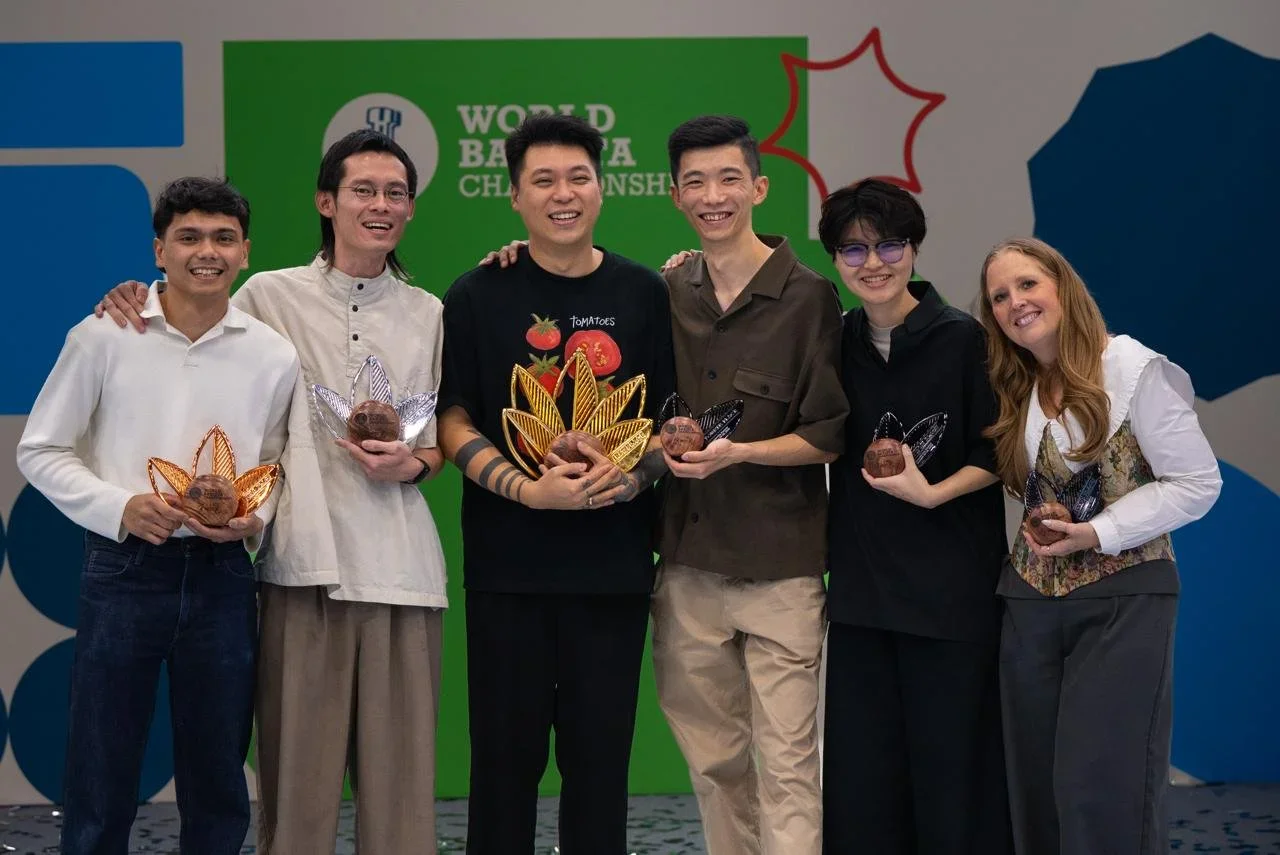
Pan Wei is the 2026 World Barista Champion. The World Coffee Championships announced the result on October 25, 2026, after a final in Panama City. He is the first champion representing China, one year after China finished second in Milan.
He won the 26th edition of the World Barista Championship, held at the Panama Convention Center during World of Coffee Panama 2026. His win came from fourth place in the semi-finals, with a routine built around coffee-growing families.
China's climb: second in Milan, first in Panama
At the 2025 championship in Milan, Simon SunLei of China finished second behind Jack Simpson of Australia. In 2026, China climbed one step higher with a different barista. That makes two years running in the top two.
For Pan Wei, of Parking Coffee, the climb was steep: he ranked 27th at this championship two years before Panama. In 2026, 49 national champions entered, and none finished above him. Shing Win of Malaysia and Frederick Ruben of the United Arab Emirates completed the podium.
New to these competitions? The story of the latte art controversy explains what the championships are and which events they include.
Fourth in the semi-finals, first in the final
Pan Wei was never in front before the final. He ranked second in round one with 615.5 points, behind Jane Kawinnart on 643.0. In the semi-finals he slipped to fourth with 542.0, behind Shing Win (572.0), Kawinnart (556.5) and Jill Hoff (542.5).
Everything changed in the final, where Pan Wei beat semi-final leader Shing Win by 8.5 points.
The full ranking of the final:
| Rank | Finalist | Representing | Final score |
|---|---|---|---|
| 1 | Pan Wei | China | 575.5 |
| 2 | Shing Win | Malaysia | 567.0 |
| 3 | Frederick Ruben | United Arab Emirates | 528.5 |
| 4 | Gabrel Tan | Australia | 526.5 |
| 5 | Jane Kawinnart | Thailand | 521.0 |
| 6 | Jill Hoff | Canada | 486.5 |
A routine built on families
Pan Wei used two Geisha coffees. The first was a washed coffee from Panama, with El Pergamino as the listed producer. The second was a mosto anaerobic coffee from Colombia, with Finca Las Flores. Five of the six finalists used a Panama Geisha, but only he had a Colombian coffee on the official list.
The routine opened and closed on one line: "Every cup of coffee comes from a family." Three years before this final, he began traveling to coffee-producing countries and met families making difficult decisions because of a changing climate. The full routine is below.
In Panama, the Lamastus family grew coffee at around 1,500 m for more than 100 years. As temperatures rose, they moved higher, and their Geisha now grows at 2,200 m.
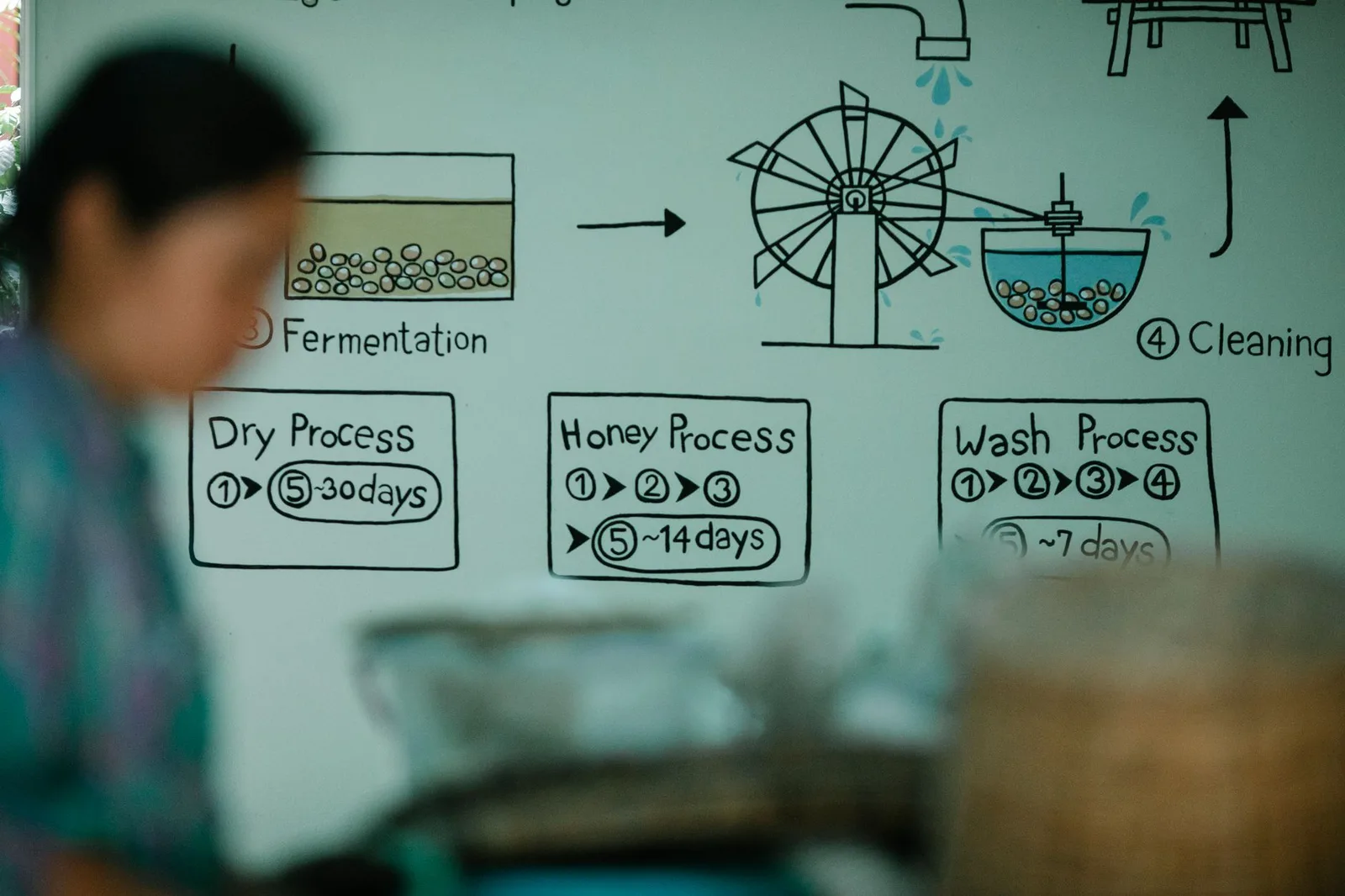
The Colombian family changed how it processes coffee rather than where it grows it. Fully ripe cherries are selectively harvested and fermented for 48 hours in mucilage mosto, a liquid he later reuses in his signature beverage. They are then slowly dried for 25 days at a low temperature.
What is reverse tamping?
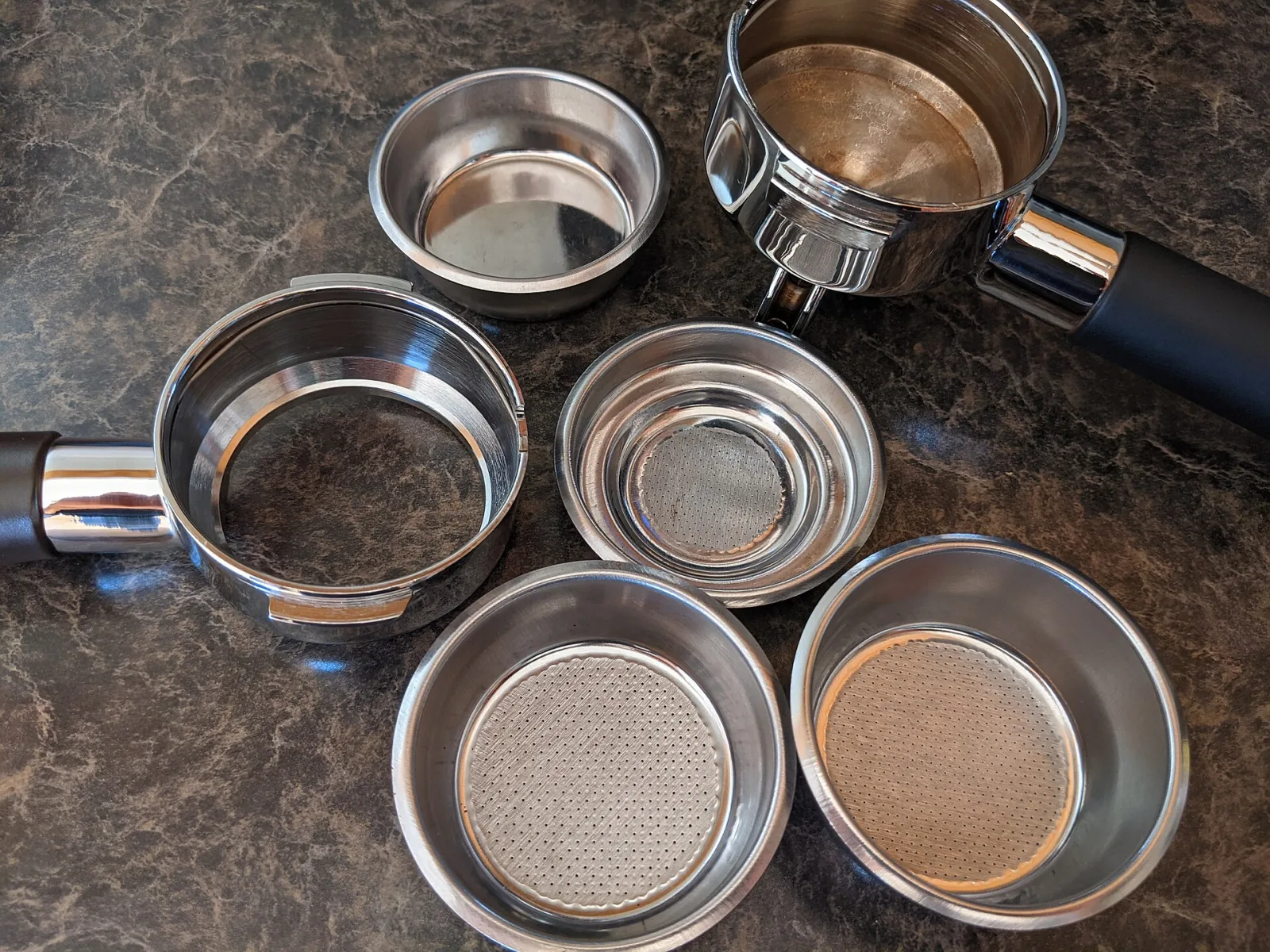
Reverse tamping is Pan Wei's name for a small change behind the bar, used for all three drinks of his routine. A spinning needle first distributes the grounds evenly. Before tamping, vibration separates them by particle size and places the finer particles on top of the puck.
He claims it slows the start of extraction, improves uniformity and raises yield by over 1%, with more sweetness and caramel. This is a competitor's own claim, with no independent measurement published.
The Family Link
He named the routine's final drink, its signature beverage, The Family Link, after a third family: everyone who carries coffee's work forward. It was served cold, with the espresso chilled in advance, and three elements completed it:
- Inspired by Panama: 40 g of a coffee cherry honey infusion.
- Inspired by Colombia: 100 g of UV-sterilized mosto, the coffee's fermentation liquid.
- From the barista: nitrogen and 80 g of sparkling water.
He also said he wonders, while holding his daughter, whether she will still be able to taste a coffee like this in 20 years.
Can a home barista borrow from Pan Wei's routine?
Not as a recipe. The routine names no machine, grinder or brewing water, and gives no extraction time, temperature or pressure. Nothing shows that reverse tamping works at home.
A few details are still worth noticing. He did not use one recipe for both coffees. The washed Panama coffee ran at 20 g in, 50 g out. The Colombian coffee, drunk with milk, ran at 21 g in, 35 g out.
He distributes the grounds before tamping. He also asked the judges to stir the espresso before tasting, so that the layers of flavor integrate.
Going further
Cascara: Drinking the Coffee Cherry Instead of Wasting It
Coffee pulp is 40% of the cherry and often pollutes rivers. Learn how cascara turns it into a fruity infusion: history, taste, caffeine and uses.
Read the article →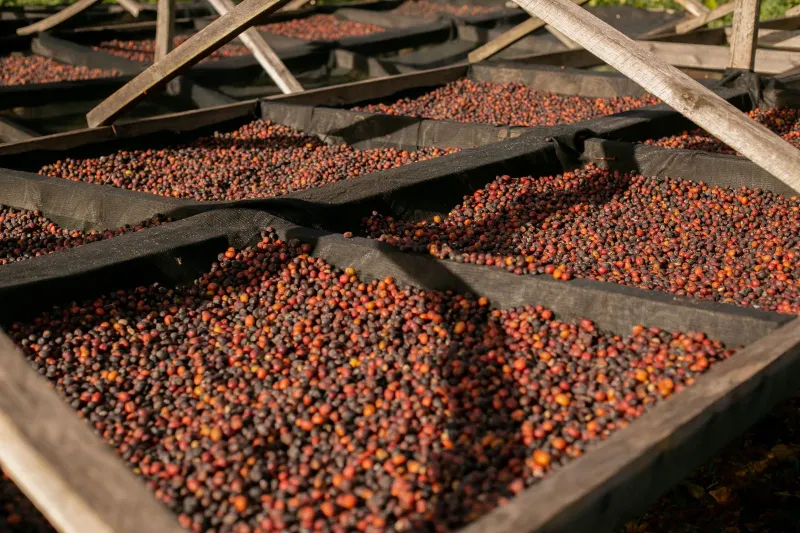
Barista Tip: Distributing Coffee Grounds in a Portafilter
Learn to properly distribute grounds in your portafilter to avoid channeling. Barista techniques and tool recommendations for consistent espresso.
Read the article →