
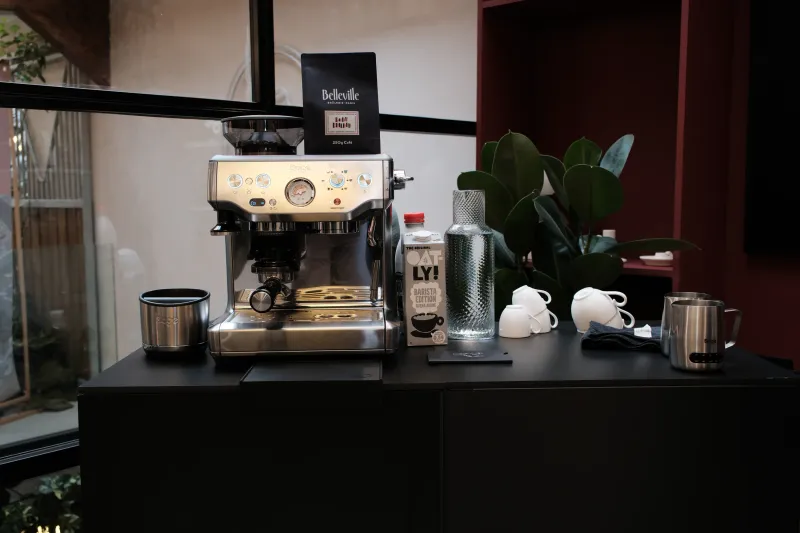

The Sage Barista Express Neo is an evolution of the Barista Express, and it packs several genuinely clever ideas. Its goal is simple: a successful espresso without fuss, even if you have never held a portafilter. I was in Paris for its launch, and I came back surprised by how much technology fits in such a small machine. If you hesitate between a bean-to-cup machine and a manual espresso machine, this one deserves a close look.
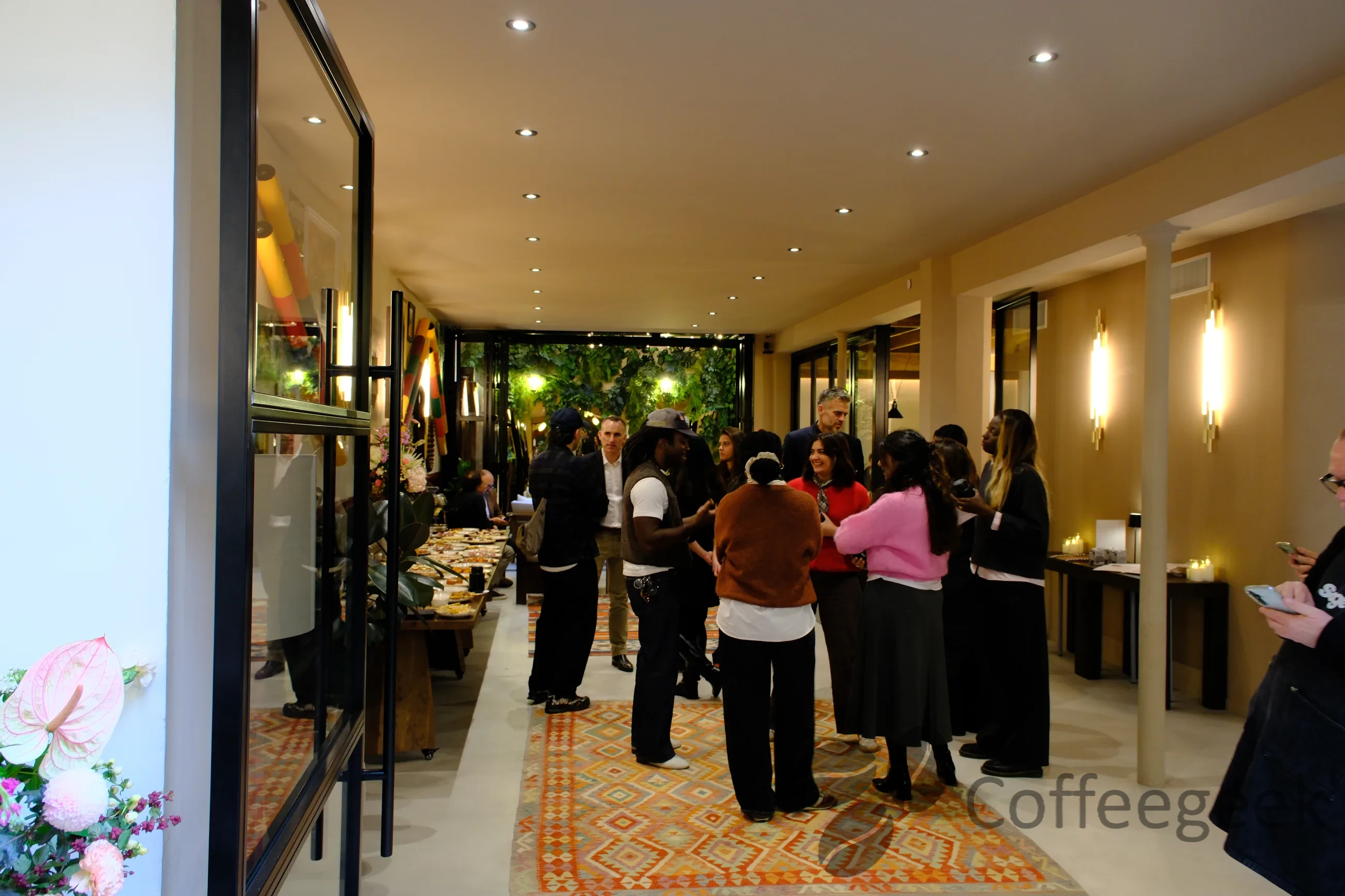
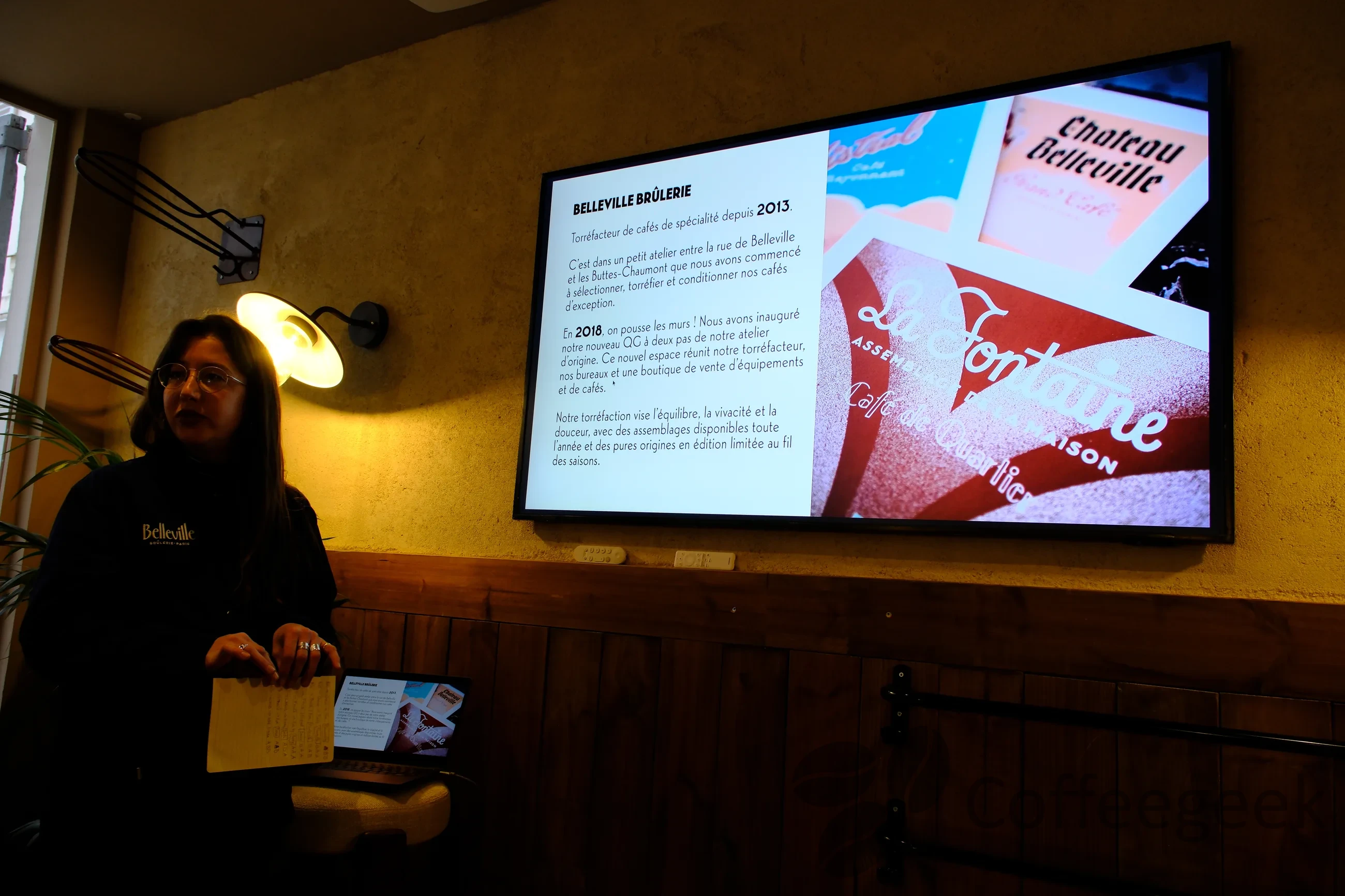
Sage (Breville) invited me to the Paris launch event, after our meeting at the Paris Coffee Show. I was able to pull shots on the machine myself, and I warmly thank Sage for the invitation. A coffee discovery workshop run by the Brûlerie de Belleville, Sage's partner at the event, was also on the program.
What is the Barista Express Neo?
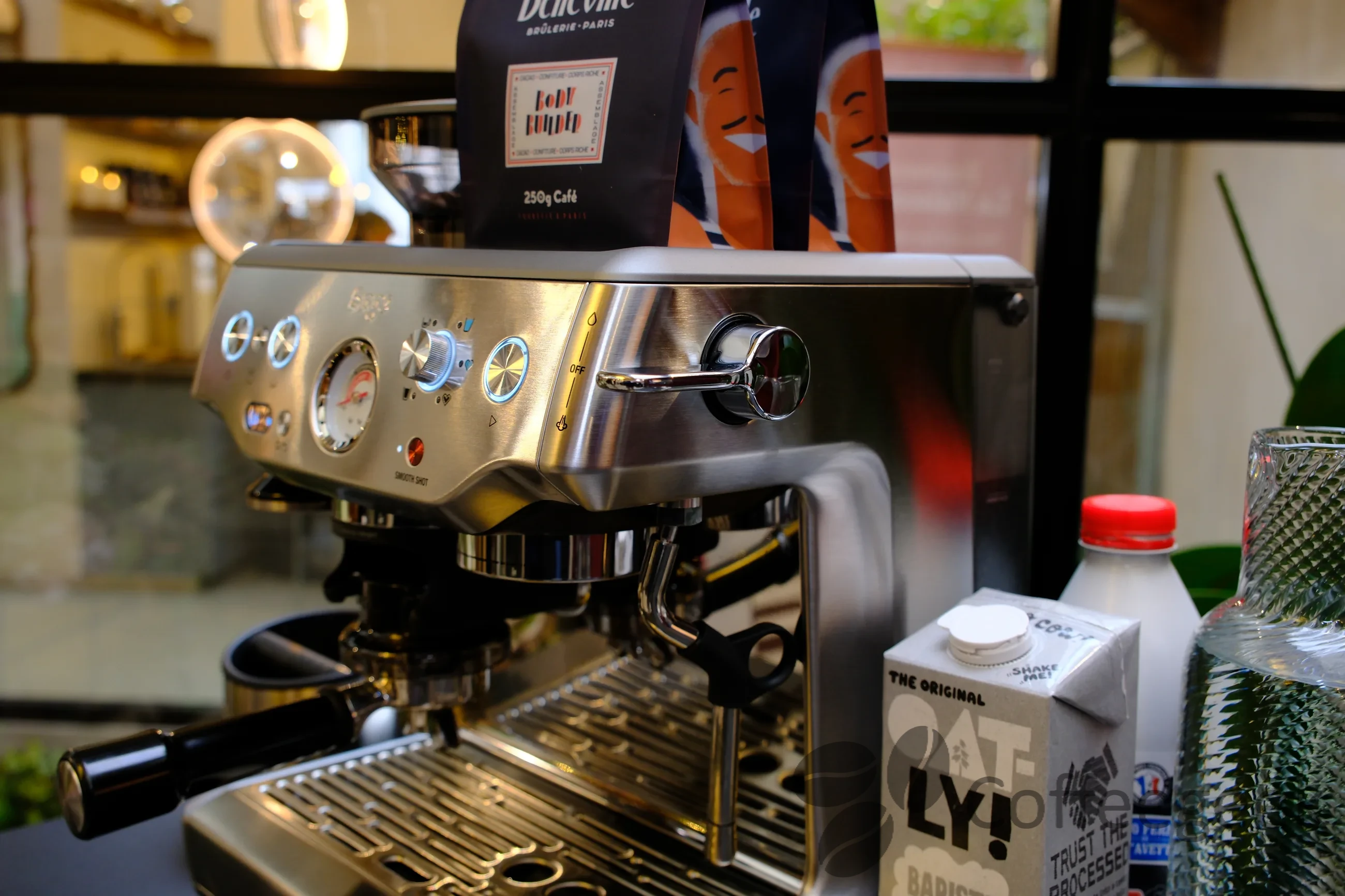
The Neo keeps the look of the Barista Express, a line Sage has been selling for 19 years. The layout stays the same: the grinder is separate from the group head. That model gave excellent results in the cup, but it asked for some know-how: grind size, dose and pressure all interact.
The Neo aims to make all this simpler. The idea: a good coffee from the first cups, then the right setting in about three coffees. The benchmark stays classic: an espresso that runs for 25 to 35 seconds. In this video, Sage presents what is new on the machine:
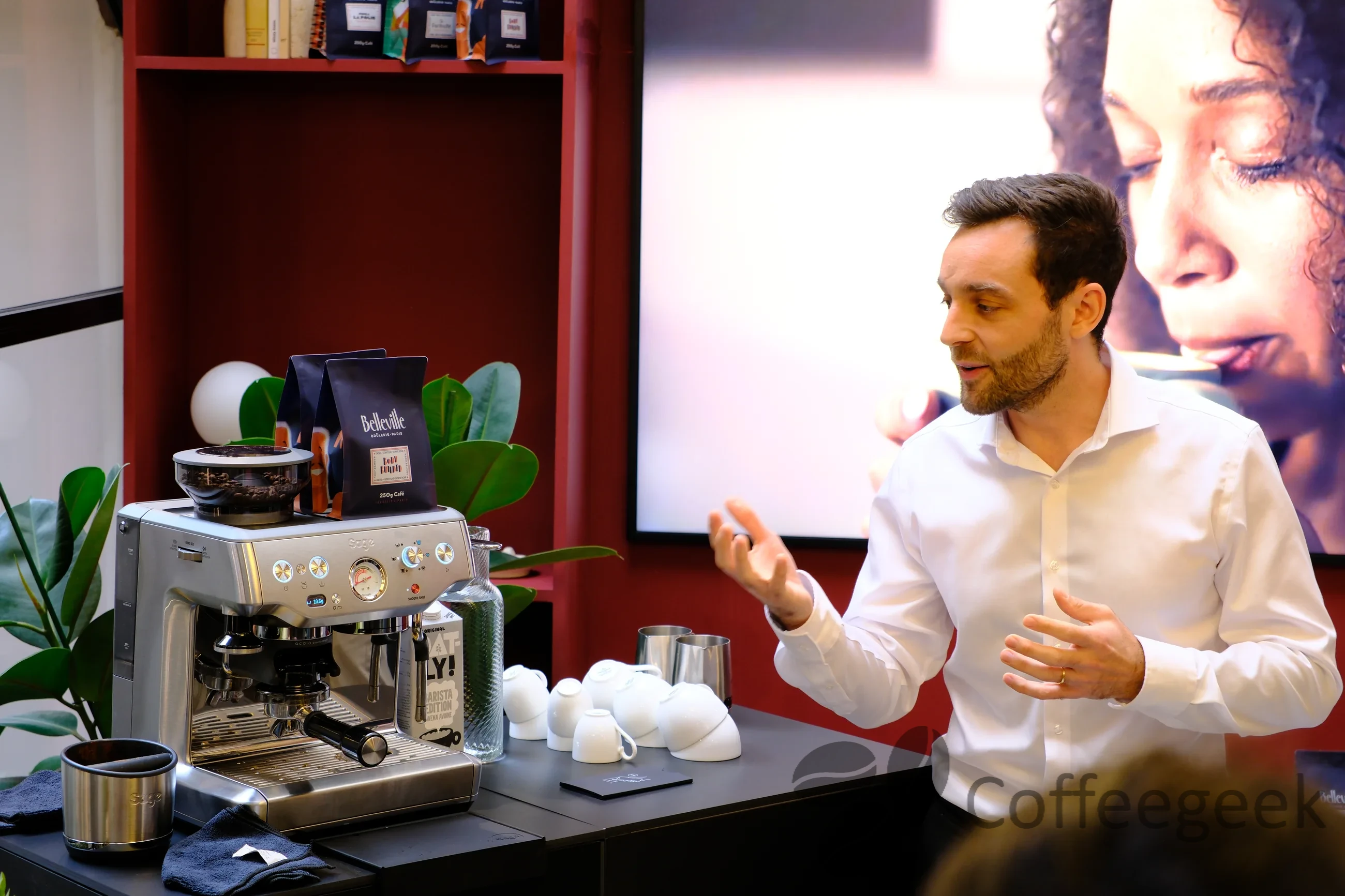
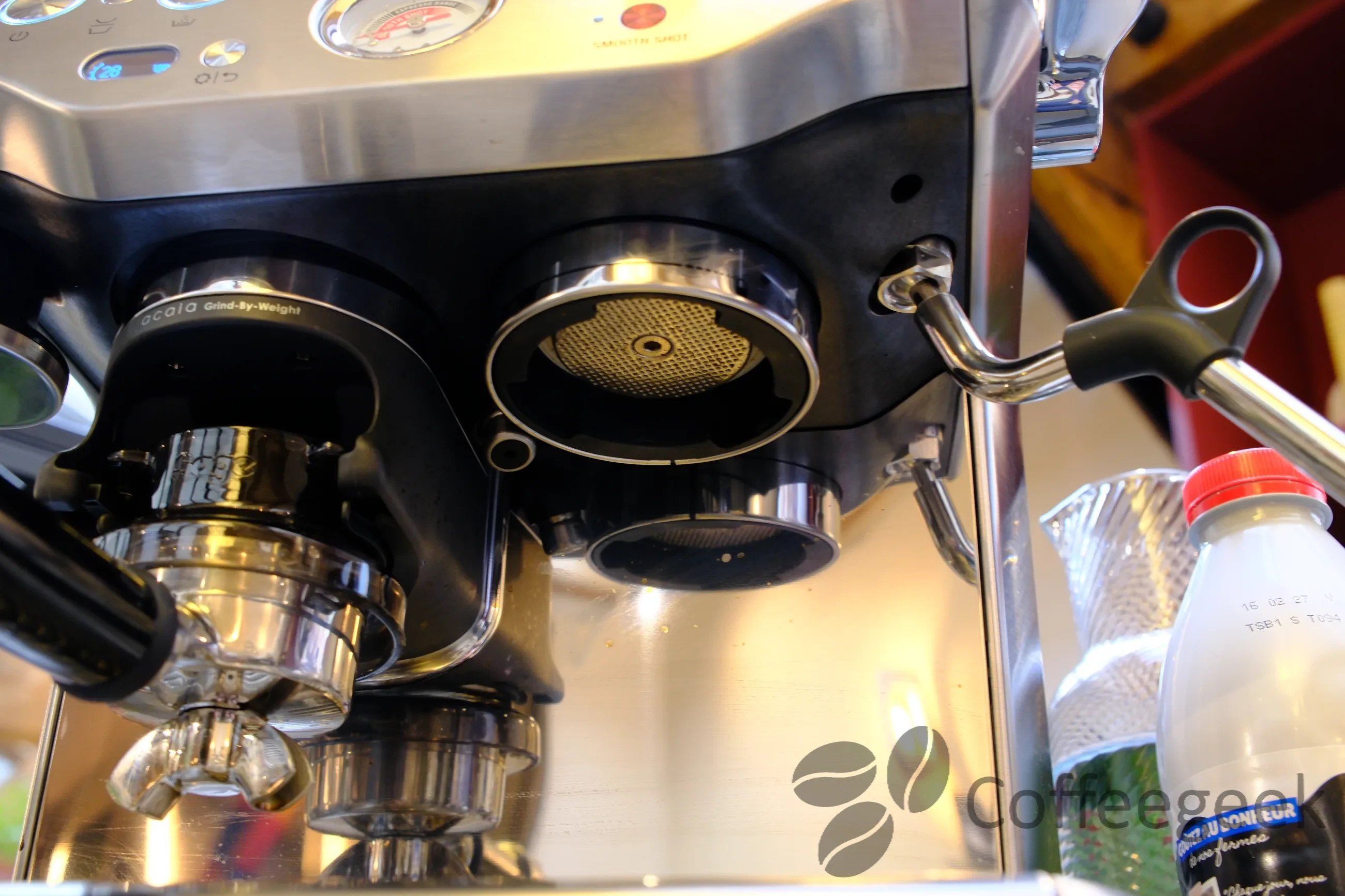
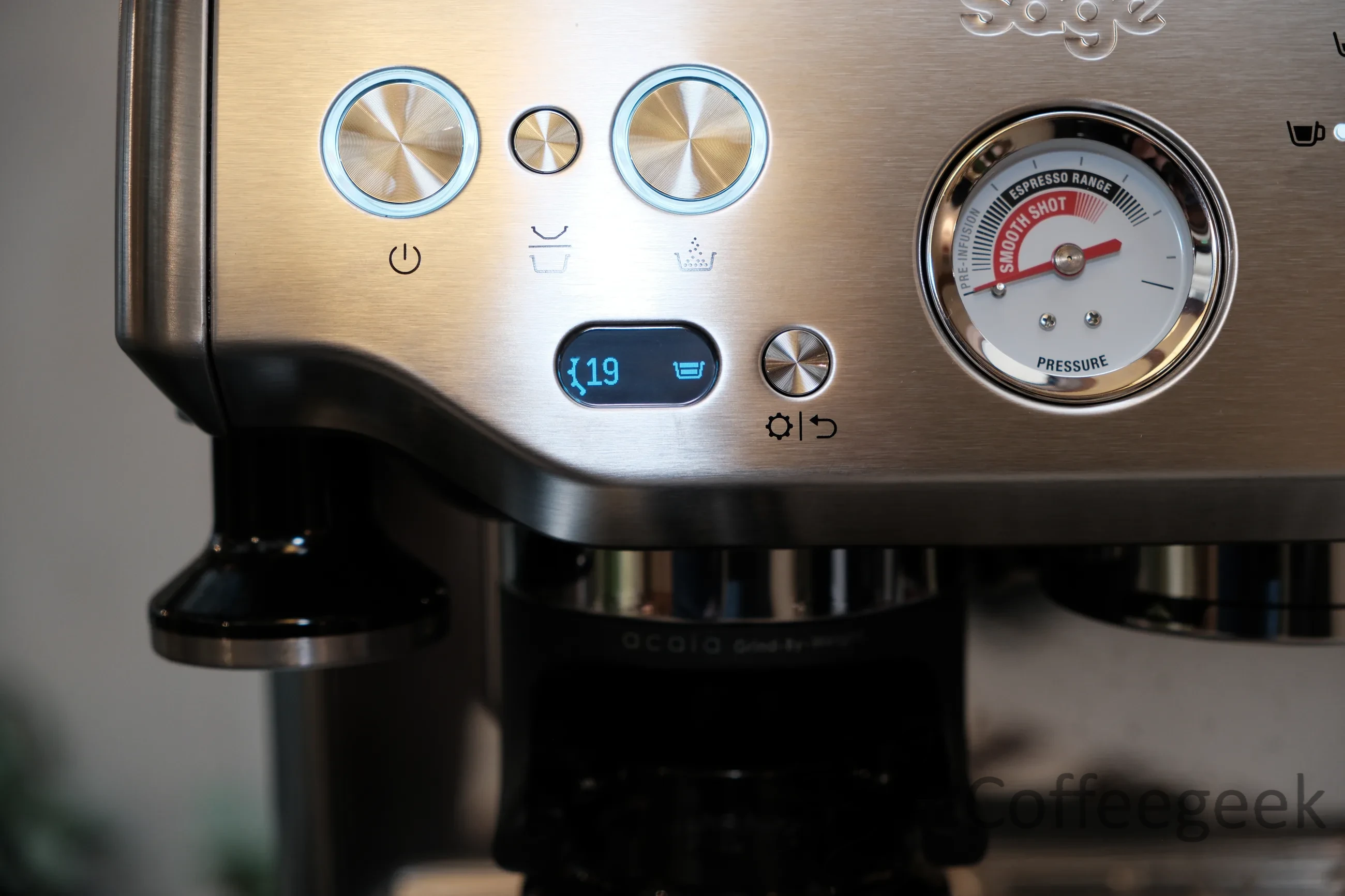
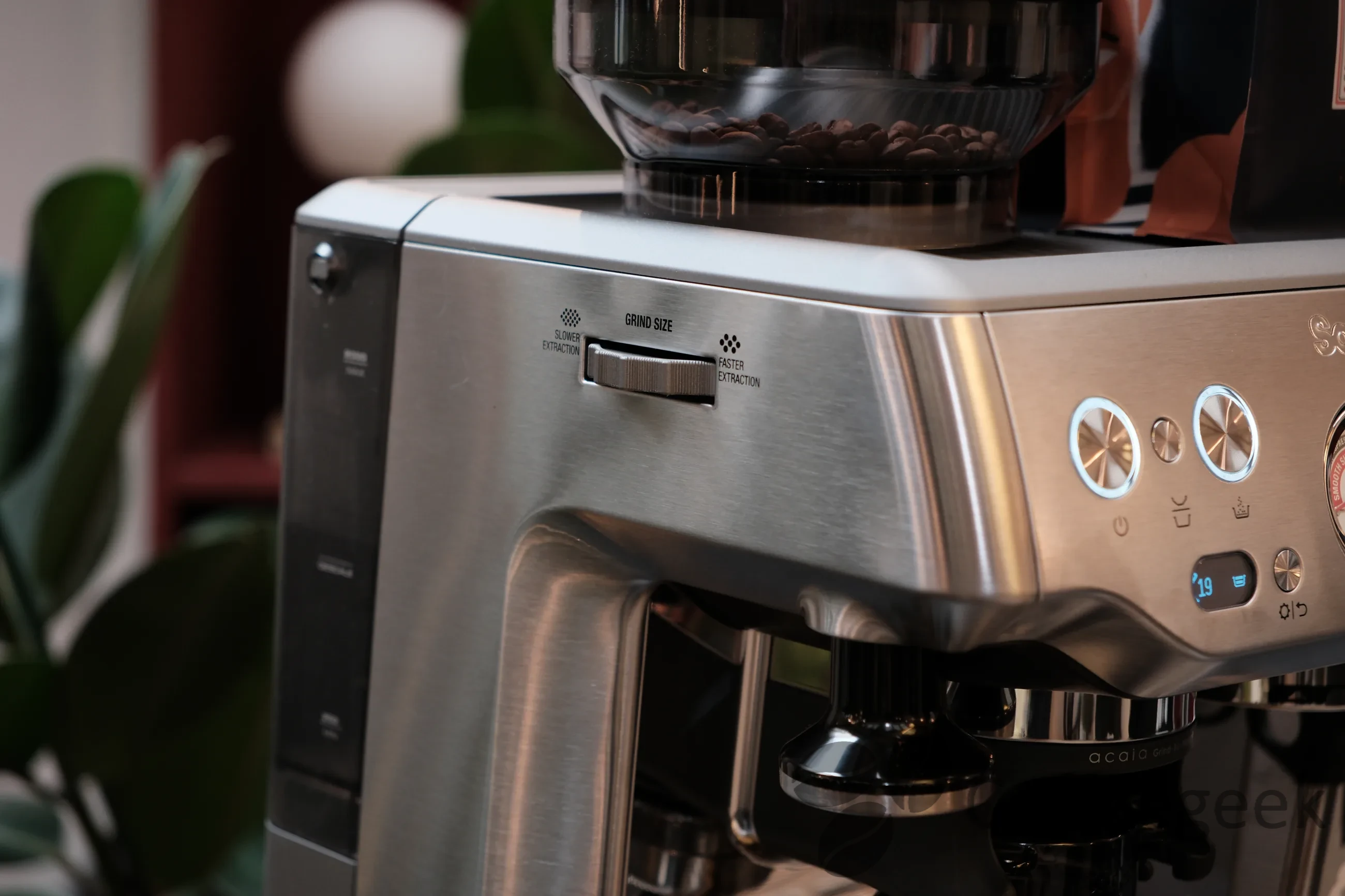
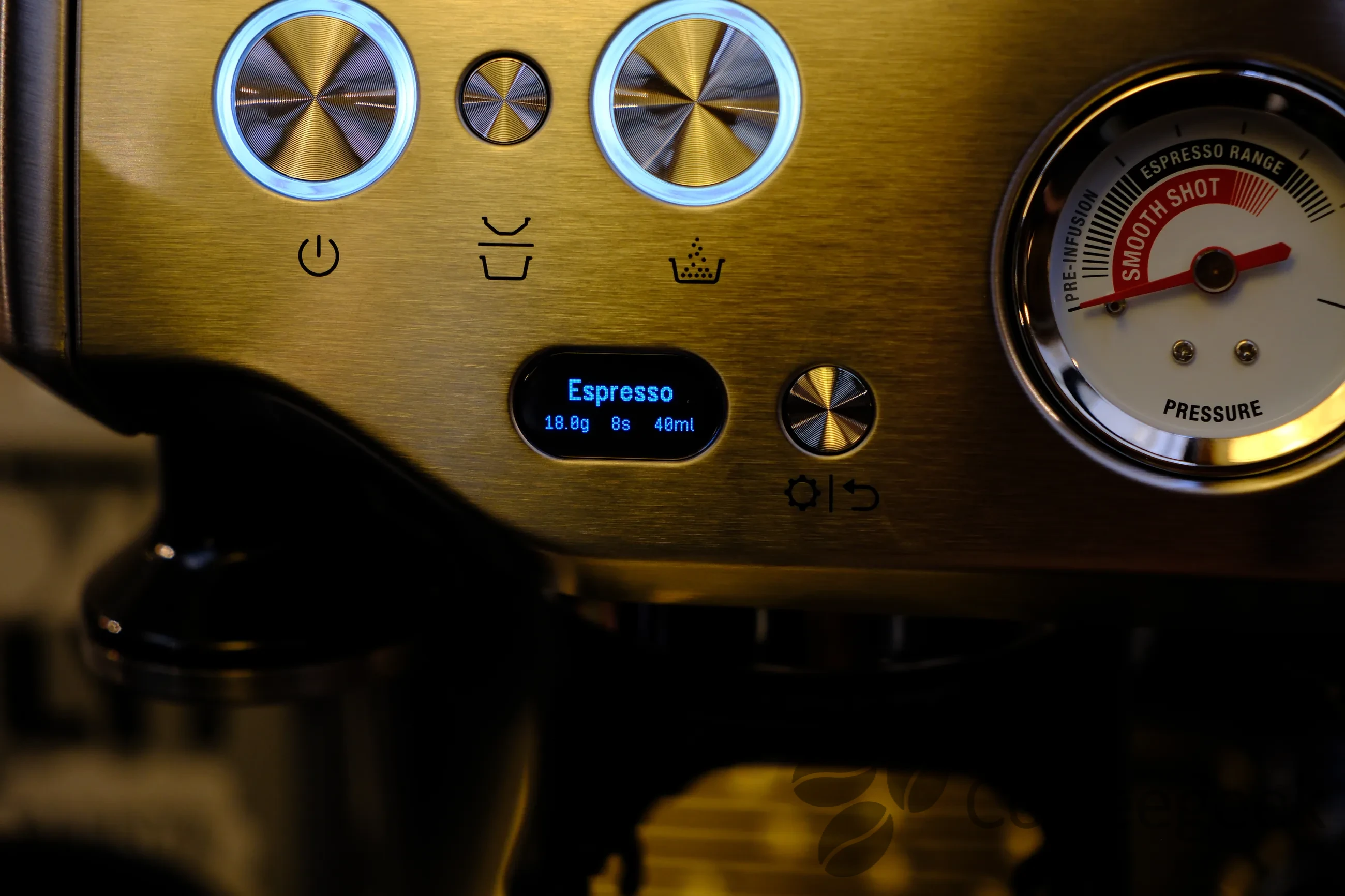
On the machine, a small screen shows the grind setting, out of 30, and the basket in use. The grind dial sits on the side, with a clear pictogram. The 54 mm portafilter has a nice weight, and a dosing funnel comes with it. For setup, an NFC card in the box opens the tutorials on your phone.
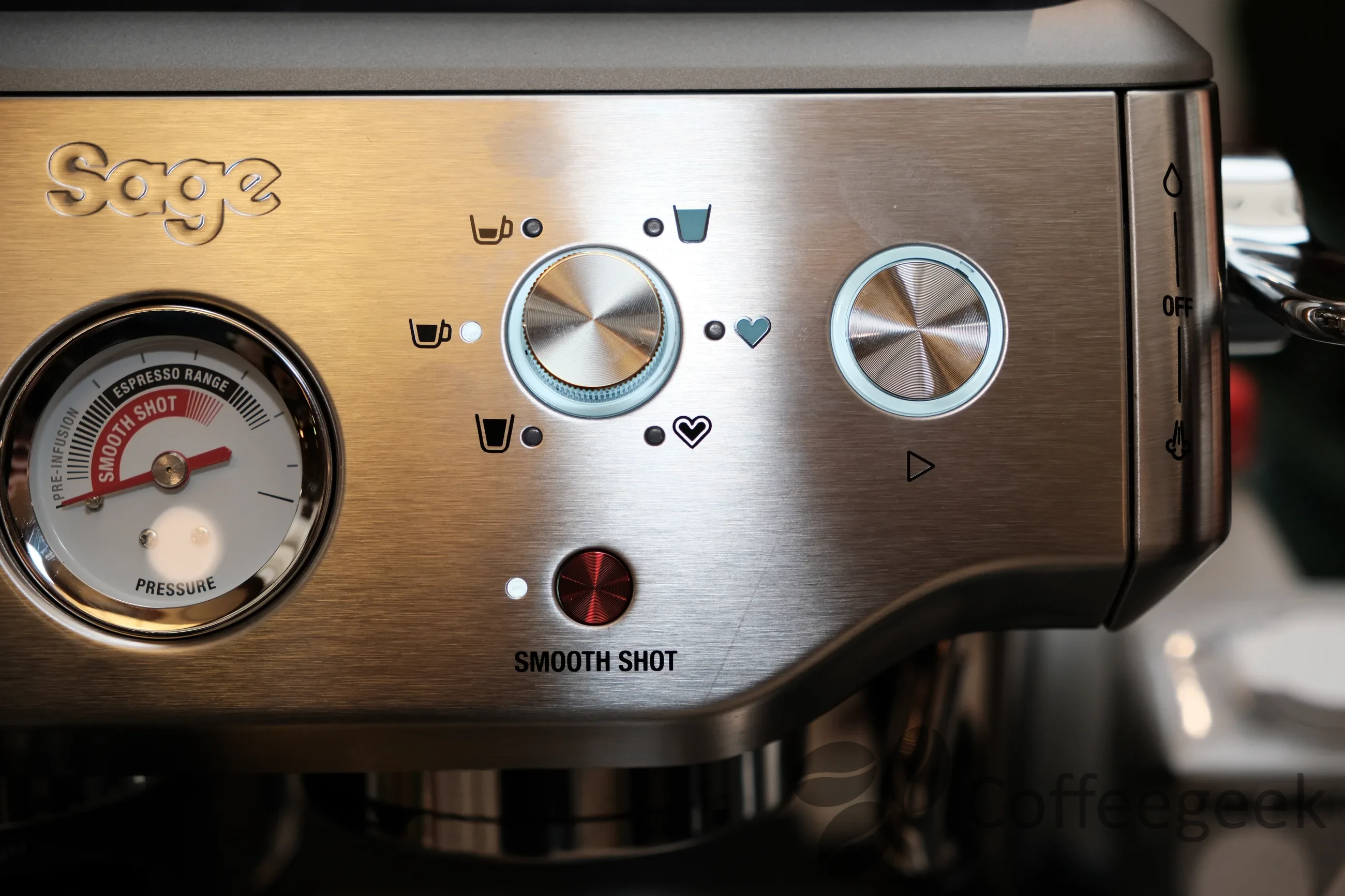
Smooth Shot: flow control that does the work for you
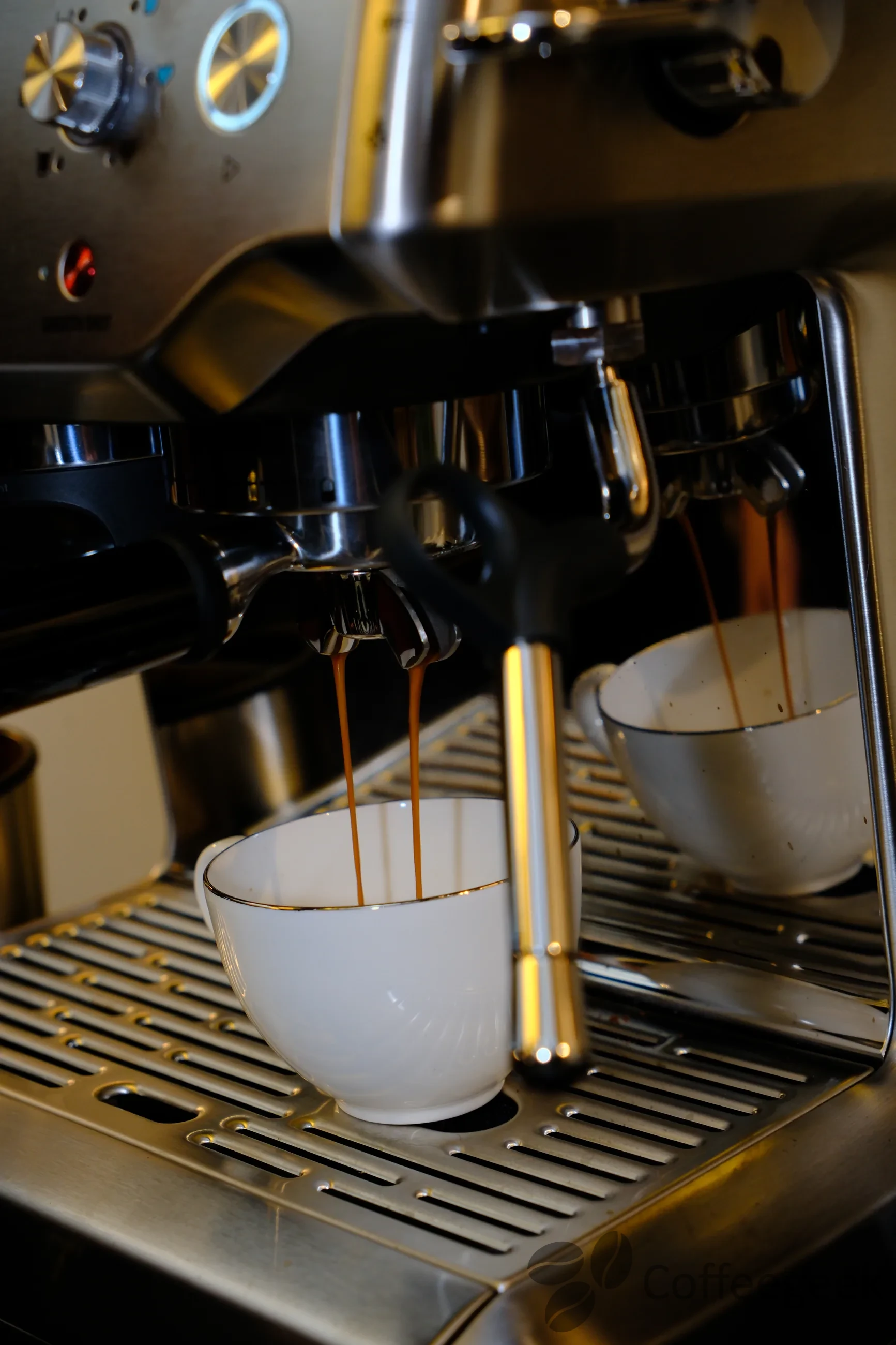
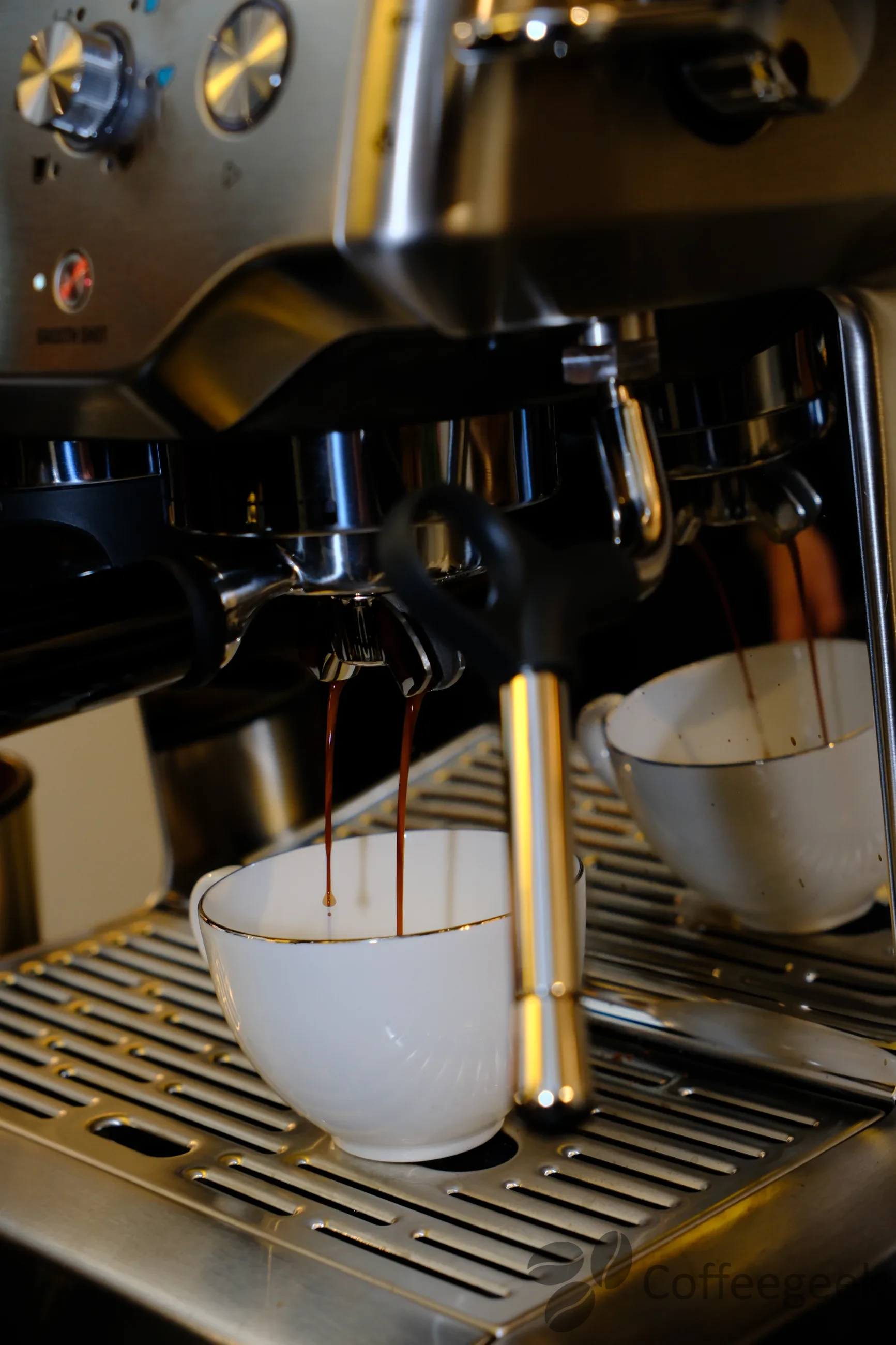
Smooth Shot was the feature Sage put forward at the event, and it is really effective. It relies on a variable-flow pump that compensates for the grind with the water flow.
It reminds me of the flow control kit I installed on my Lelit Mara X V2. Extraction pressure is not the pump pressure: it depends on how much the coffee resists the water. By changing the water flow, you lower or raise that pressure. Smooth Shot does exactly that, automatically.
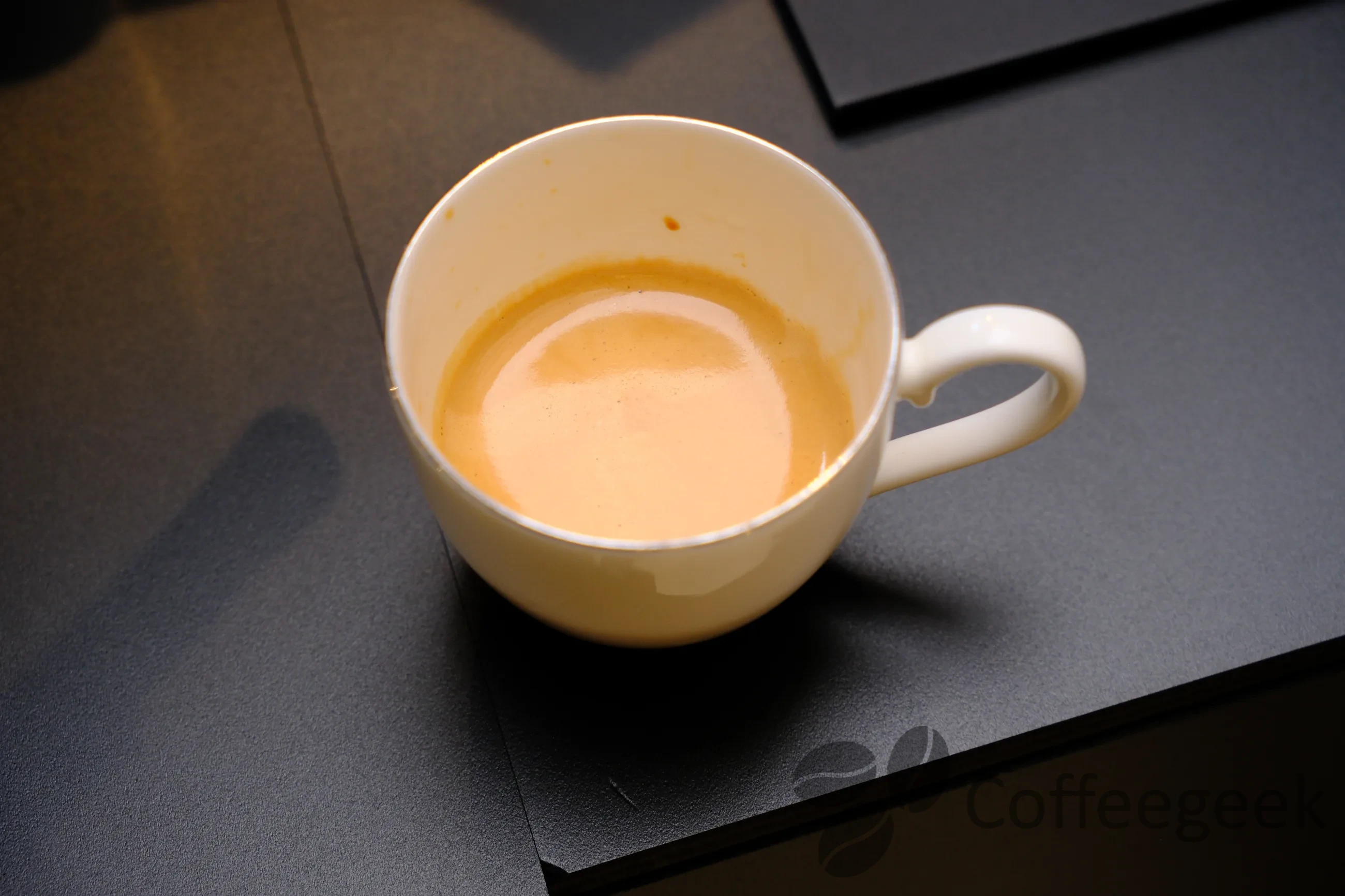
In the cup, the result was there, with a slight acidity because the coffee had been roasted very recently.
A grinder that weighs its own dose
The grinder offers 30 grind settings. A second dial at the burr itself adds 10 clicks, which opens a wide range of adjustments. The Neo keeps the same five-bladed burrs as the Barista Express. Grind size has the biggest impact on pressure, much more than tamping force.
After each shot, the machine suggests a new setting if needed. Pull a 22-second shot, for example, and it recommends setting 19 to get closer to 30 seconds. At the event, we deliberately mis-set the machines to test this. The suggestions proved relevant, and the right setting came within 2 or 3 coffees.
The real highlight is the built-in scale, made with Acaia. The grinder stops at a preset weight, to the tenth of a gram, which is the precision I use with my separate scale. The dose goes from 16 to 22 g. You set the grind and the dose, and the machine handles the rest.
For me, Acaia is a historic name in coffee, one of the first brands to make precision scales for coffee. I have never owned one: they are well above my budget.
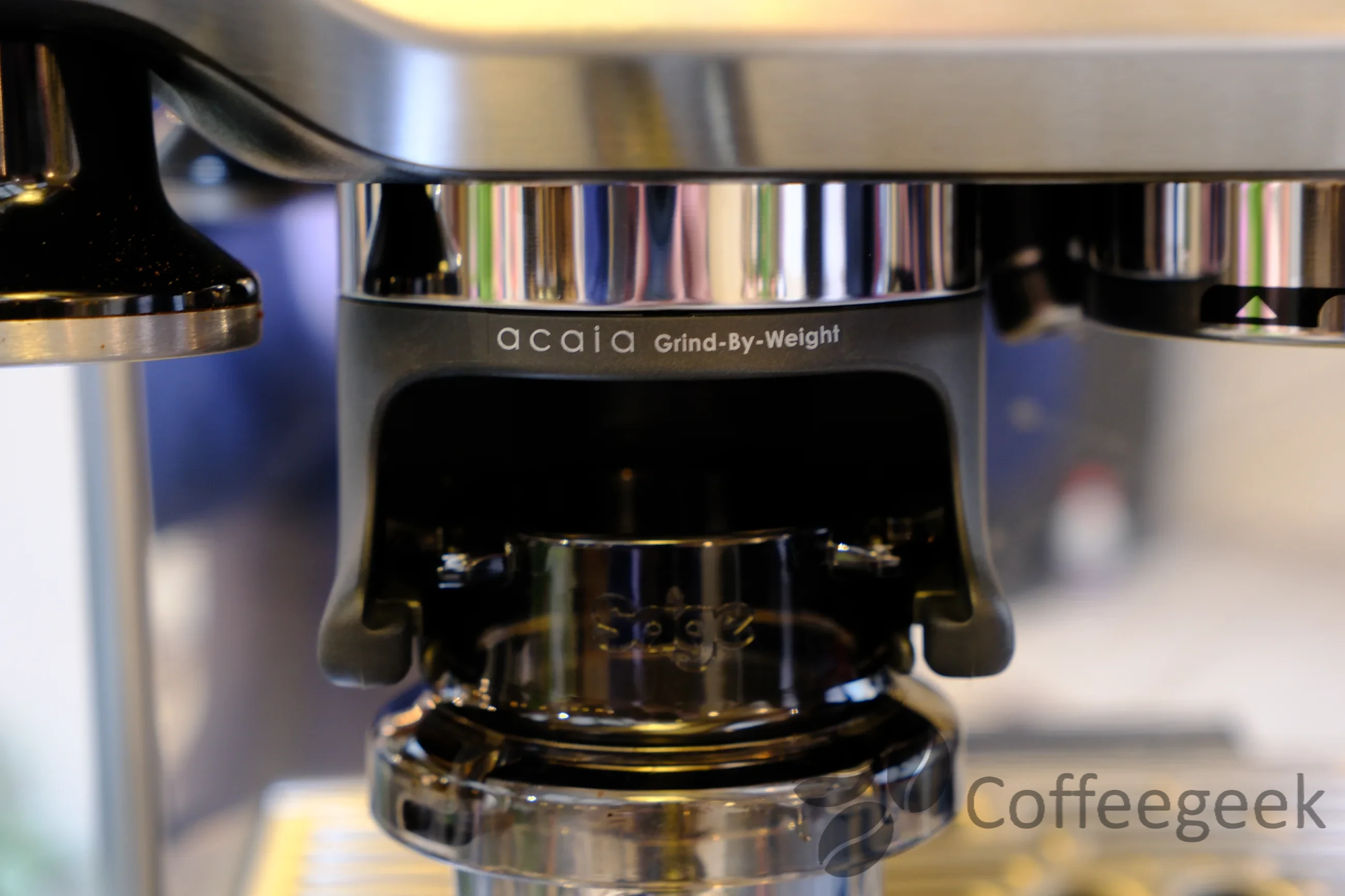
Tamping stays manual, because users want to keep the barista's gesture. The magnetic tamper is easy to tilt off axis, so a self-leveling tamper gives a more even puck. The funnel helps spread the grounds. Before tamping, I always recommend that you distribute the coffee evenly in the portafilter: otherwise, you risk channeling.
Espresso, lungo and cold coffee without a ThermoJet
The menu offers espresso, double espresso, lungo and cold coffees. The lungo can go up to 150 ml: grind three or four settings coarser, or lower the dose by about a gram. Two favorites can be saved, one hot and one cold. The machine offers 4 brew temperatures.
When I heard "cold coffee", I first thought of a ThermoJet, the heating system Sage showed me at the Paris Coffee Show. It is not one. The Neo uses a thermoblock.
For cold coffee, a parallel circuit bypasses the heating and draws water straight from the tank. The machine first runs room-temperature water to cool the system, then brews at room temperature.
All you need then is a glass and a few ice cubes for an iced coffee. A nice extra.
Steam, milk and a surprisingly quiet machine
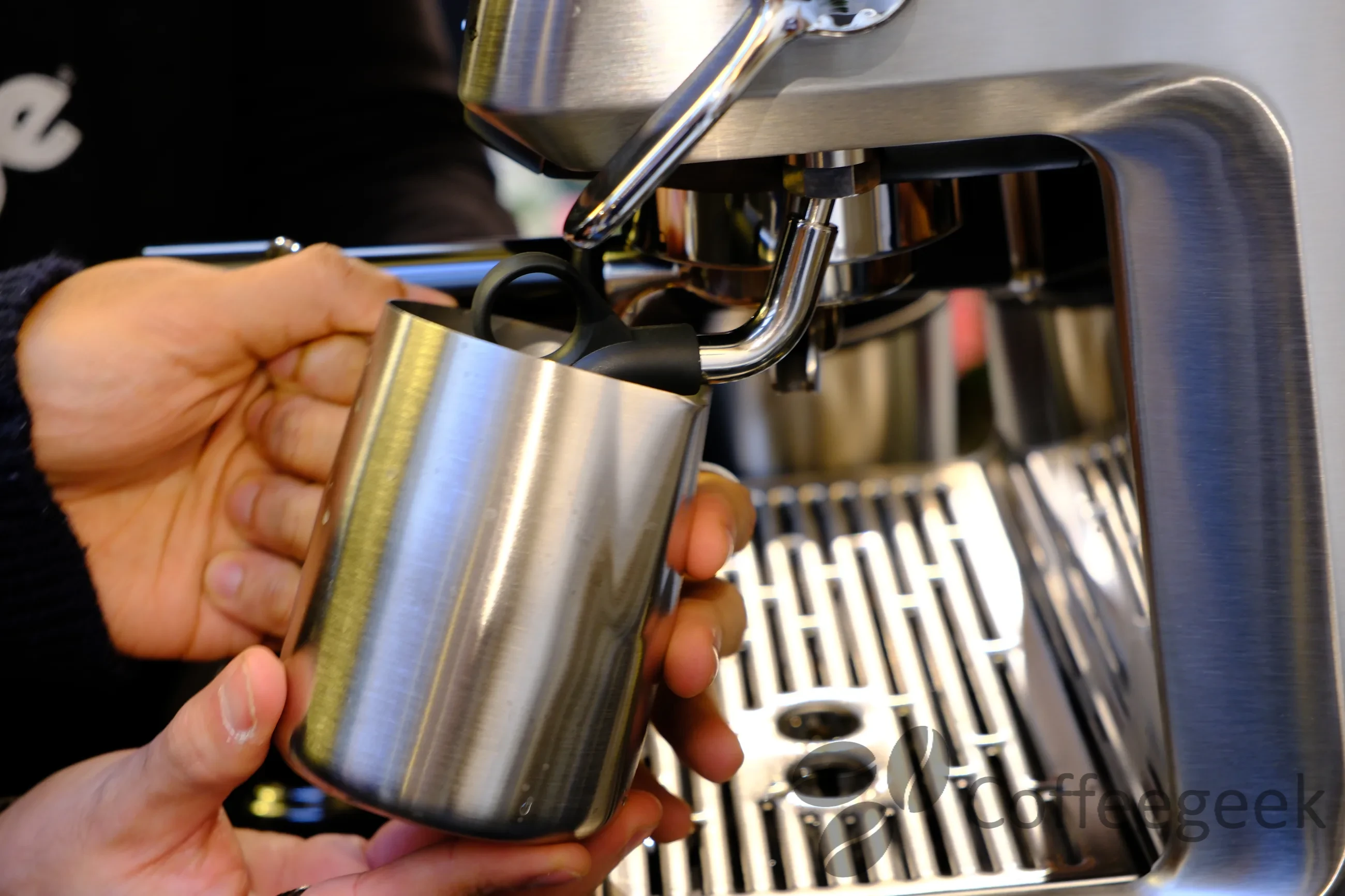
A single lever handles water and steam: up for hot water, down for steam. The steam wand now has a double wall. It does not burn your fingers, milk does not stick, and it cleans more easily. It also cools itself after steaming.
The thermoblock needs up to 30 seconds to reach steam temperature. I found the wait fairly quick.
Then I would say 40 seconds to 1 minute to texture the milk. Once hot, the steam has plenty of power, and you can grind and steam at the same time. The foam suits latte art, provided you have the barista's technique.
The noise was the other good surprise. The grinder is quiet. Despite its vibration pump, the machine seemed quieter than my Lelit Mara X V2 at home.
It was an event, with noise around, so take that with caution. Still, Sage (Breville) has insulated the sound well.
Between a bean-to-cup and a manual machine, the Neo finds its place
The Neo targets coffee novices coming from capsules or bean-to-cup machines, with no barista knowledge. For anyone who loves coffee but wants simple routines, it is a fine discovery. You still grind and tamp for real, and get far more out of your coffee than with an automatic machine. Smooth Shot and the grind suggestions take care of the hard part.
It has limits. The burrs are the same as on the original Barista Express, and the tamper is easy to tilt.
The machine is already available from Sage. With Smooth Shot, guided grinding and a precise scale, it takes most of the guesswork out of a real espresso.
Going further
De'Longhi Magnifica Duo Review: Full Espresso Machine Test
De'Longhi Magnifica Duo review: design, milk system, espresso recipes, and honest verdict after weeks of testing.
Read the article →
De'Longhi PrimaDonna Aromatic Review: Hot and Cold Coffee at Home
Full review of the De'Longhi PrimaDonna Aromatic ECAM630.75.TSM: flat burr grinder, Bean Adapt technology, LatteCrema system and mobile app put to the test.
Read the article →