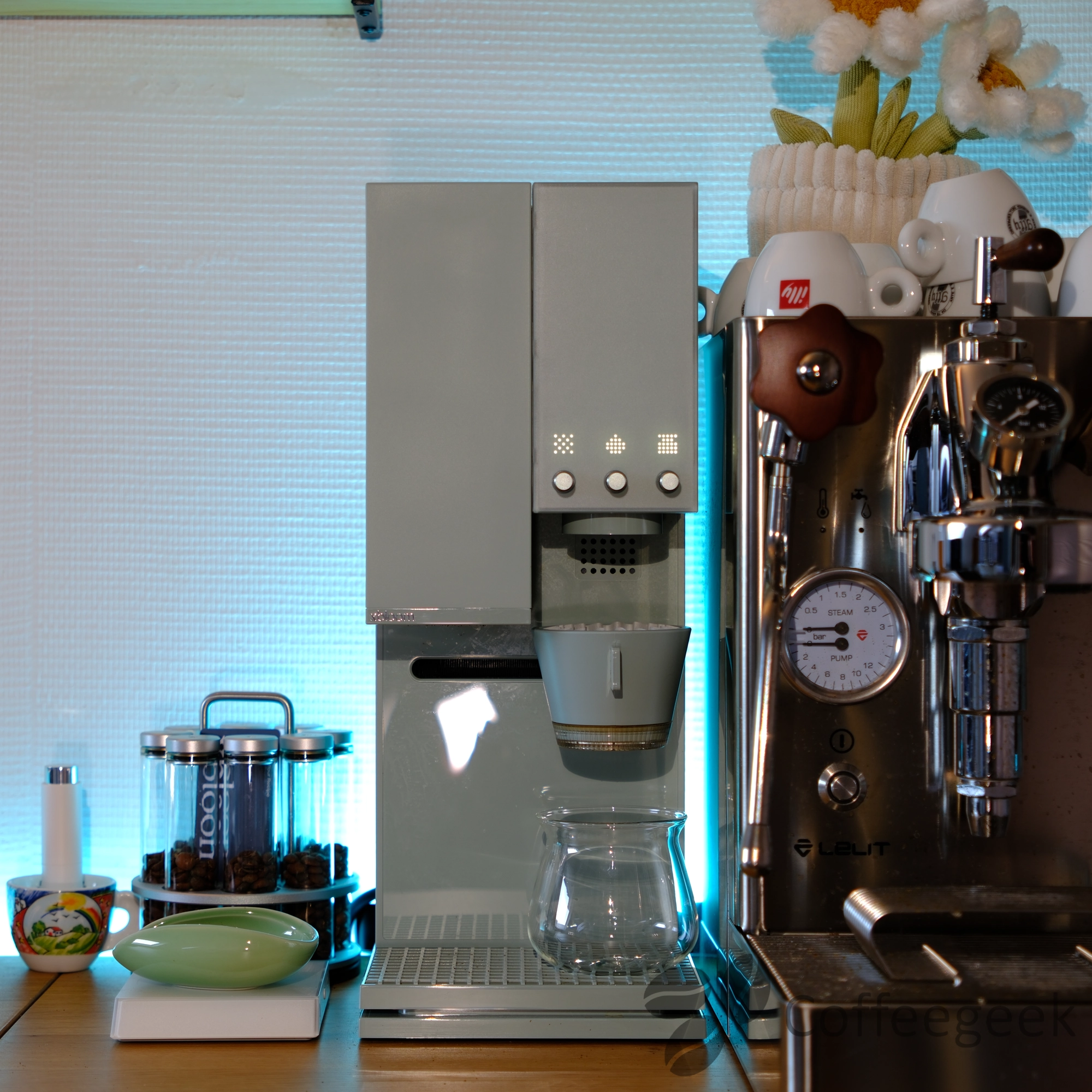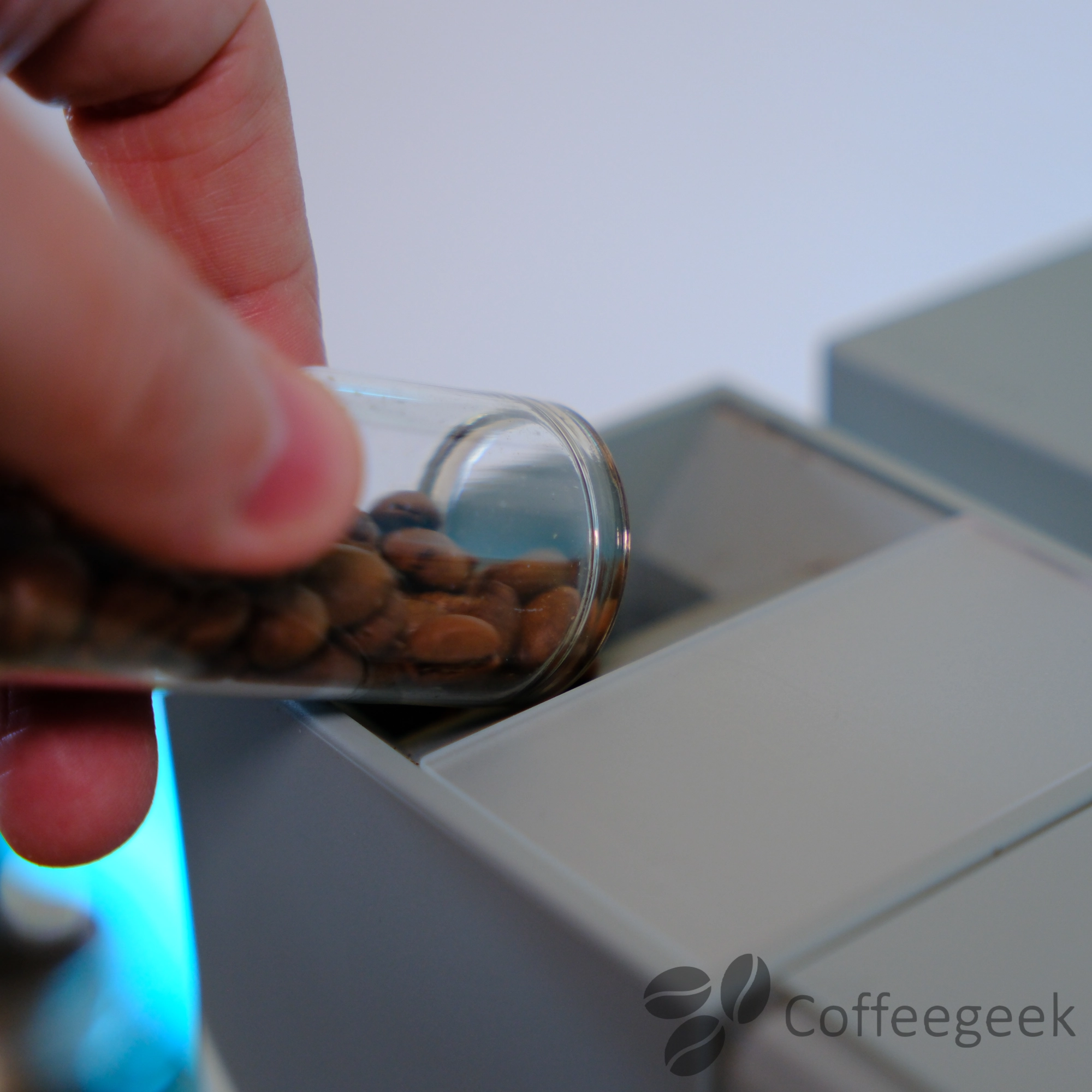


Ever since I got serious about specialty coffee, the scale has become the centerpiece of my coffee corner. Timemore sent me the Basic 3.0 to test, and after a few weeks of daily use for both pour-over and espresso, here's what I think of it.
This scale was sent to me by Timemore. This article was written entirely independently: my evaluation is based solely on my real-world experience as a user, with no commercial influence whatsoever.
Overview: design, dimensions and available modes
The Timemore Basic 3.0 comes in understated, carefully finished packaging, true to the Timemore brand's aesthetic. In the box, you'll find the scale, a non-slip rubber mat and a USB-C charging cable.
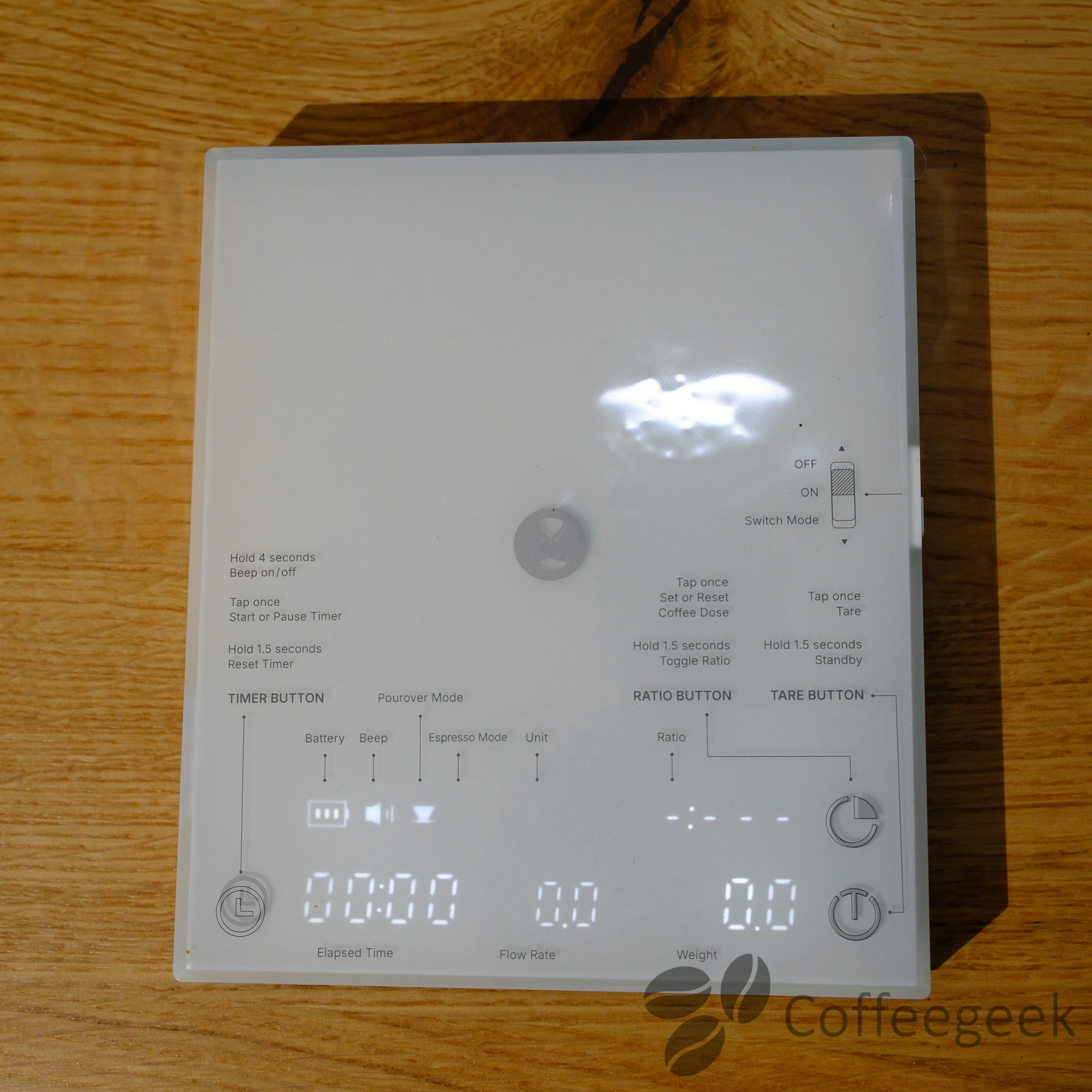
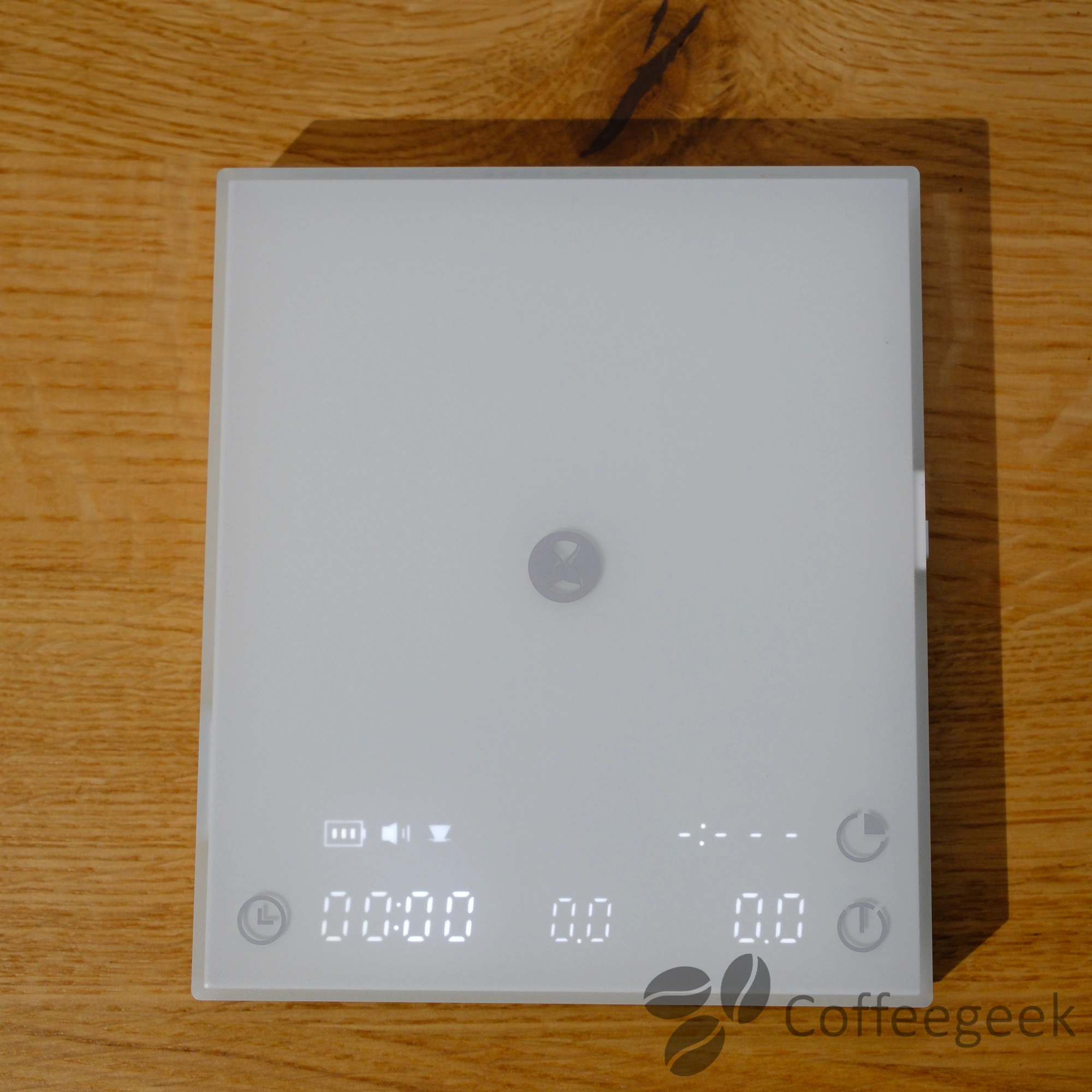
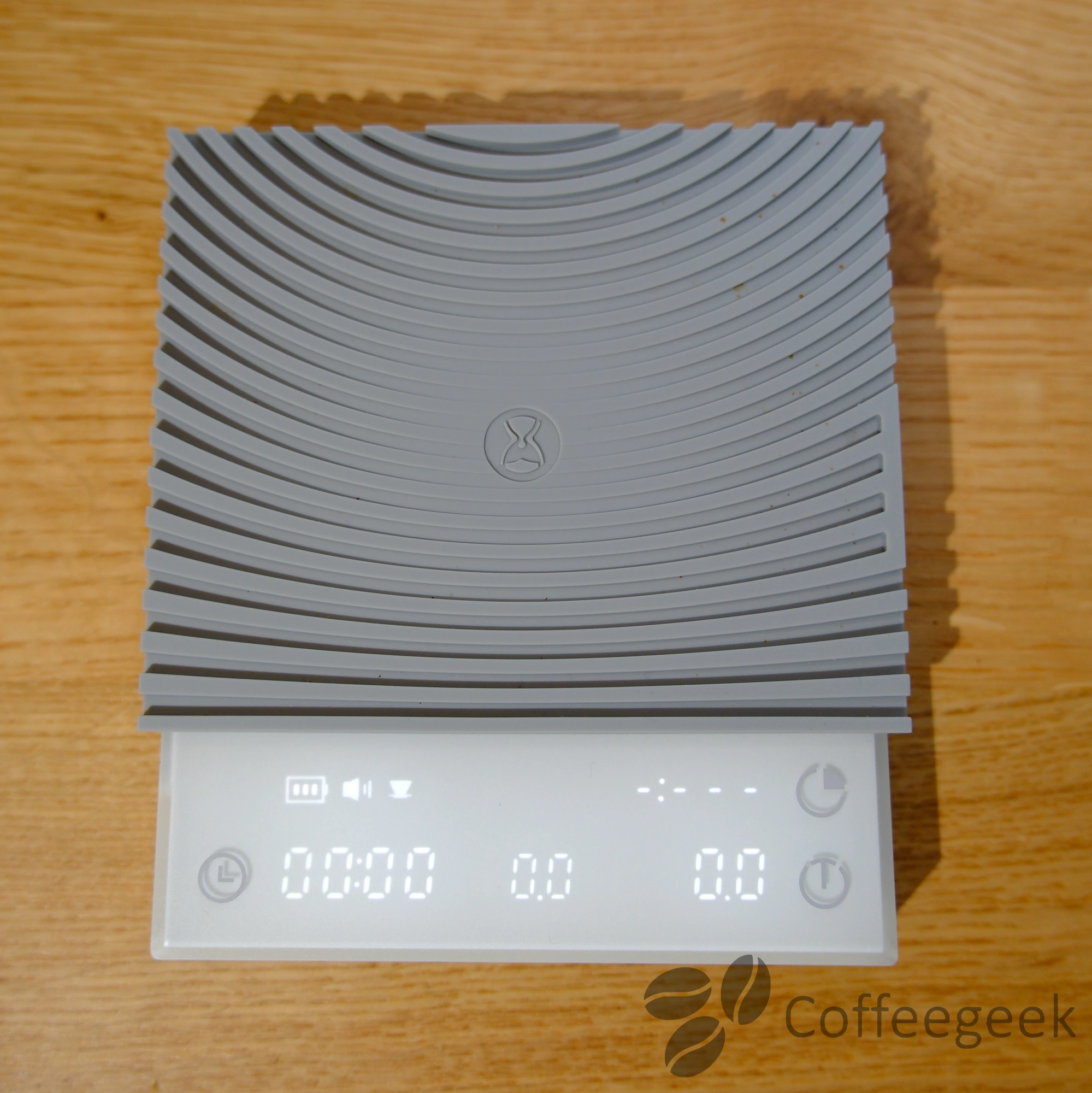
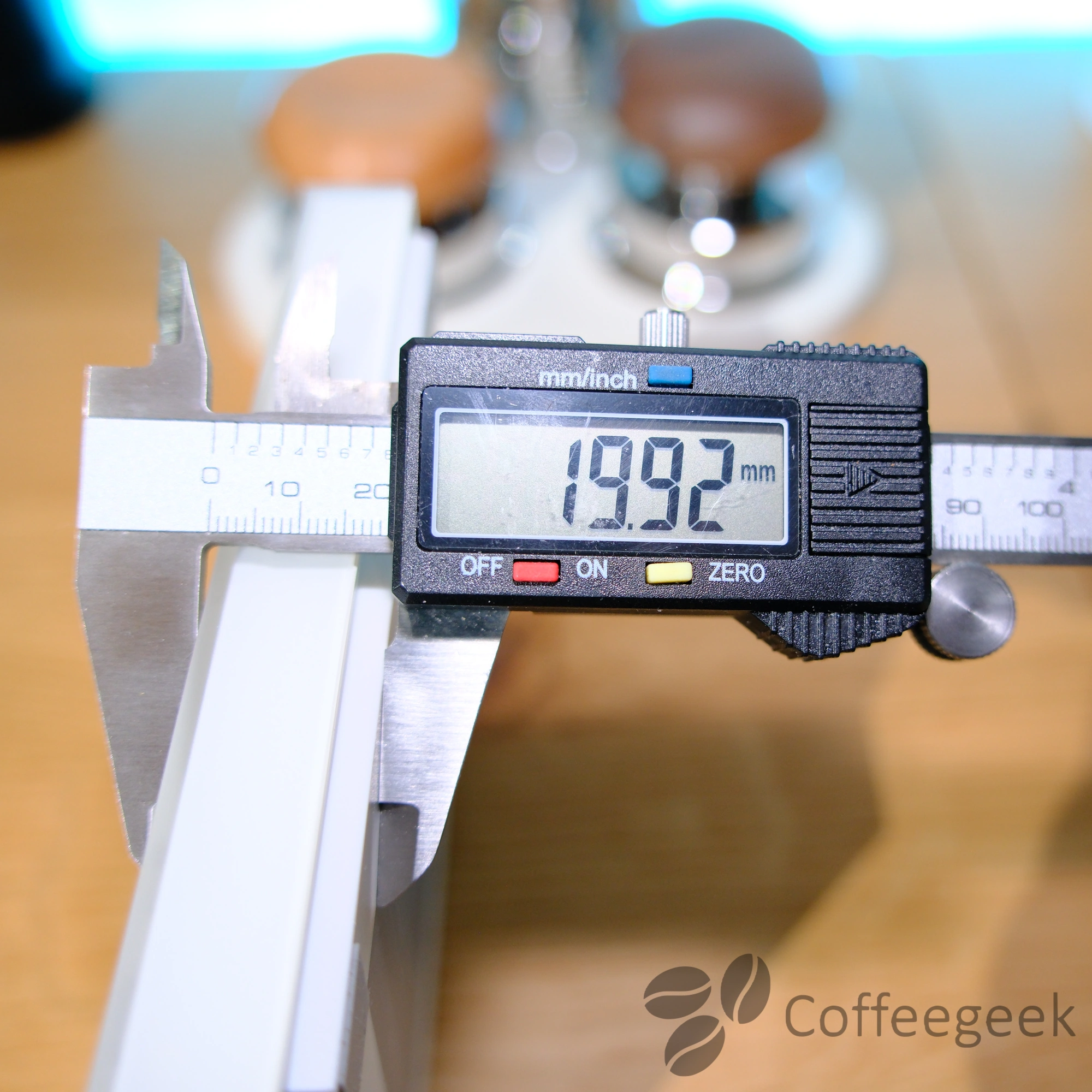
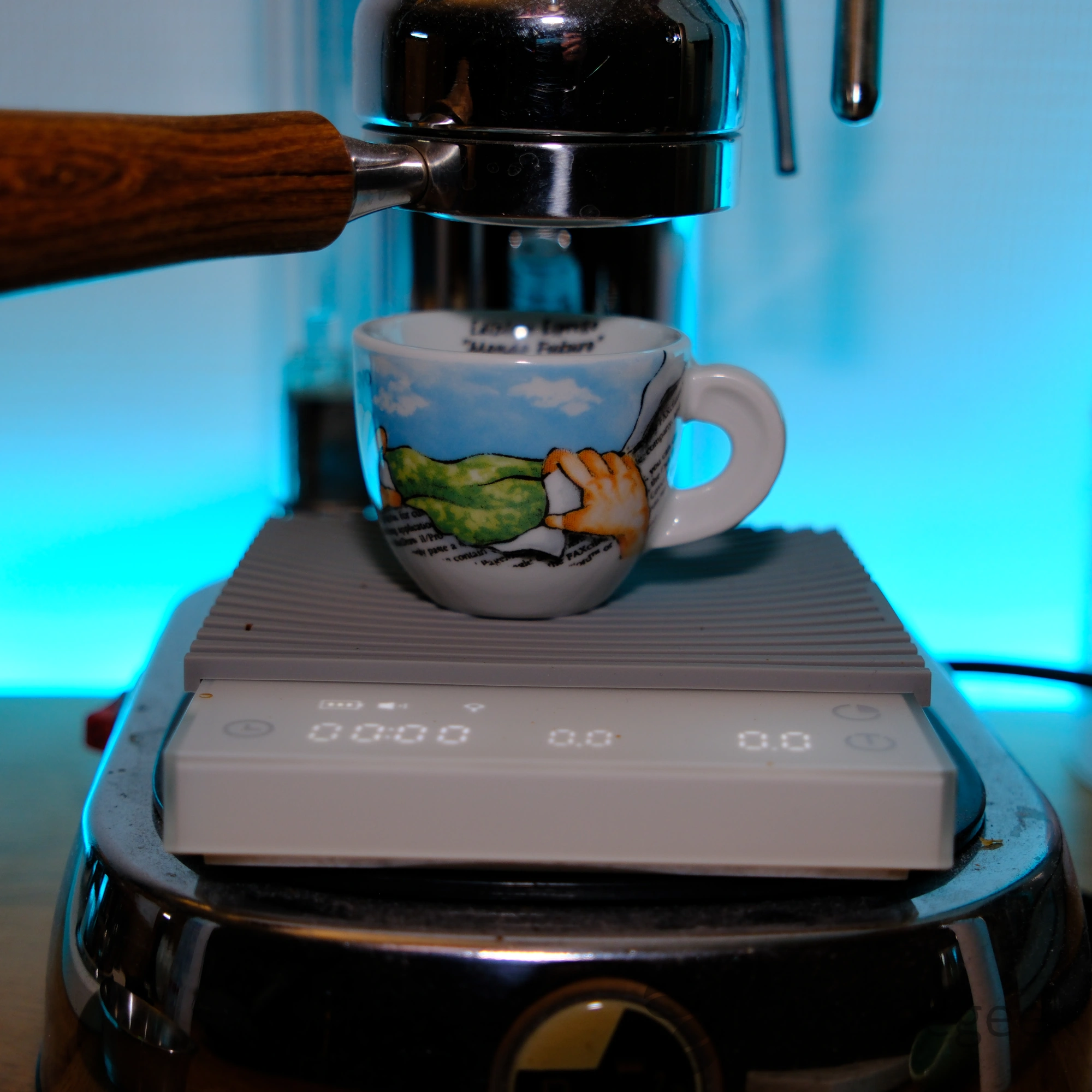
The first thing that strikes you is the size. The Basic 3.0 is 35% smaller and about 20% lighter than the Basic 2, and above all, it's only 2 cm thick, compared with 3 cm for its predecessor. That one-centimeter difference may seem trivial on paper, but in practice it changes everything if you use a scale under an espresso machine with little clearance. The scale is also noticeably lighter, at 300 g, compared with about 380 g for the Basic 1 and Basic 2. If you often move your gear around, it's a real convenience.
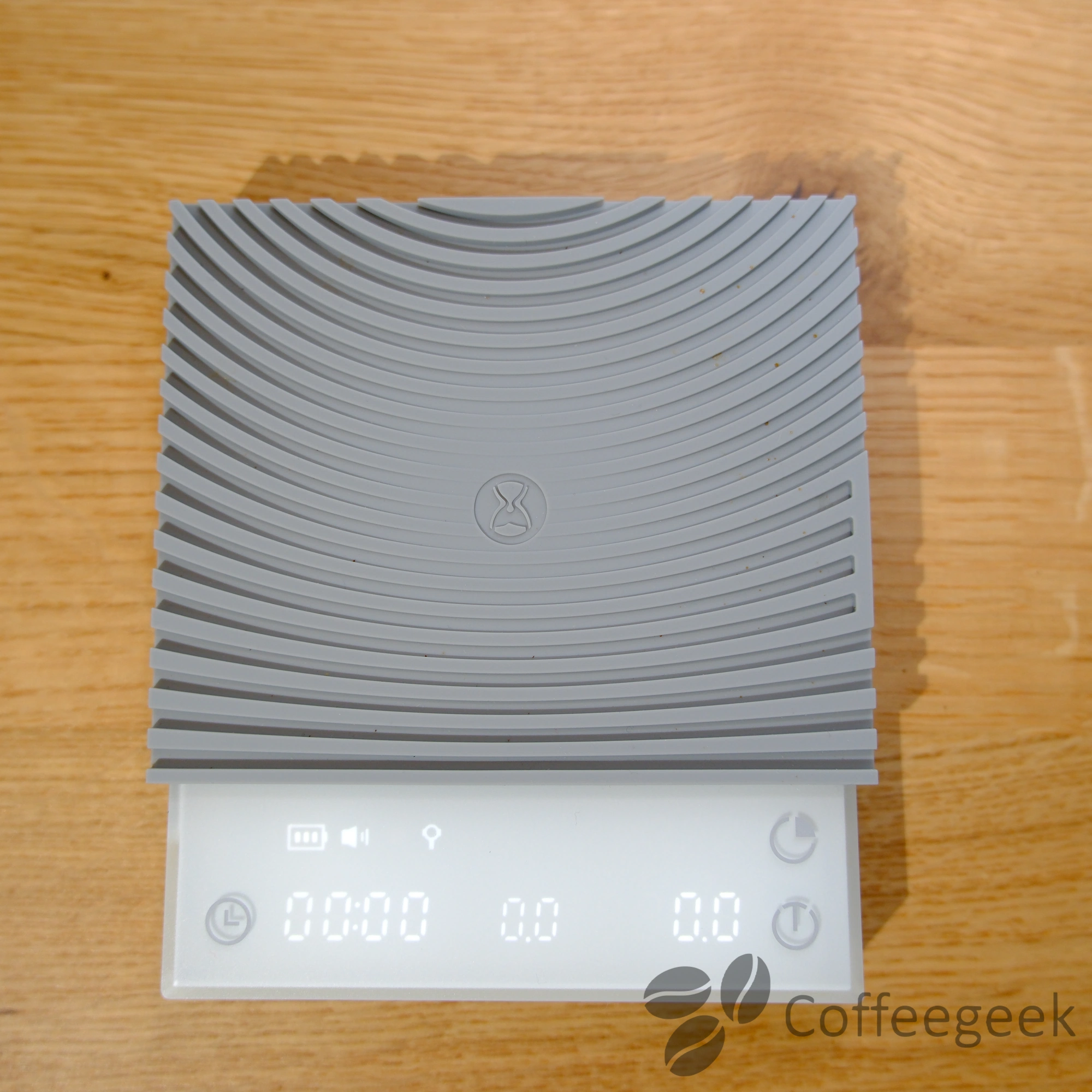
The LED display is readable in all conditions, and the sensor's responsiveness is obvious from the very first use. Charging is via USB-C, a welcome standard that puts an end to proprietary cables.
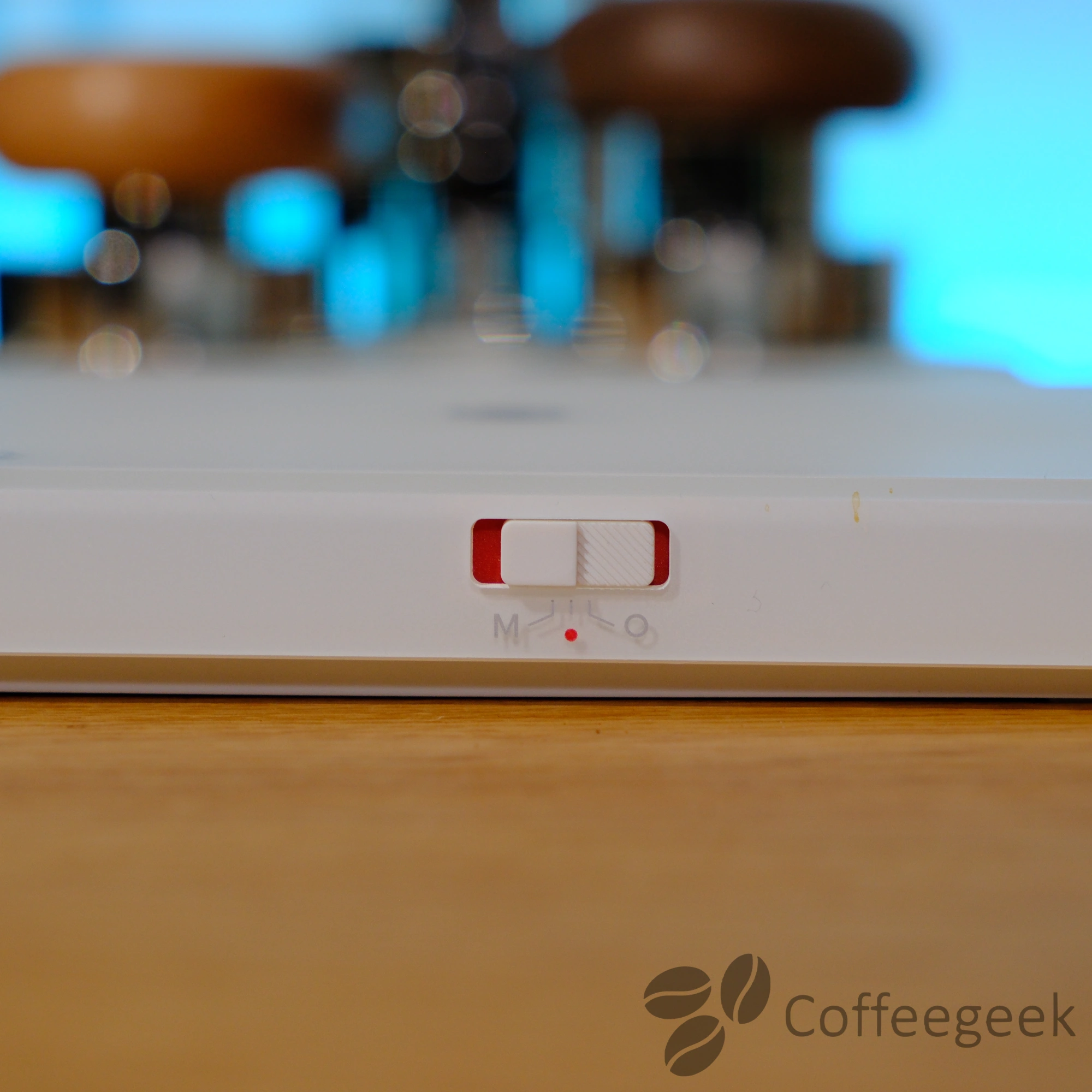
The Basic 3.0 offers three operating modes, accessible with a single press of the side button: a standard mode, a pour-over mode and an espresso mode. Each mode is marked by its own icon on the screen. Switching between modes is smooth and intuitive, even in the middle of a brew. You can also switch from grams to ounces by pressing the right button five times, an option I never use but one that will delight English-speaking users.
The Timemore Basic 3.0 is available on Amazon or on the official Timemore website
Using it for pour-over: real-time ratio and automatic timer
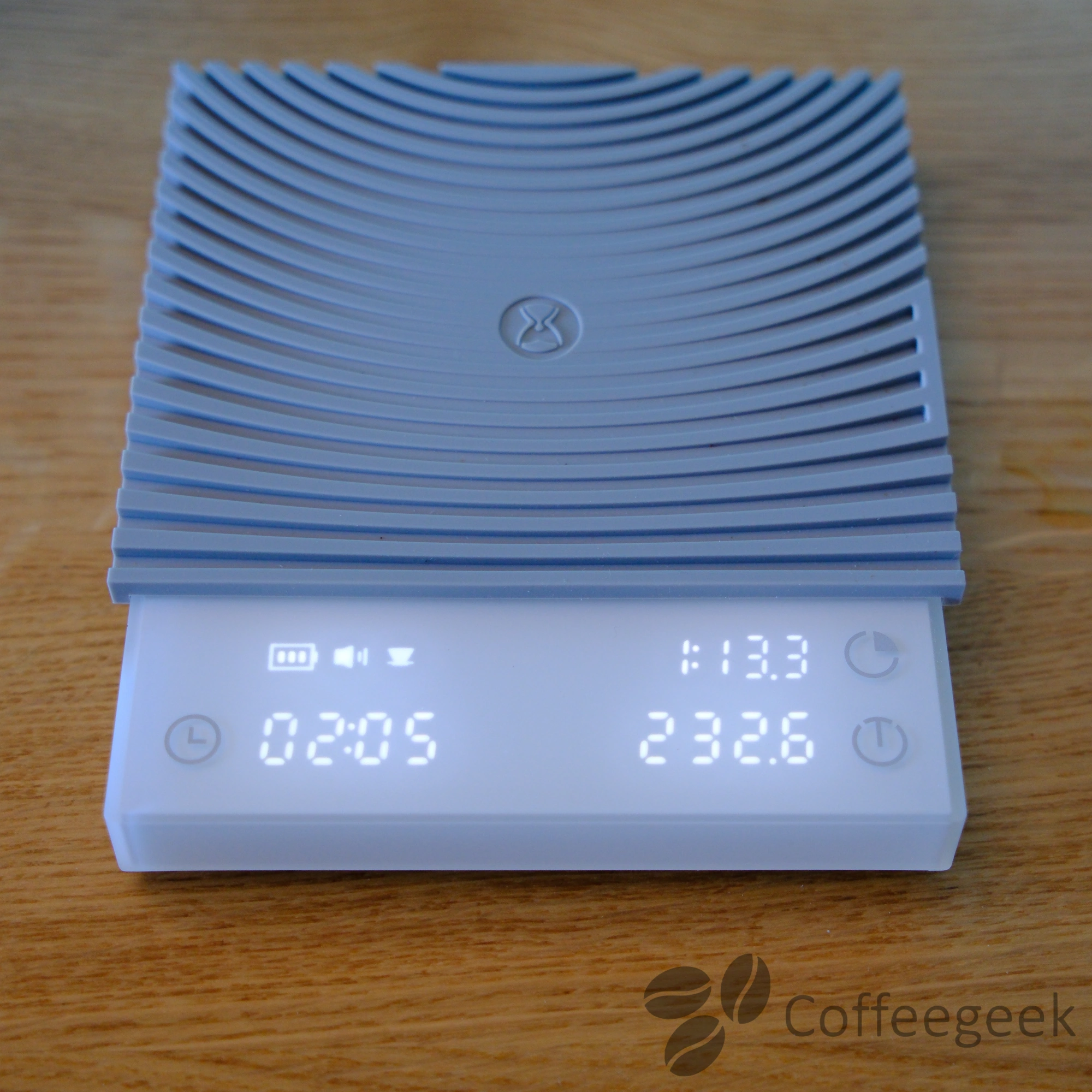
The pour-over mode is clearly the feature that surprised me most the first time I used it. Once the mode is on, the scale offers real-time tracking of the water-to-coffee ratio: you weigh your beans, press the ratio button, and the scale records your dose. As soon as you start pouring the water, the screen shows the current ratio live, for example 1
.5 or 1.2, without you having to work out in your head how many grams of water to pour.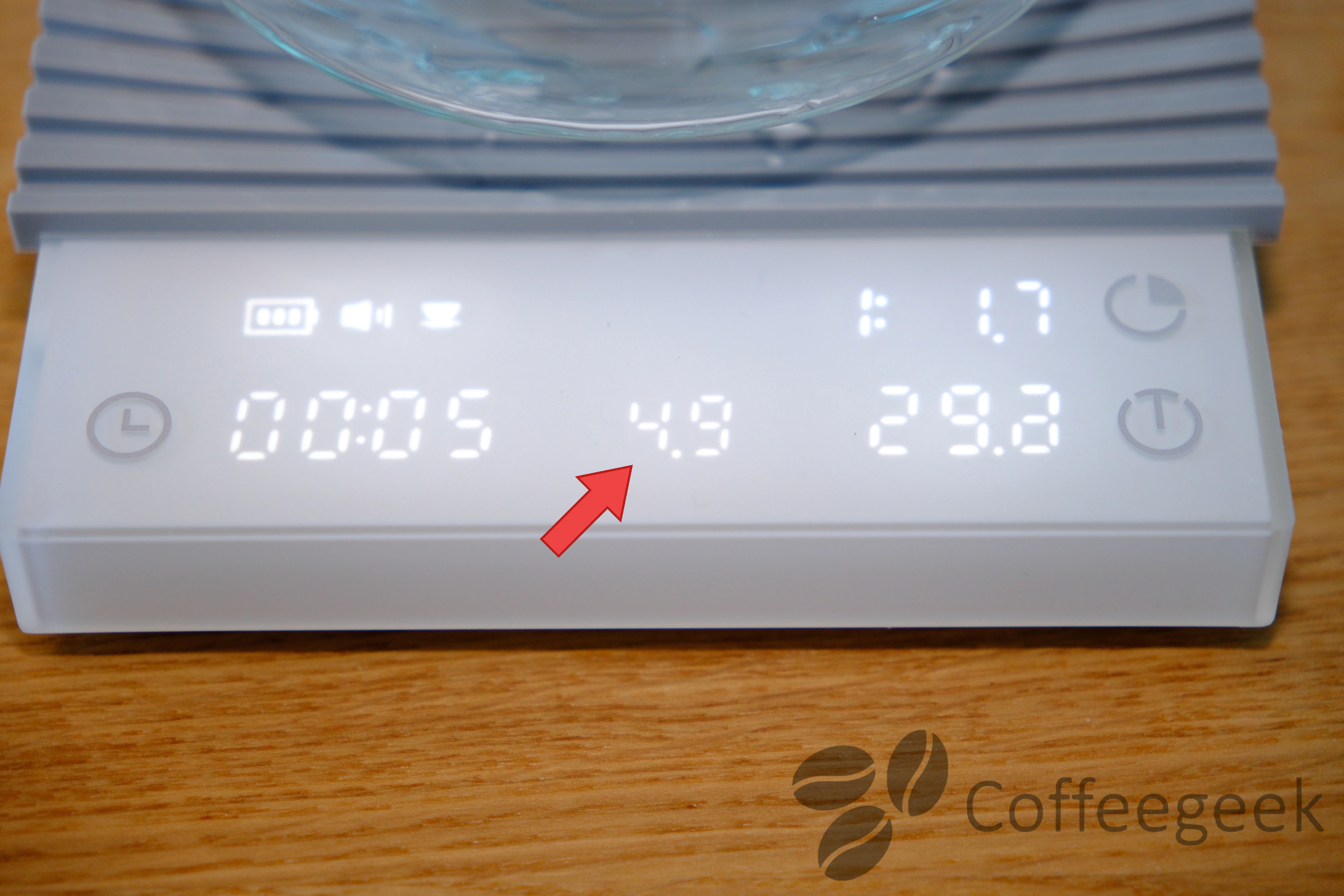
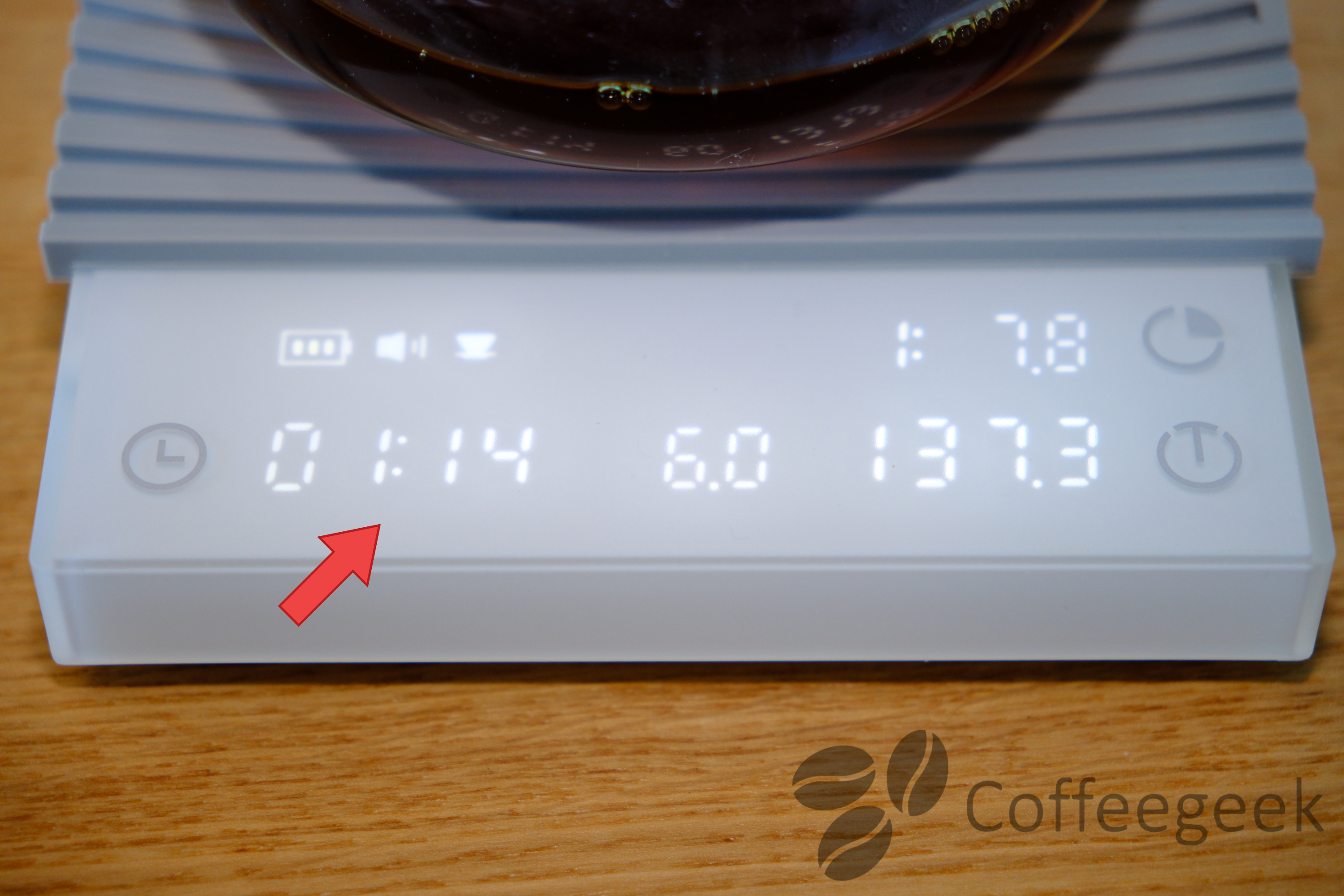
What I particularly like is the auto-start timer. Press the countdown button and the scale waits until it detects a flow of water before starting the clock, so there's no more juggling pouring and pressing a button at the same time. For recipes with several pours, it's a real convenience. At the end of the brew, the screen shows a summary: final ratio, total weight of water poured and brew time. This data stays on screen until you reset it manually, so you can note it down without rushing.
In terms of accuracy, I compared the Basic 3.0's measurements with my Nano's over a series of V60 pour-overs, dosing 15 g for 250 mL of water. The results are perfectly consistent between the two scales, with differences under 0.2 g, well within acceptable tolerances for this type of extraction. The sensor's responsiveness is clearly better than what I had seen on my Timemore Black Mirror Nano, and you notice it from the very first pour: the display follows the flow in near real time, without the slight lag that could sometimes be misleading.
See the current price of the Timemore Basic 3.0 on Amazon or on the official Timemore website
Using it for espresso: lightning-fast tare and automatic detection
Espresso is where the Basic 3.0 delivers, in my view, its most impressive performance. Timemore's promise is a tare as fast as on more expensive scales, and after several weeks of use, I can confirm that this isn't just marketing.
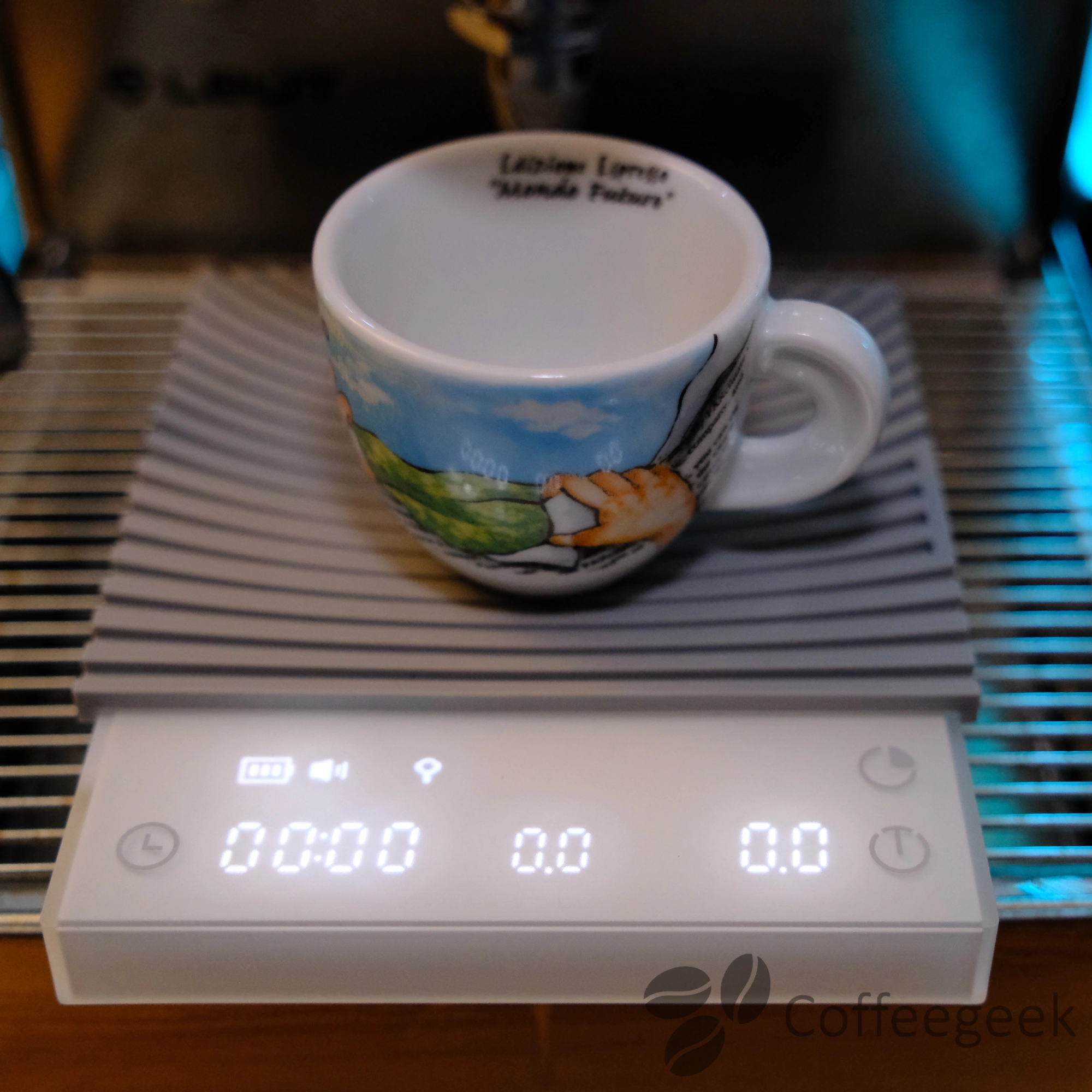
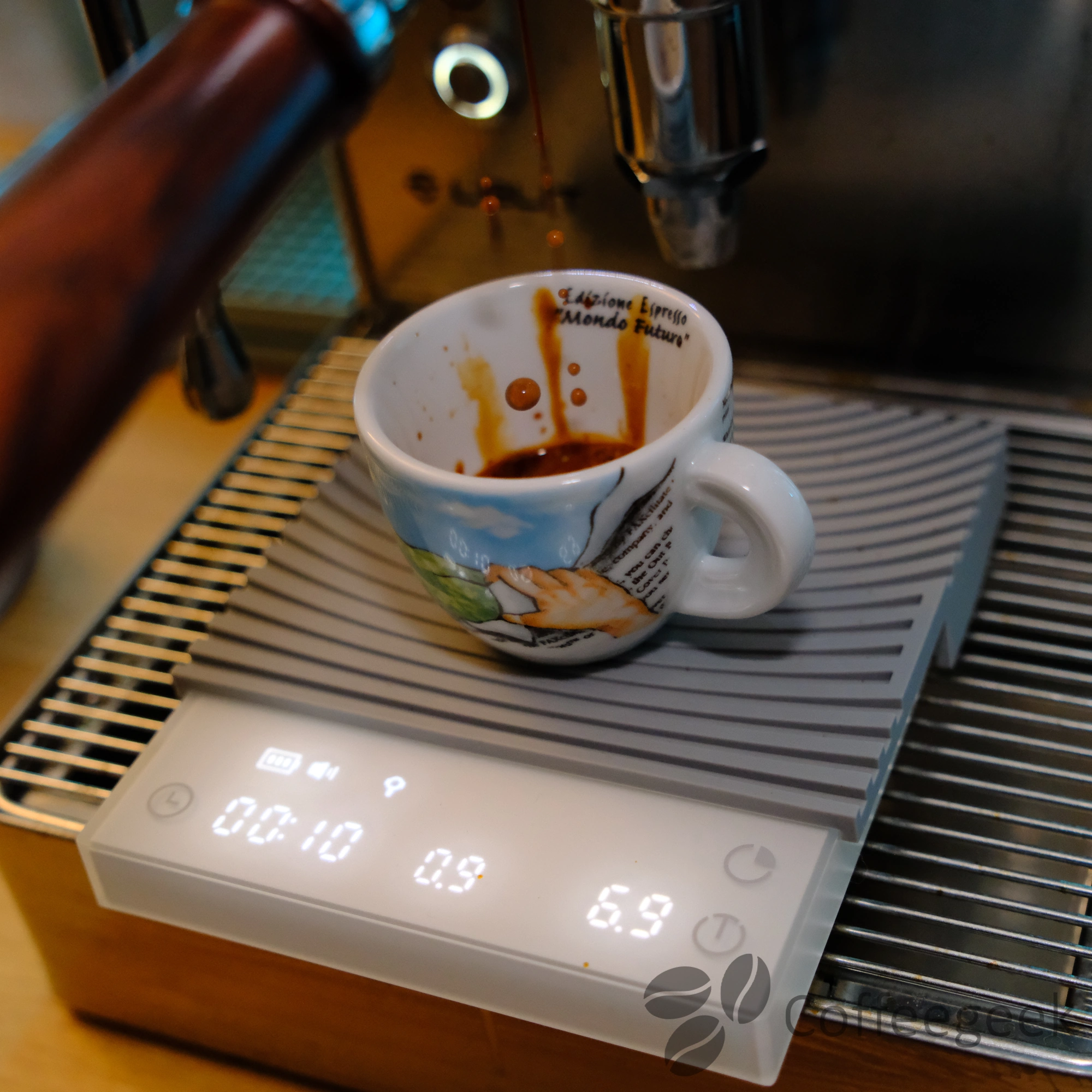
In espresso mode, the scale's behavior changes radically. As soon as you set a cup or glass on the platform, it tares in under 2 seconds. This responsiveness is crucial to a smooth espresso workflow: you can start the shot without waiting for the scale to finish settling. I tested this responsiveness under real-world conditions, setting the cup back down several times in a row, and each time the tare was done before the first drops fell.
Automatic detection of the start of extraction works well in the vast majority of cases: the timer starts as soon as the scale detects a change in weight from the first drops. End-of-extraction detection stops after a slight lag of a few seconds, which keeps the scale from ending its measurements when coffee flows intermittently from the machine. Many times with my Nano, I saw the scale stop measuring because the coffee hadn't yet settled into a continuous flow, so this is a real improvement over my Timemore Black Mirror Nano. The data stays on screen until you reset it manually, so you can read the final result without rushing.
Accuracy on espresso is excellent. Over a series of shots at 18 g for 36 g of liquid, the Basic 3.0 consistently showed measurements in line with my Nano's, with negligible differences. The LED screen stays perfectly readable even under strong ambient light, and the scale's compact size lets it slide under most espresso machines without any problem.
Buy the Timemore Basic 3.0 on Amazon
Conclusion
Without hesitation, the Timemore Basic 3.0 is the coffee scale I recommend first to anyone who asks me for advice today. It brings together everything you expect from a specialty coffee scale (accuracy, responsiveness, well-thought-out dedicated modes) in a compact size and at a price with no serious competition. The near-instant tare in espresso mode is the kind of detail that seems trivial until you get used to it, and then there's no going back.
Compared with my Timemore Black Mirror Nano, the step up is real and immediately noticeable. Compared with high-end scales, the Basic 3.0 closes much of the functional gap for a lower price. It suits home baristas and professionals alike.
Timemore has pulled off a real feat by simplifying menu navigation and offering the scale at a fairly affordable price at a time when everything else is getting more expensive. You no longer have to rack your brain over your scale to find the right mode for a given type of extraction. Personally, it's going to replace my Timemore Black Mirror Nano.
- Ultra-fast tare
- Complete pour-over mode: real-time ratio, timer that starts automatically with the first flow of water
- Compact size: 2 cm thick, 300 g, fits under most espresso machines
- USB-C
- Price
- Clear LED display
- End-of-extraction detection with a slight lag of a few seconds before confirmation
- Slightly thicker than the Nano: not ideal for machines with very little clearance