The xBloom Studio joined my coffee corner a few weeks ago, and I have to admit it has completely transformed my coffee routine. After years of using manual methods and espresso machines, this all-in-one machine won me over with how easy it is to use and the exceptional quality of the coffee it makes.
This machine was provided to me by xBloom. That said, my opinion remains completely independent: I say what I think, without sugarcoating it.
What Is the xBloom Studio?
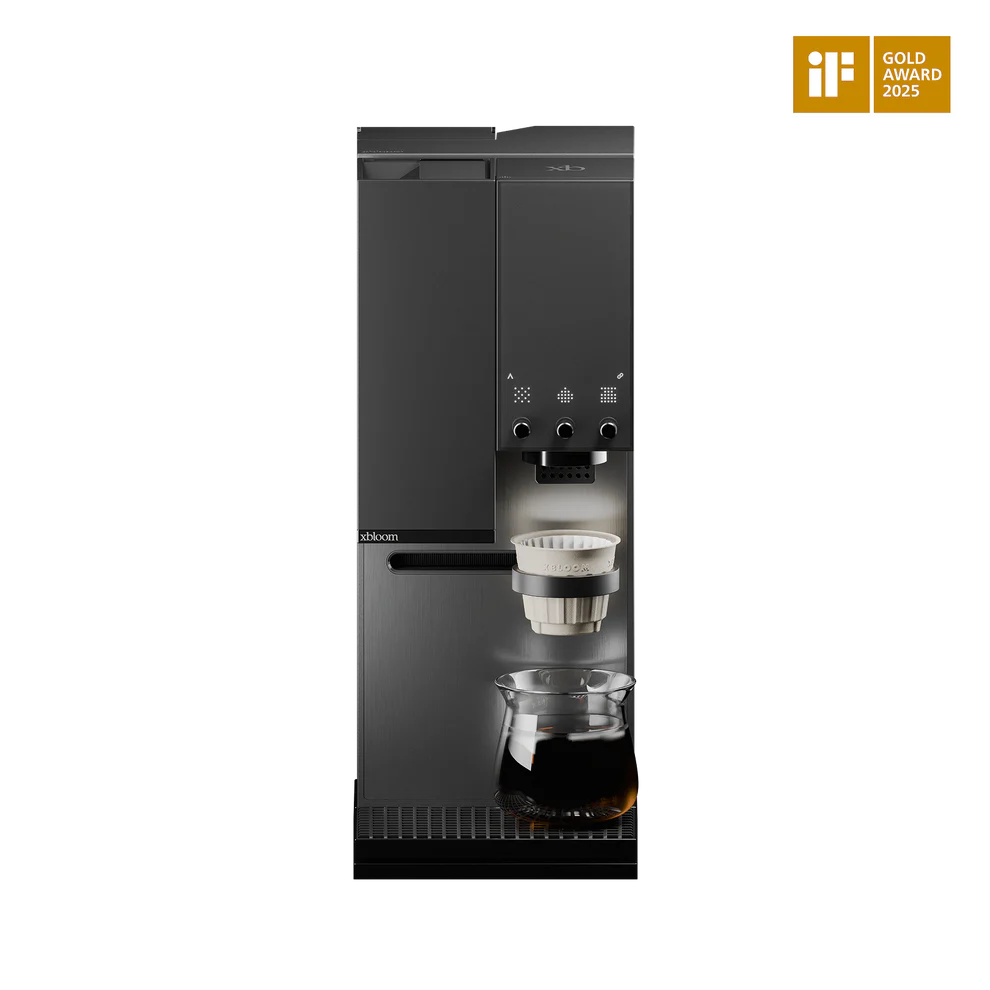
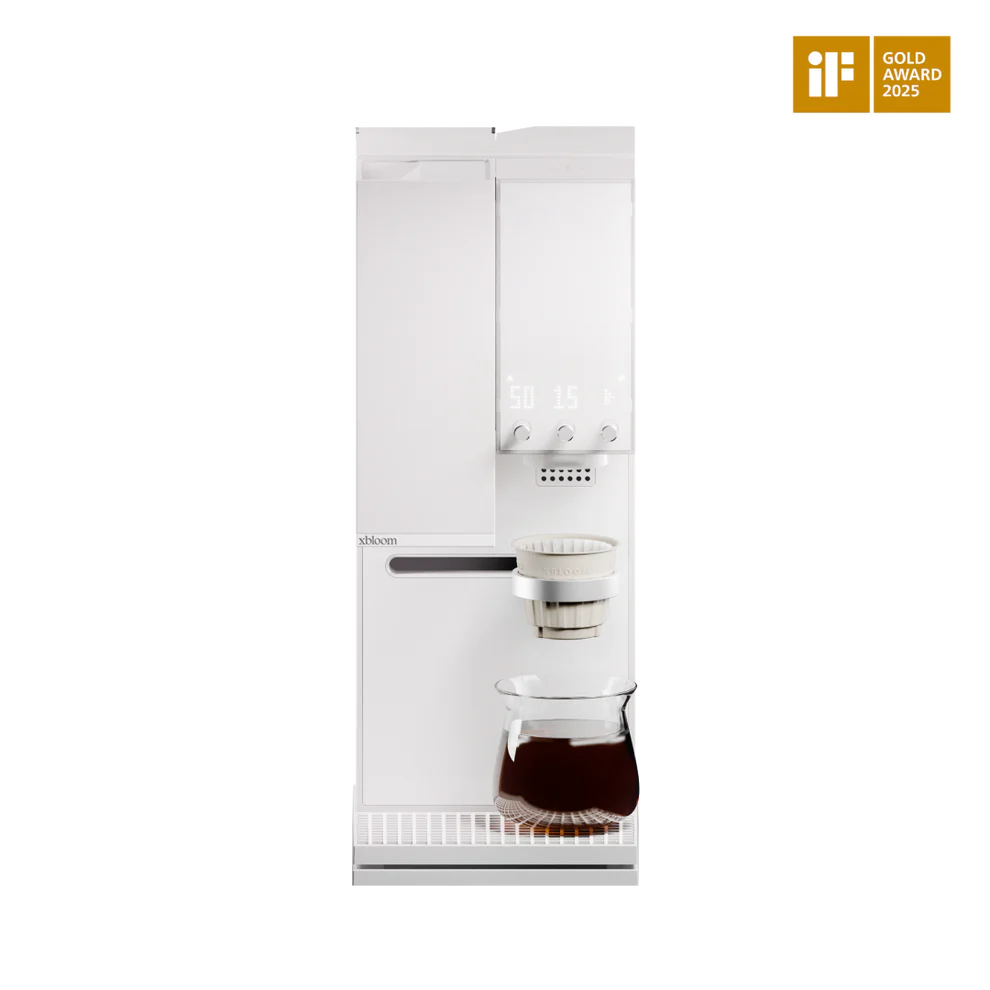
The xBloom Studio is an all-in-one automatic coffee machine that packs into a single unit:
- A 48 mm conical burr grinder with 80 grind settings and adjustable speed, equivalent to a $350-400 electric grinder
- A high-precision scale (0.1 g), equivalent to $50-150
- A kinematic brewer with three different pour patterns and an adjustable water flow, so you no longer need a gooseneck kettle at ~$150
- Bluetooth 5.0 connectivity for control through an app available on iOS and Android.
- A built-in dripper, which means about $50 less in accessories
At first glance, the price of the xBloom Studio ($599) may seem high. But add up the cost of the equipment it replaces (listed above) and you get to $600-750 for an equivalent setup, not counting the bulk and the complexity of using it all. The xBloom Studio brings all of that together in a single compact, automated unit.
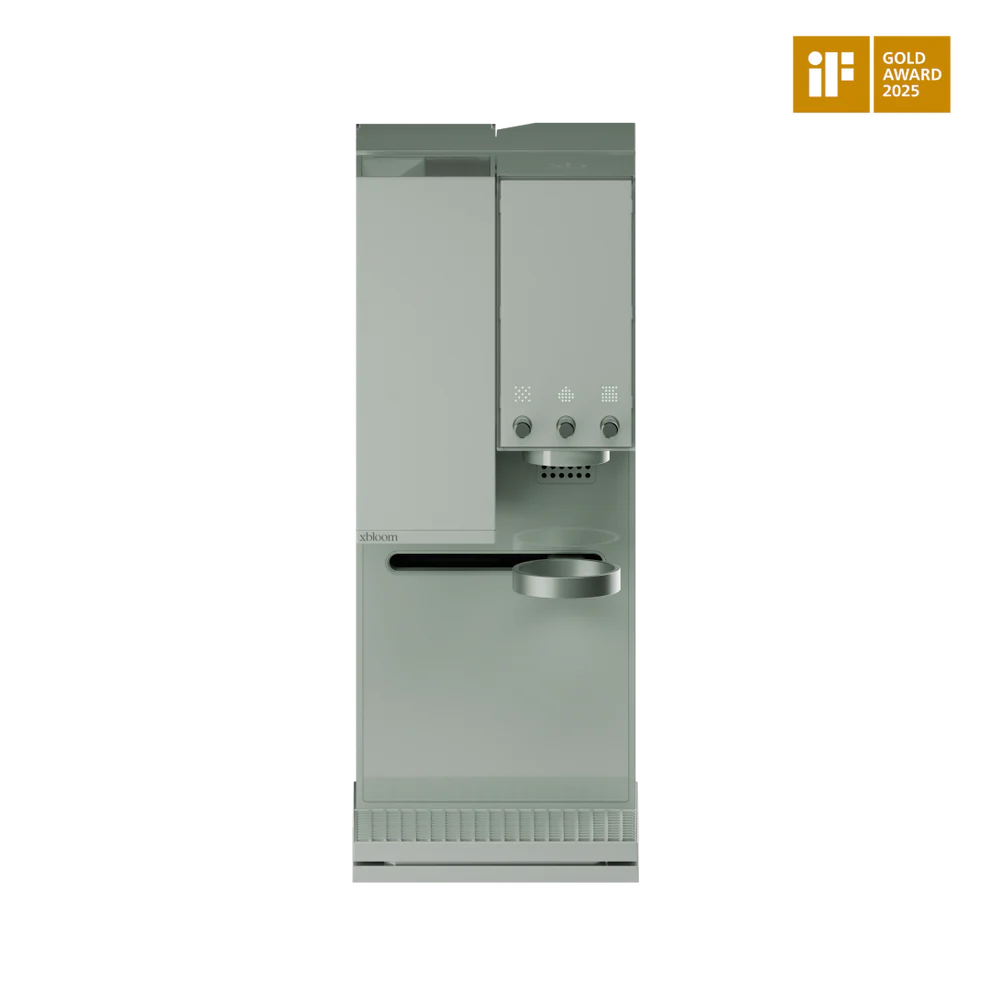
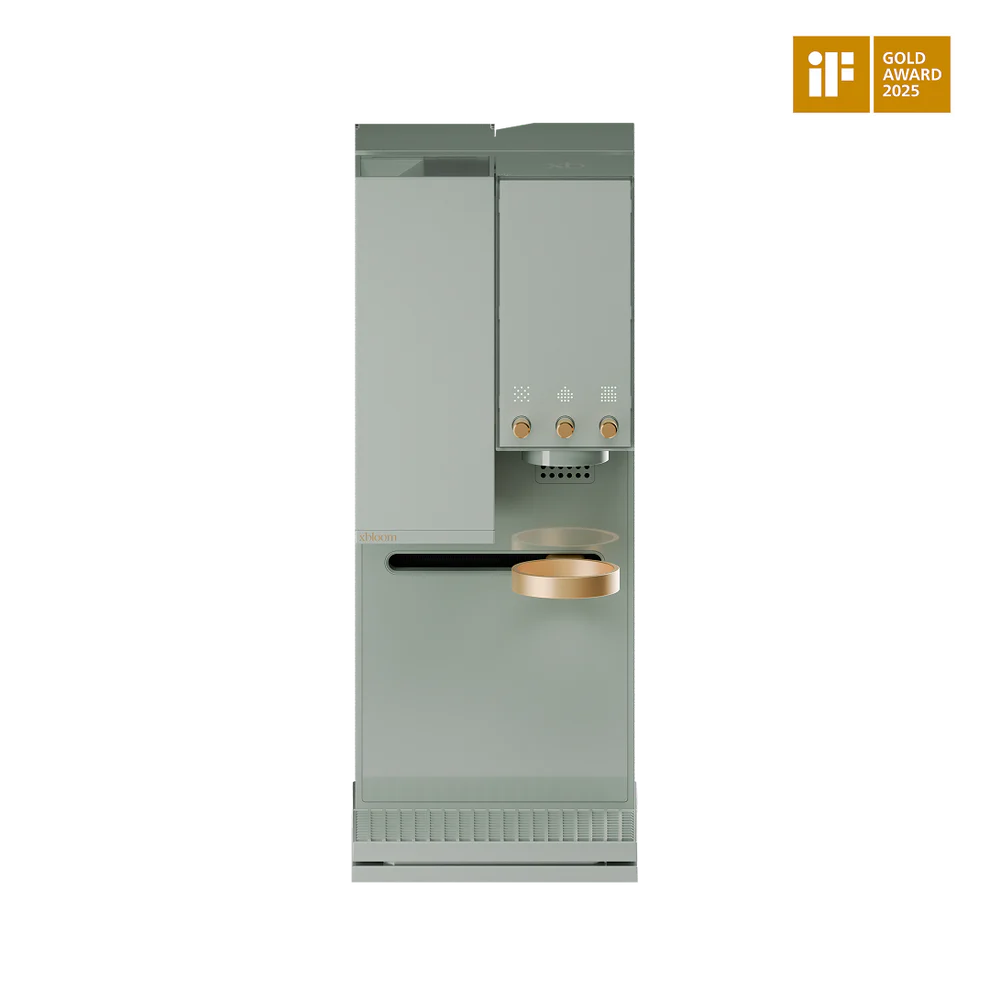
The Three Brewing Modes
What sets the xBloom Studio apart is its versatility, thanks to its three operating modes.
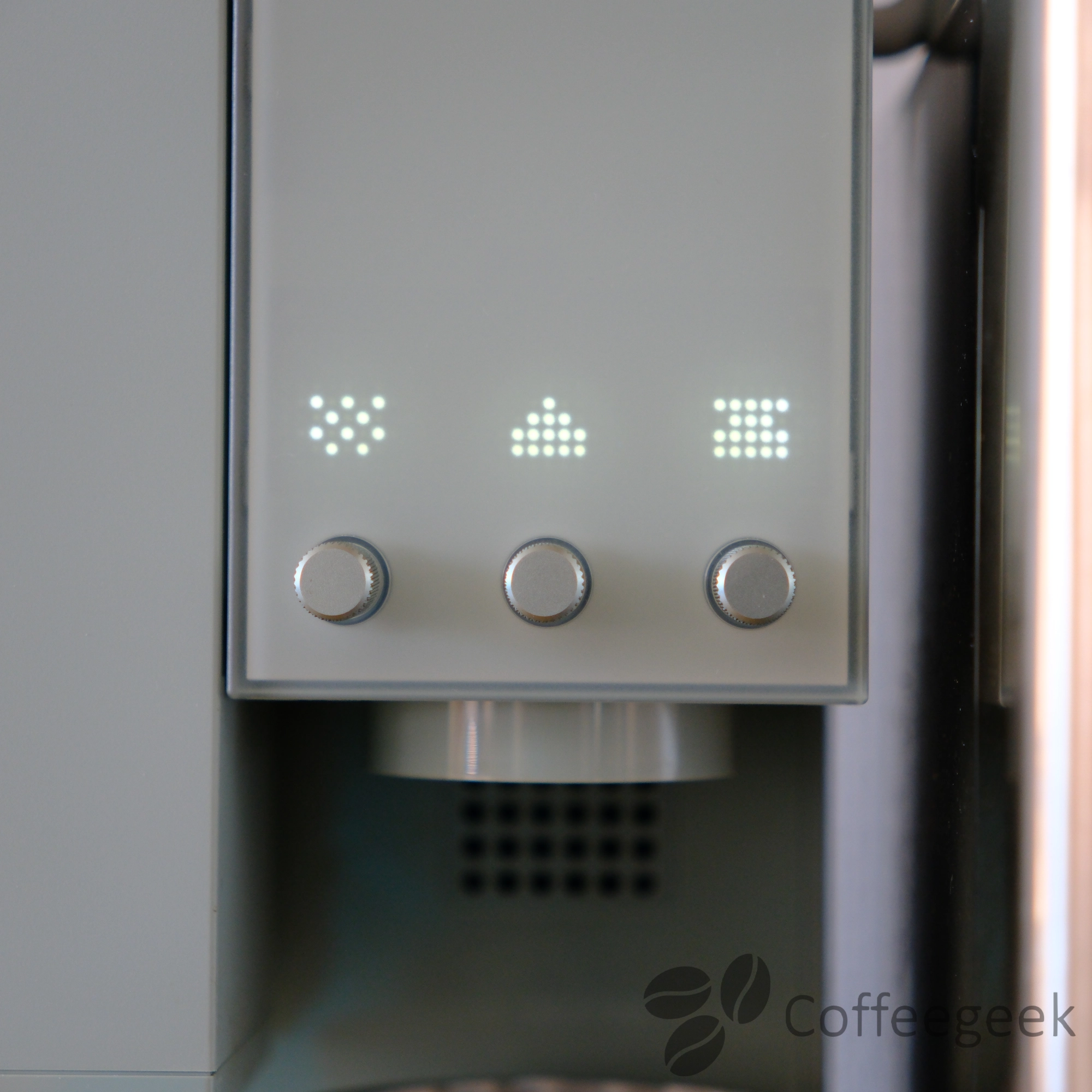
Whichever mode you choose, the machine's three dials let you stay in control:
- Left dial: controls the grinder (grind fineness, grinder speed)
- Center dial: controls the water (pour pattern, temperature, flow rate)
- Right dial: controls the scale (weighing, tare, unit)
This layout lets you adjust the parameters of any recipe just before starting the brew, even in Autopilot mode or with an xPod. You're never locked into the preset settings.
1. Autopilot Mode: Absolute Simplicity
In Autopilot mode, you can choose between three recipes, each assigned to one of the machine's three buttons. Just press the matching button to start the brew: the machine automatically adjusts every parameter, including grind, dose, temperature, flow rate, and pour pattern. You set up these recipes through the mobile app.
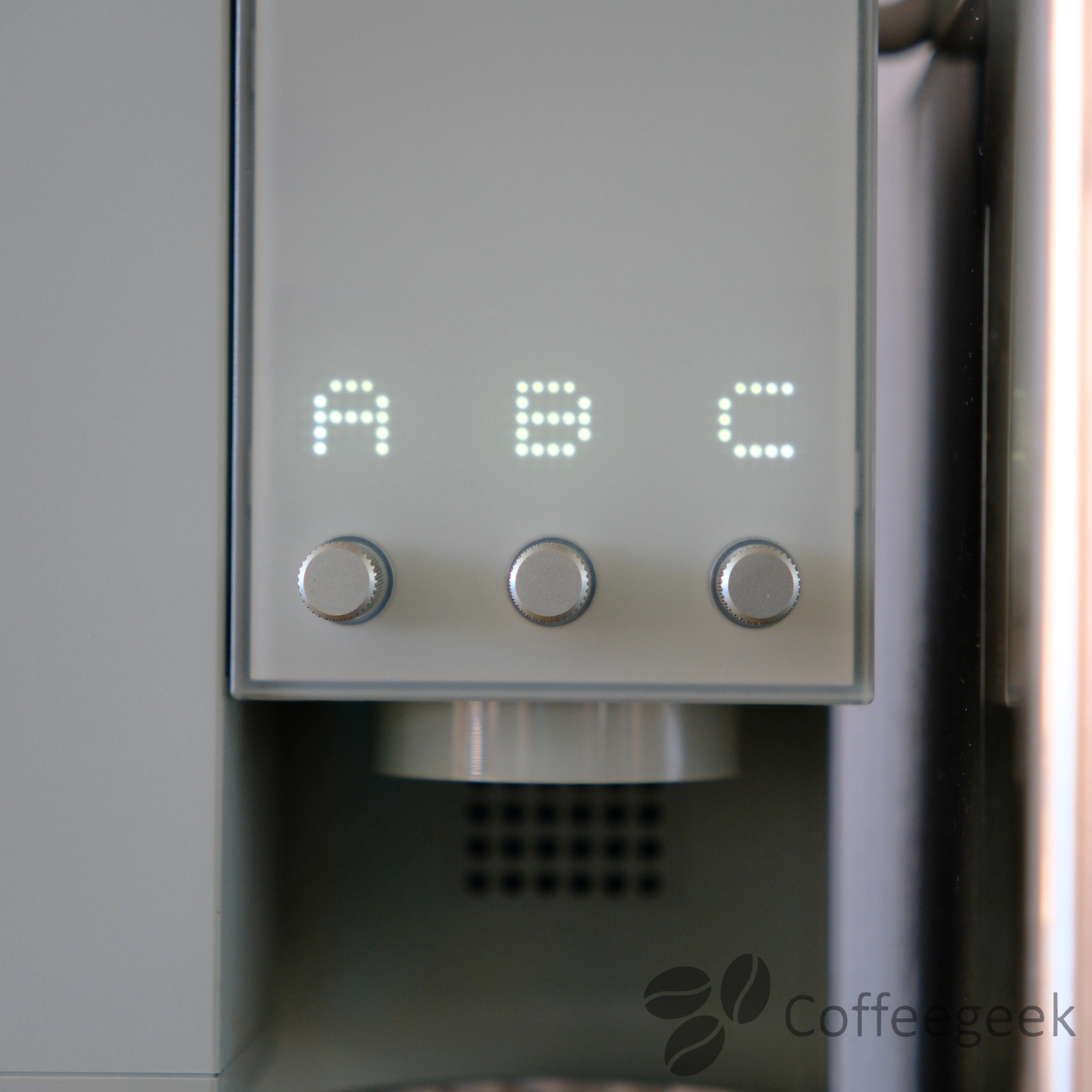
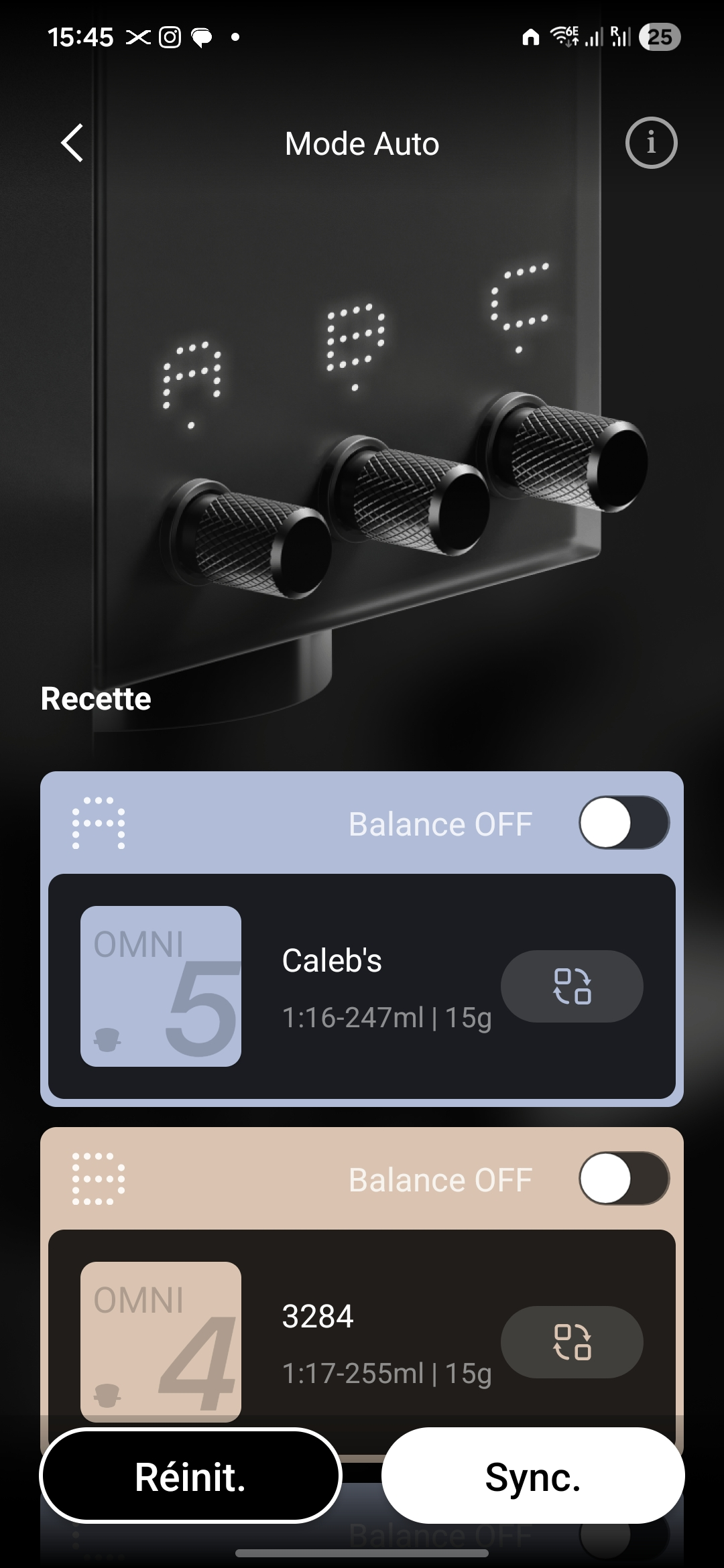
And as mentioned above, the dials let you adjust the parameters before starting if needed.
2. Copilot Mode: Guided Customization
Copilot mode lets you customize the parameters through the mobile app while the machine carries out the protocol. It's ideal for experimenting with different coffees, finding the best extraction profile, and saving it.
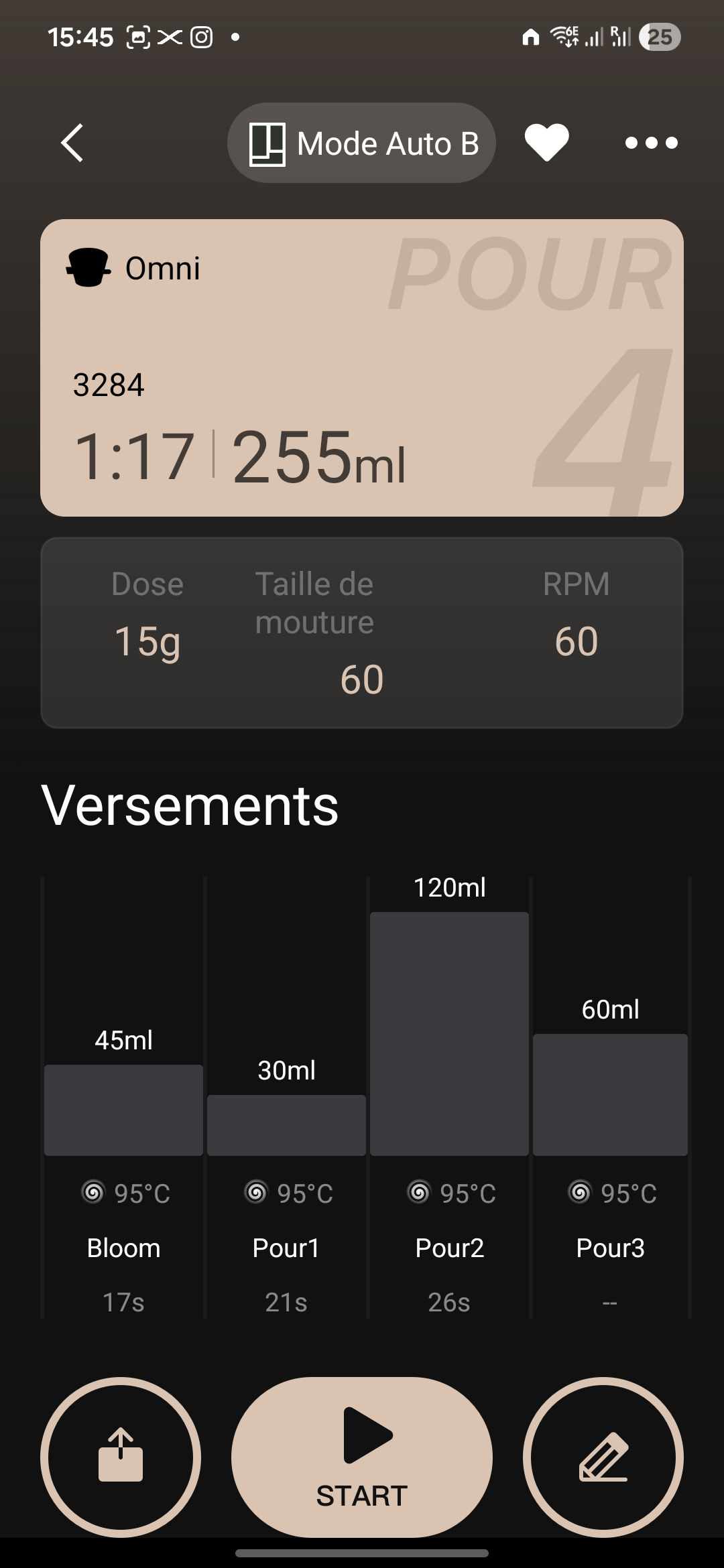
Here again, the machine's dials offer a quick way to adjust the parameters (ratio, grind, and so on) just before starting the brew, without having to change the recipe in the app.
The machine comes with an RFID card holding a default recipe. It lets you quickly start a brew without going through the app, using the same system xPods rely on to pass along roasters' recipes. I use this recipe regularly, and it gives very good results.
3. Freesolo Mode: Total Control
For purists, Freesolo mode offers complete manual control. You can use the grinder, the brewer, and the scale as independent modules, exactly as you would with traditional equipment.
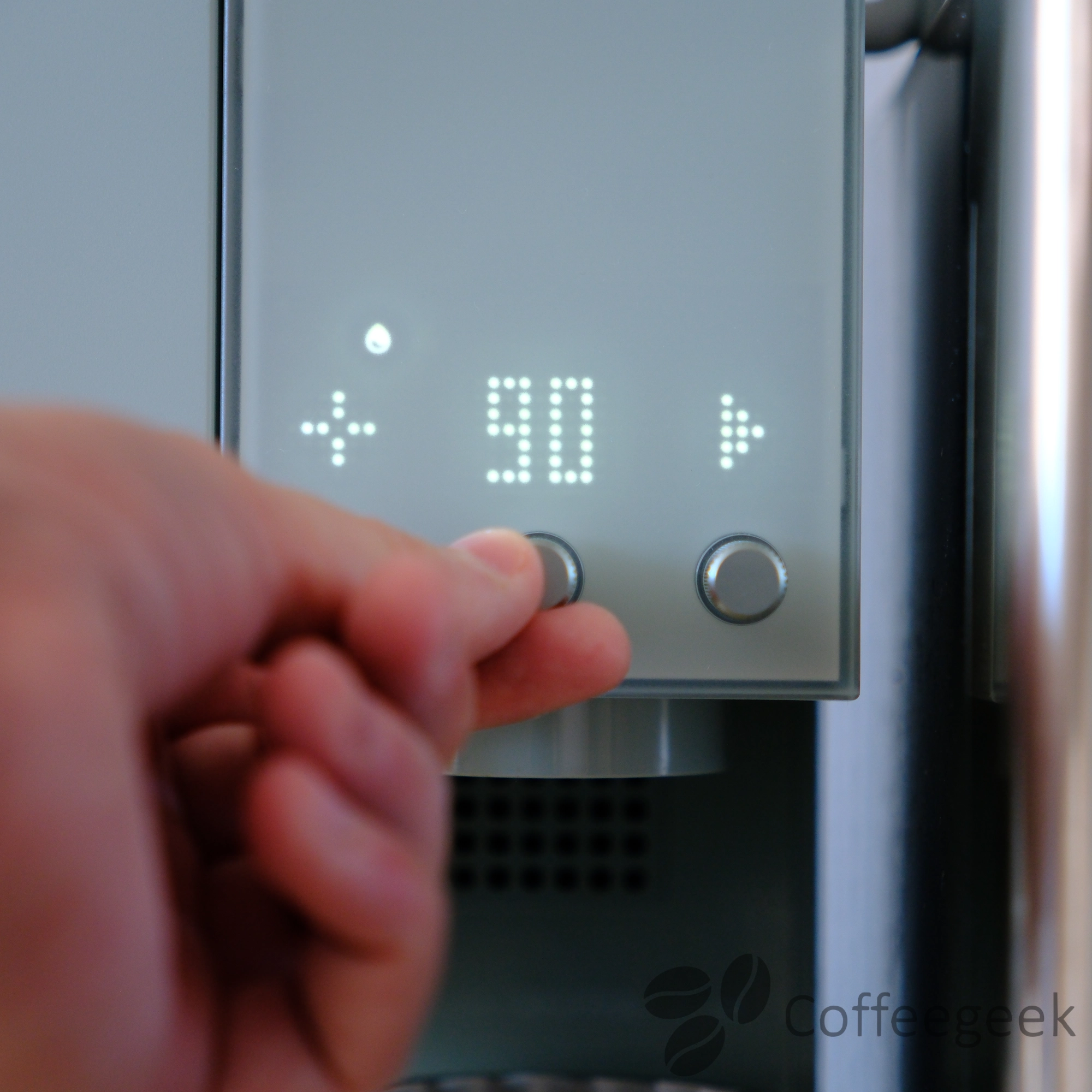
The machine's three dials each correspond to one module:
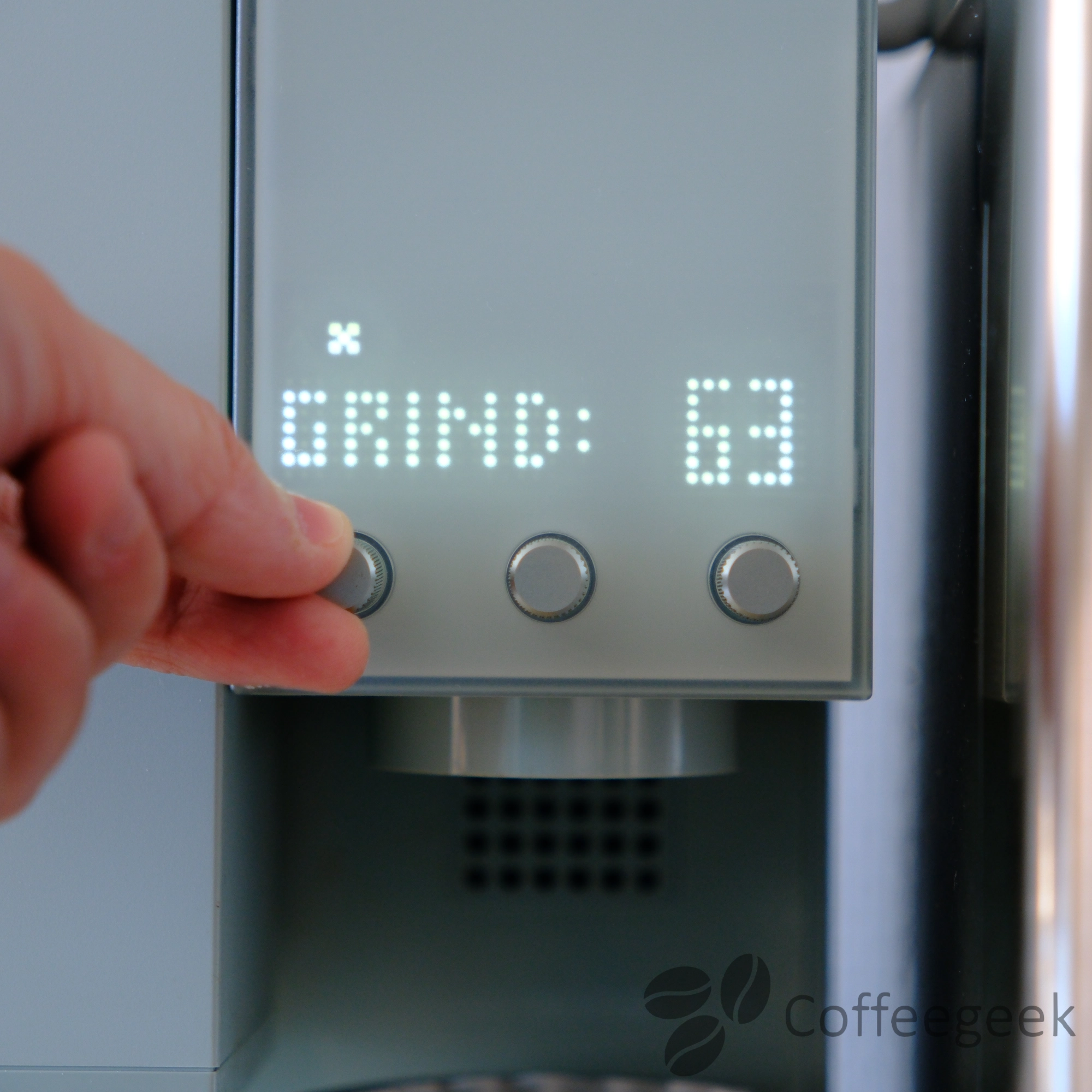
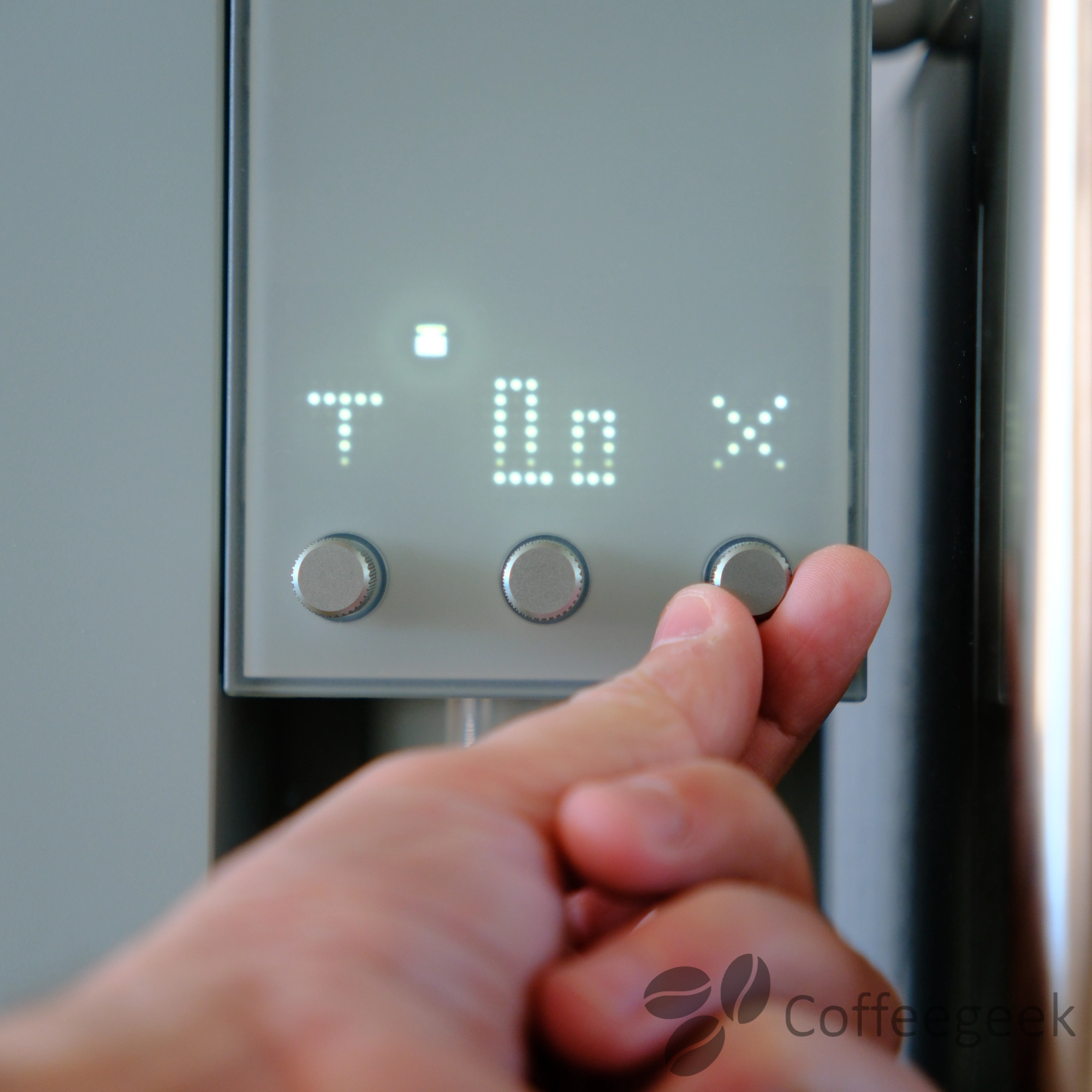
- Left dial (grinder): sets the grind fineness and the grinder speed
- Center dial (water): controls the pour pattern (circular, center, spiral) and the temperature. While the water flows, a timer and the amount of water poured appear in real time
- Right dial (scale): turns on the scale, and lets you tare and change the unit of measurement
I mainly use this mode to make tea. Once the water temperature is set, I pour straight into the Omni Tea Brewer and let it steep. The results are very good, and the advantage is having water instantly at the right temperature, without having to keep an eye on a kettle.
4. xPods: The xBloom Capsule System
xBloom offers a system of xPods: specialty coffee capsules containing pre-weighed coffee and fitted with an RFID chip. When you bring the xPod close to the machine, it automatically retrieves the recipe set by the roaster (grind, temperature, flow rate, pour pattern).
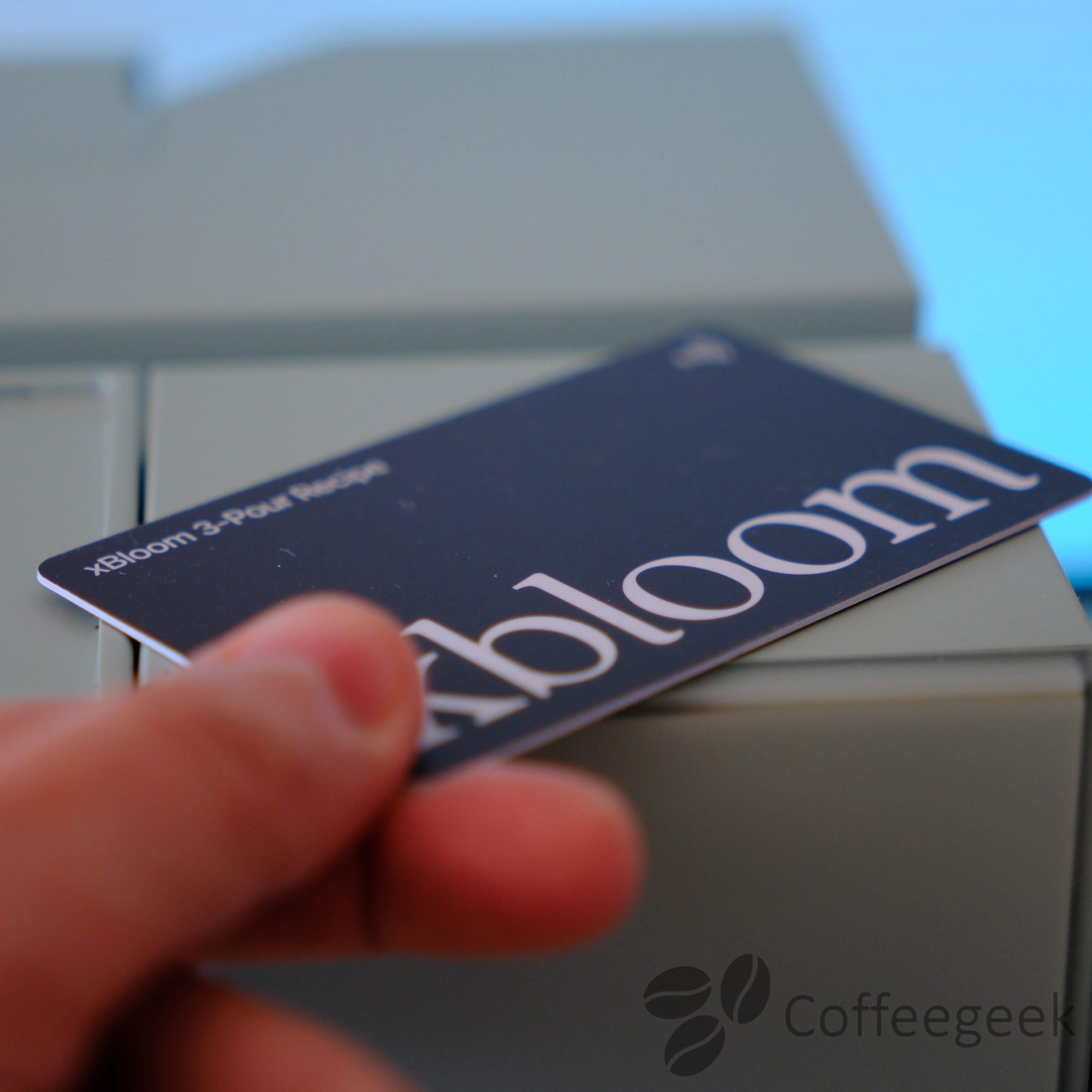
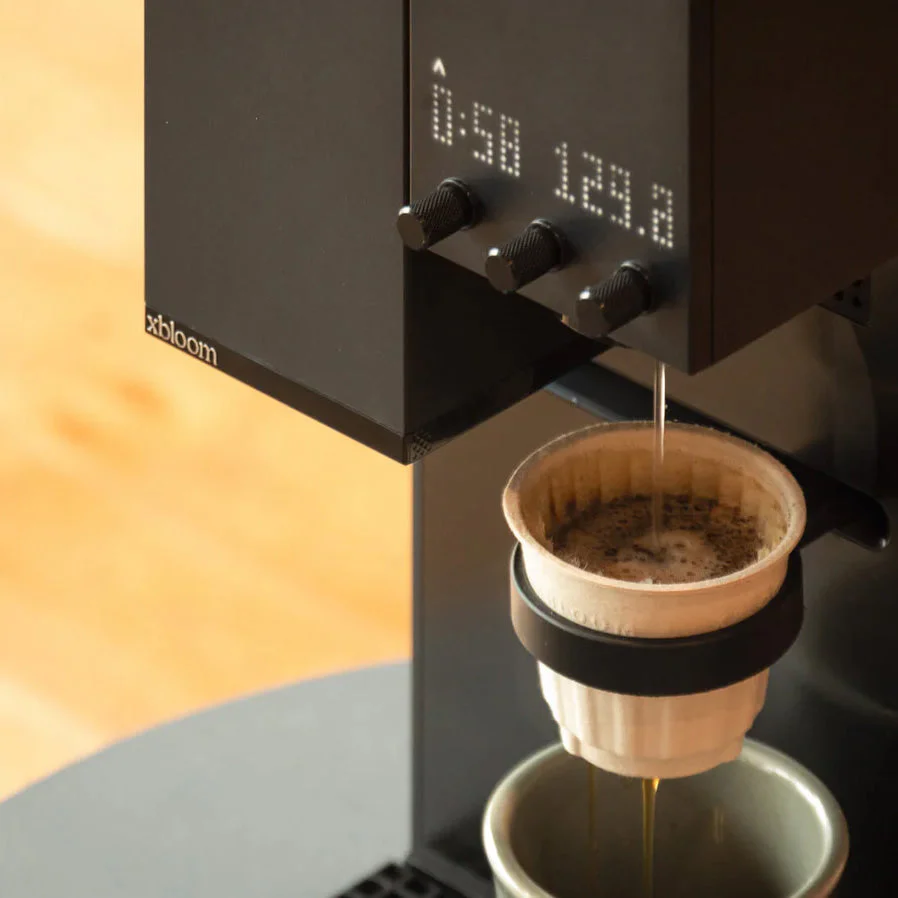
As with the other modes, the machine's dials let you change the recipe parameters before starting (ratio, grind, and so on), even when an xPod recipe is loaded.
My take on xPods and RFID chips
I haven't tested xPods because they aren't sold in Europe yet at the time of this review. On top of that, their price is relatively high compared to buying whole bean coffee.
That's not what interests me about the xBloom Studio. I prefer to:
- Weigh my coffee myself
- Create my own custom recipes
- Use existing recipes shared by xBloom or the user community
The machine works perfectly well without xPods.
As I write this, xBloom doesn't let you program an RFID chip yourself to encode your own recipes on it. That's a shame, because these chips sell in batches for a few dollars online.
For example, I would have liked to stick an RFID chip under one of my single-dose coffee tubes: I would only have had to scan the tube before pouring the coffee into the machine to automatically load the associated recipe. Handy, right?
I think this limitation is deliberate on xBloom's part: by keeping control over RFID reads, the manufacturer makes sure that only official xPods (or capsules from partner roasters) can be used with this system. It's a way of preserving a closed ecosystem, and of keeping competitors from offering their own compatible pods.
Bonus: Using Your Own V60
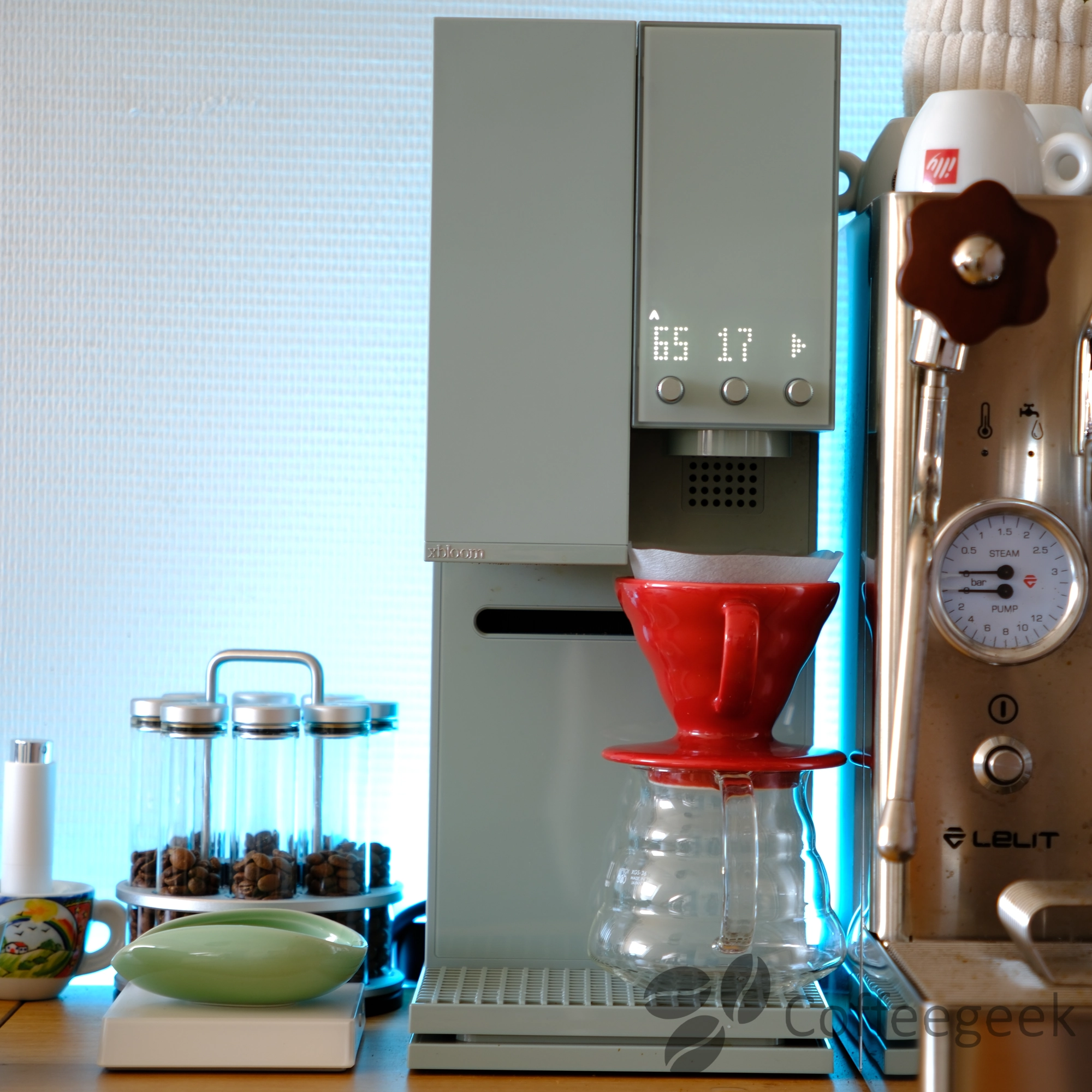
The xBloom Studio isn't limited to its built-in dripper: you can absolutely set your usual V60 on it and let the machine pour the water over it. That gives you the kinematic arm and the precise temperature, with the dripper you already know.
The Built-In Grinder: 80 Settings for Maximum Precision
The 48 mm conical burr grinder is one of the highlights of the xBloom Studio. With its 80 grind settings and a speed adjustable between 60 and 120 RPM, it offers very good precision for adjusting the particle size to the type of coffee and the brewing method you want.
These settings are indicative and may vary depending on your coffee and preferences.
I measured less than 0.3 g of retention after grinding, an excellent result for a built-in grinder.
xBloom Studio Grinder Test: Pour-Over and Espresso
Complete test of the xBloom Studio integrated grinder. With its 48mm conical burrs, 80 settings and adjustable speed, can it compete with dedicated grinders for pour-over and espresso?
Read the article →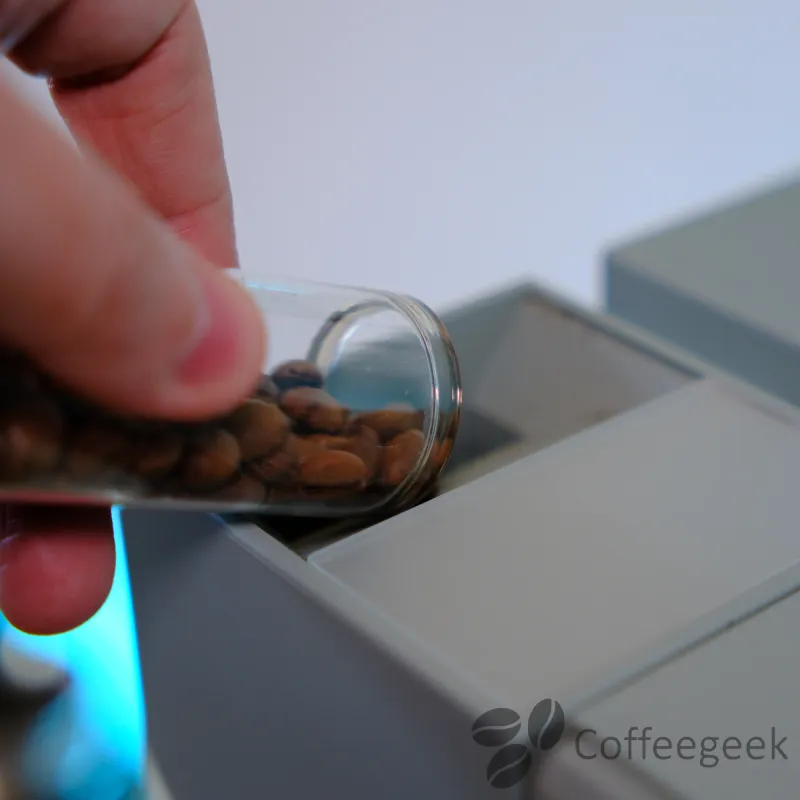
Can the xBloom Grinder Handle Espresso?
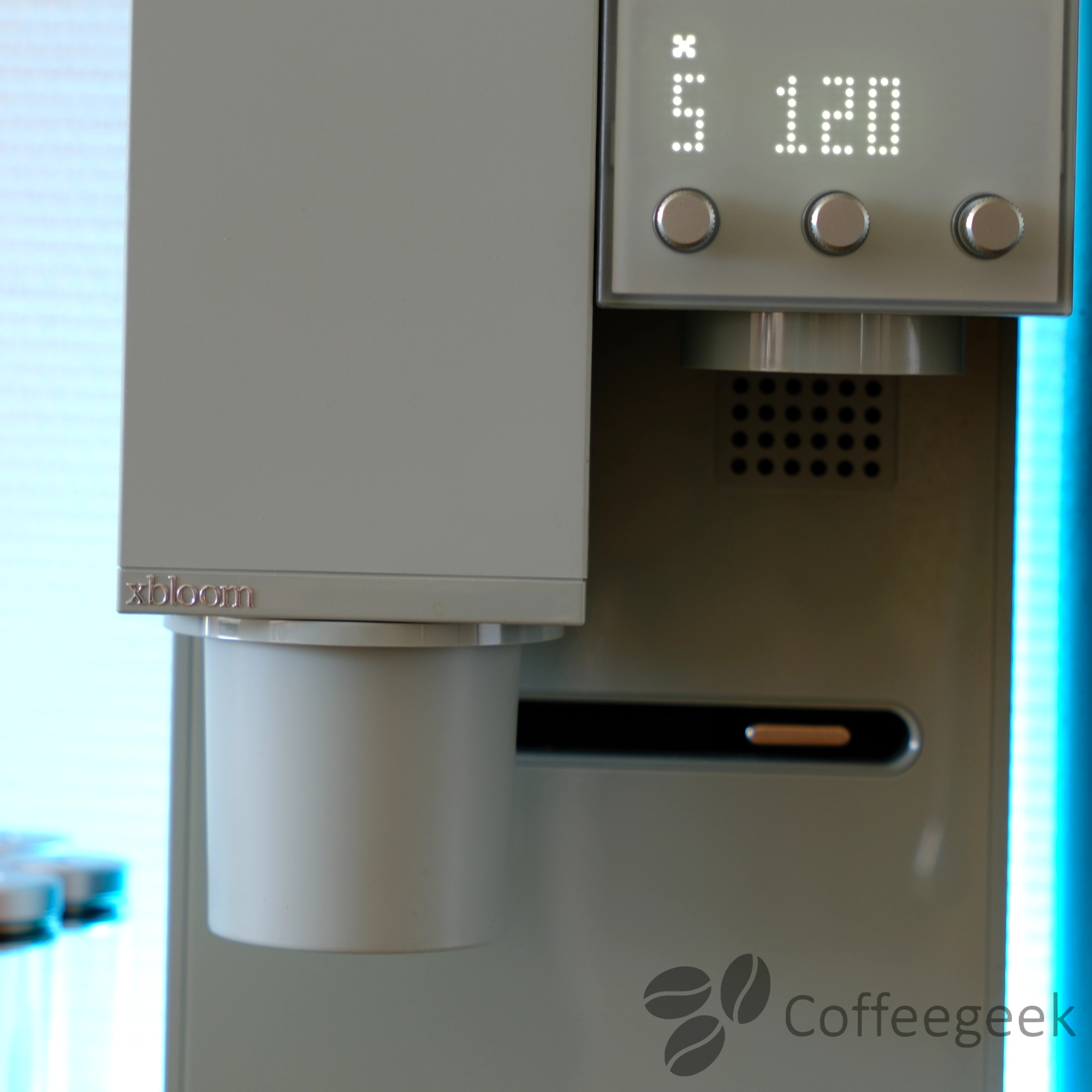
It's a question a lot of people ask: can the xBloom Studio's grinder go fine enough for espresso? The answer is yes.
With its 80 settings and a gap of 18.75 microns between clicks, the grinder goes fine enough to produce a grind suited to espresso. I tested it myself with my espresso machine, and the results are convincing.
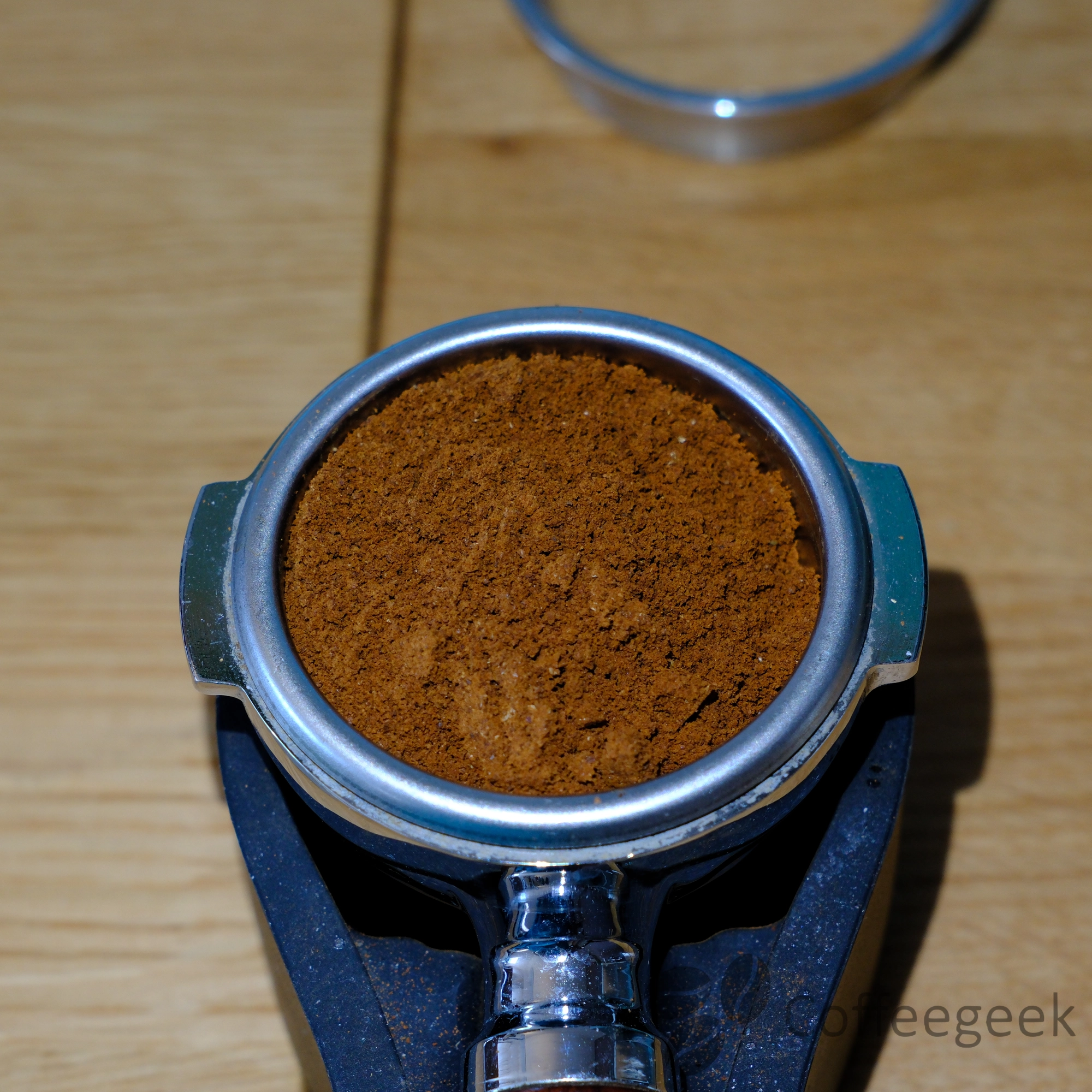
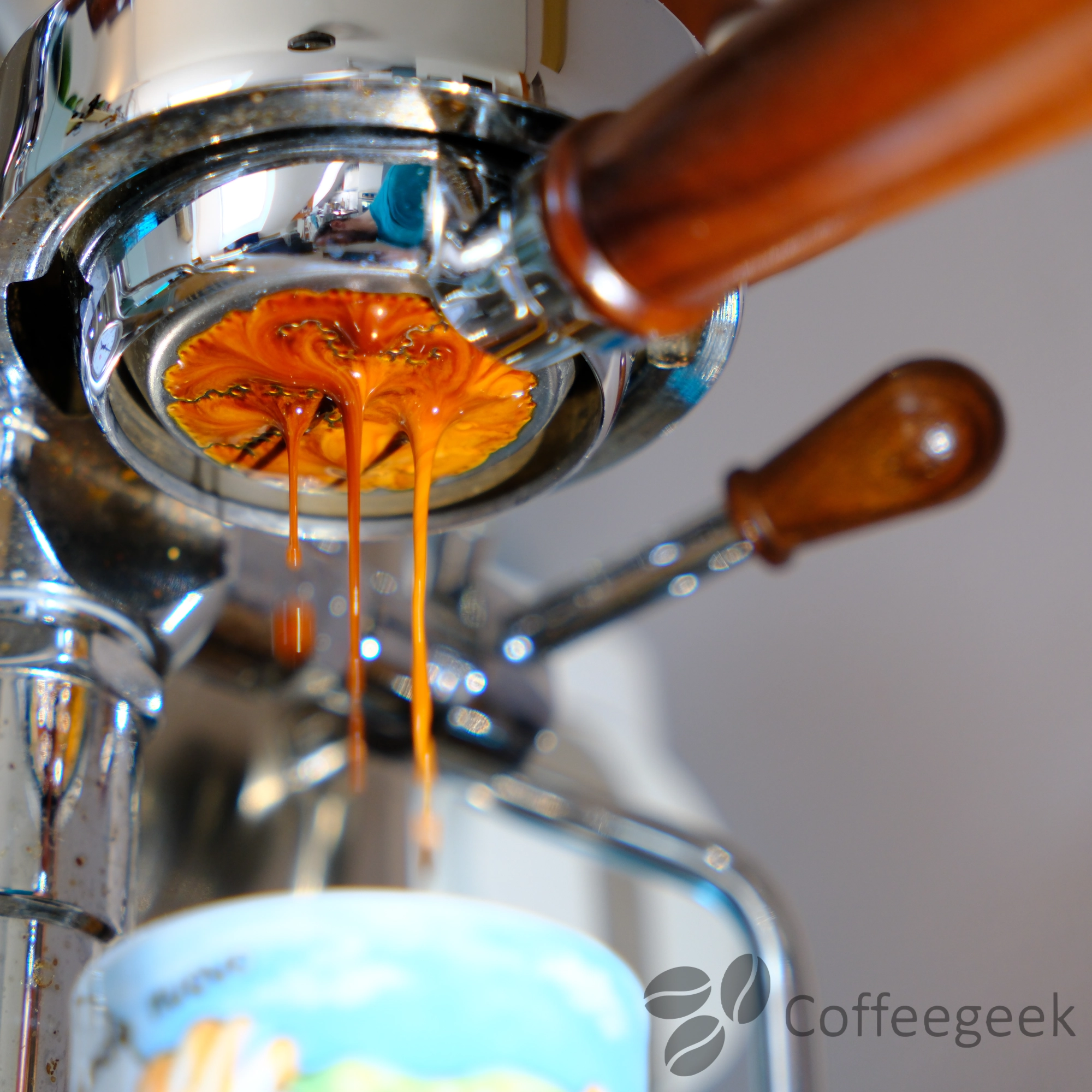
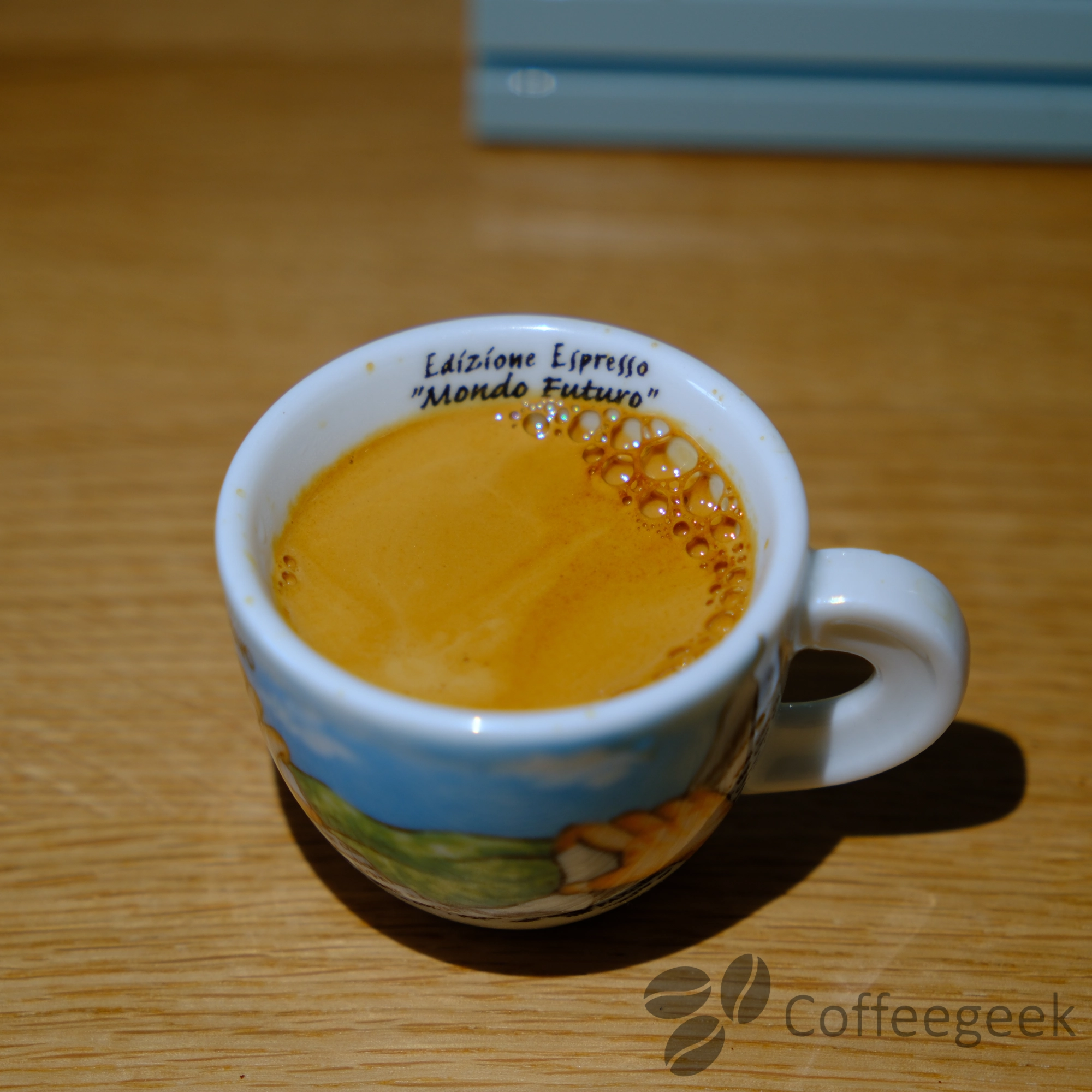
As for aromas, the result in the cup shows a slightly more acidic profile than you'd get from a dedicated espresso grinder. That makes sense: the xBloom Studio's conical burrs are optimized for pour-over, which favors clarity and tangy notes.
A well-thought-out detail: the magnetic dosing cup that comes with the machine fits 58 mm portafilters perfectly.
The xBloom Studio's grinder isn't a dedicated espresso grinder, but it does a respectable job for anyone who wants to make an espresso. For daily espresso use, a dedicated grinder is still preferable. But it's a real plus.
And for Pour-Over? That's Where It Excels
While the grinder holds its own with espresso, pour-over is where it reveals its full potential, which makes sense, since that's precisely what it was designed for.
The 48 mm stainless steel conical burrs offer remarkable particle consistency across the whole range of coarser grinds (for pour-over).
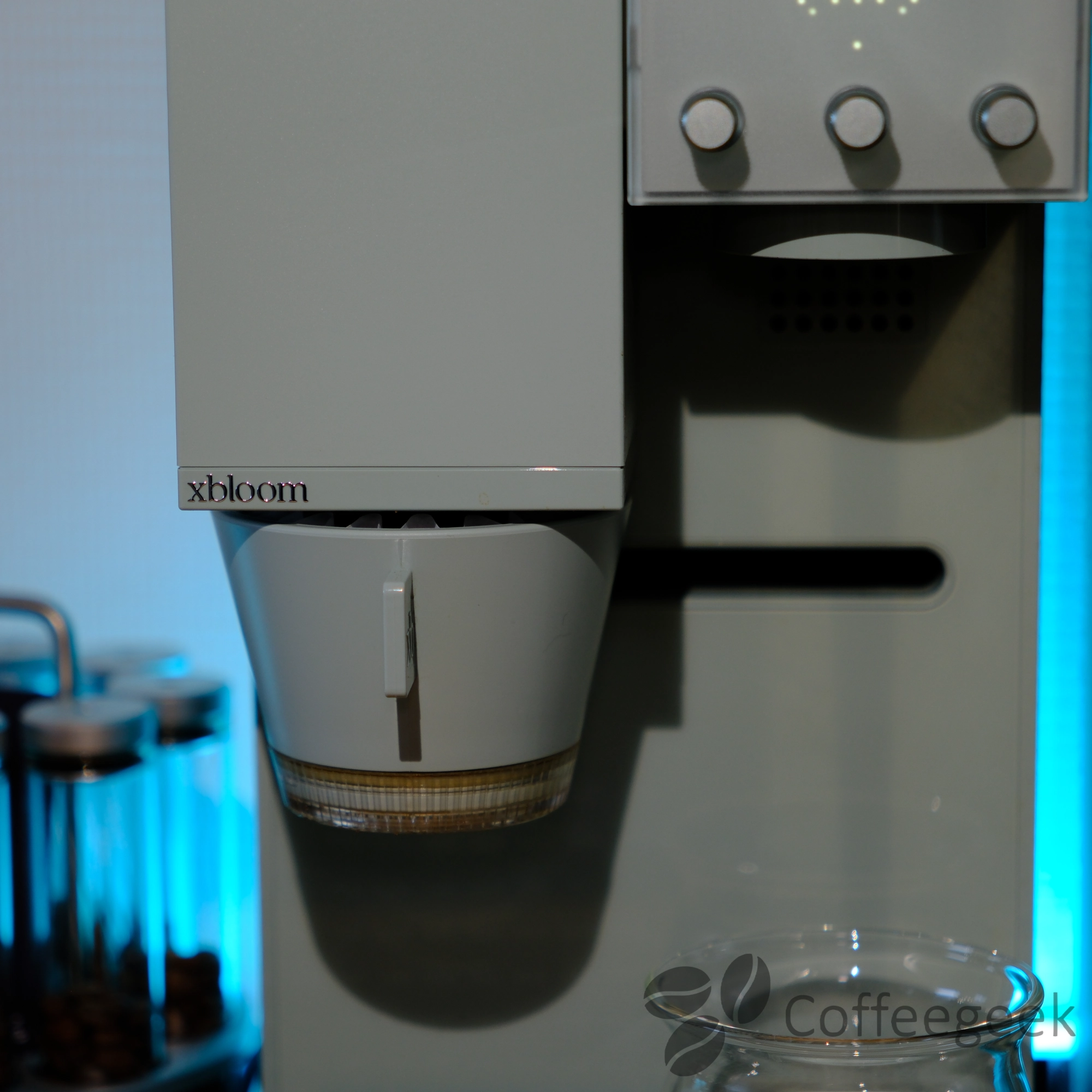
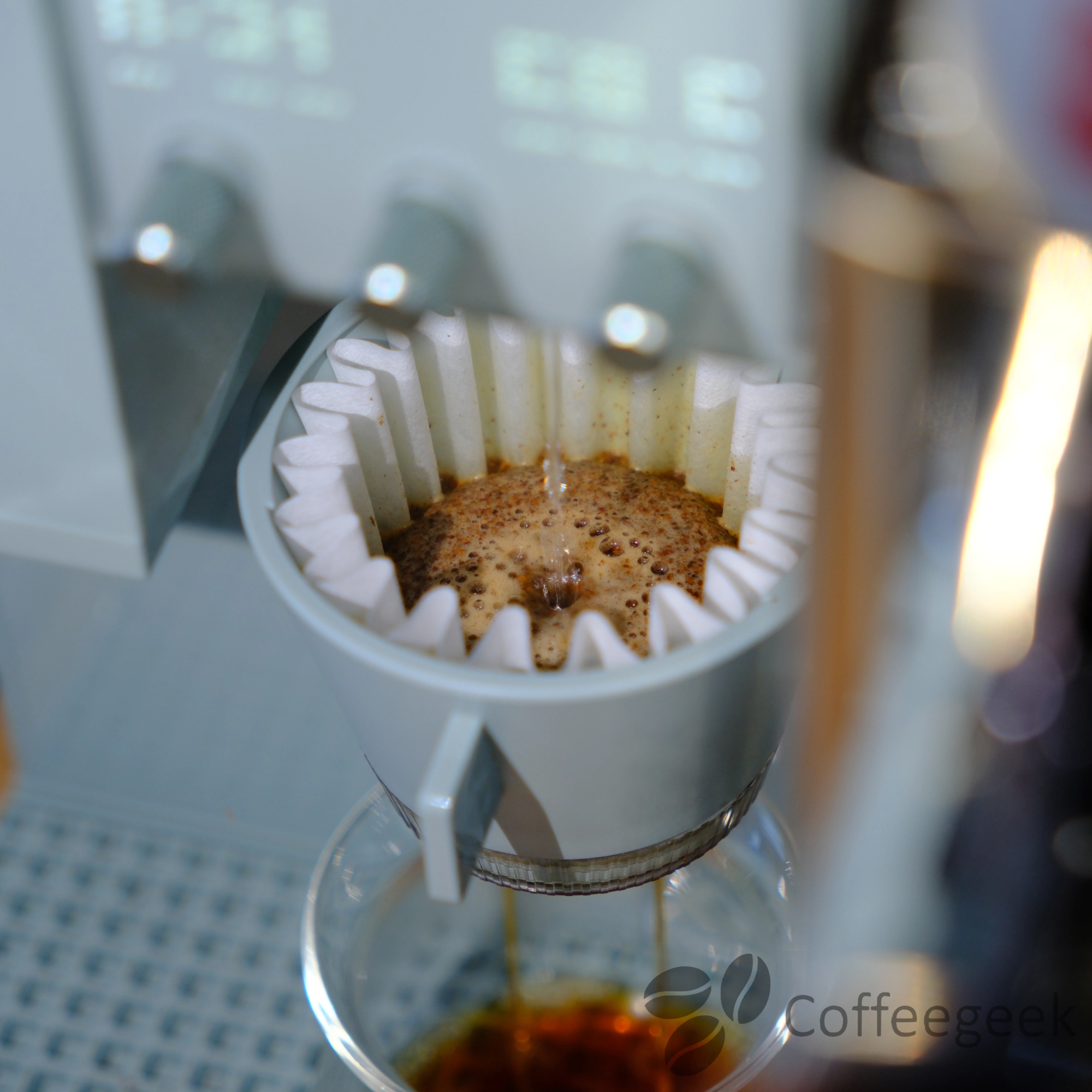
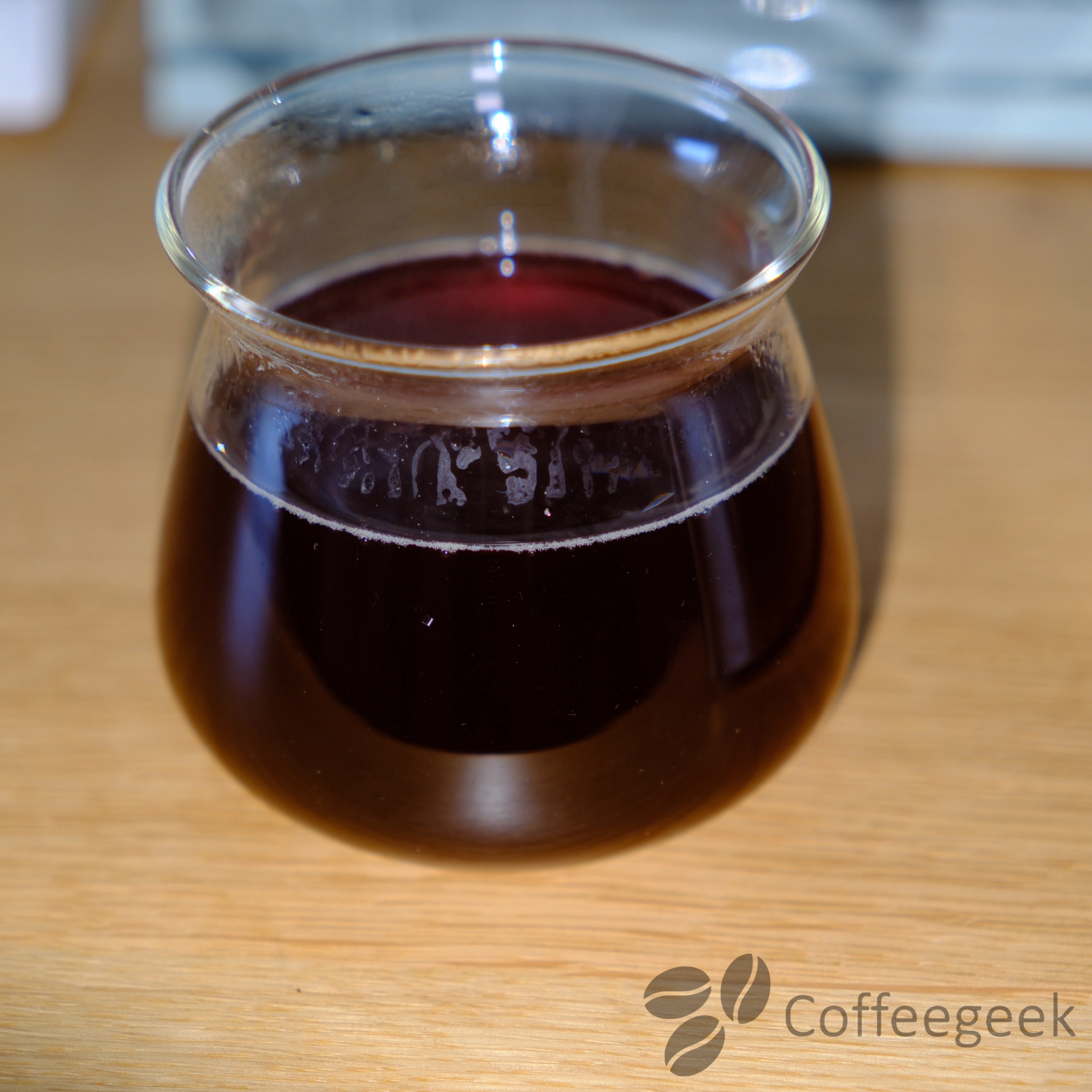
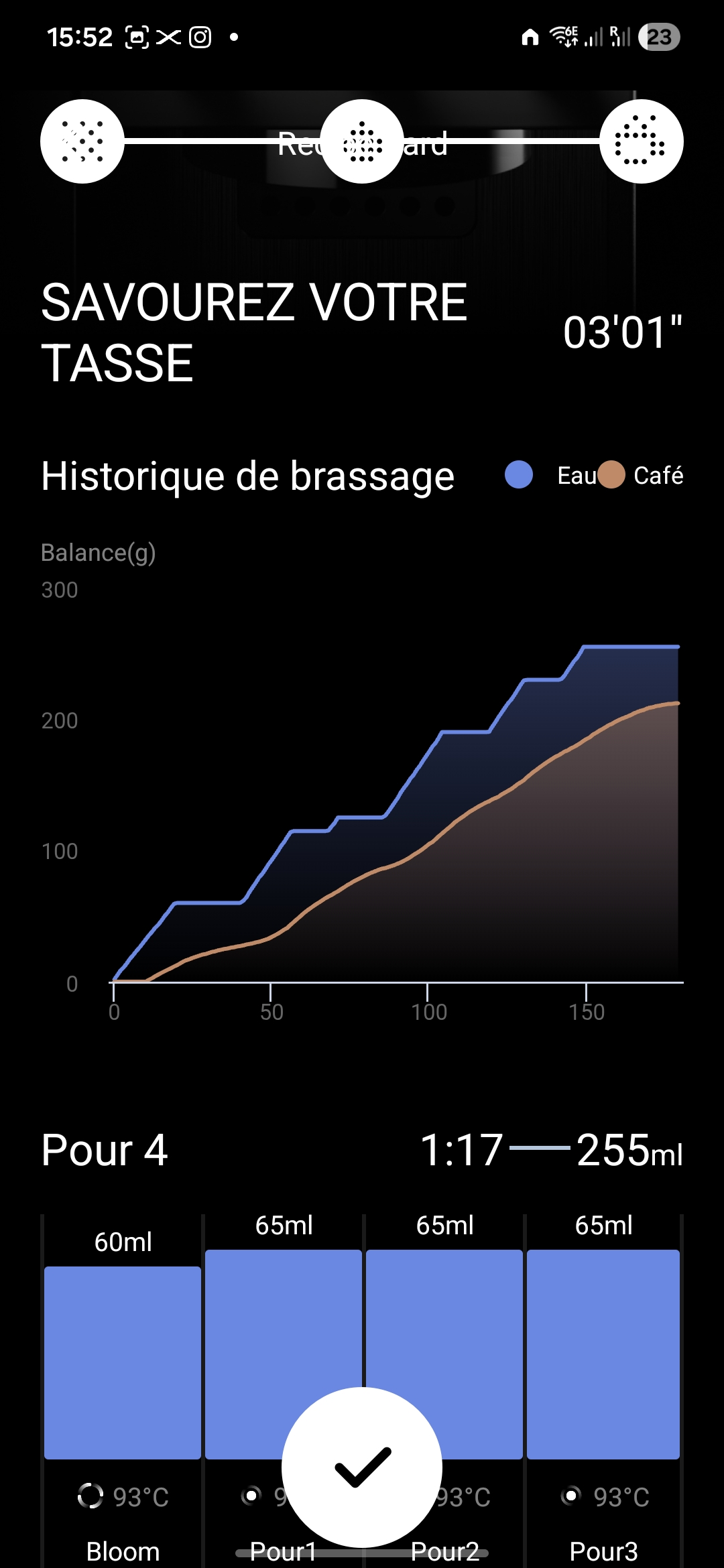
The result in the cup? Clarity of flavor worthy of the best grinders, with well-defined notes and an even extraction.
Using Your Own Grinder: A Major Asset
You can disable the built-in grinder to use ground coffee from another grinder. It's ideal for comparing different grinders with an identical brewing protocol.
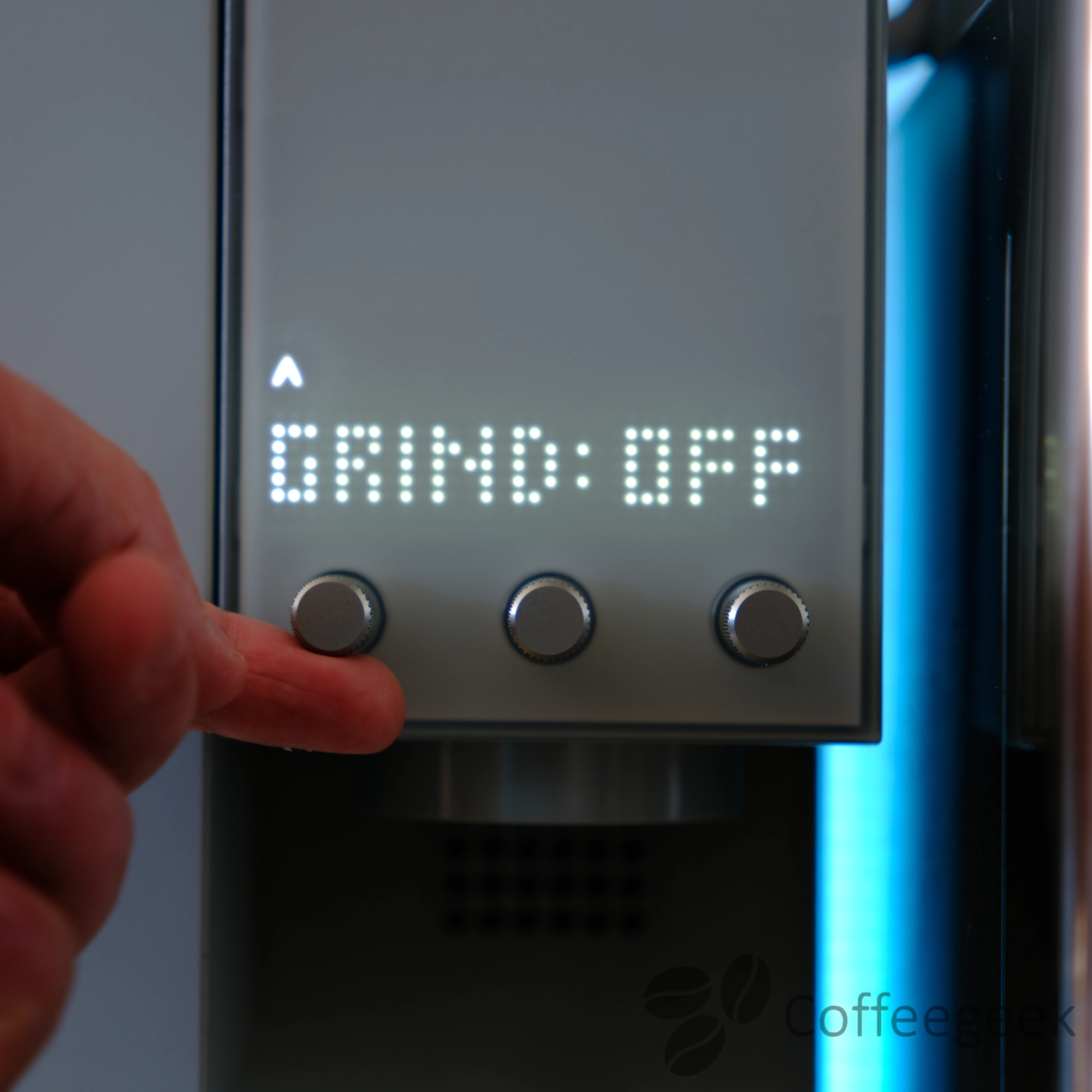
I now use the xBloom Studio as the reference for my grinder reviews on this blog for the "pour-over" part. Its perfectly repeatable brewing protocol makes it possible to isolate the differences between the grinders under review.
The Kinematic Brewer: Three Pour Patterns
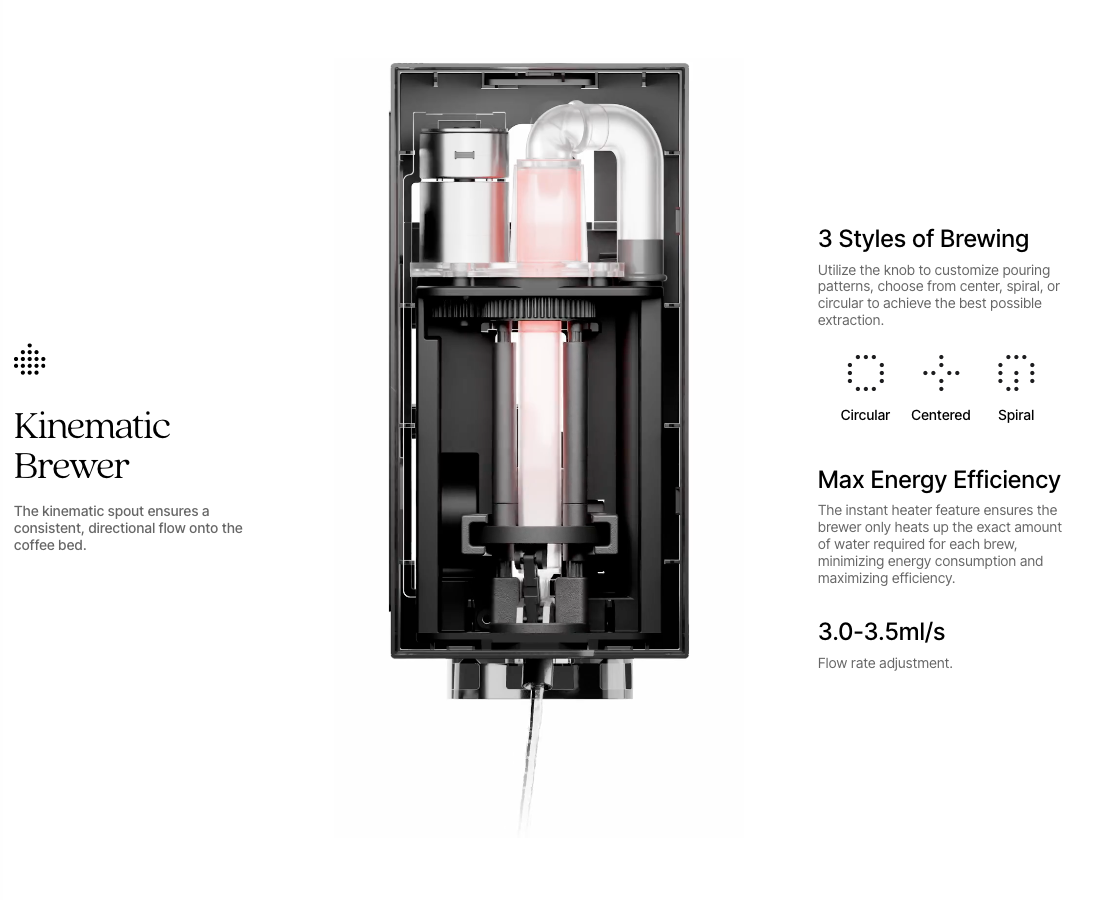
The xBloom Studio's kinematic brewer replicates a barista's movements with three pour patterns:
- Circular
- Center
- Spiral
This technology guarantees fully repeatable motion, with the same flow and the same pattern, for a consistent extraction from one cup to the next. The water flow rate is adjustable between 3 and 3.5 ml/s.
You no longer need to master pouring with a gooseneck: the kinematic brewer repeats exactly the same motion with every brew.
The Built-In Scale: Precision and Convenience
The xBloom Studio builds a precision scale (0.1 g, 20 ms response time) directly into its platform, with readouts on the screen and in the app. It offers simple weighing, water flow tracking, and automatic ratio calculation.
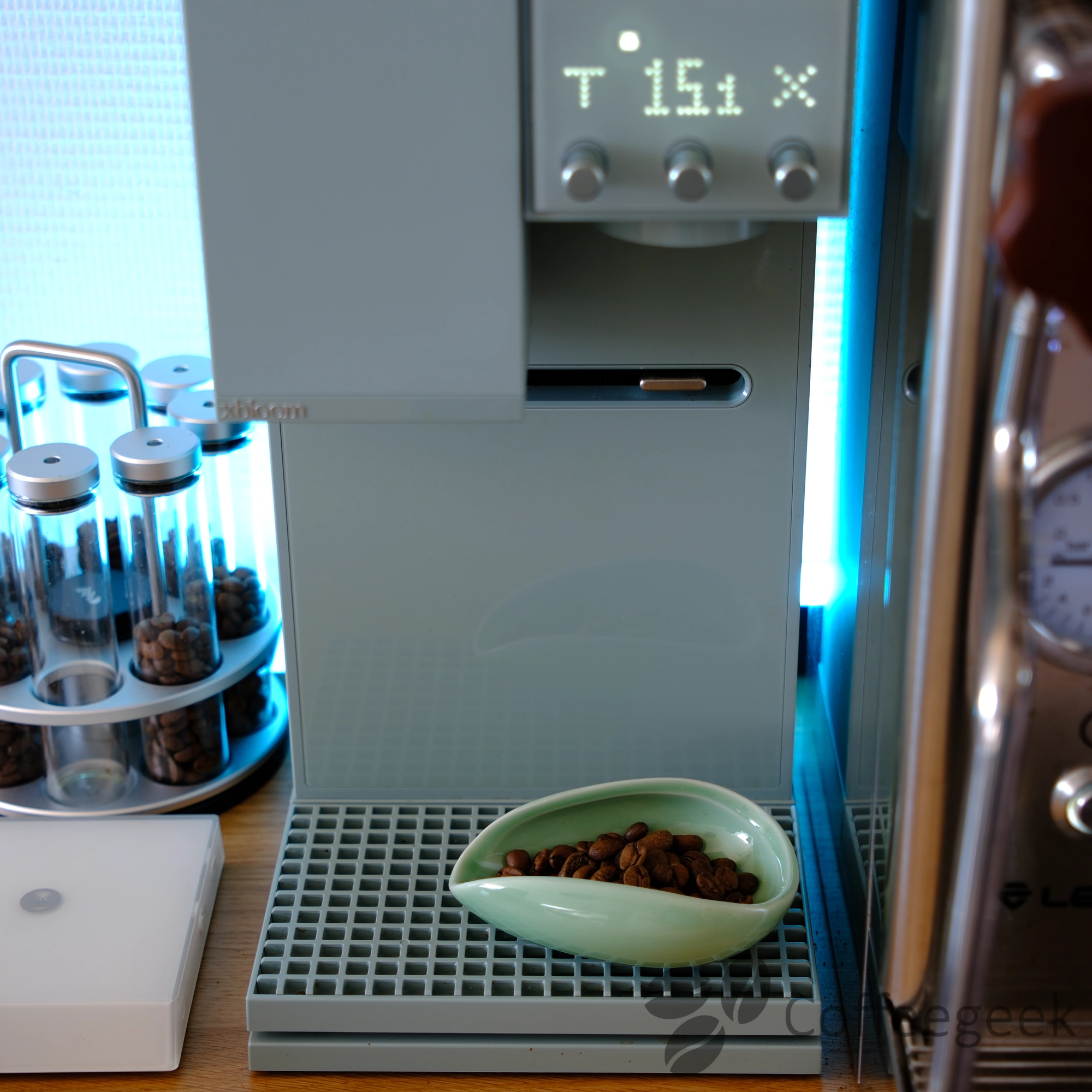
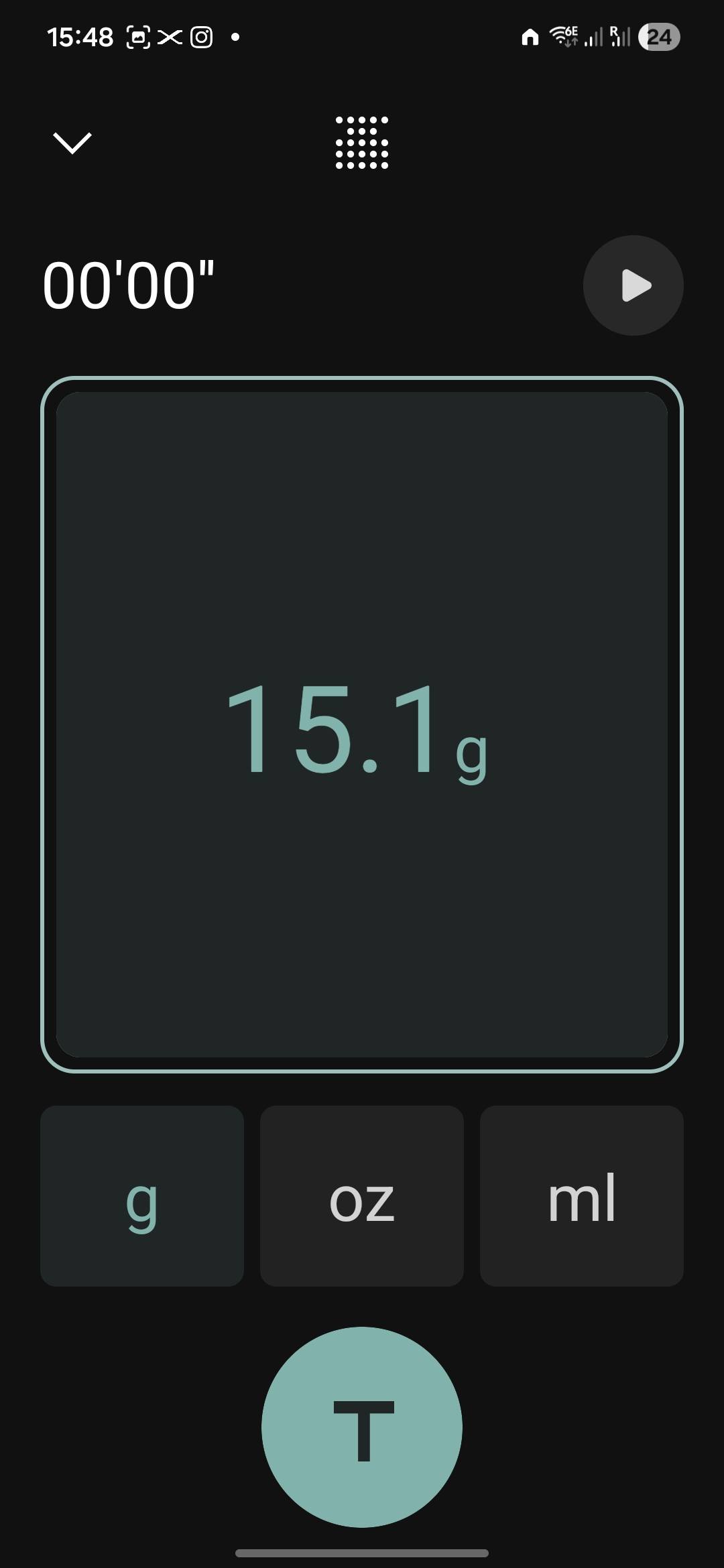
A few tenths of a gram are enough to change the coffee-to-water ratio, and therefore the final taste. Weighing your coffee on a precise scale guarantees repeatable results.
The major advantage is total integration with the system: the machine automatically adjusts the parameters based on the coffee weight it detects, and you can follow the extraction in real time without juggling several devices.
The Mobile App: Powerful, but Could Be Better
The mobile app (available on iOS and Android) is packed with features: creating and managing custom recipes, monitoring the extraction in real time, and using the machine without a phone once recipes have been sent to it. I especially like being able to share recipes with other users: I regularly share mine or take inspiration from the community's.
The downside: the app has a few bugs, and some updates have introduced regressions (lost controls, slowdowns, a sometimes crowded interface). But xBloom has proven responsive: the manufacturer pushes updates regularly, and the introduction of Auto mode, with recipes started directly from the machine, is a concrete example of a feature born from user feedback.
xBloom runs a very active official Discord server where the team talks directly with users. That's where bug reports and suggestions turn into concrete changes to the machine and the app.
Accessories
The xBloom Studio has a well-thought-out ecosystem of accessories. Here are the ones I use.
Omni Dripper 2
The Omni Dripper 2 is the dripper that comes with the machine, and it's the one I use for all my coffees. It features anti-static technology that reduces the buildup of grounds and a Hyperflow base for an optimized flow rate. The filter is removable for easier cleaning. It's compatible with xBloom filters or standard 155 filters (Φ155 mm).
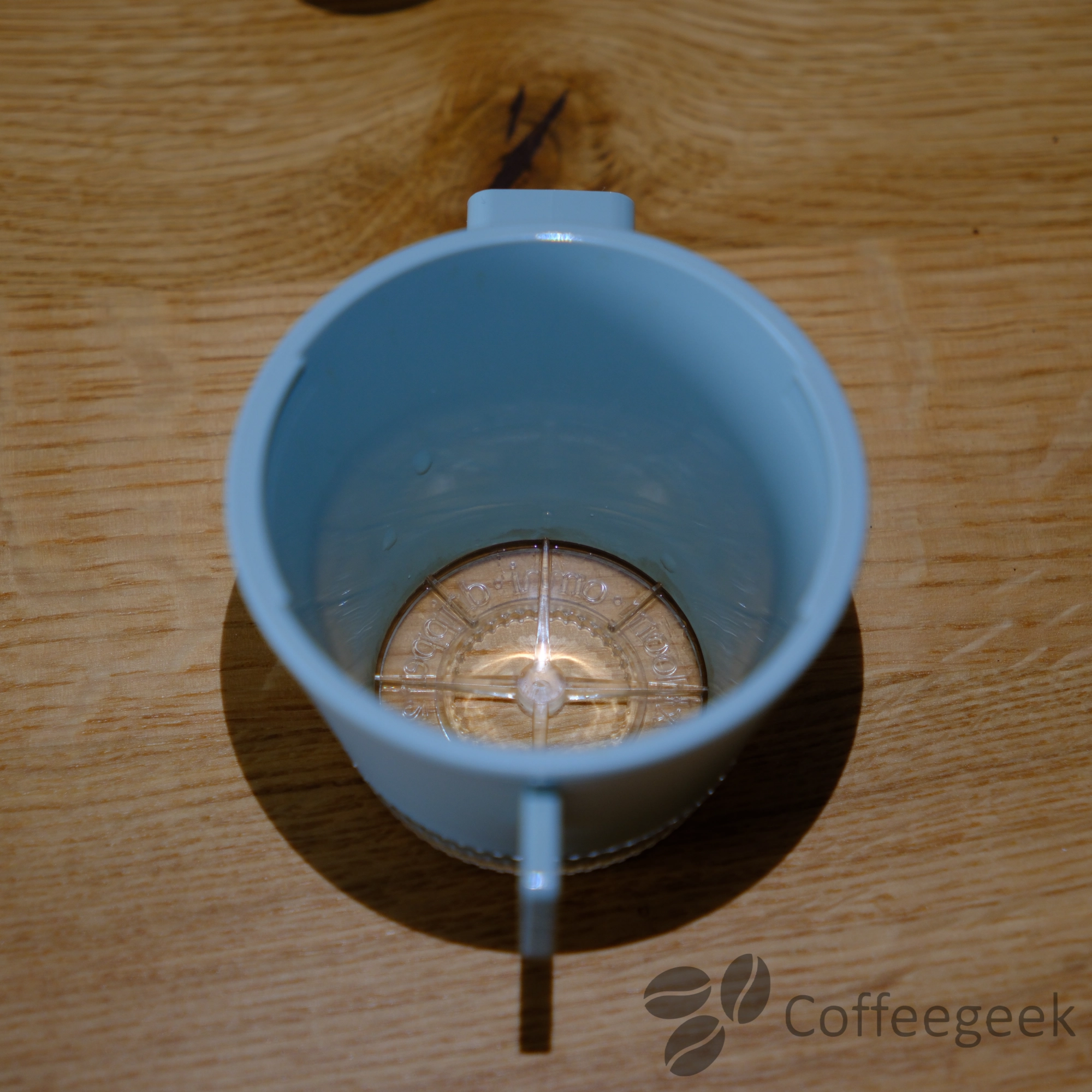
According to the manufacturer, the Omni Dripper 2 is not dishwasher-safe.
Omni Tea Brewer
I also bought the Omni Tea Brewer, an accessory dedicated to making tea. It's practical and I use it regularly. The only downside: with its 160 ml capacity, you need 2 to 3 infusions to fill a standard cup. Also worth noting: on rare occasions, I've run into a small bug where the water ran straight into the cup without steeping properly.
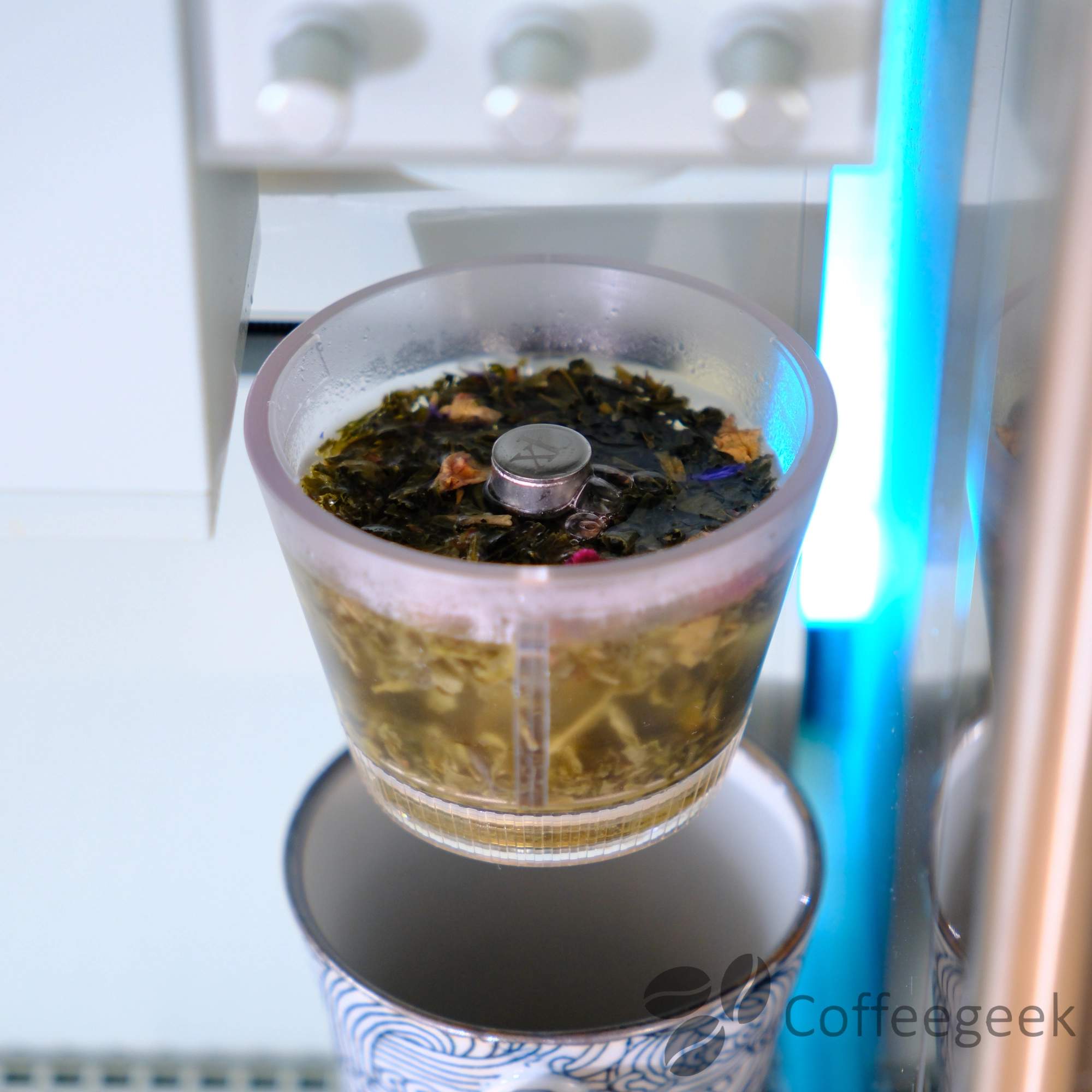
According to the manufacturer, the Omni Tea Brewer is not dishwasher-safe.
Maintenance: Simple, with No Nasty Surprises
Maintaining the xBloom Studio is simple, and that's a real relief compared to automatic espresso machines, where spent grounds can sit and grow moldy in hard-to-reach internal passages.
-
Here, there's no grounds container to get grimy: the coffee drops straight into your cup through the filter, then you throw the filter away. That's it. The machine stays clean and hygienic.
-
For the grinder, a quick pass with the brush (included) from time to time is enough to clear coffee residue from the chute. The anti-static technology limits buildup, but regular cleaning is still recommended. For a deep clean, you can use Puly Grind. If you notice any imprecision in the grind, an automatic calibration puts everything back in order.
-
For descaling, xBloom recommends a cycle every 3 months or 300 cups (more often if you use hard water). You start the procedure from the app or directly on the machine.
Compared to an automatic espresso machine, maintaining the xBloom Studio is child's play: no group head to clean, no fermenting grounds container, no complex internal passages. Just a filter to throw away and an occasional pass with the brush.
Quality in the Cup: My Verdict
After several weeks of daily use, I'm very satisfied with the quality of the coffee the xBloom Studio makes. Here's my detailed verdict for each type of use.
Automatic Pour-Over
The coffees show exceptional clarity of flavor with well-defined notes. The extraction is even and well-balanced, highlighting the characteristics of each origin. The consistency from one cup to the next is impressive, even for someone used to manual methods.
Filter Coffee with Your Own Beans
Being able to use your own beans (and not just xPods) is a major asset. In Copilot or Freesolo mode, I was able to make my usual specialty coffees with excellent results.
Conclusion
The xBloom Studio has established itself as a revolution in the world of automatic coffee machines. It manages to combine the ease of use of an automatic machine with the extraction quality of a manual pour-over made by an experienced barista.
Its three operating modes make it accessible to beginners and connoisseurs alike. The 48 mm grinder with its 80 settings offers great versatility.
In the end, the xBloom Studio offers excellent value for money for anyone looking for a complete, automated pour-over setup. Not to mention the countertop space you save and the ease of use.
The xBloom Studio has established itself as a revolution in the world of automatic coffee machines. It manages to combine the ease of use of an automatic machine with the extraction quality of a manual pour-over made by an experienced barista.
Sure, a price of around $600 may seem high, but add up the equipment it replaces (grinder ~$350-400, scale ~$50-150, Fellow kettle ~$150, dripper ~$50) and the math doesn't take long.
- Exceptional extraction quality for pour-over
- Three operating modes (Autopilot, Copilot, Freesolo)
- 48 mm grinder with 80 settings, retention < 0.3 g
- Built-in precision scale (0.1 g)
- Kinematic brewer with 3 repeatable pour patterns
- Intuitive mobile app
- Option to use your own beans
- Compact, polished design
- Plumb-in option
- Reliance on the app for some advanced settings
Before buying, I recommend going through the official xBloom website: xBloom very regularly runs promotions that can add up to significant savings on the purchase price.
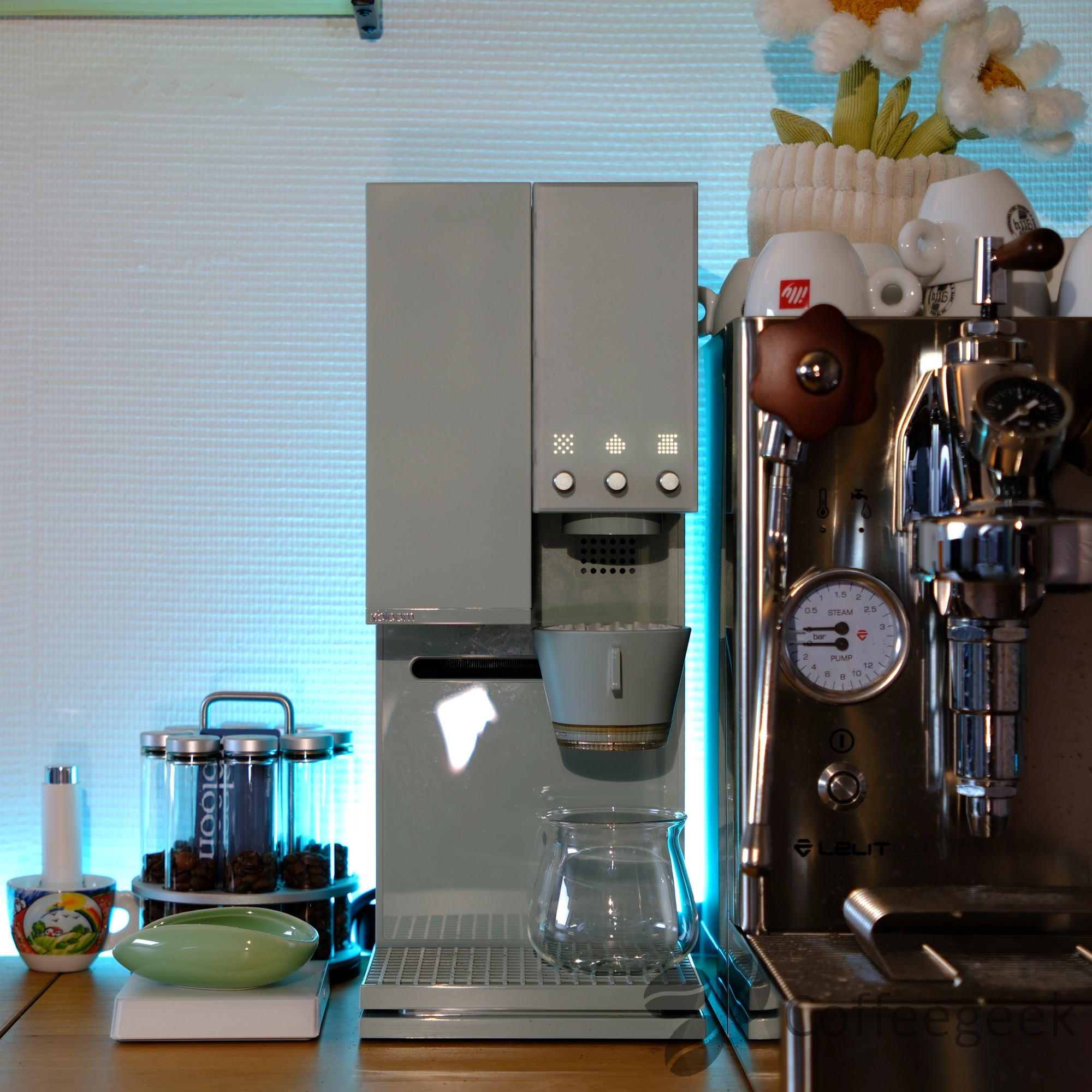
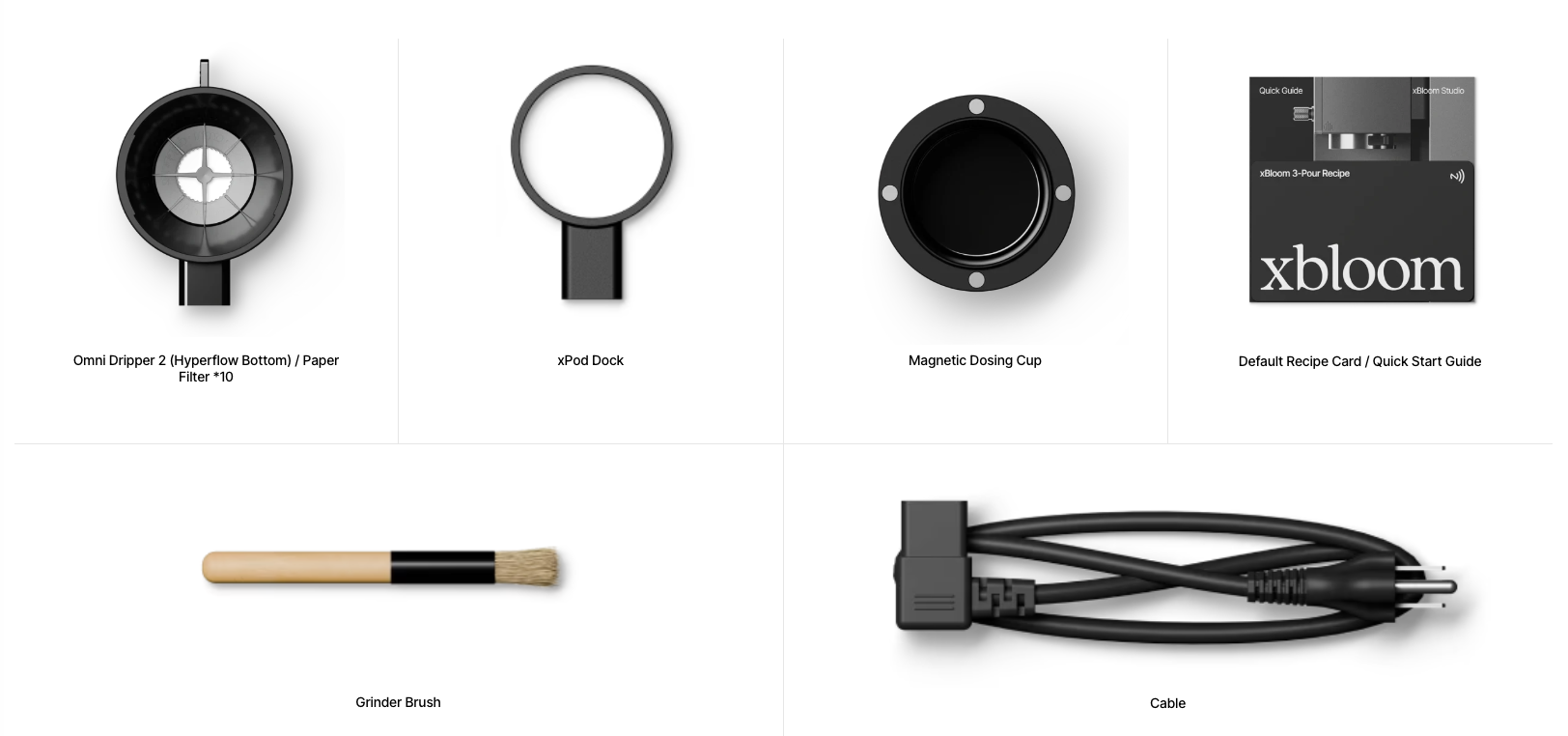
What's in the Box
The xBloom Studio comes with:
- xBloom Studio machine
- Omni Dripper 2
- xPod dock (capsule holder)
- Magnetic dosing cup
- Recipe card
- Paper filters
- Cleaning brush
- Power cable
Technical Specifications
| Feature | Detail |
|---|---|
| Grinder | 48 mm conical burrs, 80 settings |
| Scale | 0.1 g precision |
| Water tank | 946 ml (plumb-in option) |
| Connectivity | Bluetooth 5.0 |
| Pour patterns | 3 (circular, center, spiral) |
| Available colors | Midnight Black, Moonlight White, Sage Green, Twilight Gold |