
From December 30, 2026, coffee sold in the European Union has to show where it grew. That is the day the EU Deforestation Regulation (EUDR) starts to apply to large and medium-sized companies, after two delays and a review. Most micro and small firms follow on June 30, 2027. Under this law, a "deforestation-free" coffee is not a sticker on the bag: it is a paper trail running from the plot to the importer.
The text is Regulation (EU) 2023/1115, and coffee sits in it alongside cocoa, palm oil, soy and wood. Its goal is simple to state: products placed on the EU market, or exported from it, must not contribute to deforestation or forest degradation. The rules were amended in December 2024 and again in December 2025 to make them simpler. Here is what they ask of coffee, who has to prove what, and what changes for the cup in your hands.
What does "deforestation-free" mean for a coffee?
The EUDR covers seven commodities: cattle, cocoa, coffee, palm oil, rubber, soy and wood, plus products made from them. Anyone placing them on the EU market, or exporting them, must prove two things. The product is deforestation-free, and it was produced in line with the laws of its country of origin.
Deforestation-free means grown on land that was not cleared after December 31, 2020. Beans, ground coffee or capsules, every coffee sold in the EU must be traceable to plants grown on such land. Legality covers the producing country's laws on land-use rights, forest management, labour, tax and human rights.
The proof starts with a map. Operators collect the geolocation of every plot: a polygon tracing the whole perimeter for plots over 4 hectares, a single point for smaller ones. Add the product, its quantity, the country, the production period, and the supplier and customer.
Before the coffee enters the market, the operator files a due diligence statement, its declaration that the coffee has been checked. It goes into the EUDR Information System, the EU's online register. To show a plot was free of forest before the cut-off, companies will often rely on satellite imagery.
Two delays and a review: how did we get to December 2026?
The regulation was adopted on May 31, 2023 and entered into force on June 29, 2023. It was first meant to apply on December 30, 2024. In October 2024, the Commission proposed a 12-month delay, after complaints from trading partners including Brazil and the US. An amending regulation made it official: December 30, 2025 for large and medium firms, June 30, 2026 for small ones.
The second delay came from the IT side. Through 2025, projected traffic on the Information System ran far above plans. To avoid a breakdown, the Commission proposed targeted changes in October 2025. On November 26, 2025, the European Parliament voted a simplification package, 402 to 250, pushing the dates back another year.
The amending act, Regulation (EU) 2025/2650, was published on December 23, 2025. It set today's dates and called for a "simplification review".
The Commission's report, COM(2026) 191, dated May 4, 2026, found the burden on companies substantially reduced, above all for firms sourcing from low-risk countries, small primary producers and downstream businesses. For the sake of legal certainty, it proposed no further change to the regulation itself.
Importer, roaster, café: who has to prove what?
The EUDR sets three roles: upstream operator, downstream operator and trader. A single firm can hold several roles, product by product.
A company importing green, non-decaffeinated coffee is usually the upstream operator. It carries the full due diligence, in three steps: collect the information, assess the risk, reduce it when it is more than negligible. It keeps the records for five years.
Roasting changes the coffee's customs code, and so does decaffeinating. A firm that roasts or decaffeinates is generally a downstream operator, as long as its green coffee was already covered. Retailers and cafés are downstream operators too. A company reselling coffee unchanged is a trader.
Since the December 2025 revision, only the first operator files the statement. Larger downstream firms and traders mainly register in the system. Those right after the importer keep the statement numbers passed on to them. All must alert the authorities if they learn of a breach, but have no duty to collect anything from end users.
Since May 2025, a Commission rule ranks countries, or parts of them, as low, standard or high risk. Coffee sourced only from low-risk areas follows a lighter procedure. Controls focus on the higher-risk areas behind 95% of global forest loss.
Instant coffee joins the list in 2027
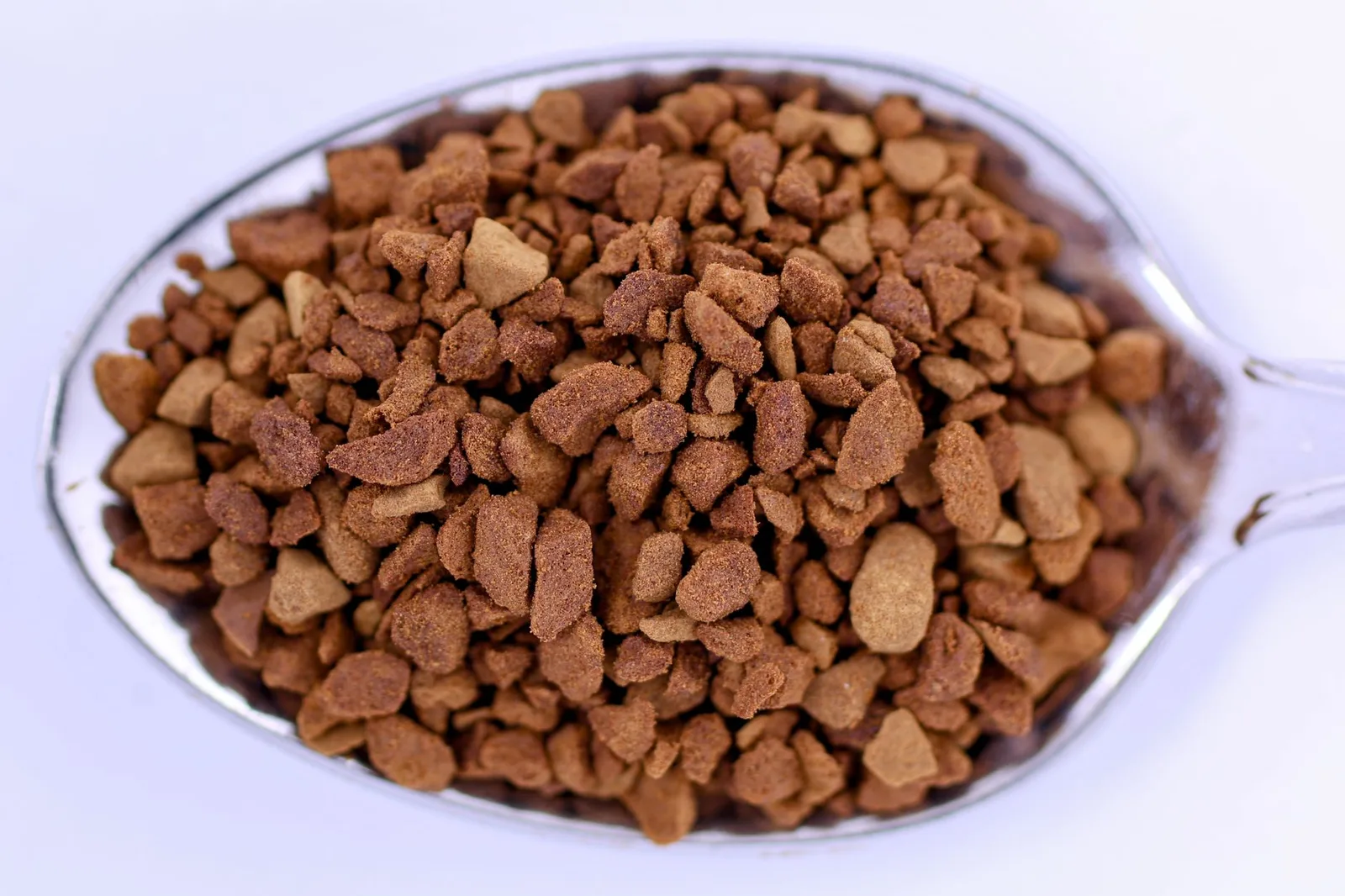
In 2024, the regulation covered green and roasted coffee, but not instant coffee. Leaving it out risked moving deforestation to a product outside the rules, rather than ending it.
On July 13, 2026, the Commission adopted a delegated act, a technical update made under the watch of Parliament and Council. Delegated Regulation (EU) 2026/2102 adds soluble coffee, some palm oil derivatives and frozen cattle tongues. It also removes a few items, such as leather and retreaded tyres. The seven commodities stay the same. The new products come under the rules on December 30, 2027, giving companies time to prepare.
Smallholders and prices: who carries the cost?
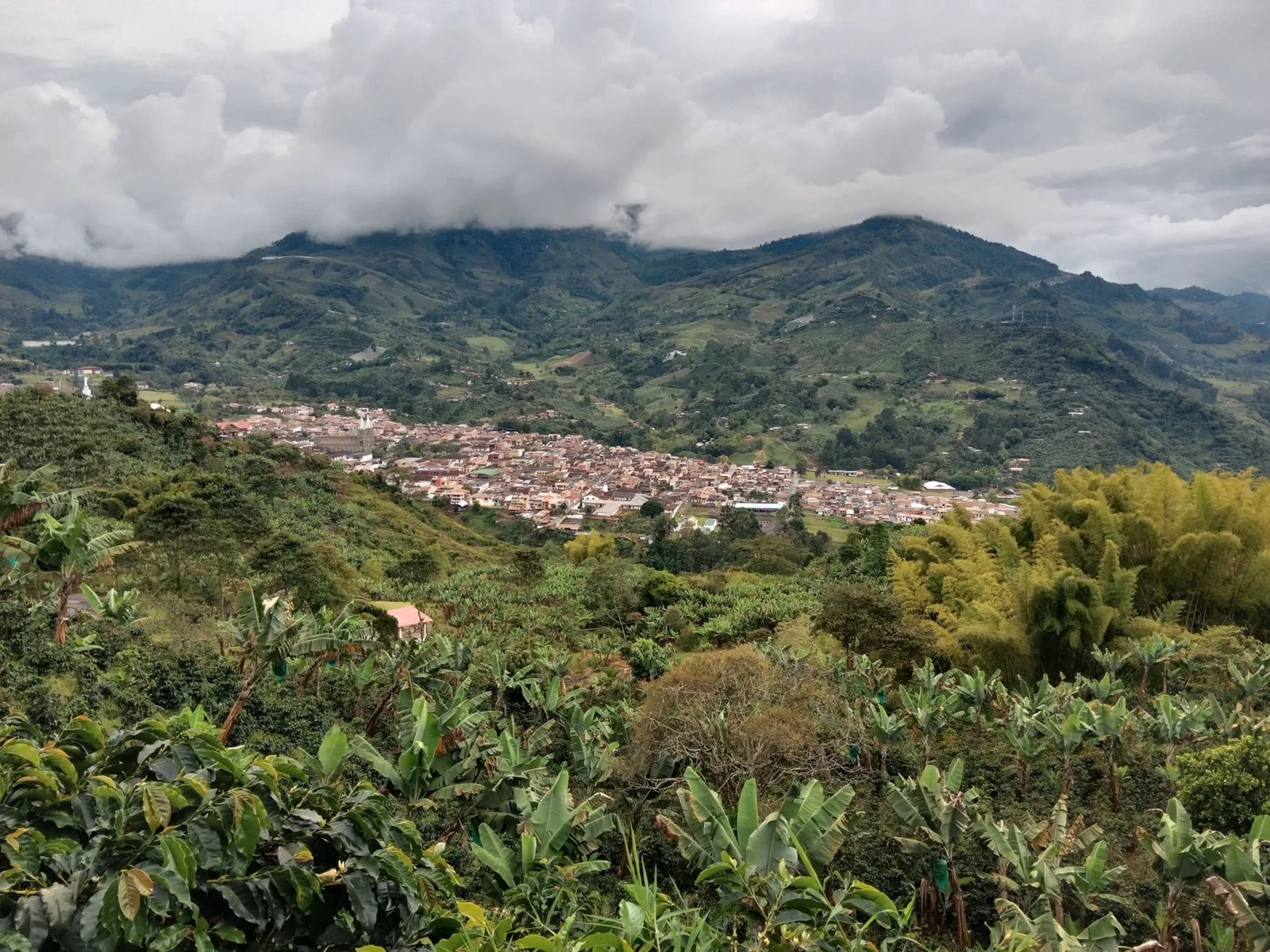
About three million tonnes of green coffee enter the EU each year. Coffee grows in more than 60 countries on 12.5 million farms, 84% of them under two hectares. Smallholders produce an estimated 73% of the world's coffee.
Tracing that coffee is hard. In 2024, only about 20% of EU imports came through a verified certification scheme. Another 30% came straight from a large farm or cooperative.
The other half passed through many hands. In Vietnam or Indonesia, up to 10 small intermediaries can stand between the plot and the exporter. National auctions in Kenya, Ethiopia and Tanzania blur the trail further.
Hence the main fear: buyers may favour large estates and cooperatives able to supply plot coordinates. Producer groups, traders and large roasters have warned that badly designed rules could lock smallholders out of Europe. Lost income could, in turn, push farmers back toward the forest.
Origin countries are building tools. Ethiopia tracks coffee with mobile apps, Kenya uses remote sensing, and Honduras has already shipped fully traceable coffee to the EU.
The industry is split. In July 2025, Lavazza's chair asked for another delay, warning of higher prices. Companies including Nestlé, Ferrero and Danone backed the rules in a letter: "any postponement or weakening would create a dangerous regulatory vacuum".
Thanks to the simplifications, estimated yearly compliance costs have dropped by about 75%, from €8.1 billion to €2.0 billion. The expected benefits come to about €7 billion a year, counting 208,000 hectares of deforestation avoided each year.
How much a bag will cost is still an open question. Costs could be passed on to drinkers, and traceable lots could become scarcer outside Europe.
What a deforestation-free bag really guarantees
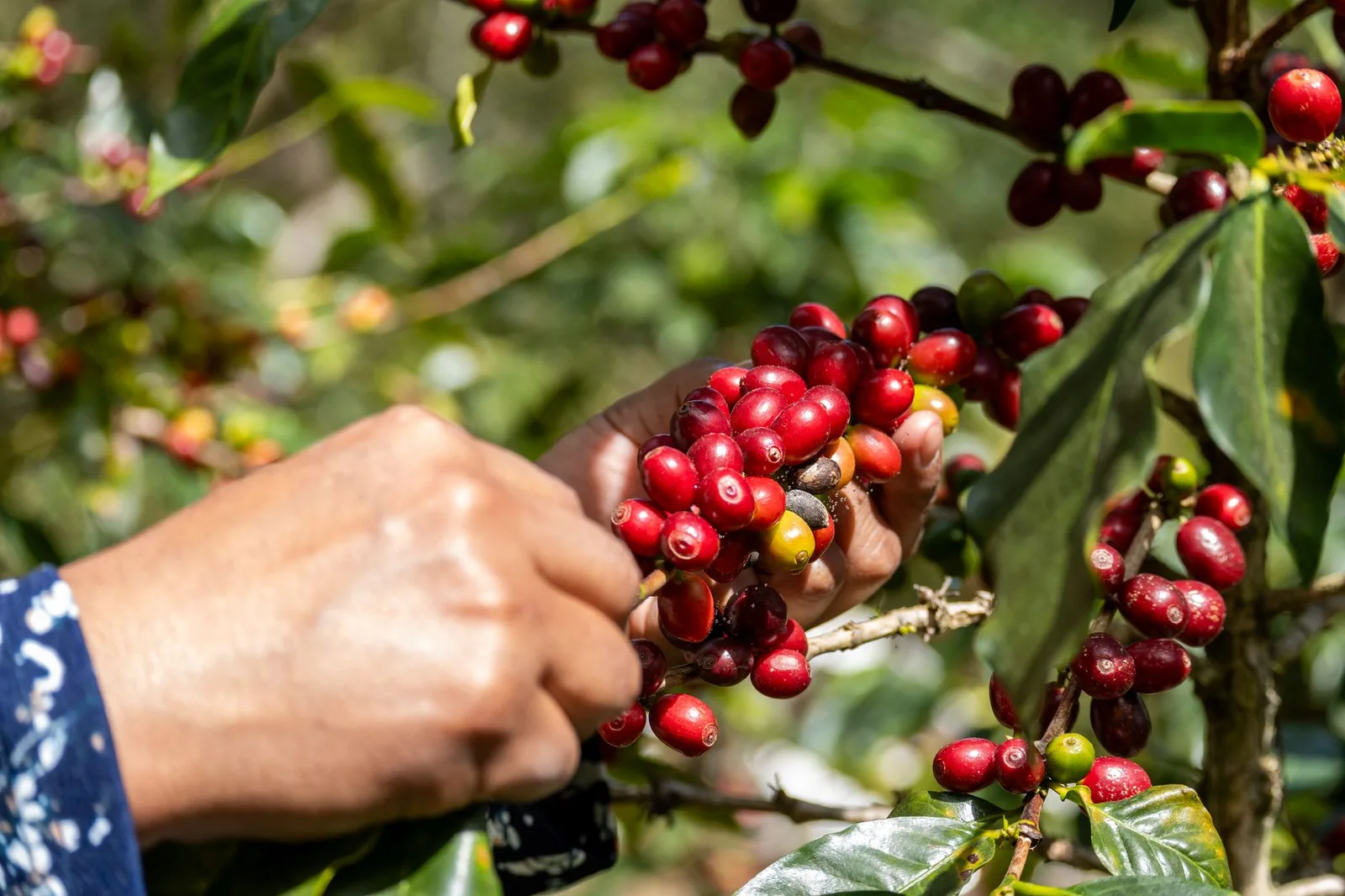
The EUDR is a due diligence duty on companies, anchored to a cut-off of December 31, 2020. When you buy beans in Europe after December 30, 2026, the proof sits with the importer and the firms that follow it. You have nothing to declare: no business in the chain, retailers included, has to collect information from you. What "deforestation-free" does promise is a check: a company has tied the coffee to a mapped plot, a cut-off date and the law of the country where it grew.
Even certified coffee gets no shortcut: Rainforest Alliance, 4C or Fairtrade farms must still map their plots precisely. Satellites have their limits too: not every algorithm can read shade-grown coffee or the edge of a forest.
Coffee can drive tropical deforestation, but some farming systems also protect forests and biodiversity. Arabica evolved as an understory shrub, and coffee grown under shade trees is common in Ethiopia and parts of Central America. Whether the law rewards these farms or pushes their smallest growers out is the question to watch. So is the price in your cup.
Going further
Organic Coffee and Pesticides: From the Cup to the Farm
Is one cup in five really contaminated? What the pesticide figures measure, what roasting removes, and why the bigger issue for organic coffee is on the farm.
Read the article →
History of instant coffee: a global innovation
From 1901 to today, trace the history of instant coffee: industrial innovation, freeze-drying, and artisanal renaissance. A little-known revolution.
Read the article →