
Which arabica should a farmer plant when the climate keeps shifting? A trial spanning 30 sites in 17 countries now offers a data-backed answer: a study published in Scientific Reports on October 2, 2026, and first covered by Daily Coffee News, shows that introgressed varieties, led by two F1 hybrids, beat pure arabica on both yield and leaf rust. The catch: climate decides which one wins on a given farm.
Coffee is grown on roughly 12.5 million farms worldwide, most of them family-run smallholdings, yet global evidence on varieties that combine productivity with disease resistance across environments is still limited. Climate change makes that gap harder to ignore.
Inside the International Multilocation Variety Trial
The study scores 32 varieties for yield and leaf rust severity across 30 sites in 17 countries. Researchers from the International Center for Tropical Agriculture (CIAT) and World Coffee Research (WCR) led the work, using field records from 2015 to 2023. Not every site made the cut: once data quality was checked, 20 sites remained for the yield analysis and 24 for leaf rust.
The trial behind it, the IMLVT, dates back to 2015. That year WCR brought together 31 top-performing varieties from 11 suppliers, most of them never tested on a broad basis, and sent them to 18 coffee-growing countries, where 29 research plots would host them for years. Each country set up and monitored one to three plots on average, measuring the same variables under standardized WCR protocols. Together, these plots have built a global dataset on how each variety responds to its environment. A smaller group of countries with representative sites carried the program forward in 2025, and it will keep running through 2030.
This is not the trial's first paper. A 2025 study had already looked at leaf rust resistance in 29 arabica varieties at 23 sites in 15 countries; the new one brings yield under contrasting climates into the picture.
Yield: two F1 hybrids out in front
Two F1 hybrids, H1 Centroamericano and EC16 (also known as Mundo Maya), followed by the introgressed line Parainema, offer the strongest combination of yield and rust resistance, though each comes with its own climatic preferences and trade-offs in yield stability. Ranked on yield alone, H1 Centroamericano and EC16 still sit at the top, with Parainema and Ruiru 11 close behind.
A second tier of introgressed varieties, IPR103, Col5 and S4808, gives up a little yield in exchange for steadier results from one climate to the next. Pure arabica varieties trail the field. If F1 hybrids are new to you, our guide to disease-resistant F1 hybrid coffee varieties explains how they are bred.
Leaf rust: introgressed varieties beat pure arabica
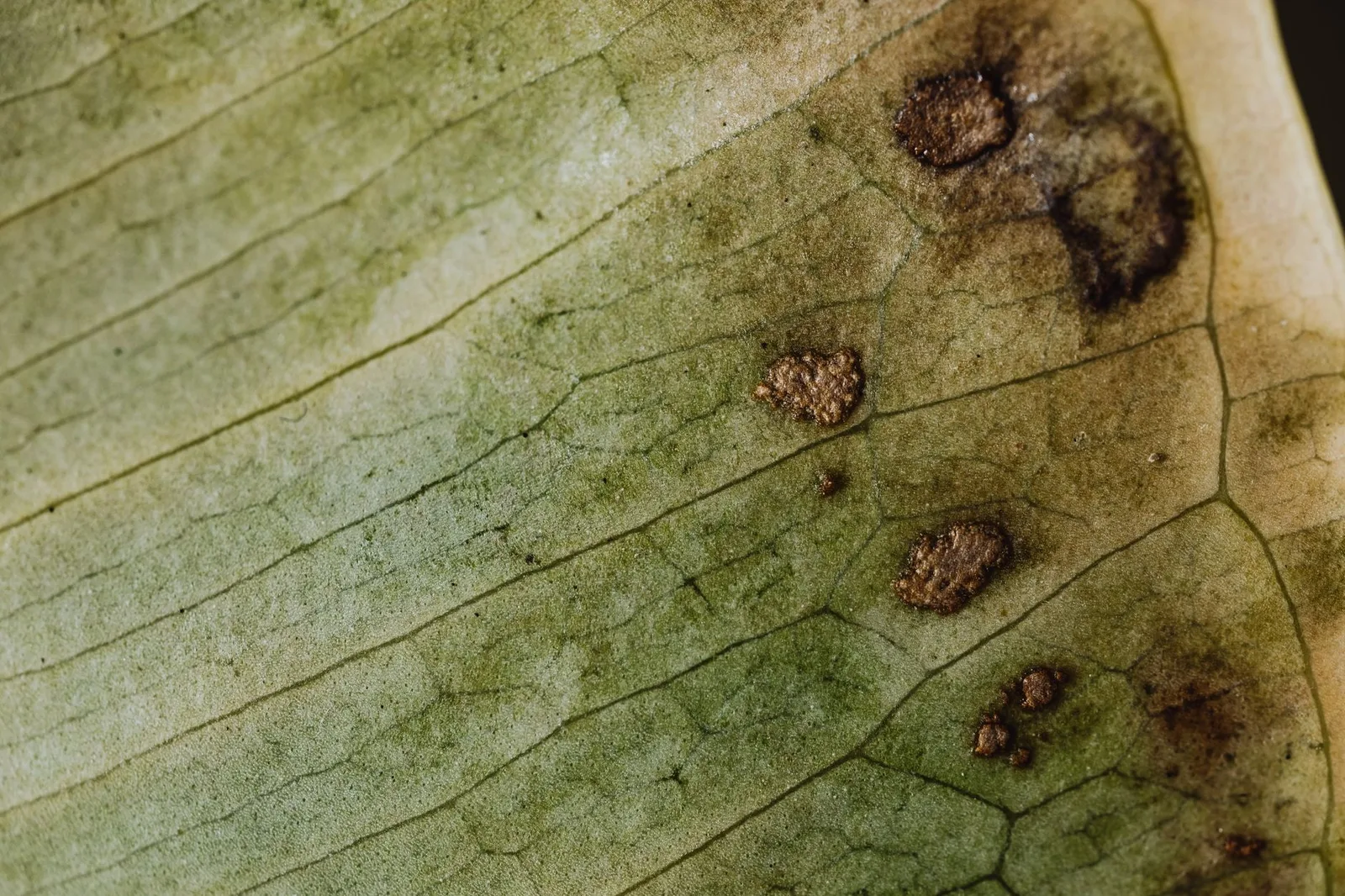
On rust, the authors' conclusion leaves little doubt: "Overall, introgressed varieties consistently outperformed pure Arabica varieties, which exhibited lower yields and greater rust susceptibility." The four top yielders also stand up relatively well to the disease. Much of that resistance comes from outside arabica: robusta and other coffee species supplied the resistance genes in many of the leading varieties, robusta being the species we compare with arabica in our arabica and robusta primer.
Warm, humid conditions generally made rust worse, though not evenly: the disease struck each variety and each site to a different degree. Rust severity tracks combined gradients of temperature, rainfall, humidity and thermal variability. For the disease itself and the breeding race against it, see our report on coffee leaf rust as a global threat.
Climate decides: no single winner for every farm
Growers already feel the strain: weather swings shake both harvests and prices, and more frequent heat extremes, droughts and unpredictable rains are set to disrupt production further and shift where coffee can be grown at all.
To find out which variety suits which climate, the team modeled genotype-by-environment interactions with factor analytic mixed-effects models, then tied hidden environmental factors to climate gradients. Yield stability followed temperature: some varieties suit cooler sites with wide day-night swings, others warmer, thermally stable ones.
The two hybrids split the map. EC16 does best at cool sites where the gap between day and night temperatures is wide; H1 Centroamericano prefers warmth and steady temperatures. Parainema and Ruiru 11 sit on EC16's side, favoring cooler sites with bigger temperature swings. Performance shifted with climate, often by a significant margin, and the top yielder on paper is not automatically the right tree for every farm.
Some IMLVT sites are hot, with long dry spells, conditions close to the changing climate growers already face and a preview of the climates forecast for the future. Earlier in 2026, WCR and CIAT launched CafeClima, a platform that combines the trial's data with climate projections to match growers with varieties suited to today's conditions and tomorrow's.
What it means for coffee lovers
Choice is the bottleneck. Through historical accident, colonial history or the lack of national coffee research, many farmers have very few varieties to pick from and end up planting seeds that are prone to disease or poorly suited to their land. Some participating countries have negotiated access to multiply the best performers and distribute them to their own producers. The catch is cost and supply: F1 seedlings are pricier than conventional ones, and because they usually have to be raised in specialized nurseries, scaling up is harder. Before any wide rollout, the authors add, "promising varieties should be validated under local environmental and management conditions".
For the cup, the study offers no verdict: cup quality was not evaluated. A rust-resistant, high-yielding tree answers the farmer's problem; whether it tastes better is a question for another trial. WCR member companies funded the work and had no role in its design or analysis.
Going further
F1 Hybrids: Disease-Resistant Coffee Varieties
Discover the F1 hybrids (Catimor, Sarchimor, Centroamericano) that reconcile disease resistance with cup quality for the future of specialty coffee.
Read the article →
Coffee leaf rust: a global threat to your plantations
Coffee leaf rust has been devastating coffee plants for 150 years. Origins, spread, economic losses, and concrete solutions to protect your production.
Read the article →