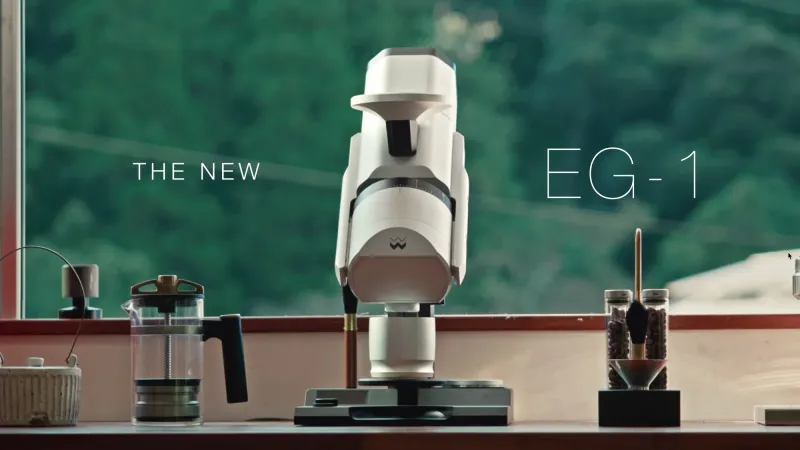

Weber Workshops announced a redesigned EG-1 on 14 October 2026. The flagship 80 mm flat-burr single-dose grinder keeps its silhouette, but almost everything inside has been reworked, and the price has gone up. The question for home single-dosers: which changes ease daily use, and which remain untested promises.
The original EG-1 arrived in 2015, the V2 in 2019 and the V3 in 2022.
Same shell, new insides (and a higher price)
From the outside, little has moved: same proportions, same 80 mm flat burrs, same variable speed. The real work is hidden in the base and the grinding path, where the motor, the chamber, the chute that guides the grounds out and the way beans are fed in have all been rethought. Version numbers go too. Founder and CEO Douglas Weber is blunt: "We want people to buy it, use it, maintain it, and stop wondering what version comes next. There is no v4. There is the EG-1." Earlier editions are promised service and spare parts indefinitely.
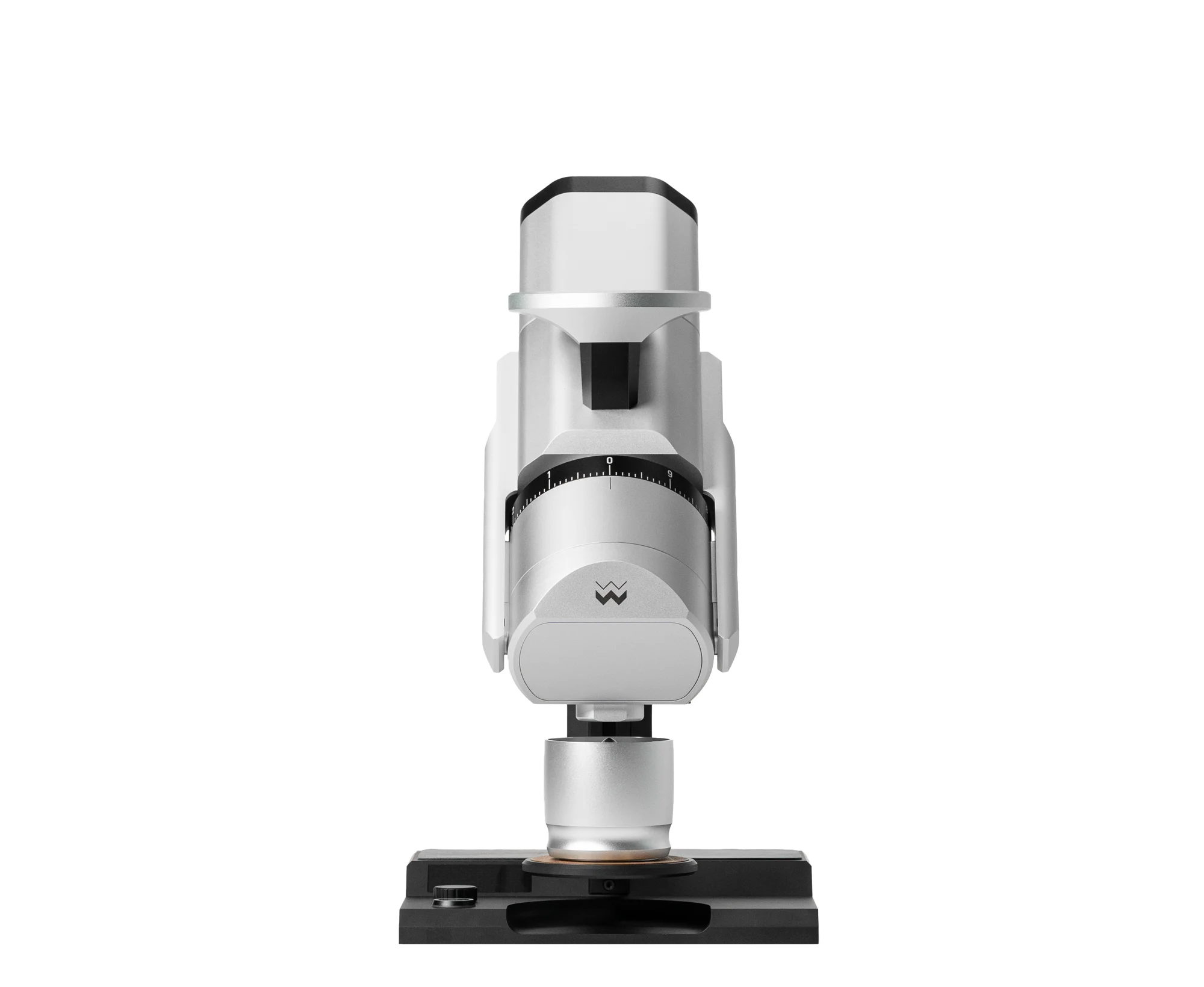
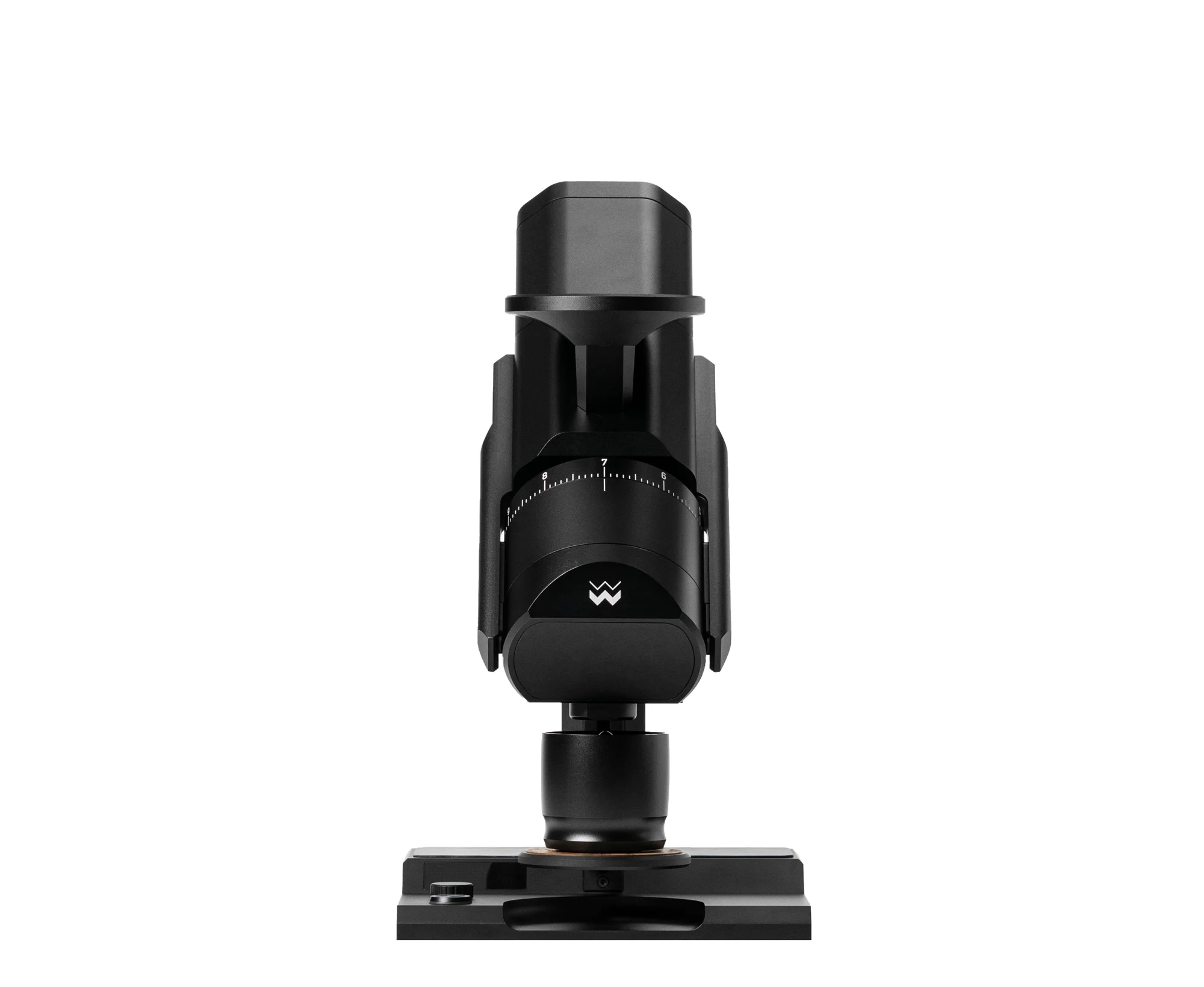
Two magnetic burr sets are offered: CORE, the all-rounder from espresso to pour-over, and ULTRA, made by SSP for filter only. On the European store, the new EG-1 costs €4,900 in Silver and €5,150 in Onyx with CORE burrs. The Mk.3 is still sold as new-in-box overstock at €4,400 and €4,850: €500 less in Silver, €300 less in Onyx. Shipping is due to start in two to three weeks, with European orders sent from a warehouse in Germany.
The official, unnarrated launch video gives a first look.
Static and retention: the two promises
An active ion generator, built into the removable burr chamber cover, is designed to neutralise static where the grounds leave the chamber. The second promise is Vibe Tone: after grinding, motor oscillations are meant to shake loose the coffee left between the burr teeth. Frequency and tone are adjustable in the browser interface because, in Douglas Weber's words, "certain tones were slightly more effective, but it depends on the characteristics of the powder — how fine, roast level, et cetera."
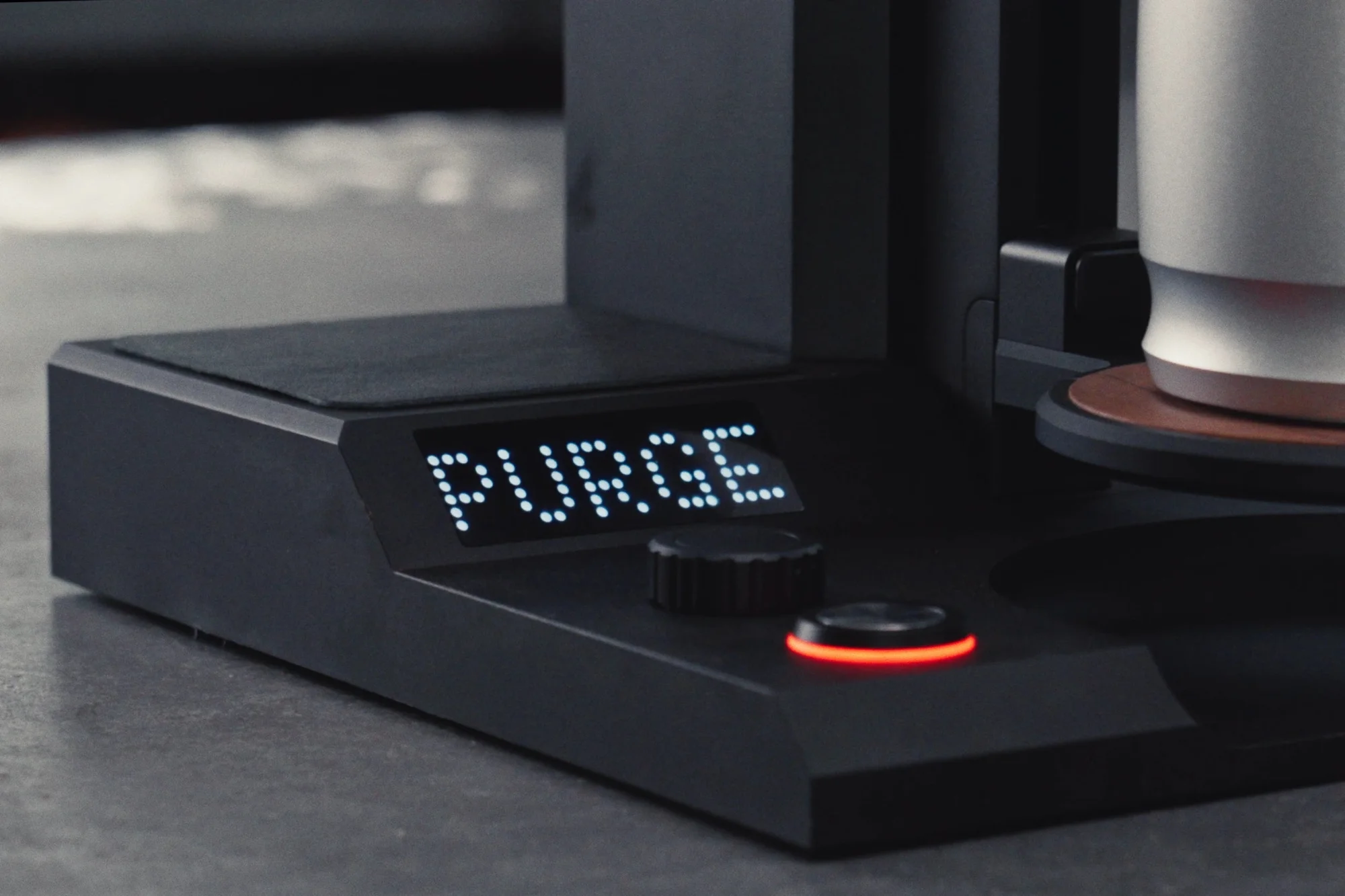
On the V3, purging went through a dedicated button in the centre of the RPM dial, and retention was claimed to be under 0.1 g. No retention or static figure has been published for the new model. Each unit is test-ground at the factory and may arrive with a little coffee inside.
Cleaning without the alignment ritual
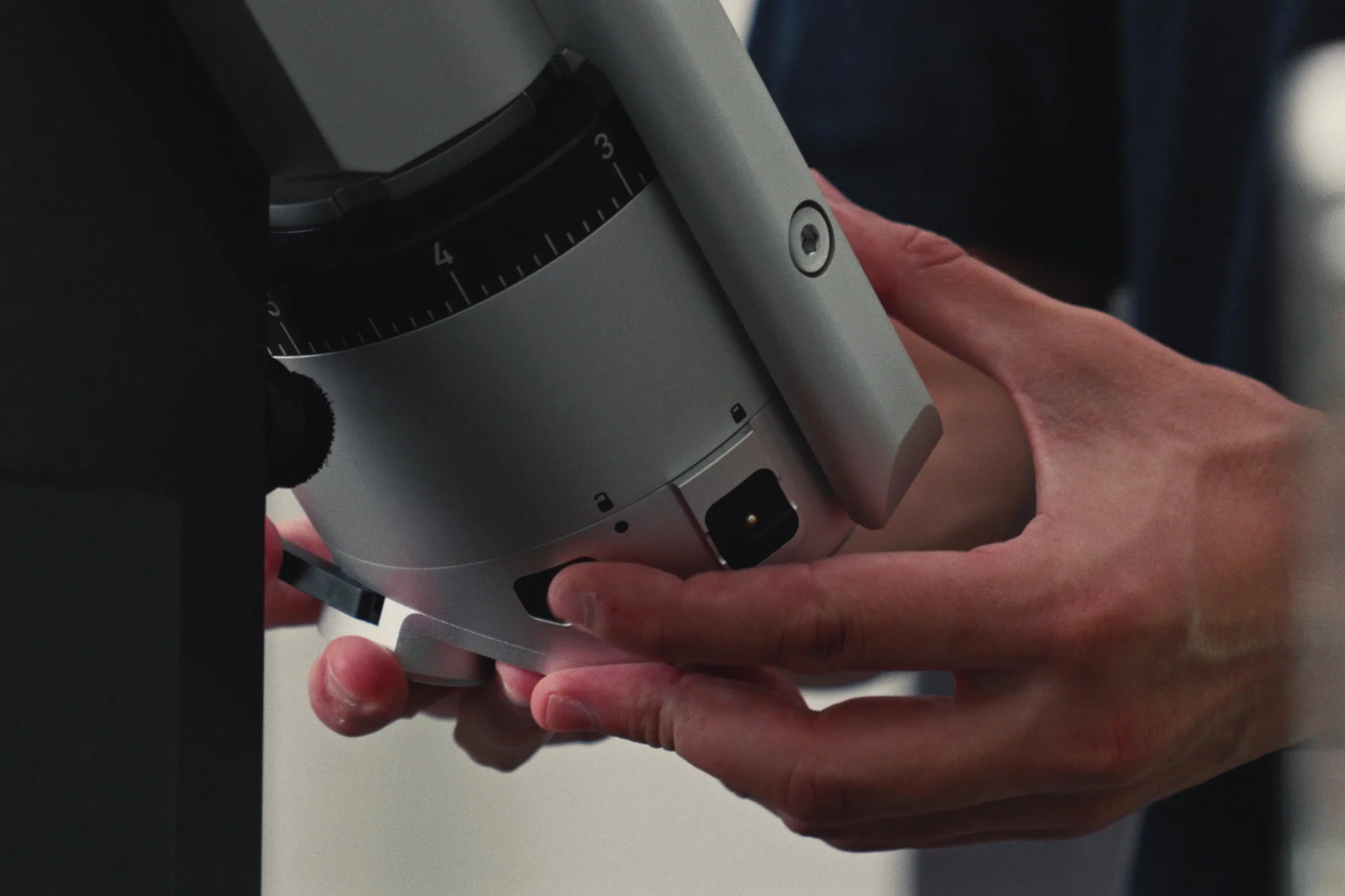
The burr chamber cover is now a single piece that comes off by hand, without tools, for cleaning or a burr change. Behind it, "Intrinsic Alignment" is meant to keep the burrs parallel and concentric through the mechanical design itself (extra bearings, tighter tolerances, a reworked internal architecture), so no manual realignment should be needed afterwards, a design claim that nobody has measured yet. Each grinder leaves the factory with its dial set to a defined zero, which the owner can recalibrate.
Motor, Bean Feeder and the small details
The redesigned motor is announced with 22% more torque, without a stated baseline, and gains an auto-stop function. The optional Bean Feeder attaches magnetically after a quick part swap, uses a pinch-free mechanism and meters beans into the burrs; its flow is designed to follow the chosen RPM. It is not compatible with the V3.
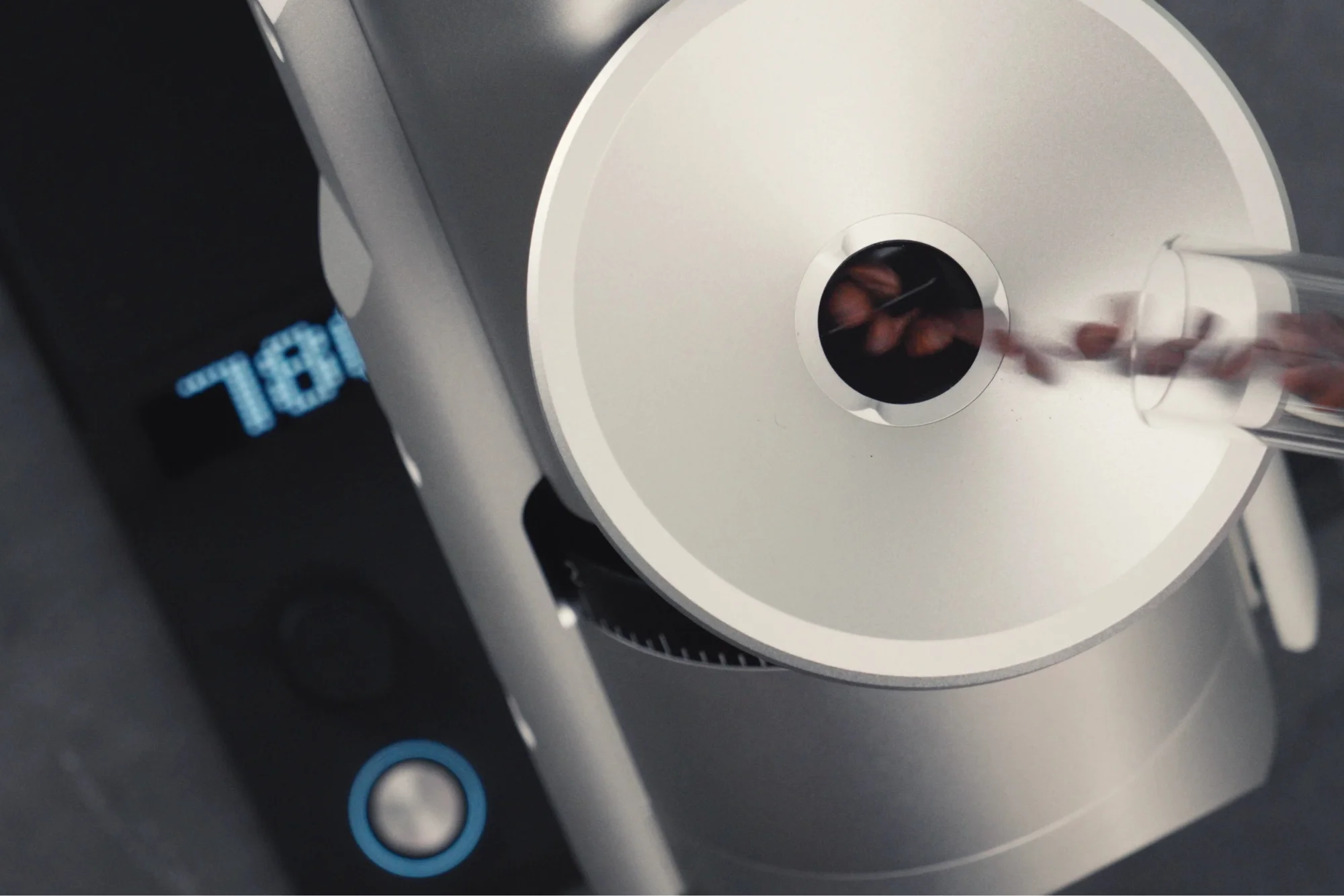
Smaller touches: a power-button LED showing the grinder's status, with configurable behaviour and brightness; a USB-C port behind a sliding dust cover for firmware updates and settings; and a mains inlet that pivots from rear-facing to downward-facing for a cable routed through the countertop.
What it means for coffee lovers
At home, the concrete changes concern maintenance (a tool-free cover, alignment designed to need no adjustment, a resettable zero) and workflow, with the ion generator, Vibe Tone and the Bean Feeder. The two biggest promises, low retention and neutralised static, remain unverified until independently measured. A mechanism earns its place only if it shortens the morning routine instead of adding one more thing to manage, and the price stays a serious barrier for most home baristas, who may look at a compact flat-burr grinder such as the Eureka Mignon instead. A new-in-box Mk.3, €300 to €500 cheaper, is still on the table.
Going further
Without an ion generator, a single drop of water is the usual answer to static at home, which raises the question of whether that water can harm a grinder; an RDT atomiser still ships with the new EG-1. The brand also makes high-end manual grinders.
The Ross Droplet Technique: Eliminate Static in Your Grinder
Discover the Ross Droplet Technique, an ingenious trick to reduce static electricity in your coffee grinder.
Read the article →
List of High-End Manual Coffee Grinders
Selection of the best manual coffee grinders: Kingrinder, 1Zpresso, Kinu, Timemore and more. Expert advice for choosing between espresso and pour-over.
Read the article →