


If you've ever opened a bag of freshly roasted coffee, you've probably noticed the packaging puffed up slightly, or even that distinctive little "pssht" as it opens. This isn't a flaw, quite the opposite: it's degassing, a natural and essential stage that follows roasting. Yet many enthusiasts rush to brew their coffee as soon as it arrives, unaware that they're about to miss out on much of its aromatic potential. In this article, we'll explore what really happens inside the bean after roasting, why that trapped CO2 directly affects the quality of your cup, and how long you should really wait depending on the brewing method you choose.
What happens chemically inside the bean after roasting?
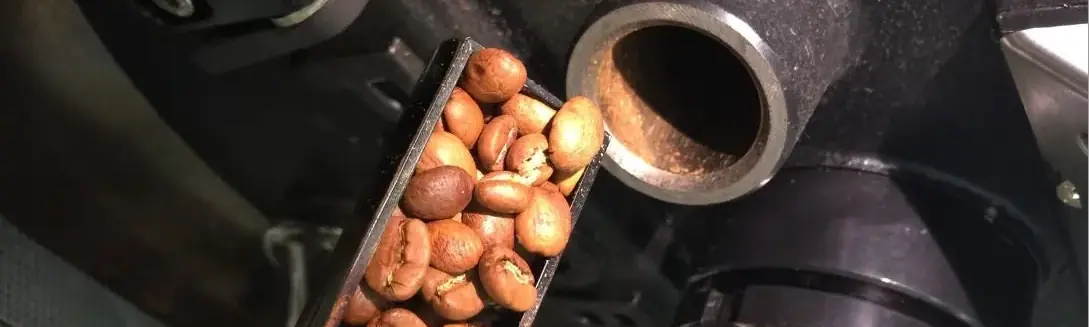
During roasting, the coffee bean undergoes a profound chemical transformation. Under the effect of heat, sugars and amino acids react with each other in the famous Maillard reaction, while the bean's cell structures are deeply altered. It's also during this phase that first crack occurs, followed by second crack depending on the roast level you're after, two stages we cover in more depth in our article on first crack and second crack. These exothermic reactions generate a significant amount of carbon dioxide, much of which remains trapped inside the bean's porous structure.
This CO2 doesn't evaporate instantly. It keeps slowly escaping from the bean for days, or even weeks, after leaving the roaster. A freshly roasted coffee bean is generally thought to lose most of its carbon dioxide within the first two weeks, but the process continues at a residual level for much longer. The speed of degassing depends on several factors: the roast level (a darker roast generally contains more CO2 and degasses faster at first), the density of the bean, its origin, and even the grind size once the coffee is ground, which considerably speeds up the release of gas by multiplying the surface area exposed to the air.
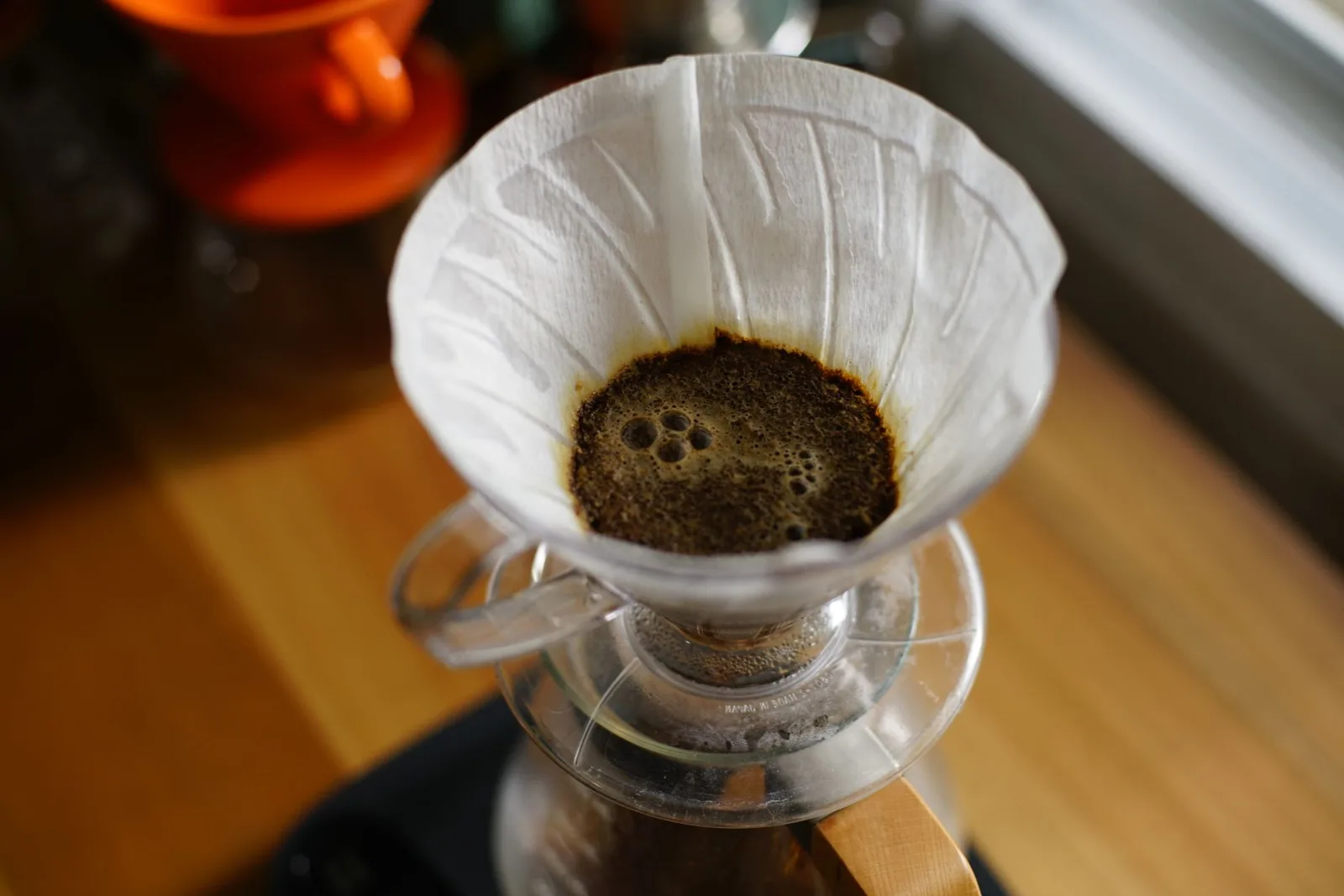
It's precisely this CO2 that explains the famous "bloom" you see in filter brewing, when you pour a small first amount of hot water over the ground coffee and it swells, releasing bubbles. This release of gas is healthy and expected, but it becomes a problem when it's too intense, in other words when the coffee is still too young at brewing time. Excess CO2 literally disrupts the contact between water and coffee, which gets in the way of a consistent extraction of aromas.
Why does coffee that's too fresh disappoint in the cup?
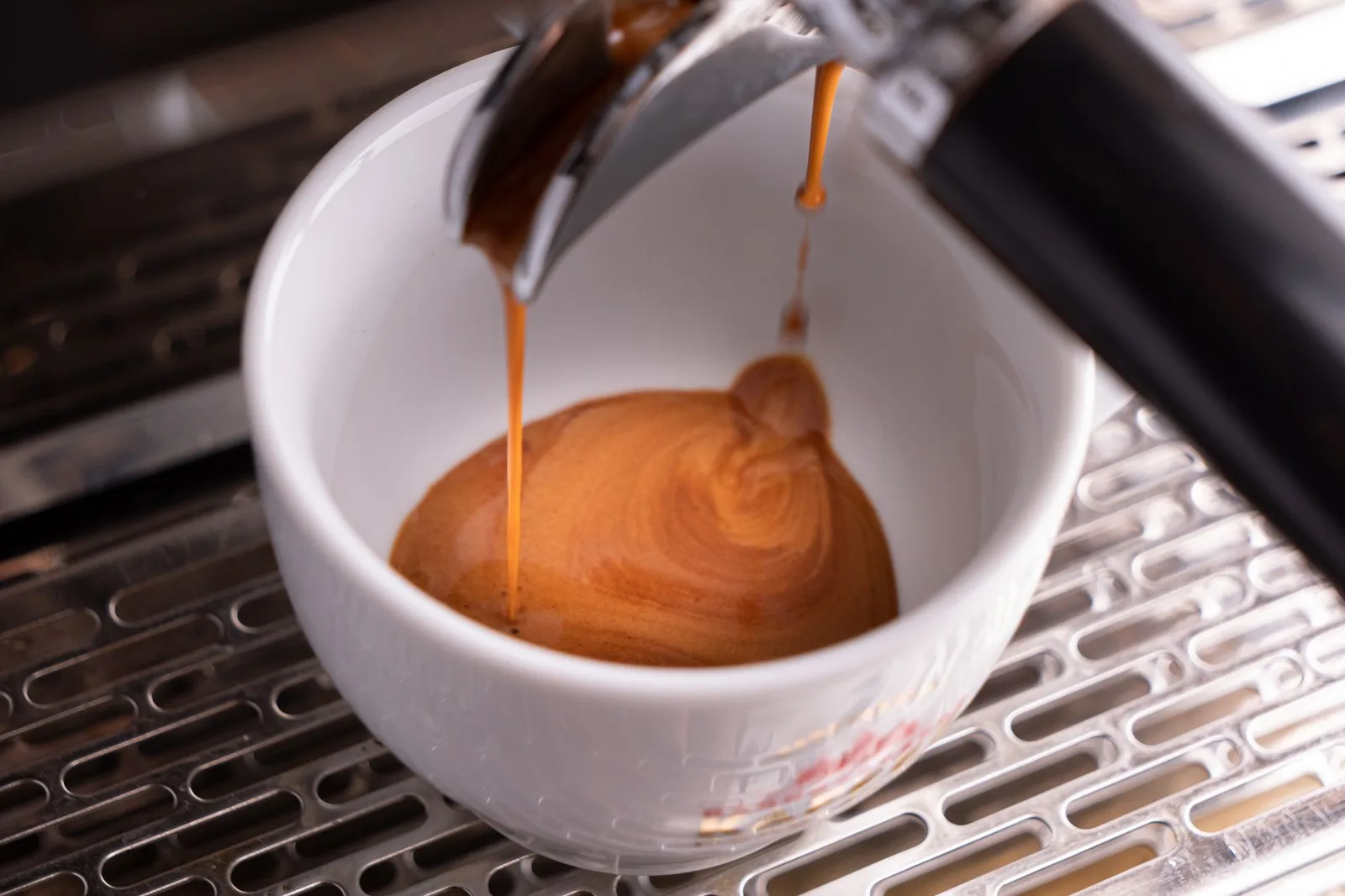
The most common mistake is believing that "the fresher, the better." In reality, coffee brewed within 24 to 48 hours of roasting often produces a chaotic extraction. With espresso, excess CO2 pushes the water back instead of letting it penetrate the coffee puck evenly, resulting in a thick, foamy, unstable crema, channels through the puck, and a completely unpredictable brewing time. If you're already struggling with channeling on a bottomless portafilter, know that coffee that's too young only makes the problem worse: our article on anti-channeling tips covers this aspect too.
With filter coffee, the symptoms are just as distinctive. Coffee that's too fresh will bubble excessively during the bloom, sometimes even forming a real little volcano of foam that overflows the filter. This erratic bubbling can disrupt the flow of water, create air pockets that prevent consistent contact between water and grounds, and ultimately deliver a cup that's under-extracted in some areas and over-extracted in others. On the palate, the result is often described as "hollow," with a sharp, unbalanced acidity that masks the aromatic notes the roaster set out to bring forward. If you keep running into extraction problems with filter coffee, our article on the 5 reasons your filter coffee could be better details other causes to look at alongside degassing.
Beyond the technical side of extraction, CO2 also affects aromatic perception itself. As long as the bean is saturated with gas, some volatile aromatic compounds stay partly masked or aren't released properly during brewing. A coffee that has had time to degas properly generally reveals clearer aromas, better-defined tasting notes, and a rounder body. That's why most specialty roasters print a roast date on their bags rather than a standard expiration date: that's the date that should guide your tasting schedule, not the purchase date.
How long should you really wait, depending on the method?
Espresso: a rest of 4 to 10 days
For espresso, the optimal resting window is generally between 4 and 10 days after roasting, with peak quality often seen around the seventh day for most light to medium roasts. Because this method is particularly sensitive to pressure and flow, excess CO2 has a disproportionate impact on the final result compared with filter methods. If your extraction runs too fast, with an erratic flow despite a fine grind, your coffee is far more likely to be still too young than badly ground.
Filter methods: patience for up to two weeks
For V60, Chemex, or AeroPress, you can generally afford to wait a little longer, between 7 and 14 days depending on the roast and the coffee's origin. Light roasts, which are denser and contain more compounds that have yet to dissolve, often benefit from a longer rest than darker roasts. On this point, the advice on slow, steady pouring found in pour-over troubleshooting resources applies particularly well: coffee that's still slightly gassy needs an even more delicate pour to avoid stalling or, conversely, a drawdown that's too fast.
Keep in mind, though, that coffee doesn't improve indefinitely with time. After a certain point, generally between three and six weeks depending on storage conditions, coffee starts to lose its aromatic qualities through oxidation rather than through lack of degassing. So the goal isn't to wait as long as possible, but to find the optimal freshness window, specific to each coffee and each brewing method.
The times given above are general guidelines, not universal rules: depending on the origin, the density of the bean, and the roast level, some coffees degas faster, others more slowly. The most reliable approach is still to follow your roaster's guidance when they provide it, or simply to test (a calm, even bloom, with no excessive bubbling, signals a coffee that's ready to brew). In any case, never wait several months before using a coffee, even if you think it hasn't finished degassing: after a few weeks, it's oxidation that degrades the aromas, not residual CO2.
Storing your coffee properly during the degassing phase
Storage plays a decisive role during this resting period. An airtight container fitted with a one-way degassing valve remains the most effective solution: it lets CO2 escape without letting in oxygen and ambient humidity, which are the real enemies of coffee freshness. This is exactly the principle roasters use on their professional bags, and it's entirely possible to reproduce the system at home with a suitable airtight container, such as the Airscape canister, a simple, effective way to preserve aromas during this phase. For a more advanced system (active vacuum storage rather than a simple airtight seal), the Fellow Atmos delivers an even better result, at a higher price. We cover all the best storage practices, including the question of the freezer and opaque containers, in our complete guide to storing coffee.
It's also important to avoid transferring your coffee to a fully airtight container without a valve during the first few days after purchase, or you risk seeing the bag or jar swell dangerously under the pressure of the released CO2. Conversely, leaving the coffee in the open air for too long speeds up its oxidation and quickly robs it of its most volatile aromas. The balance between "letting it breathe" and "protecting it from oxygen" is therefore the key to successful storage during this delicate phase.
Steps for managing your coffee's degassing
Step 1: Find the roast date
First of all, check the roast date on the bag rather than the purchase date or any standard expiration date. This is the date that should guide your whole tasting schedule, since it marks the true starting point of degassing. Most specialty roasters display it for precisely this reason.
Step 2: Rest the coffee according to your brewing method
The optimal resting time depends directly on the method you'll be using. For espresso, generally allow between 4 and 10 days, with peak quality often seen around the seventh day. For filter methods such as V60, Chemex, or AeroPress, the coffee may need a longer rest, between 7 and 14 days, especially for light roasts and denser coffees.
Step 3: Choose a suitable container for the resting phase
While the CO2 continues to escape, store your coffee in an airtight container fitted with a one-way degassing valve, which lets the gas out without letting in oxygen or humidity: an Airscape canister does this job perfectly day to day. On the other hand, avoid transferring freshly roasted coffee to a fully airtight jar without a valve, or you risk seeing it swell dangerously under the pressure of the released gas. Our guide to storing coffee details all these best practices.
Step 4: Adjust grind and pre-infusion if the coffee is still young
If you still have to brew a coffee that hasn't had time to degas fully, go for a slightly coarser grind and a longer pre-infusion. This gives the residual CO2 more time to escape before the main extraction phase and limits the negative effects of excessive bubbling or channeling, whether you're making espresso or filter coffee.
Step 5: Drink it within the optimal freshness window
Once the initial rest is done, don't wait too long before drinking your coffee: after about three to six weeks depending on storage conditions, its aromatic qualities start to decline through oxidation rather than through lack of degassing. So the goal isn't to wait as long as possible, but to target the window when the coffee has degassed enough without having started to oxidize.
If you receive a coffee and need to use it quickly, go for a slightly coarser grind and a longer pre-infusion: this gives the residual CO2 more time to escape before the main extraction phase and limits the negative effects of a coffee that's still too young.
Understanding degassing ultimately means understanding an essential part of coffee's journey from roast to cup. It's not a minor detail reserved for purists, but a decisive factor in getting a stable extraction and fully expressed aromas, whether you lean toward espresso or filter methods. The next time you receive a bag of freshly roasted coffee, resist the temptation to open it right away, and give it a few days of patience before it goes through your grinder.


