
A French press, also called a cafetière or press pot, asks for very little: ground coffee, hot water and a few minutes of patience. Water and grounds steep together, which helps extract the coffee evenly. The method is cheap, easy and repeatable.
Its metal mesh lets a little oil and tiny particles into the cup, which gives a big, rich body. That same mesh is why the result can disappoint: sludge collects at the bottom of the cup, sandy in the mouth. Coffee left on its grounds can also turn bitter and astringent. This guide shows you how to choose a grinder and grind, brew with clear numbers, and fix both problems.
Which grinder and grind suit a French press?
Choose burrs over blades
Grinders come in two families: blade and burr. A blade grinder smashes the beans, leaving fine powder next to large pieces. The powder adds bitterness, the large pieces an unpleasant sourness, and a French press ends up with a lot of grit in the cup.
A burr grinder cuts the beans between two facing discs. Grounds only escape once they fit through the gap, so they come out very even. Fines, tiny particles that break off along the way, almost always dissolve fully, with bitter consequences.
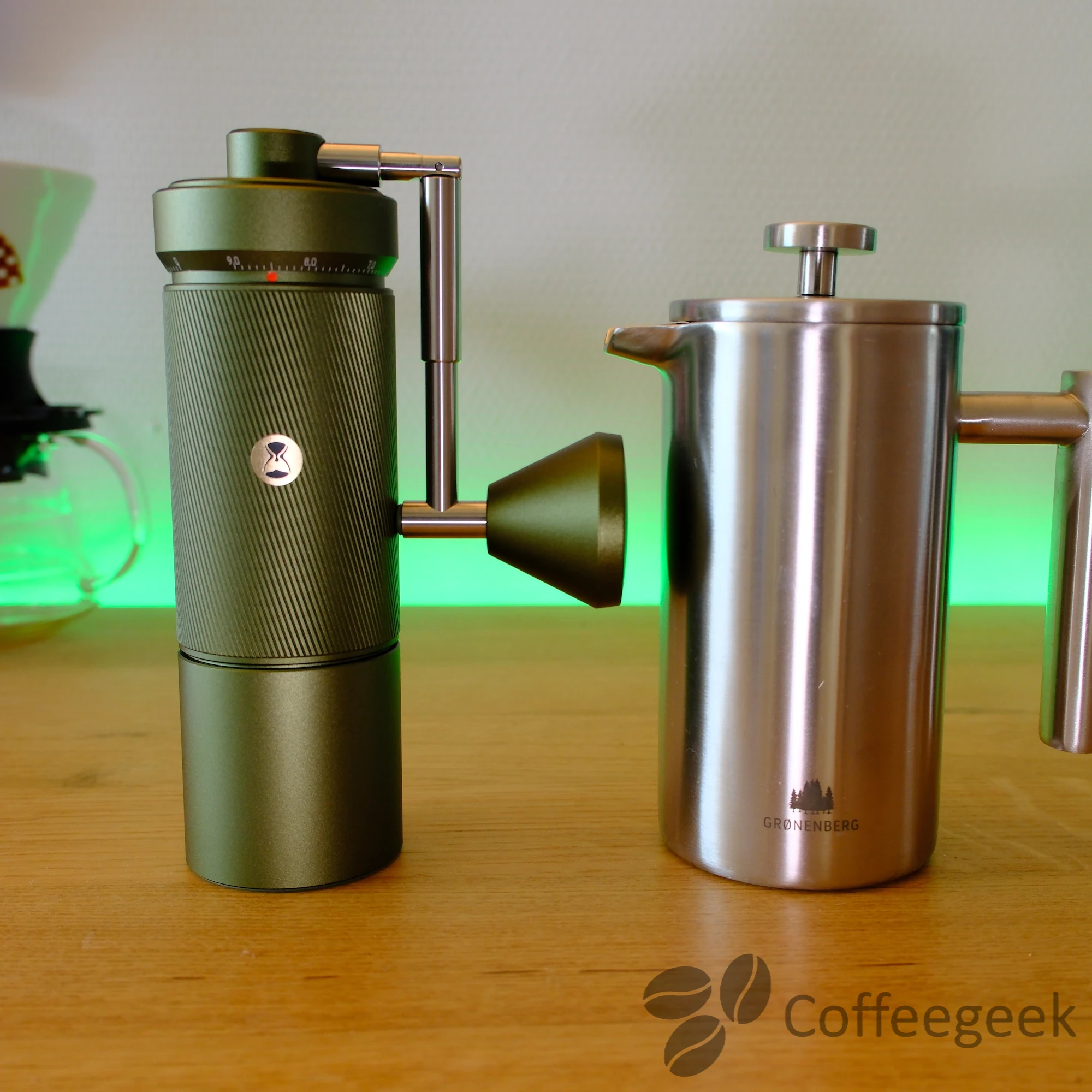
Burr grinders cost more, but need not be expensive. Manual models are relatively cheap and easy to use: the Timemore C5 is made for pour-over and French press, and the Timemore S5 Pro has a French press range of 80 to 90 clicks. An electric one suits you if you grind large quantities every day.
Aim for medium to medium-coarse
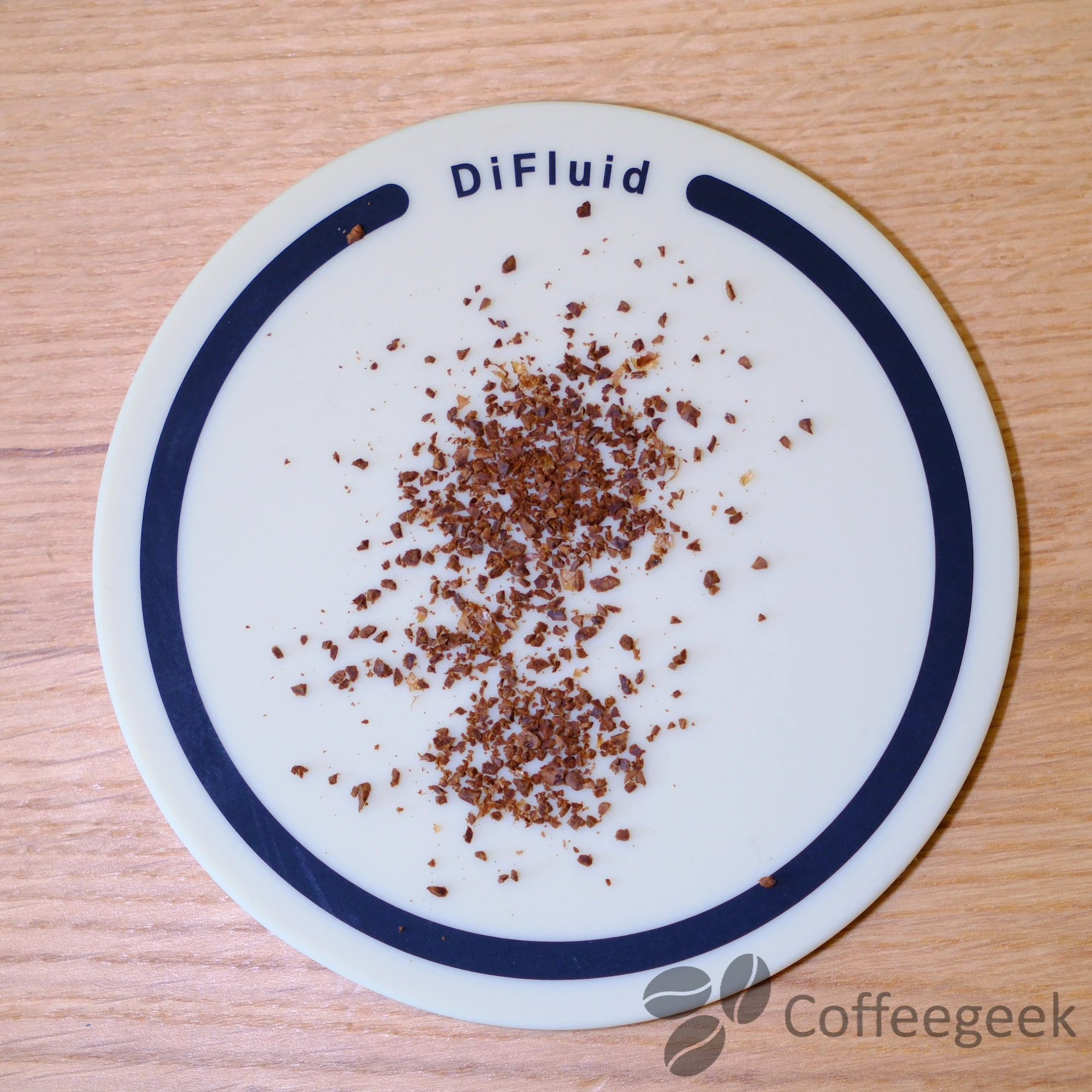
For a French press, aim for a medium to medium-coarse grind, with the look of superfine (caster) sugar or cooking salt. To see how grind size shapes extraction in general, read our guide to coffee grind size.
Too fine a grind means the plunger needs excessive force, more particles seep through or around the filter, and the cup can over-extract and taste bitter. Many people grind very coarsely, closer to breadcrumbs or couscous. That is only necessary if your grinder makes a lot of fines and your brews quickly turn bitter. Go a notch finer or coarser until you like the cup.
Grind just before brewing
Oxidation begins as soon as coffee is ground, and flavors deteriorate quickly. Once the bag is open, beans keep for several days, ground coffee for a few hours at most. Pre-ground coffee works, but it won't taste as good as it could.
After changing the setting, purge a few grams and throw them away, because the first coffee out is still the old size. Clean the grinder regularly too: oily deposits can turn rancid and taint fresh grounds.
How to brew French press coffee, step by step
You need a press, a burr grinder, a kettle, a spoon and a digital scale. Weighing lets you repeat a good cup and know what to change after a bad one. Water makes up 98.5 percent of a cup of filter coffee, so choose fresh, clean water with a low mineral content. If you can taste chlorine, a filter pitcher with active carbon helps.
Benchmarks for a first brew:
- Ratio: 60 to 70 g of coffee per liter of water, so 30 g to 500 g of water to start. For a stronger cup, go up to 75 g per liter.
- Water: 92–96 °C (198–205 °F), which means just off the boil.
- Time: 4 minutes of steeping, then 2 minutes of rest.
-
Preheat the press
Boil fresh cold water, preferably filtered. Fill the press with hot water, then discard the water.
-
Weigh and grind
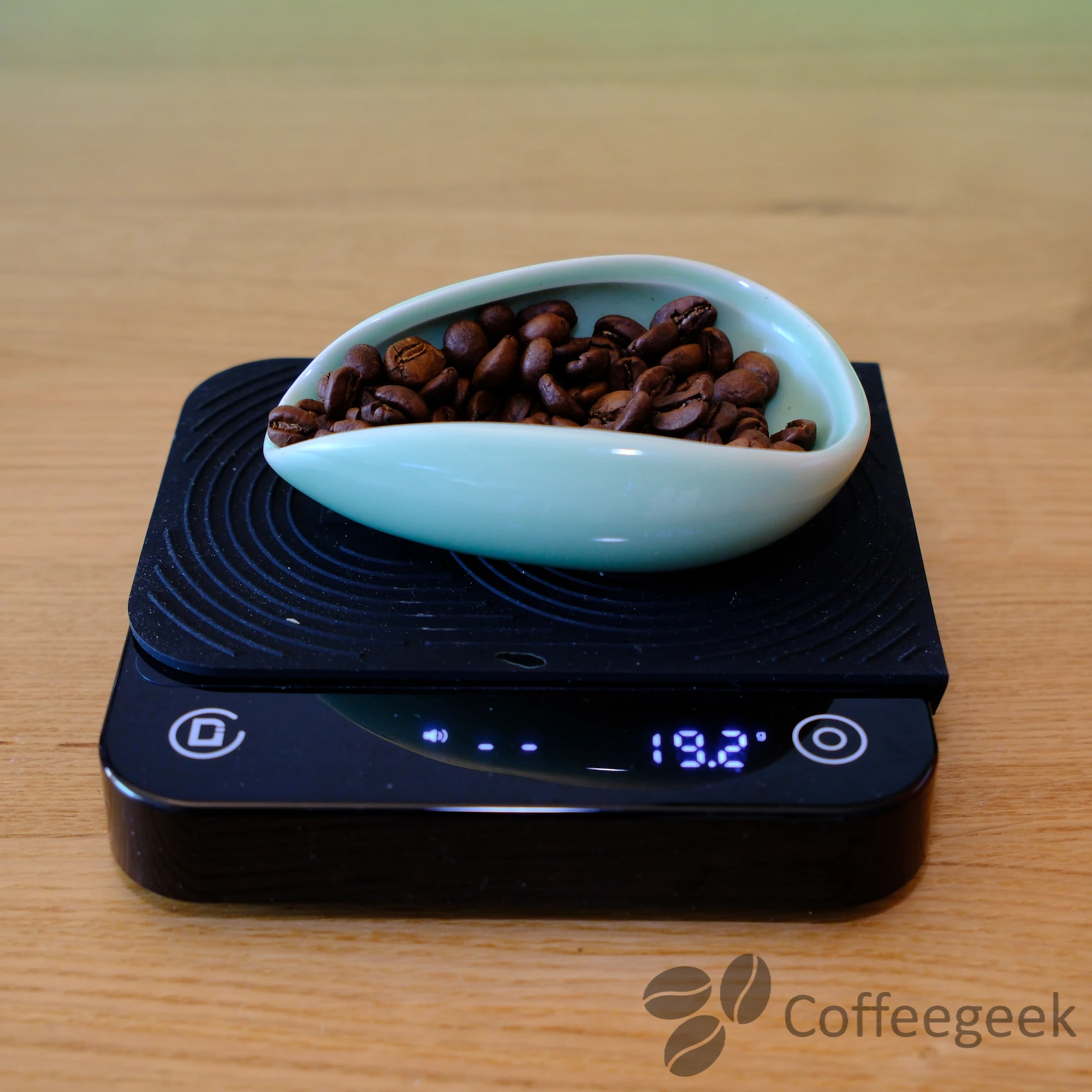
Weigh 30 g of coffee first, then grind it to a medium or medium-coarse size.
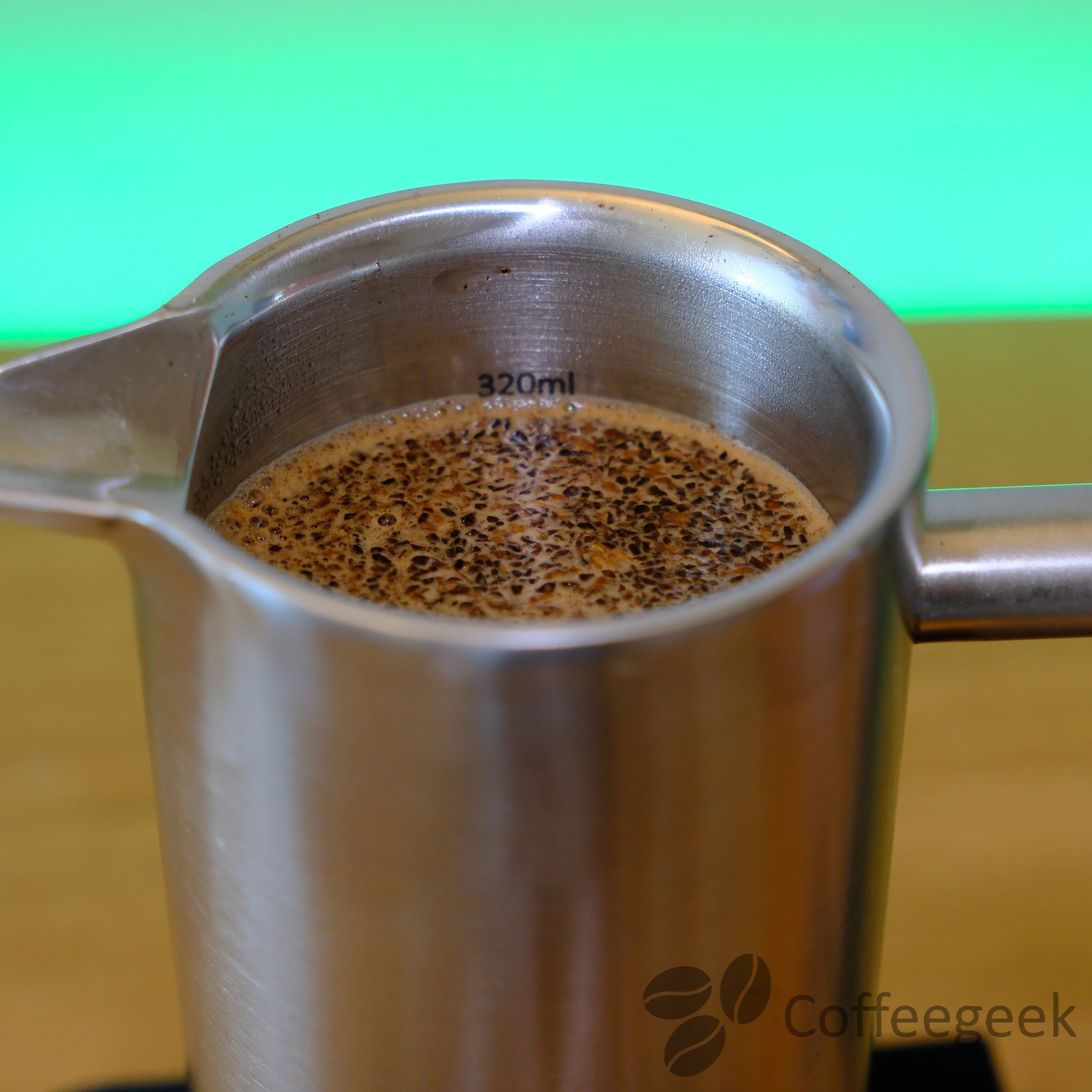
noteMy French press holds 320 ml, not 500 ml, so I weigh only 19.2 g of coffee to keep the same ratio.
-
Add the coffee
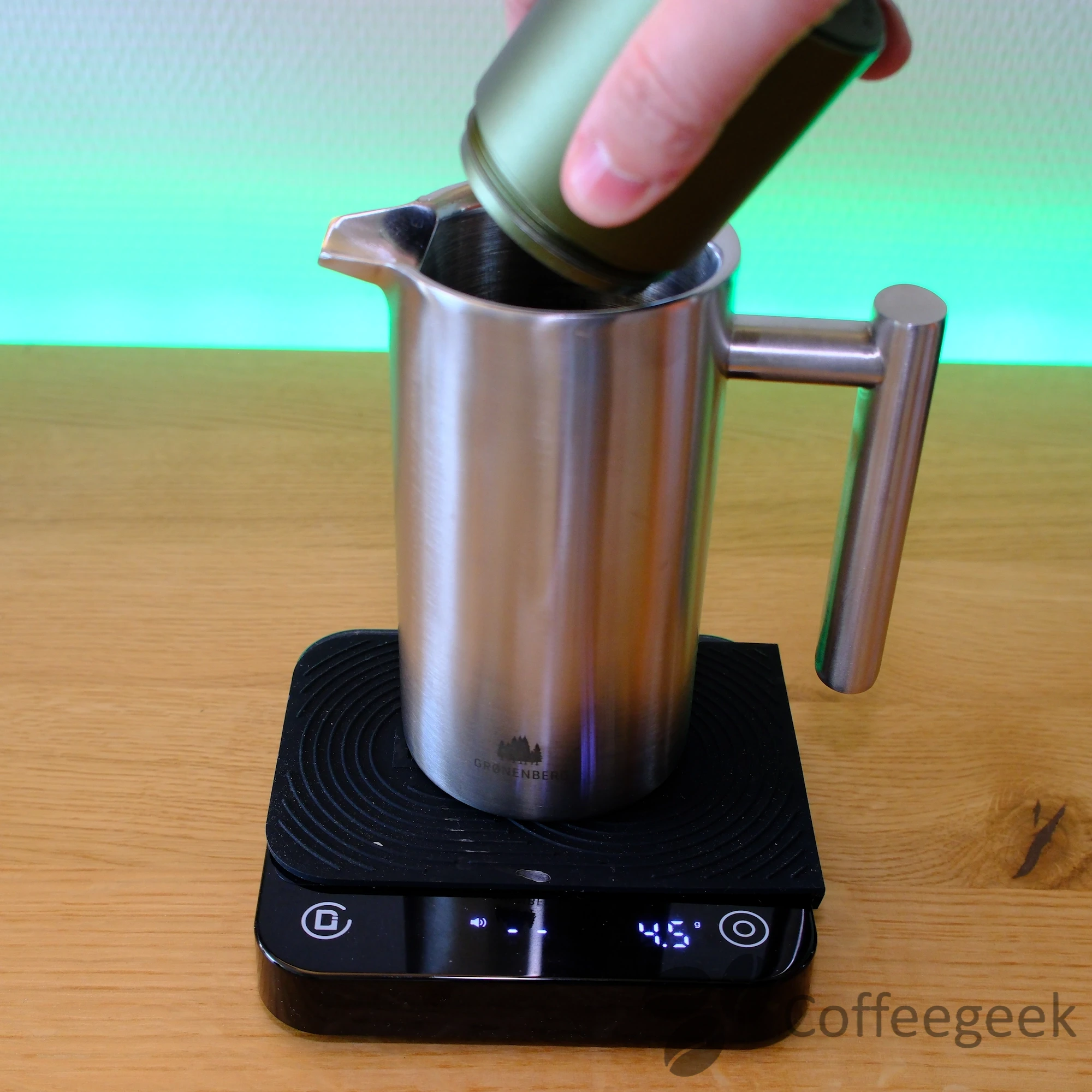
Put the press on the scale and tare it, which resets it to zero. Add the coffee and tare again.
-
Pour the water
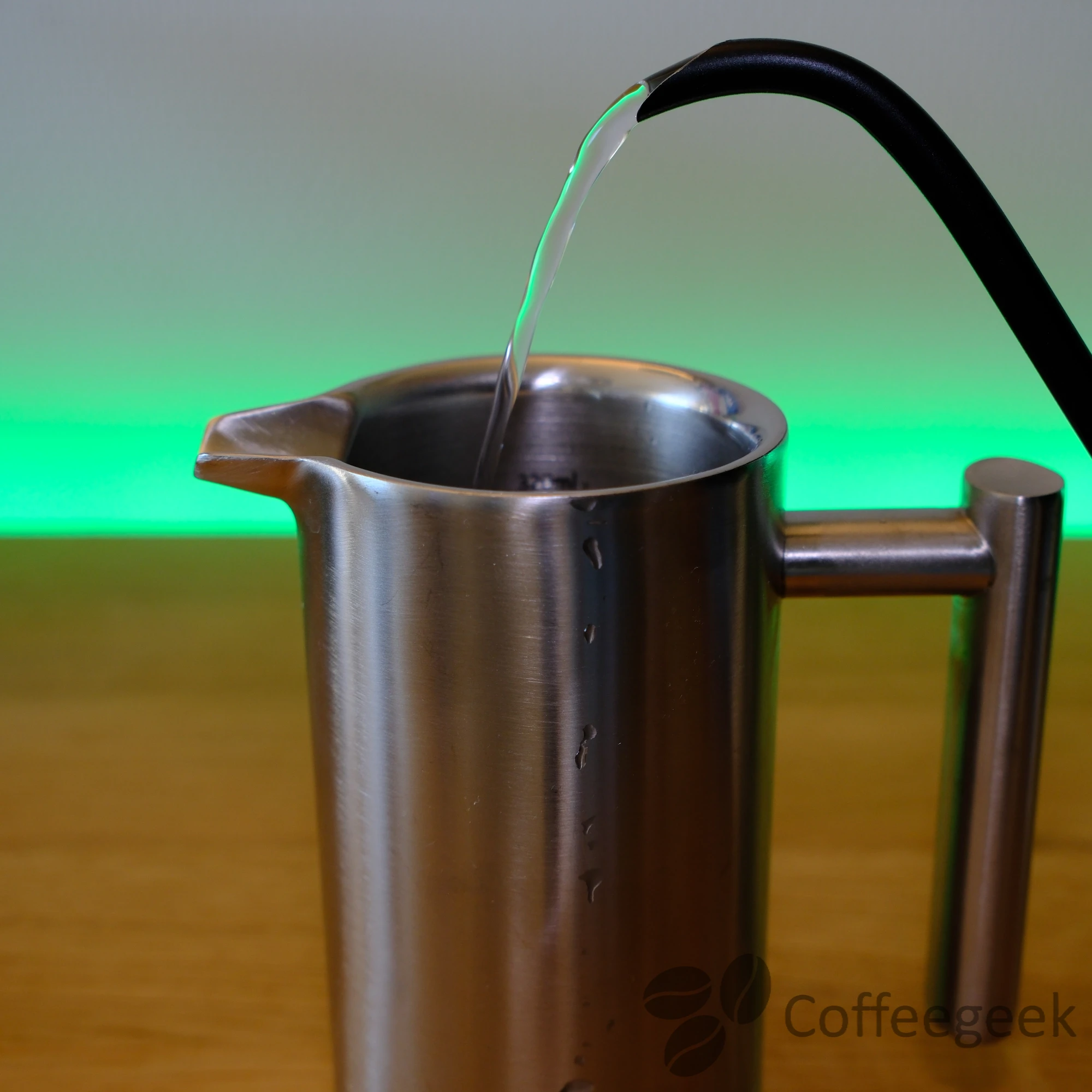
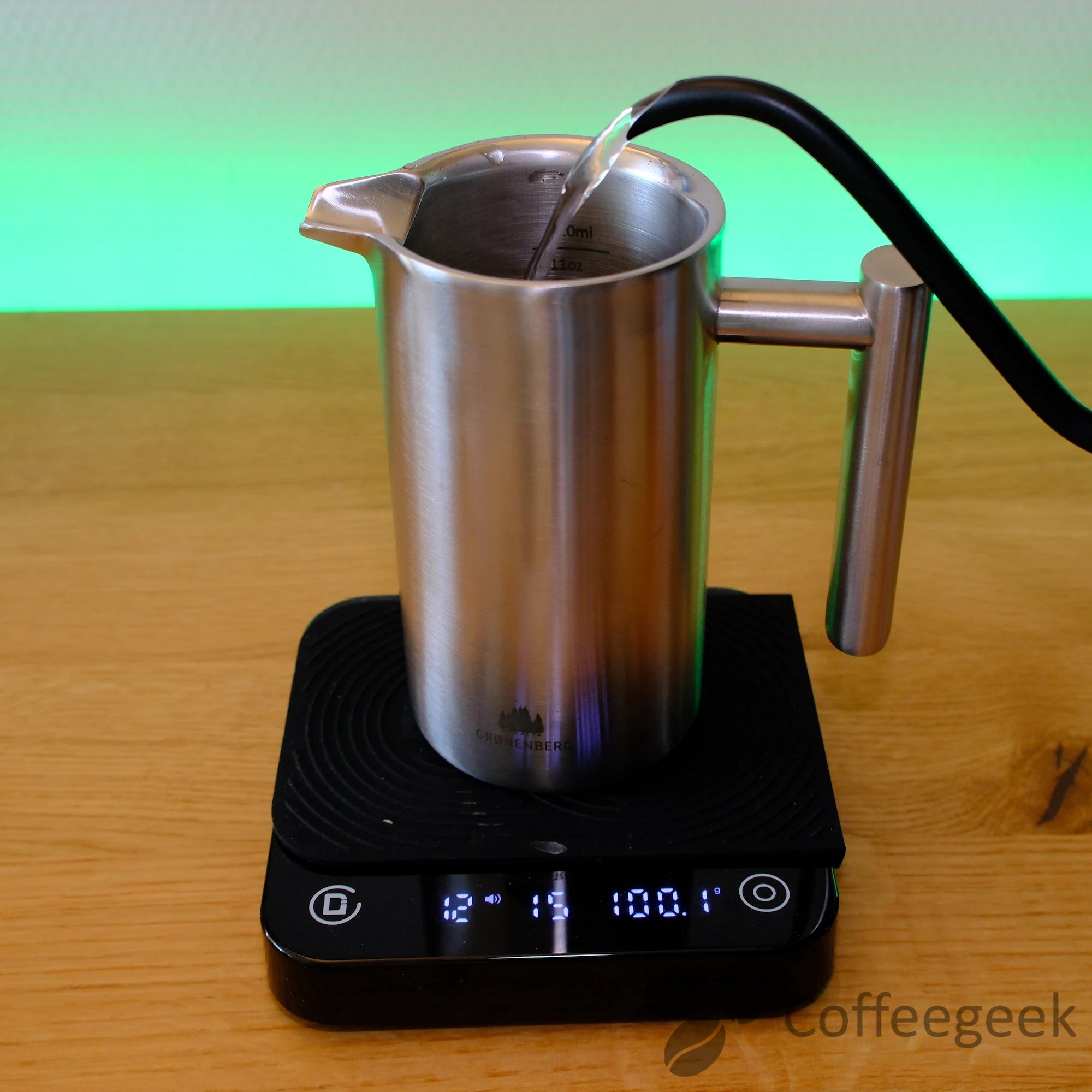
Bring the kettle back to the boil and wait about 30 seconds, which brings the water into the right range. Pour in 500 g, checking the weight and temperature.
-
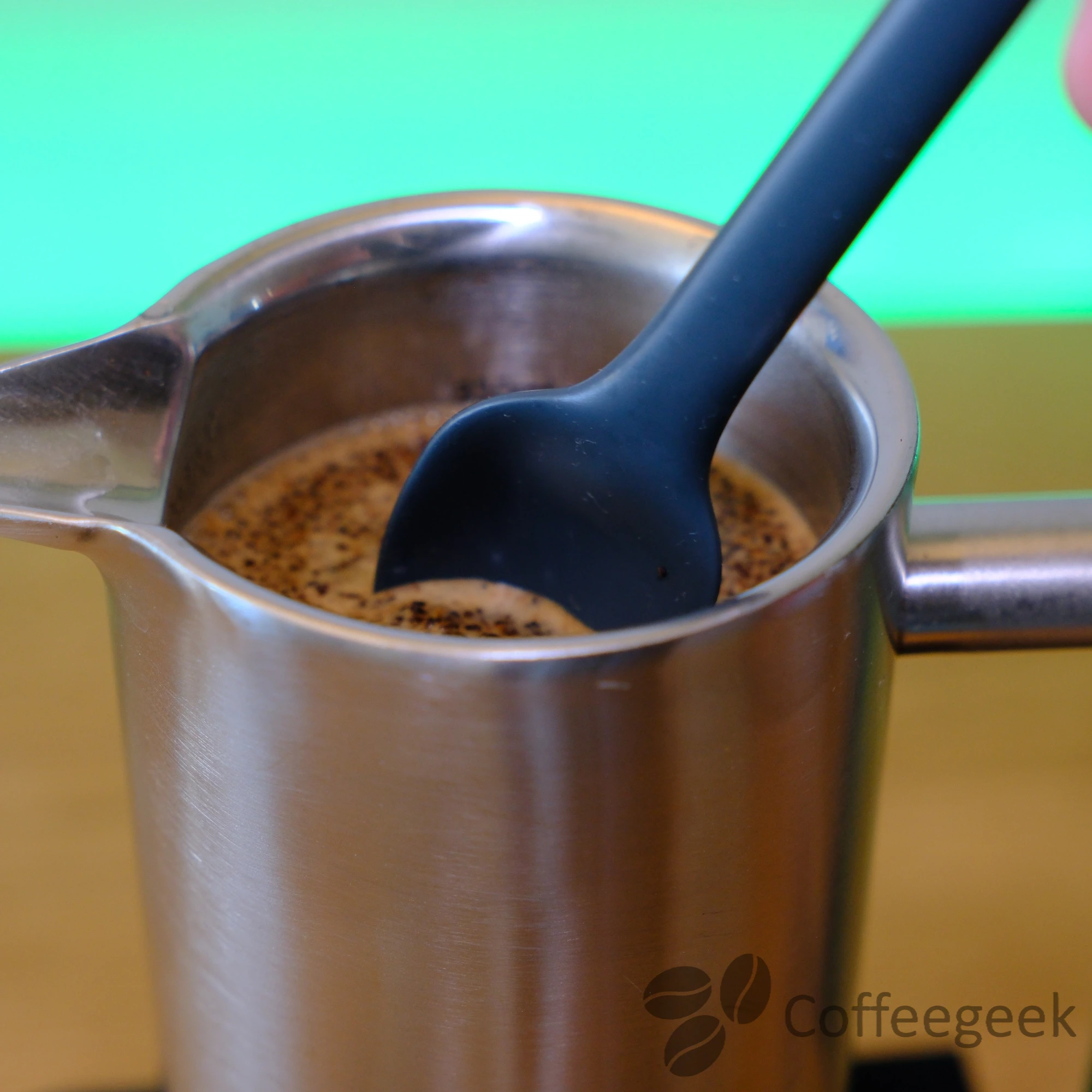
Stir the grounds
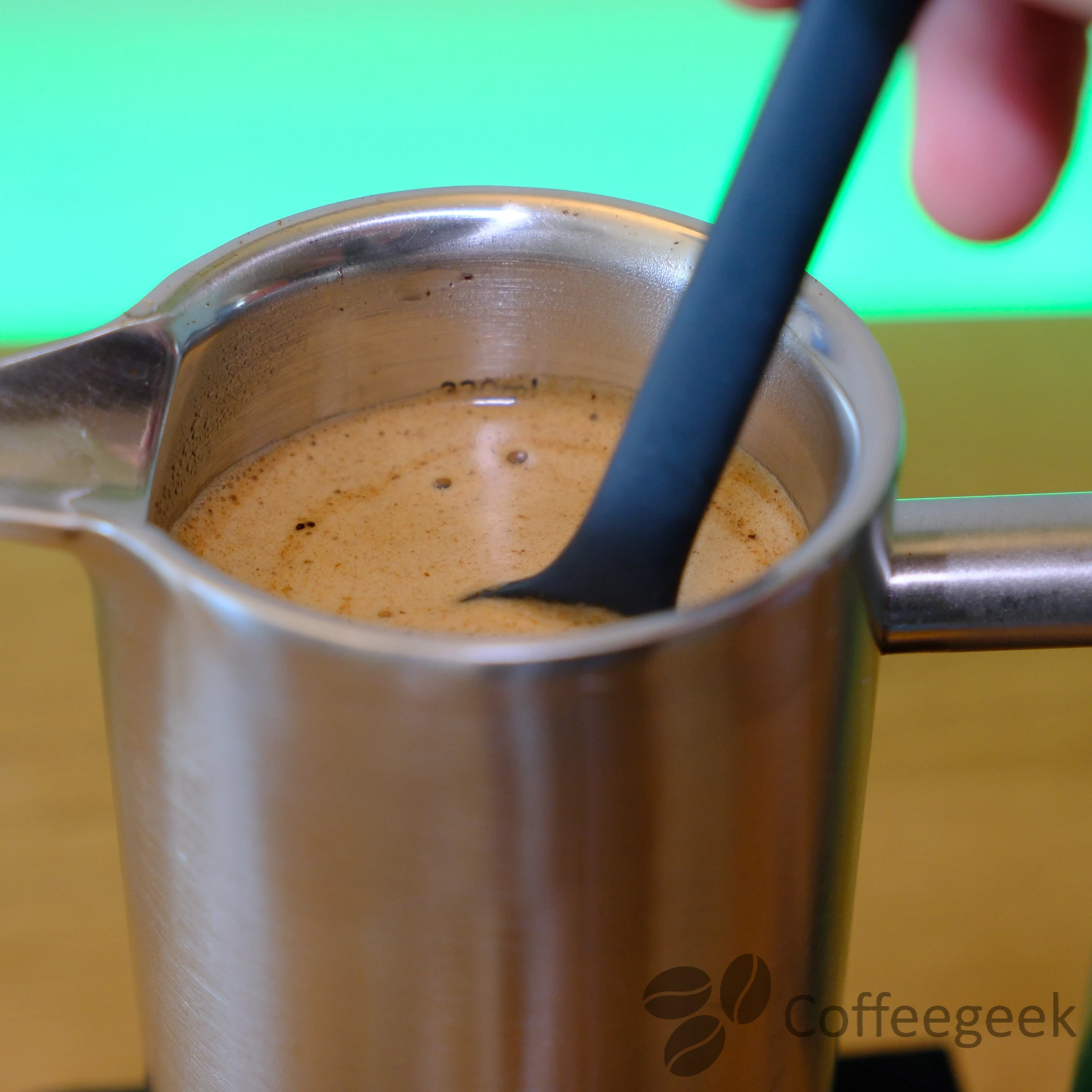
Stir once or twice with a spoon to saturate the grounds. Using a glass carafe? Read the warning further down before you stir.
-
Steep for 4 minutes
Leave the coffee alone for 4 minutes. A crust forms on top.
-
Stir the crust and skim
Gently stir the surface: much of the crust falls away, leaving foam and floating bits. Lift them off with a spoon and throw them down the sink.
-
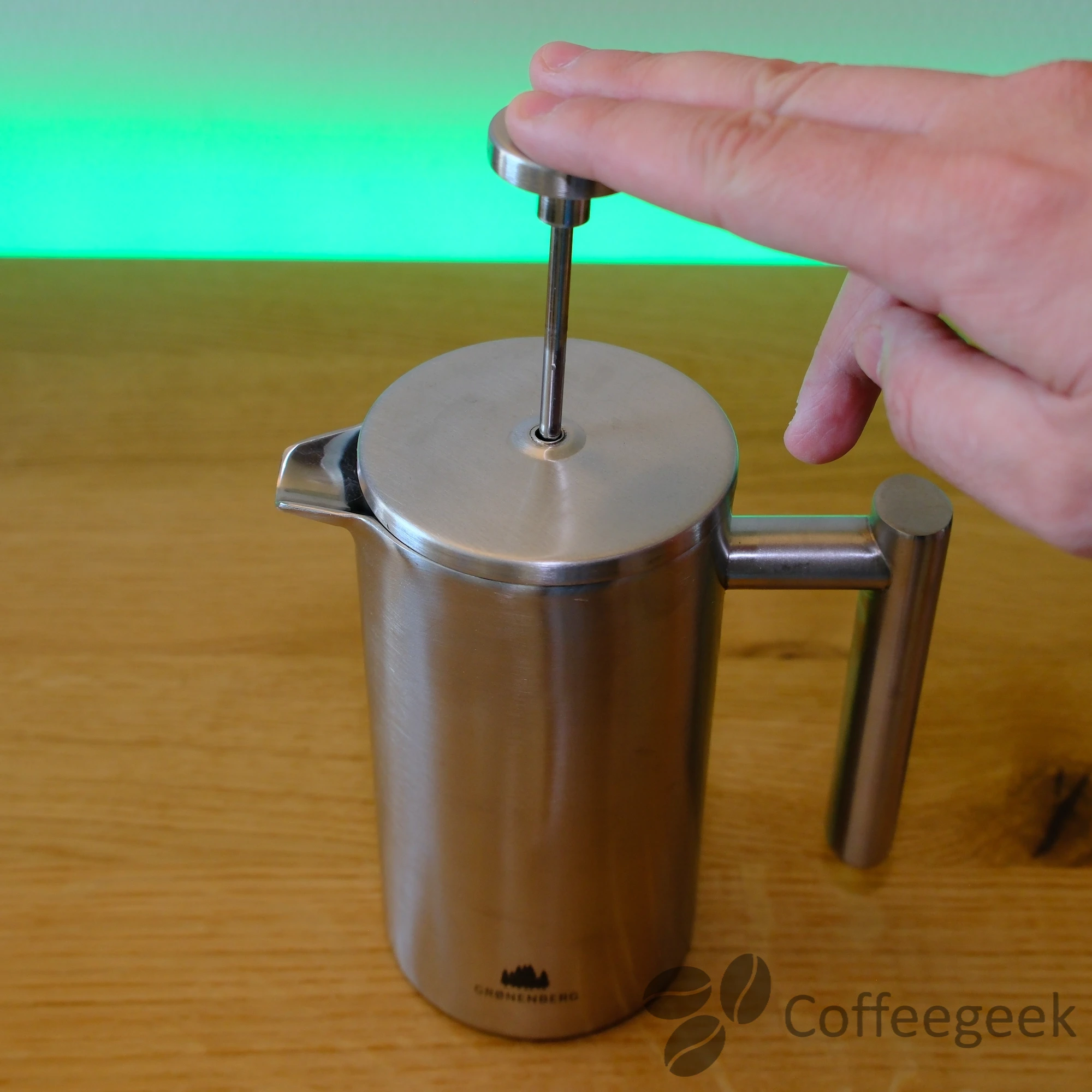
Plunge gently
Place the filter on top of the press and push down slowly until the grounds are at the bottom. Going slowly prevents accidental scalding. The mesh normally doesn't compress the grounds: most designs leave about 30 mm of space below it.
-
Rest, then serve
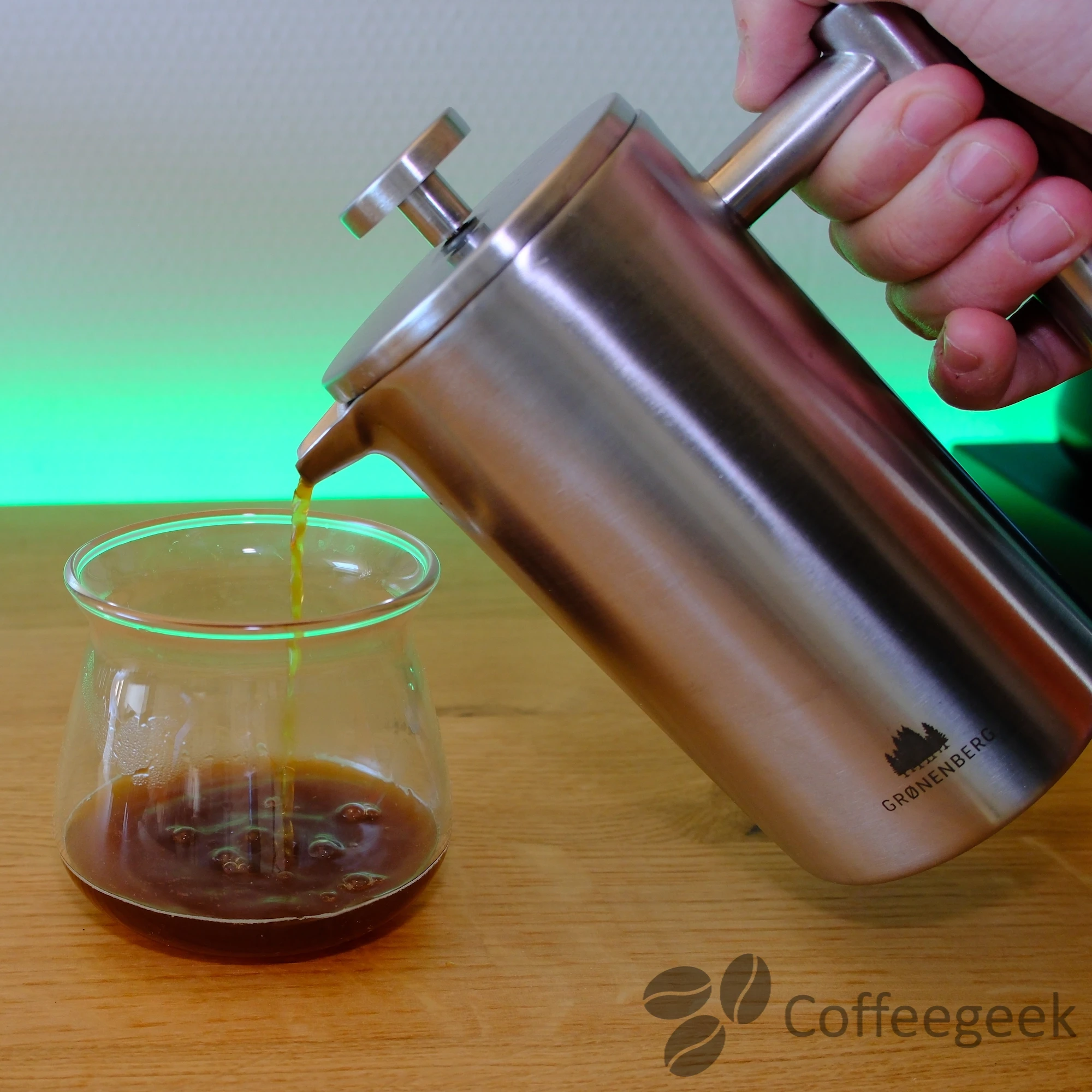
Let the coffee rest for 2 more minutes so the particles settle, then serve it.
Want less sediment? Let it settle longer
This slower version gives a cleaner cup. Follow the steps through skimming, then do nothing for at least five minutes. The floating bits sink and settle in the bed of coffee at the bottom. The coffee is ready after five, maybe seven or eight minutes.
Then lower the plunger only to the surface of the coffee, because pushing further here would stir the sediment back up. The plunger acts as a strainer for any big pieces still floating. Pour gently.
How to fix common French press problems
Too much silt? Add paper
Passing the brewed coffee through a paper filter removes insoluble particles. You lose some body, but flavors come through better. "I recommend filtering a French press through a pre-rinsed, pre-heated paper cone," says Ryan Cross, wholesale manager at Ristretto Roasters, "for a cup that is delicious and clean."
You can also fit a wet paper filter on the plunger, below the mesh. Push really slowly: about a minute on a small press, a minute and a half on a bigger one. Going quickly can rip the paper. On a small press, this setup allows a finer grind, around 16 clicks on a Comandante. Use 15 g of coffee and 225 g of water, and steep for 3 minutes.
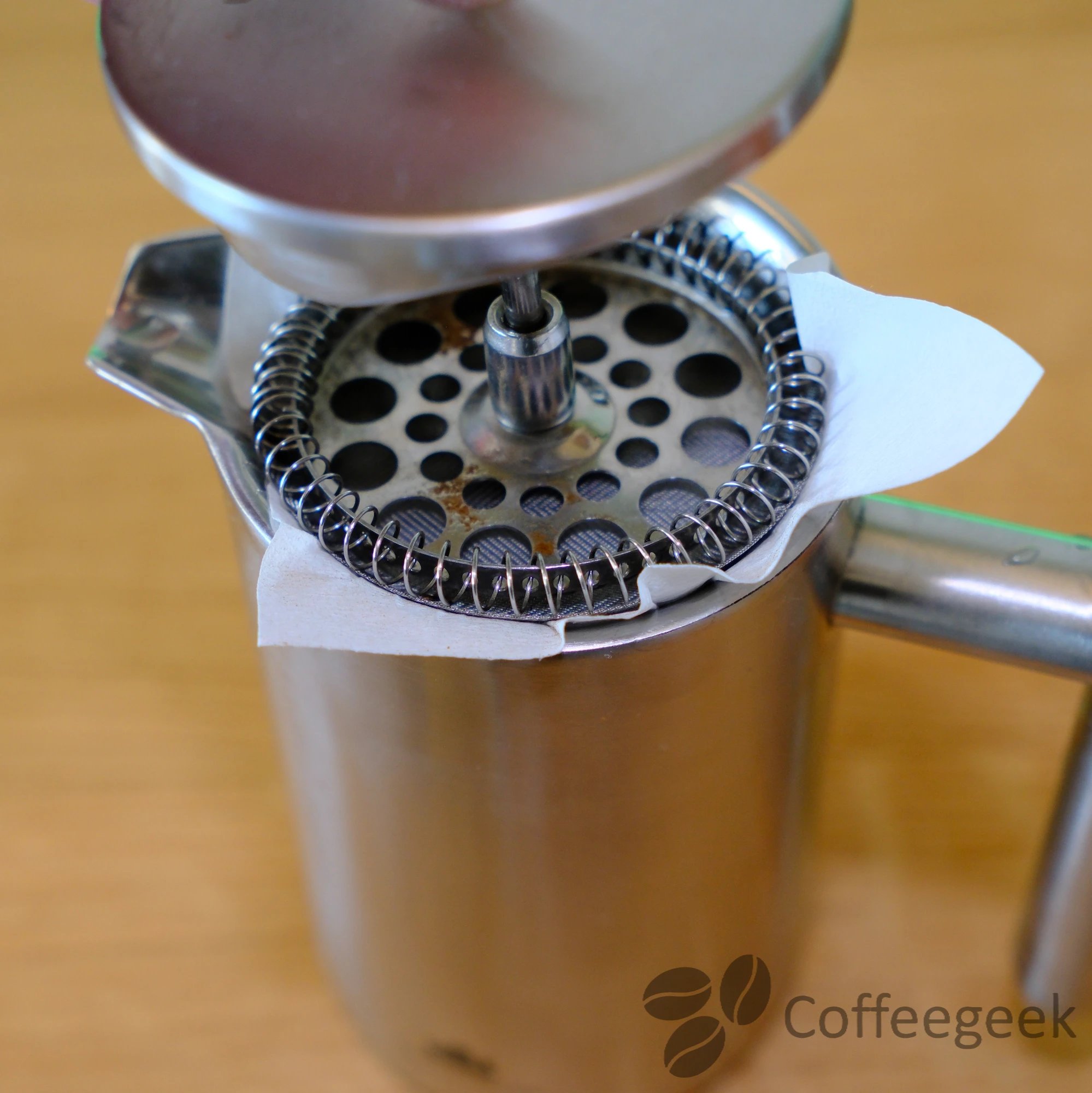
Cafestol and kahweol, coffee compounds that contribute to higher cholesterol, are absent from paper-filtered coffee. The effect of other brewing methods on cholesterol is marginal, yet enough to fuel demand for paper filtration. Mesh has its own upside: the oils that pass through help retain aroma and add to mouthfeel.
Plunger too hard to press?
Too much resistance can mean too much coffee, too fine a grind or not enough steeping time. Change one of these on your next brew.
Second cup tastes dirty?
A French press is not a brew-and-hold method: the coffee touches the grounds for as long as it stays in the carafe. Make only what you will drink right away, and decant the rest into another vessel.
Keep it fresh and clean
- Beans: check the roast date on the bag. Coffee is still off-gassing in the first couple of days after roasting, so give it a few days before brewing. Our guide to coffee degassing explains how long to wait.
- Cleaning: after serving, dismantle the press and unscrew each element of the mesh filter. Trapped grounds and oils can add a bitter or sour flavor. Many presses are dishwasher-safe, but check your model.
Before brewing with glass, read our article on the Bodum French press recall: it explains how to check your carafe and what to stir with.
Start with 30 g, 4 minutes and a gentle plunge
For your first brew, keep it simple. Use 30 g of coffee to 500 g of water, a medium to medium-coarse grind from a burr grinder, and water just off the boil. Grind just before brewing, steep for 4 minutes, then stir the crust and skim. Plunge gently, let the coffee settle and pour gently.
Then adjust one thing at a time. If the cup turns bitter, grind coarser. If silt bothers you, try the longer settling time or a paper filter. Experimenting is the way to find the right grind at home.