

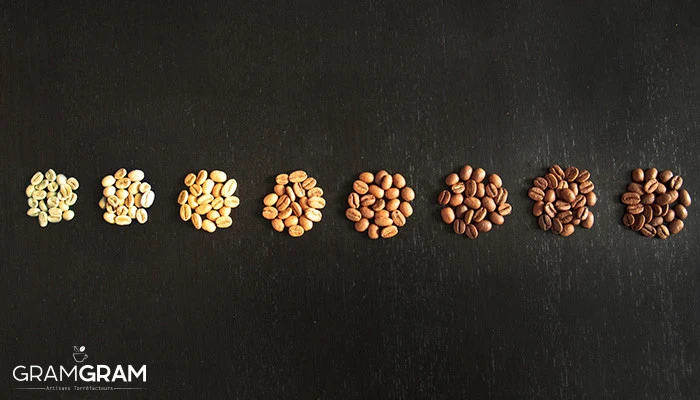

If you've ever caught the heady smell drifting out of a roaster in full swing, you've smelled, without knowing it, the olfactory signature of the Maillard reaction. This chemical transformation, discovered by French physician and chemist Louis-Camille Maillard in 1912, isn't unique to coffee: it also happens when you brown meat, toast bread, or caramelize an onion. But in the coffee bean it plays an absolutely central role, because it's what generates most of the hundreds of aromatic compounds behind the flavor we love so much.
Understanding this reaction isn't just about satisfying your scientific curiosity. It also gives you the tools to read a roast sheet better, to choose a coffee more wisely for the aromatic profile you're after, and to better understand why two beans from the same origin can produce radically different cups. That's what this article is about.
What exactly is the Maillard reaction?
The Maillard reaction is a chemical reaction between amino acids (the building blocks of proteins) and reducing sugars (such as glucose or fructose), driven by heat. In practical terms, when green coffee is heated in the roaster's drum, these two families of molecules, stable until then, start reacting with each other in an extremely complex cascade of reactions. The result of this cascade is the formation of hundreds, even thousands, of new compounds: melanoidins (responsible for the brown color), pyrazines, furans, thiophenes, and many other volatile molecules that make up most of the aromatic bouquet of roasted coffee.
It's important to understand that this reaction isn't an isolated event that kicks in at a precise moment and then stops. It's more of a continuum of reactions that gradually intensify as the temperature rises, then keep changing in intensity and nature depending on how long the bean is exposed to heat. That's why the roast curve, meaning the way temperature changes over time, has such a decisive impact on a coffee's final flavor profile. Two roasters using the same green coffee but different curves will get very distinct aromatic results, simply because the Maillard chemistry won't have had time to produce the same molecules.
Green coffee naturally contains sugars (about 6 to 9% reducing sugars and sucrose depending on origin) as well as free amino acids and proteins, so all the conditions are in place for this reaction to occur as soon as the heat climbs high enough. That's also one of the reasons why the biochemical composition of green coffee, which varies with the botanical variety, growing altitude, and post-harvest processing method, directly influences the aromatic potential a roast can reveal.
Where the Maillard reaction fits in a roast
To place the Maillard reaction within the overall roasting process, you have to put it between two stages well known to enthusiasts: the drying phase and first crack. During the first few minutes, the bean mostly loses its residual moisture, with no major chemical transformation. Only when the bean temperature reaches roughly 140°C to 165°C does the Maillard reaction truly get going and become the main driver of the changes underway, well before the bean audibly cracks.
This phase, sometimes called the "aromatic development phase" by roasters, is crucial because it builds the foundation of the flavor profile. The longer it's stretched out (what's sometimes called "Maillard time" in professional roasters' jargon), the more chance the aromas have to grow in complexity, giving toasty, nutty, honey, or cereal notes. Conversely, too fast a temperature rise through this zone tends to produce a coffee that's simpler on the palate, sometimes more acidic and less rounded, because the reactions haven't had time to fully unfold.
Right after this phase comes first crack, that small, characteristic cracking sound marking the moment when the bean's internal pressure, caused by the water vapor and CO₂ produced inside it, exceeds the structural strength of the cell walls. For more on this pivotal stage and what happens next up to second crack, I'll point you to the dedicated article on first and second crack, which details exactly what's going on physically and chemically inside the bean at that moment.
Maillard and caramelization: two reactions you shouldn't confuse
Many enthusiasts confuse the Maillard reaction with caramelization, and it's understandable, since both reactions occur simultaneously during roasting and both contribute to coffee's brown color and to some of its sweet aromas. Yet they are two distinct chemical phenomena. Caramelization is the thermal breakdown of sugars alone, with no amino acids involved, and it generally requires higher temperatures (above 170°C for pure sucrose) than those at which the Maillard reaction starts.
The difference isn't merely academic: it has concrete consequences for flavor. Caramelization mainly produces sweet, caramelized notes, sometimes slightly bitter toward the end of the reaction, while the Maillard reaction generates a much wider palette including roasty, toasted, earthy, fruity, or even floral notes, depending on the specific compounds formed. This molecular diversity, unique to Maillard, explains coffee's extraordinary aromatic richness compared with other foods that are simply caramelized.
In practice, the two reactions intertwine constantly throughout the roast, and it's precisely this combination, modulated by the duration and intensity of the heat, that shapes the final profile. An experienced roaster is constantly playing with this balance, adjusting the rate of temperature rise and the length of each phase to favor either the aromatic complexity of Maillard or the sweet roundness of caramelization, depending on the result they want from a given origin.
Why this chemistry determines your cup's profile
If you've ever compared a light roast with a dark roast, you've tasted firsthand the effects of how long the bean was exposed to the Maillard reaction. A light coffee, where the roast is stopped soon after first crack, retains more of the acidity and origin characteristics of the green coffee, because the Maillard reactions have had little time to deeply transform the bean's matrix. Conversely, in a darker coffee, where the roast continues well beyond that point, the sugars and amino acids are largely consumed by the chemical reactions, which gradually erases the original fruity or floral notes in favor of more toasted, more bitter, even smoky notes if you get close to second crack.
This chemistry also explains why a poorly roasted coffee can develop unpleasant flavor defects. A roast that's too fast, "burning" the outside of the bean without giving Maillard time to develop evenly through to the core, produces what's sometimes called a "baked" or unbalanced coffee, with flat acidity and little complexity. If you're trying to understand the more specific causes of a coffee that tastes bitter or unpleasant, the article on the common causes of bitter coffee covers several related factors, some of which stem from a poorly controlled roast.
Finally, this understanding of the bean's chemistry also partly explains why freshly roasted coffee, and more broadly specialty-grade coffee, differs so much from standard industrial coffee. Artisan roasters fine-tune their curves with great precision, bean by bean, batch by batch, to make the most of each origin's own aromatic potential, while industrial roasts often favor speed and consistency at the expense of this finesse. The topic is covered in more detail in the article comparing roaster coffee and supermarket coffee. If you feel like testing this chemistry at home, you should also know that it's entirely possible to roast your own coffee, as explained in this guide to home roasting, an excellent way to watch, in real time, the moment when the Maillard reaction takes over from simple drying.
So the Maillard reaction is far more than a chemist's curiosity: it's literally the invisible engine that turns a green, bland, astringent seed into one of the most aromatically complex products in our diet. The next time you taste an espresso with nutty notes or a filter coffee with aromas of toast, you'll know exactly what you owe that pleasure to: a few minutes of organic chemistry carefully orchestrated in a drum heated just right.
The steps of the Maillard reaction during roasting
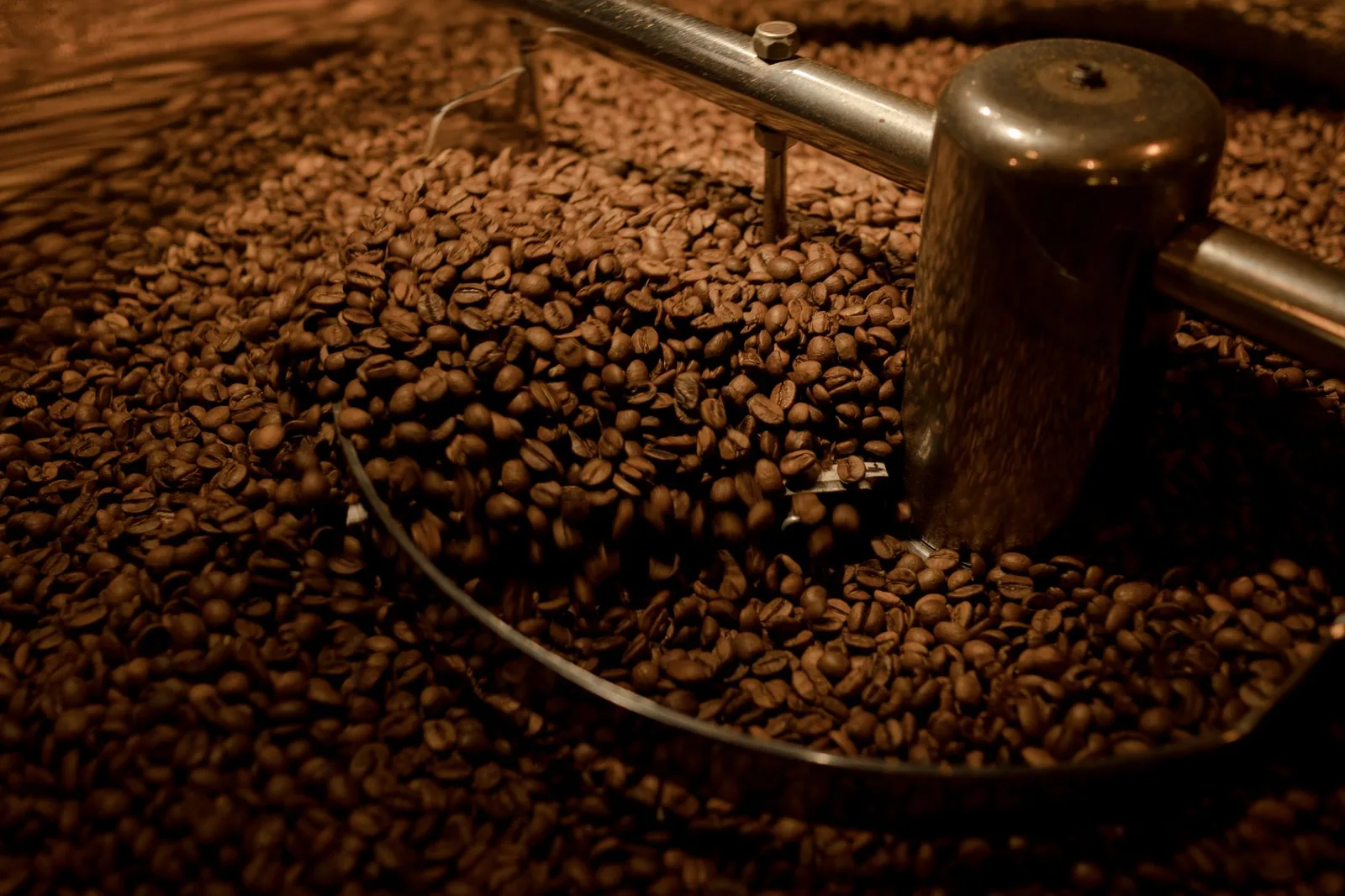
Step 1: Drying the green coffee
It all starts with a phase involving no major chemical transformation: the bean loses its residual moisture under the heat of the drum. The Maillard reaction hasn't kicked in yet at this point, but this step prepares the bean to heat up evenly. Only once this moisture has been driven off can the aromatic chemistry truly begin.
Step 2: Triggering the reaction (140°C to 165°C)
When the bean temperature reaches roughly 140°C to 165°C, the amino acids and reducing sugars in the bean start reacting with each other. This is the true starting point of the Maillard reaction, which then becomes the main driver of the changes underway, well before the bean audibly cracks. Hundreds of new aromatic compounds, such as melanoidins, pyrazines, and furans, start to form.
Step 3: The aromatic development phase ("Maillard time")
This phase, sometimes called "Maillard time" by professional roasters, is where the foundation of the flavor profile is built. The longer it's stretched out, the more chance the aromas have to grow in complexity, giving toasty, nutty, honey, or cereal notes. Conversely, too fast a temperature rise through this zone tends to produce a coffee that's simpler on the palate, sometimes more acidic and less rounded.
Step 4: Coexisting with caramelization
As the temperature keeps climbing, caramelization of the sugars joins the Maillard reaction, generally once temperatures get higher. The two reactions then intertwine constantly, the first contributing a wide palette of roasty, toasted, or fruity notes, the second more simply sweet, caramelized notes. It's this combination, modulated by the duration and intensity of the heat, that shapes the final profile of the cup.
Step 5: First crack and choosing when to stop
Right after this phase comes first crack, that characteristic cracking sound marking the moment when the bean's internal pressure exceeds the strength of its cell walls. Depending on whether the roast is stopped soon after this point or continued well beyond it, the sugars and amino acids are consumed to a greater or lesser extent, which determines whether the coffee keeps its original fruity, tangy notes or moves toward more toasted, bitter, even smoky notes.
Conclusion
The Maillard reaction is neither a technical detail reserved for roasters nor a mere curiosity of organic chemistry: it's the mechanism that, more than any other, shapes what you find in the cup. Understanding how it works (its onset between 140°C and 165°C, its intensification during "Maillard time," its coexistence with caramelization) gives you concrete tools for interpreting a roast sheet, anticipating a coffee's aromatic profile before you've even tasted it, or identifying the source of a flavor defect such as a "baked" or unbalanced coffee.
The next time you choose a light roast over a dark one, or try to understand why two otherwise similar origins produce such different cups, you'll know the answer lies in those few minutes of organic chemistry carefully orchestrated in a drum heated just right.


