
Imagine a kingdom where the smell of roasting coffee drifting from your kitchen could bring uniformed men to your door. Between 1781 and 1787, that was daily life in Prussia, where Frederick II (Frederick the Great) turned roasting into a royal monopoly and set a corps of "coffee sniffers" loose on his subjects. This true, almost absurd story shows how coffee became a European drink of the people: popular, taxed and controlled.
Coffee in 18th-century Prussia: from luxury to everyday drink
At the end of its long journey around the world, coffee reached Germany as a luxury product. The first German coffeehouse, "Schütting", opened in Bremen in 1673 and is still there; others followed in Hamburg, Leipzig and Munich, but only the wealthy could afford a cup. Frederick William I, Frederick II's father, even listed coffee among luxury goods, alongside chocolate, tea, sparkling wine and fruit sorbets.
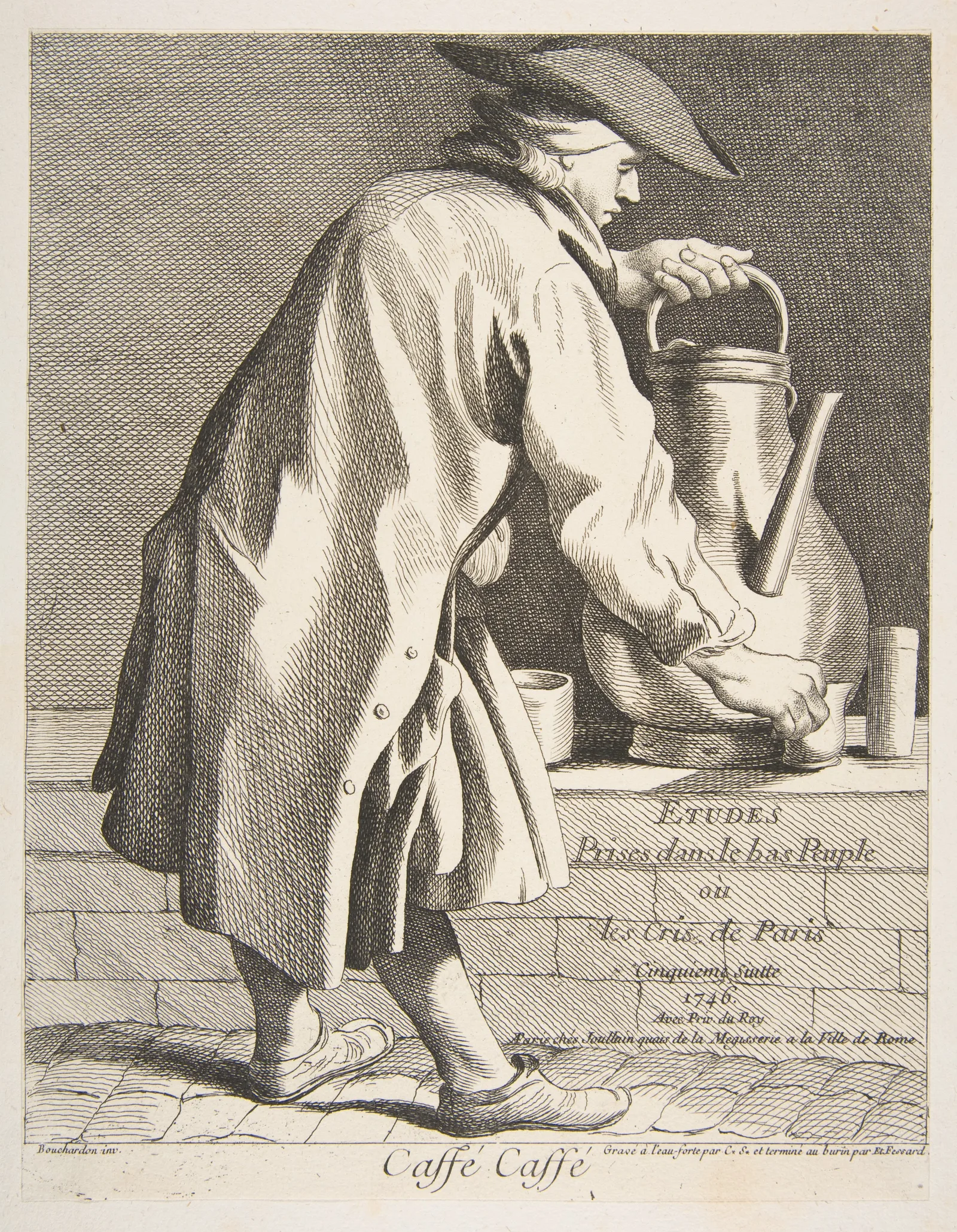
By the middle of the 18th century, most Prussians drank coffee regularly, and offering a cup was considered a particular mark of respect. Imported coffee had gradually replaced locally produced drinks. But Prussia had no coffee-growing colonies: every bean was bought green from its neighbours. According to Coffee: A Comprehensive Guide, Germany "had come late to coffee", held back by rulers such as Frederick the Great who wanted to protect a homegrown product: beer.

From luxury tax to roasting monopoly (1763-1781)
The Seven Years' War (1756-1763) left the Prussian treasury empty. Frederick II responded with a luxury tax amounting to 150% of the selling price of coffee. For a woman working in a spinning mill, a single cup now cost a full day's wages.
His subjects, the King argued, could drink beer soup (Biersuppe) instead, a humble dish long eaten by the poor. It was healthier, he said, and financed local breweries, whereas coffee sent currency abroad. The stated aims were to restore public finances, stop the outflow of currency, and protect Prussian brewers and the producers of chicory, the local substitute. Frederick II first wanted to ban coffee outright and replace it with chicory.
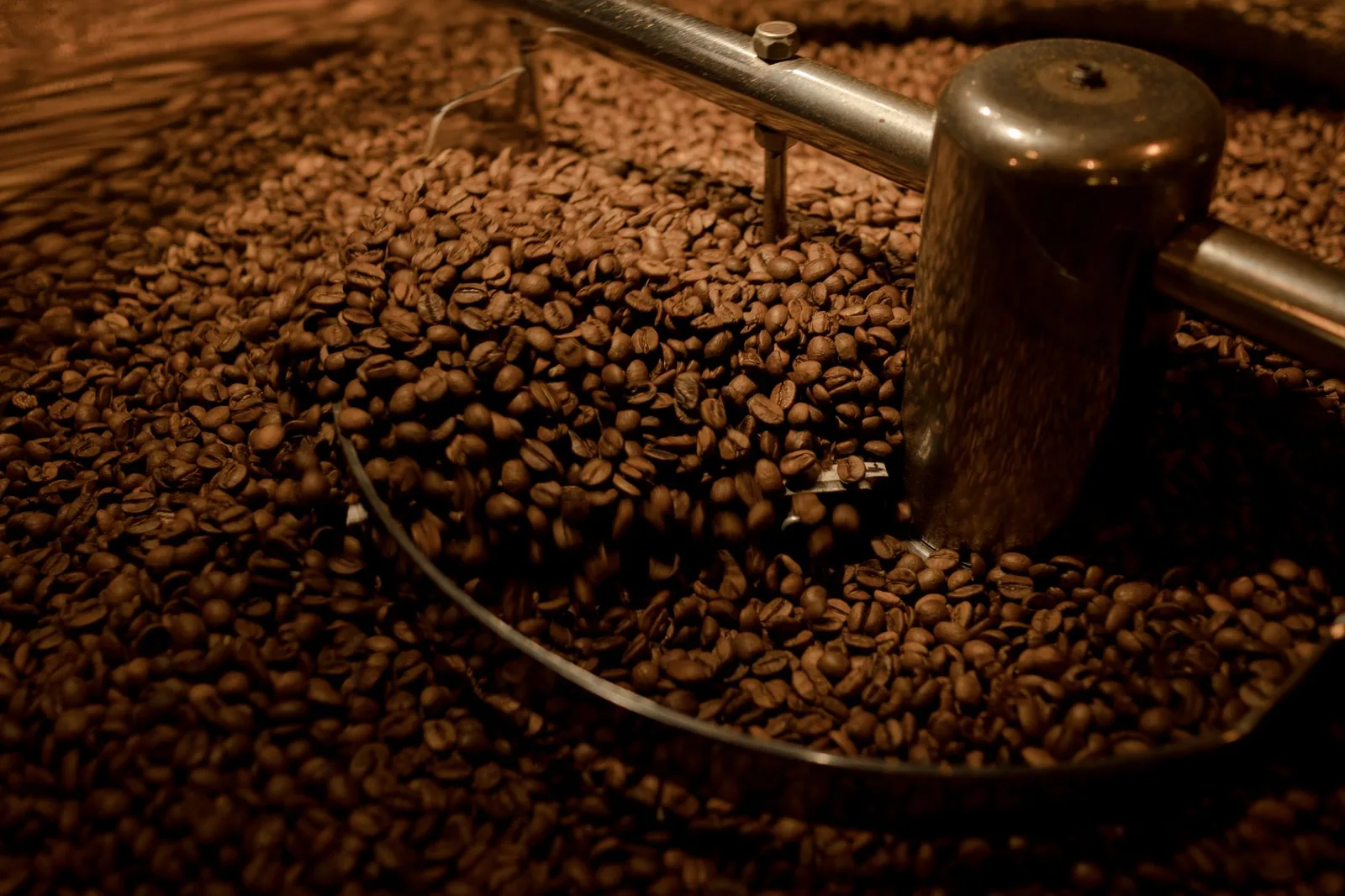
A total ban was judged impracticable: the population had become rather addicted to it. In 1781 the King set up a monopoly on coffee roasting: a decree stated that only state roasters could roast coffee, which in effect prohibited private roasting. Coffee: A Comprehensive Guide adds that Frederick established state monopolies on both importing and, later, roasting, a valuable source of revenue for the treasury.
The decree exempted the aristocracy, high officials, the clergy, industrialists and other favoured citizens: in short, the ban only applied to ordinary people. Approved merchants used it to overcharge.
The Kaffeeriecher: 400 noses in uniform
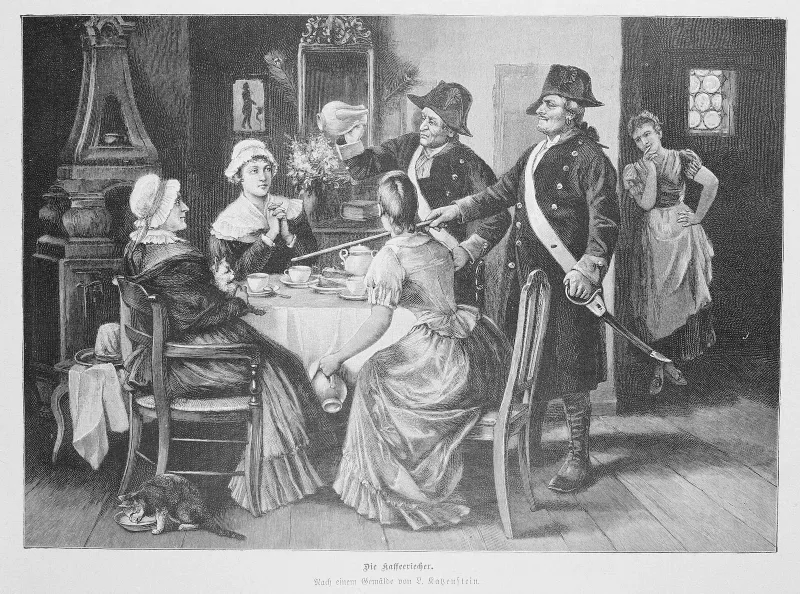
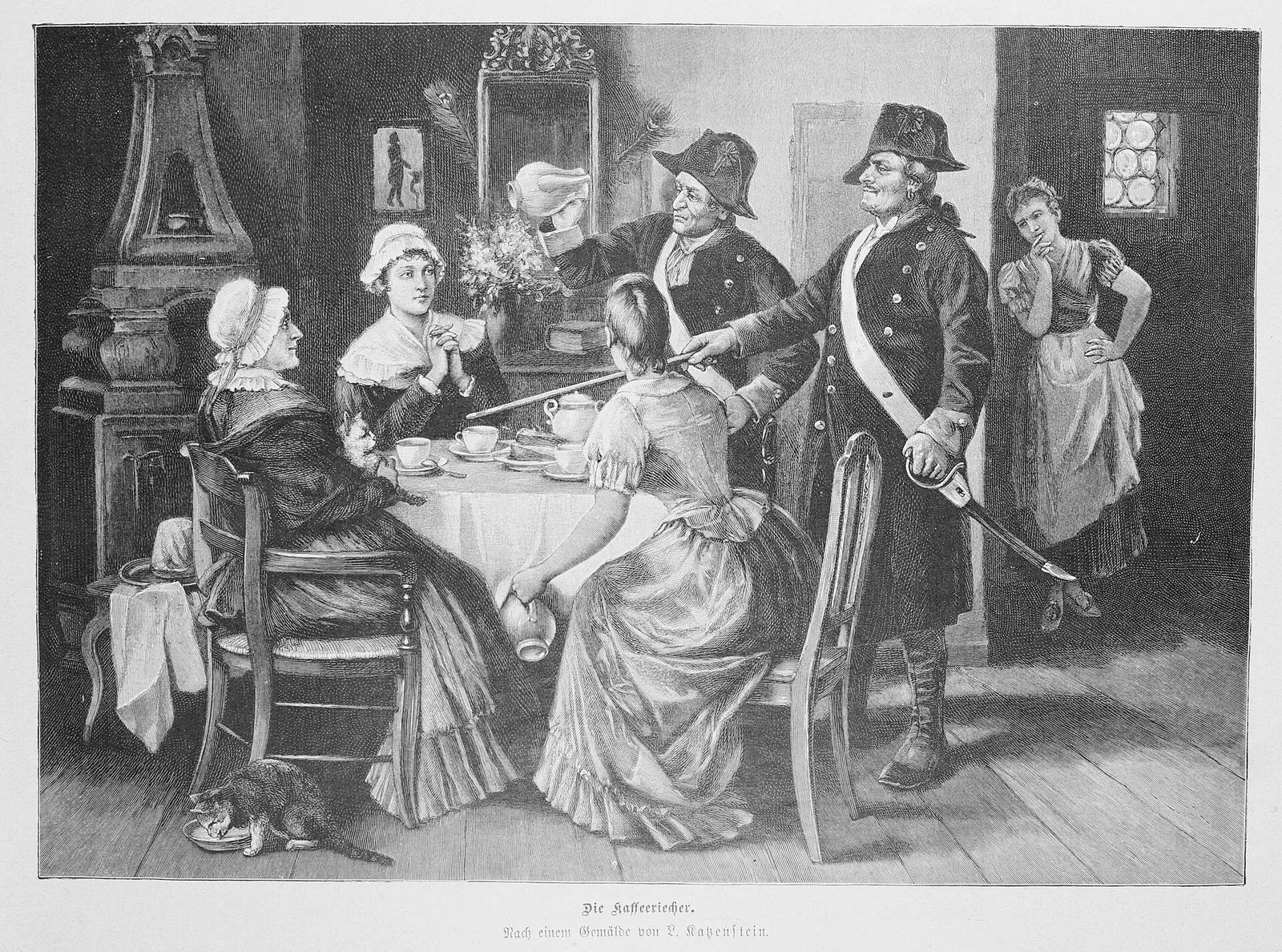
To enforce the monopoly, Frederick II hired 400 disabled veterans of the Seven Years' War. In German they were called Kaffeeriecher or Kaffeeschnüffler, "coffee sniffers", and they were active from 1781 to 1787. Their job was literally to sniff out the aroma of beans being roasted illegally and to identify contraband coffee, whether roasted or in the cup.
They wore military uniforms and could search any person or home "from which a smell of coffee emanates". Anyone caught with illegal coffee paid a heavy fine. Besides an advantageous salary, the sniffers kept a quarter of the fine for every catch. Extremely zealous, they were very quickly hated by most of the population.
This French-language video opens with a dramatised scene set in 1785 before telling the whole story:
Smuggling, substitutes and the Hesse-Kassel precedent
The sniffers could smell roasting, but not green beans, which are practically undetectable before they hit the heat. Many Prussians simply bought green coffee; some gave up their trade for lucrative smuggling. Others turned to substitutes made from wheat, maize or dried figs, alongside chicory and the King's beer soup.
Prussia was not alone, and coffee had faced bans before. The landgraviate of Hesse-Kassel had banned coffee in 1766. Because people kept drinking it, its ruler, Frederick II of Hesse-Kassel (not to be confused with his Prussian namesake), tightened the laws in 1774 and appointed officials to detect roasting or drinking in homes: Hesse-Kassel had its own coffee sniffers.
1787: the end of the monopoly
The coffee market stayed in royal hands until Frederick died in 1786. A year later, in 1787, the state monopoly was abolished and the corps of sniffers dissolved. Drinking coffee became legal again, no longer a privilege reserved for an elite. The anger they had inspired lasted until the first quarter of the 19th century.
With early industrialisation, coffee increasingly became a drink for all: poorer people used it to stay awake through long factory hours and as a substitute for beer or food. The Kaffeeklatsch, women meeting for afternoon coffee, cake and conversation, spread through every class.
Anecdotes and legends
The wig sniffers
No official was as resented as the coffee sniffers, except the wig sniffers (Perückenschnüffler), who checked that the wigs citizens wore were legal.
A Prussian Prohibition?
With smuggling growing day by day, the situation recalls Prohibition in the 1920s and 1930s, except that here the forbidden drink was coffee.
In summary
Frederick's monopoly lasted six years, and the Kaffeeriecher could only do their job because roasting betrays itself: it creates fumes and smoke, and near homes or businesses smoke suppression becomes important. Home roasters know it well. James Hoffmann recommends roasting in a well-ventilated area, and Len Brault advises a unit with smoke suppression plus good ventilation to the outside, such as a kitchen hood or an open window with a small fan. The smell bothers neighbours, who can file "nuisance complaints": Scott Rao recounts a long, stressful and expensive conflict with the neighbours of his first roastery, though he roasted only 20 lb batches, 10 hours a week. Nobody fines you today, but the nose next door is still on duty.