
Order a mocha today and you get espresso, chocolate and milk. Yet the word first named a place: Mokha, or al-Makhā in Arabic, a port on the Red Sea coast of Yemen. Until the end of the 17th century, almost every coffee bean drunk in Europe was shipped from its harbour.
Mokha ruled the coffee trade until the 1720s, with a peak in the first quarter of the 18th century. Then Java took over, and the town slipped back into fishing. Its name outlived its trade: it survives in a blend, a stovetop pot and a chocolate drink.
How did a small harbour hold the world's coffee trade, and why did it lose it? The story runs from an Ottoman customs law to Dutch plantations in Java, through plague and sandbars. Its beans came down from the hills by camel, then sailed around Africa or up the Red Sea towards Cairo. The story also explains why "mocha" has become such a confusing word on a coffee menu.
A coffee port that never grew a single coffee tree
Mokha is the first port north of the Bab-el-Mandeb strait, the narrow gate between the Red Sea and the Arabian Sea. The town is hot and dry. Coffee never grew there: the beans came down from Yemen's mountainous interior.
Coffee itself had crossed from Ethiopia. Yemen was the first place where it was grown outside its homeland, and by the 15th and 16th centuries it was well established.
Farmers planted it on terraces around mountain villages, among their food crops. Laid out in the 1540s, these terraces remained the world's only source of cultivated coffee for the next 150 years. Indian merchants, the Banyans, probably financed the planting through their credit networks.
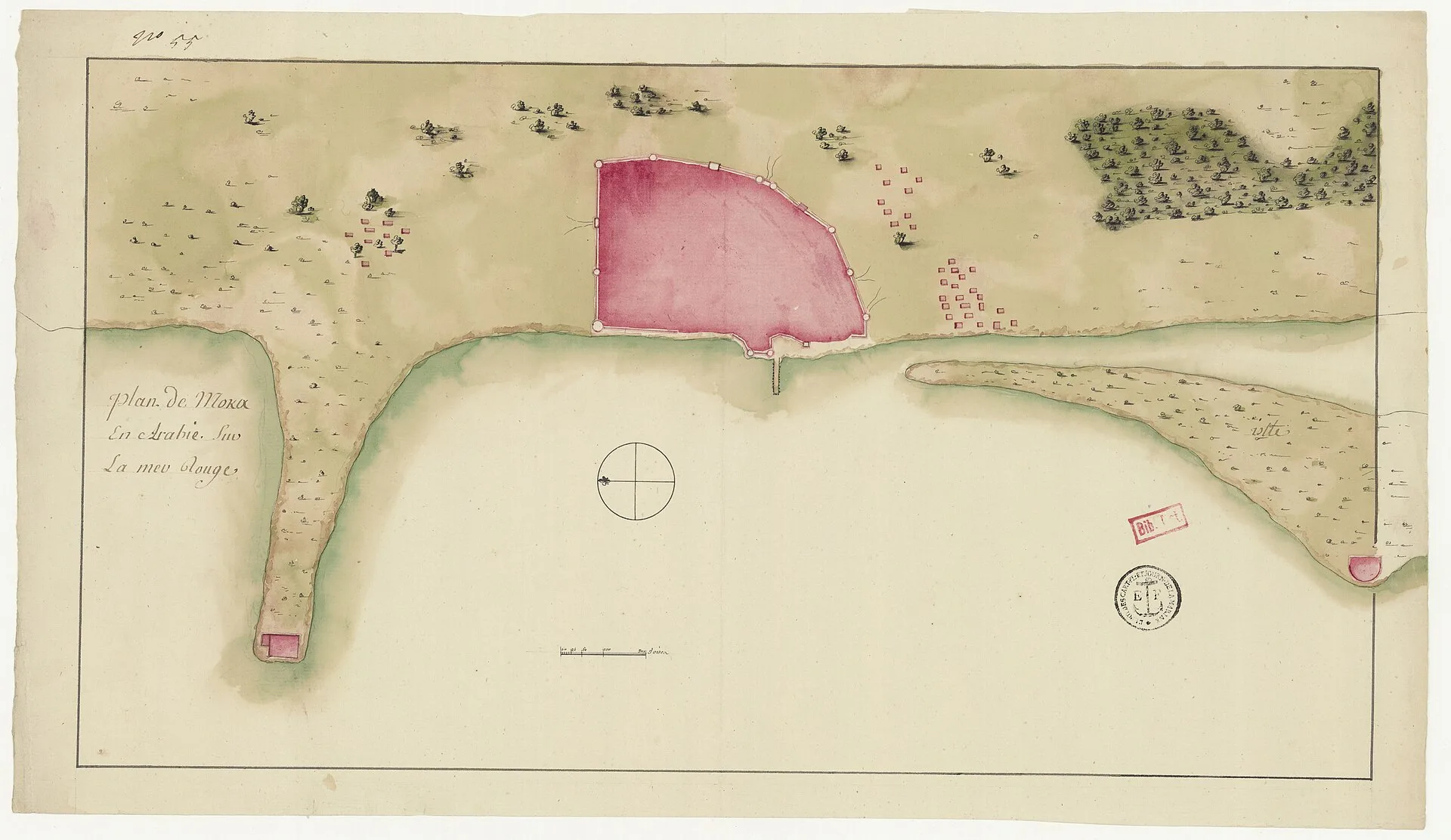
Before the Ottomans reached Yemen in 1538, Mokha was a small fishing village. They turned it into a port city. A law made it essential: every ship entering the Red Sea had to stop at Mokha and pay duty on its cargo. The site was also well placed between the Red Sea and the Arabian Sea.
In 1625, the Portuguese Jesuit Jerónimo Lobo described a town once of little note that had become the main city of Turkish-ruled Yemen. The Pasha still lived in Sana'a, two days inland. When the Qasimi dynasty expelled the Ottomans in 1635, Mokha kept its importance.
The golden age: who traded at Mokha?
The great years of Mokha run from about 1600 to 1850, with a peak in the first quarter of the 18th century. At first, coffee was only a small part of the trade. Ships also carried chinaware, Indian textiles, metals and enslaved people from East Africa.
A harbour of 23,000 people and many languages
In the first two decades of the 17th century, Mokha grew to about 23,000 inhabitants, as big as some Dutch or English ports of the time. Most were men. Yemenis, Yemeni Jews, Somalis and long-settled Indians lived side by side. Arabic and Turkish served with the authorities, while Persian, Portuguese, English, Dutch and Malay filled the quays.
Visiting traders were a small minority of 1,500 to 2,000 people. The monsoon set the calendar. Ships from India and East Africa arrived in March and left in September, as Indian crews had to be home by October or face contrary winds.
The Europeans arrive
The Dutch East India Company (VOC) was founded in 1602. Dutch traders visited Aden in 1614 and first came to Mokha in 1616, but waited several years before they could open a branch. The English reached the Yemeni coffee markets in 1609. That year, the seaman John Jourdain noted that coffee was "a greate marchandize, for it is carried to grand Cairo and all other places of Turkey, and to the Indias."
In 1640, a Dutch merchant named Wurffbain offered the first commercial cargo of Mocha coffee in Amsterdam. Regular imports began in 1663. English, Dutch and French companies all kept factories, or trading posts, in the town.
From the hills to the quays
Coffee reached Mokha by camel, mainly from the inland market of Bayt al-Faqih. A single delivery to the English could reach 50 to 60 camel loads.
From there, coffee took two roads. European ships carried it around the Cape of Good Hope. Turkish merchants sent it via Suez to Cairo and down the Nile to Alexandria, where the Pasha fixed the Cairo price according to supply. Until the end of the 17th century, virtually all coffee bound for Europe started at Mokha. By 1722, England alone received 60,000 to 70,000 bales a year.
How a port became a word: Mocha, moka and the café mocha
Coffee shipped through the port took its name overseas, and the name outlived the trade. Writing in 1922, William Ukers, author of All About Coffee, noted that Mocha's name had become permanently attached to Yemeni coffee. He described small, hard, irregular beans, olive green to pale yellow, with a winey flavour and heavy acidity.
The spelling soon drifted to "moka", used for the potent, pungent coffees of Yemen. Some naturally processed coffees from elsewhere still carry it, such as Moka Harrar from Ethiopia, which shares the same wild, fruity notes. Yemeni beans are also sold as Sanani, "from Sana'a".
Mocha's acidity and Java's low price gave birth to the first coffee blend. Mocha-Java paired the bright Mocha with the body of a cheaper Java, which also kept the price down. Old connoisseurs still swore by two-thirds Java and one-third Mocha. The Mocha-Java name was never protected, and it became a roaster's style term rather than an origin.
In 1912, a Chicago court ruled that Ethiopian coffee should be sold as "Abyssinian Mocha"; US authorities then reserved plain "Mocha" for coffee grown in Yemen.
The word kept travelling. In Germany, Turkish coffee is called Mokka, and the stovetop moka pot takes its name from the city.
The chocolate café mocha came much later. In 1960s American coffeehouse manuals, the closest drinks were the caffè chocolaccino and caffè Borgia. By 1993, American cafés simply added chocolate syrup to a latte and called it a mocha.

How Yemen lost its monopoly
Yemen's rulers guarded their trees jealously. Beans could leave the country only after being boiled or parched, so that they could no longer germinate. Coffee seeds also lose their germinating power quickly, which may explain some early failures abroad.
The lock did not hold. Indian tradition credits a Muslim pilgrim, Baba Budan, with smuggling seeds to Chickmaglur in Mysore. The story is a legend, and its date is disputed: 1600 in some accounts, 1695 in better ones. The full story of those stolen plants is told in our history of how coffee spread around the world.
Java turns the tables
In 1696, plants grown from Arabian seed went from Malabar to Java, only to be lost to an earthquake and flood. A second shipment of cuttings in 1699 survived and fathered all the coffee of the Dutch East Indies. The first regular cargo, 894 pounds, reached Holland in 1711.
The collapse was brutal. In 1721, 90% of the coffee sold in Amsterdam came from Mocha. By 1726, Java supplied 90%.
Java was held to be lower in quality, and it cost less. The VOC imposed quotas and fixed prices on local lords, who made their subjects grow coffee as tribute. This forced labour lasted well into the 19th century.
Bourbon, the Caribbean, then Brazil
Others followed. The VOC planted coffee in Suriname in 1712. The French brought plants from Mocha to Bourbon, now Réunion, in 1715. Plantations there relied on enslaved African labour. The island gave its name to the Bourbon variety, known today for its sweet cup.
Coffee reached Saint-Domingue (Haiti) the same year and Martinique in 1723. Between 1787 and 1789, the French colonies produced over two-thirds of the world's coffee. Production shifted to the West Indies, then the East Indies, then Brazil.
Sandbars, plague and Aden: why did Mokha fade?
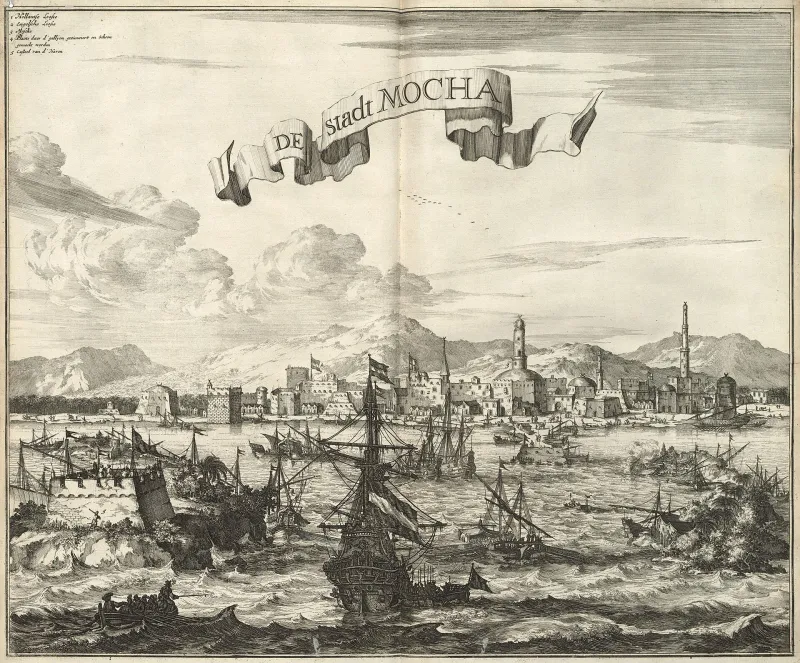
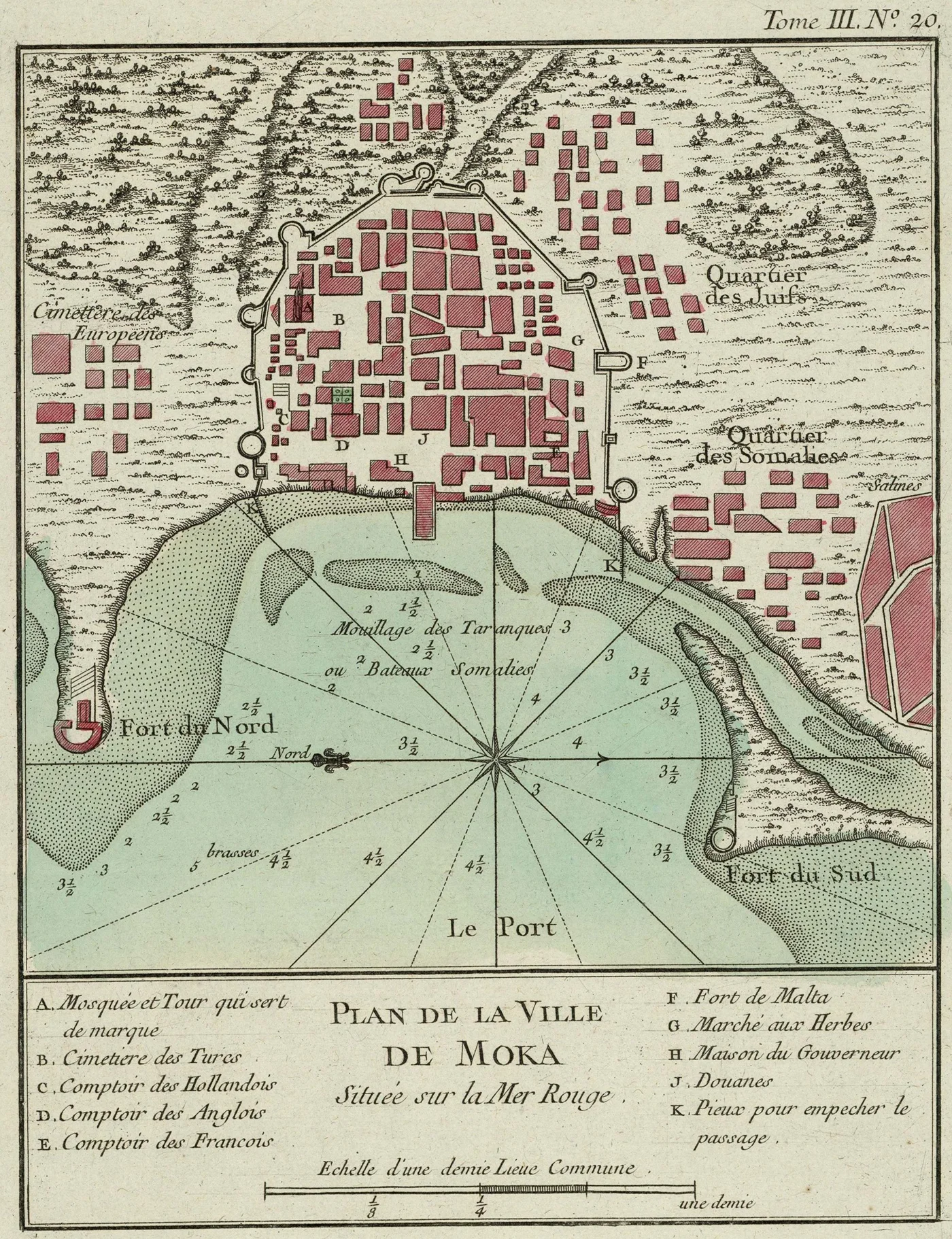
No single blow finished Mokha. A plague killed half the town in the 18th century, and it never truly recovered. When Carsten Niebuhr visited in the 1760s, decline had begun. His plan of the town and harbour appeared in Amsterdam in 1776.
Competition came from across the water too. Mokha relied heavily on Ethiopian coffee from around Harar, shipped by Somali merchants from Berbera: up to two-thirds of its supply. By the mid-1830s, Ethiopia was selling coffee to North Africa at a third of the price of Arabian beans.
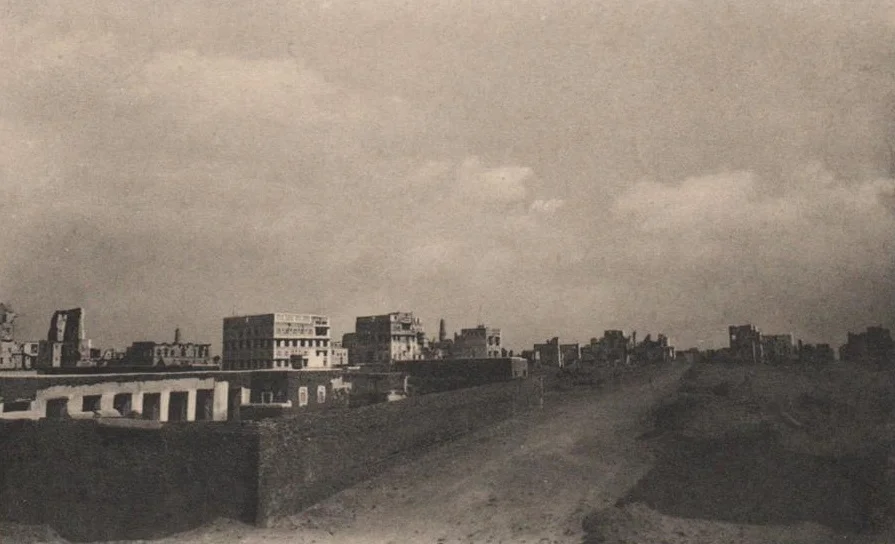
War added to the damage. In December 1820, a British warship and East India Company forces destroyed the town's two forts. Ibrahim Pasha of Egypt later tore down the sea wall and the citadel. Sandbars made the anchorage hard to keep clear, and the port was abandoned for coffee early in the 19th century.
Once Britain controlled Aden, the trade moved there and to Hodeida. By 1922, Yemeni coffee reached the world mainly through Aden.
Visitors saw the result. In 1859, Jacob Saphir found many empty houses. In 1909, the explorer Hermann Burchardt called it "one of the most godforsaken little places in Asia". A modern port opened in 1955, but the town's economy now rests largely on fishing. It had 16,794 inhabitants in 2005.
War has found it again. The Houthis took Mokha in 2015, and pro-government forces captured it in 2017. Houthi forces seized the city again on 10 September 2026. On 5 October, government forces claimed to have retaken it, a claim disputed on the ground the next day.
Saints, lighthouses and guest houses: Mokha's legends
The saint who "invented" coffee
Mokha's patron saint is Ali ibn Omar al-Shadhili. In 1609, the Englishman William Revett noted at Mokha that this holy man was the first to drink coffee.
Another legend tells of Sheik Omar, exiled into the desert around 1258, who survived on boiled coffee berries. His cures brought him back in triumph. Like other coffee origin legends, these are stories, not history.
A minaret for a lighthouse, a guest house for all
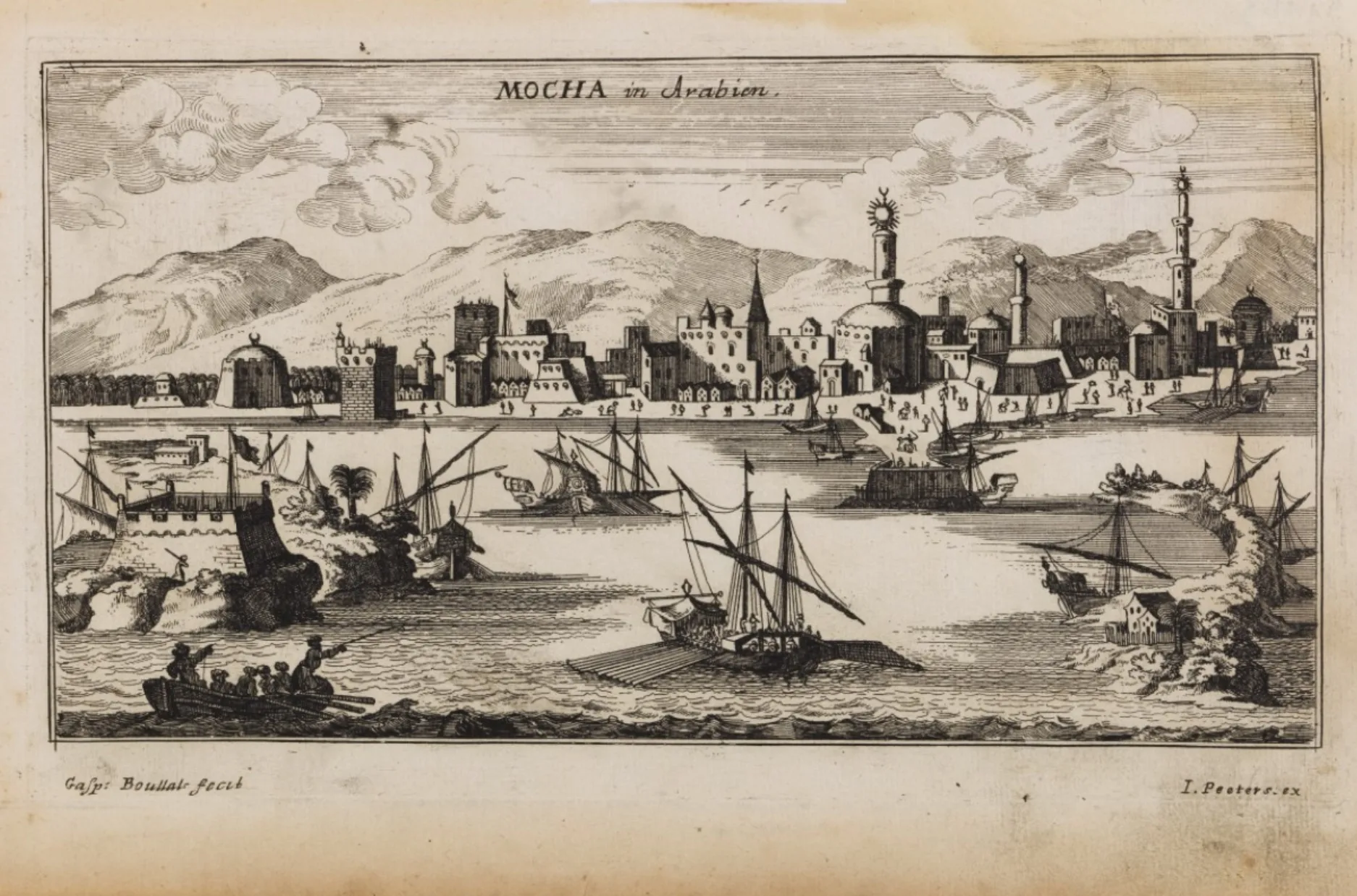
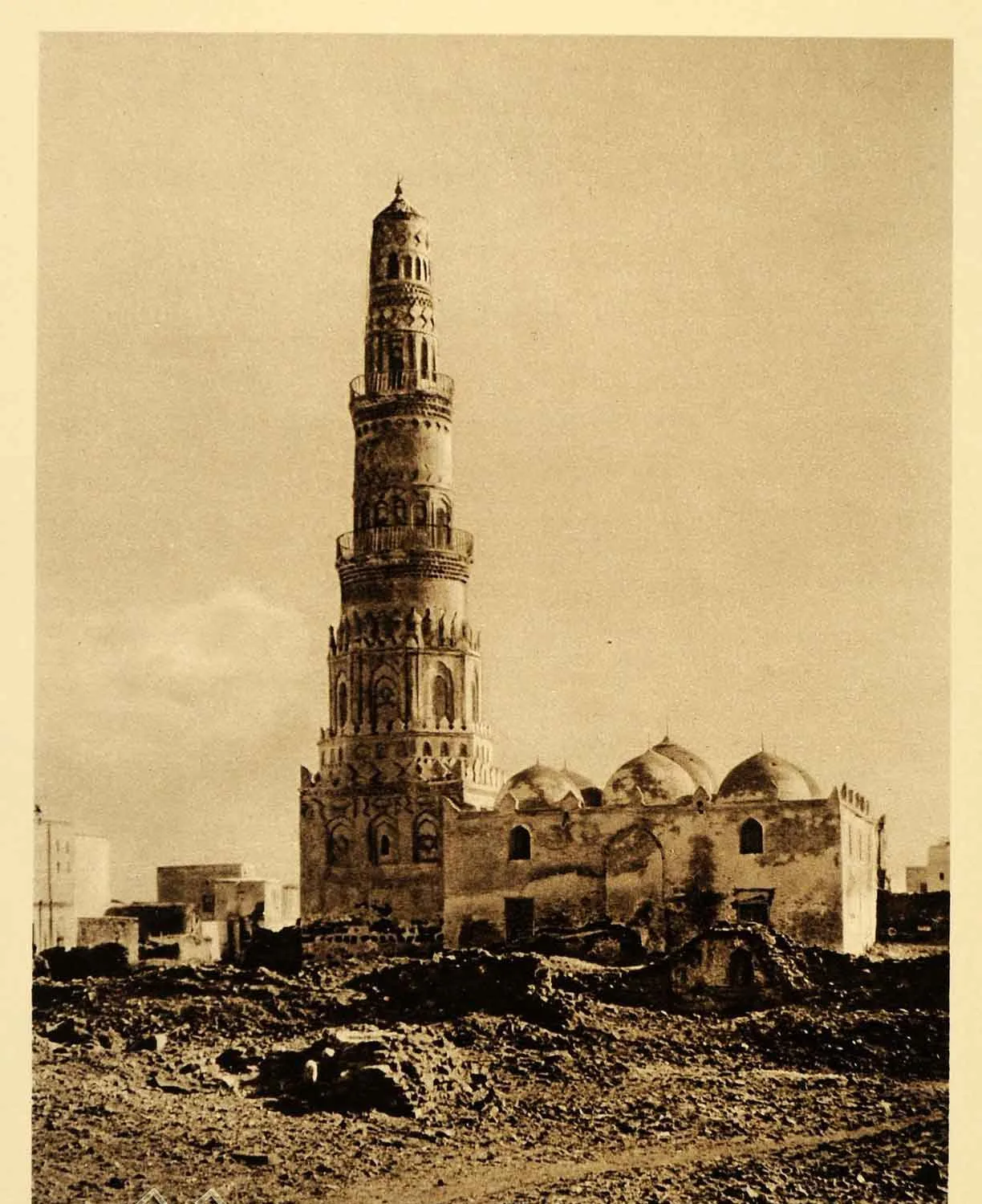
The minarets of the al-Shadhili mosque guided ships into the harbour. Only small vessels could enter: large ships anchored at least two kilometres offshore.
In the 1750s, a huge "lodging-house of the Prophet Muhammad" rented hundreds of cells to any stranger, whatever their faith. Some 400 Jewish trading households lived in thatched huts outside the walls.
A taste of old Mokha: what Yemeni coffee is like today
Like its neighbours across the Red Sea, covered in our guide to African coffee origins, Yemen grows coffee for sale. It has done so for longer than any other country, and its coffee never became a commodity.
Varieties selected there lie at the root of coffee everywhere except, probably, Ethiopia. Only 3% of the land can be farmed, and the terraces need irrigation. Water is so scarce that all Yemeni coffee is natural process: the cherries dry whole, usually on rooftops.
In the cup, expect dried fruit, winey acidity and a wild, slightly fermented edge that some drinkers love. Isolated farms have kept many heirloom varieties: Mattari, Harazi, Ismaili or Sanani. Coffees are rarely traceable beyond a region and are often sold as "Mocha" plus a variety name.
Yemen produced 125,000 bags of 60 kg in 2016. Since the war began in 2015, exports have fallen to a little over half their pre-war level. Strong demand and limited production keep prices high, and about half of exports go to Saudi Arabia. Ethiopian coffee is increasingly passed off as Yemeni.
Locals also brew qishr, the dried husk of the cherry, like tea. The port has faded, but its name still marks one of coffee's rarest origins.