

Push open the door of an old kissaten (喫茶店) and time slows down. Worn wooden booths, a jazz record on the turntable, newspapers hung on wooden rods. A glass siphon bubbles on the counter while the master watches it.
These Japanese coffee houses go back to 1888, when a former civil servant who had studied at Yale opened a Western-style salon in Ueno, Tokyo. Over the next century, they became student hangouts, listening rooms and neighbourhood living rooms. They also played a key role in spreading coffee across Japan, where it is often brewed by hand, one cup at a time.
Today, the word is sometimes used on purpose: kissaten names a style rooted in Japan's Taishō and Shōwa history. It is neither a French café, nor an American coffee shop, nor a Chinese teahouse.
Here is how the kissaten was born, how it flourished in the Shōwa era, and what remains of it today.
Before the first kissaten: how did coffee reach Japan?
Coffee came to Japan in the 18th century with Dutch traders and was first recorded in Nagasaki. Early Japanese drinkers were not always convinced. In 1860, Yanagawa Masakiyo (柳川当清), on the shogunate's mission to the United States, found it "extremely bitter" and undrinkable without sugar.
Shibusawa Eiichi, in France in 1867, had a better time. With sugar and milk, he wrote, it was "very refreshing for the chest".
Japan already had places to sit and drink, but they served tea. The word kissa (喫茶) first described the habit of drinking tea brought from China in the Kamakura period; 喫 means "to drink".
In the Edo period, mizu-chaya (水茶屋) stalls poured a cup of tea for thirsty travellers. By the mid-18th century, they could be found in Edo's entertainment districts such as Asakusa and Ryōgoku. From there, they gradually spread into town.
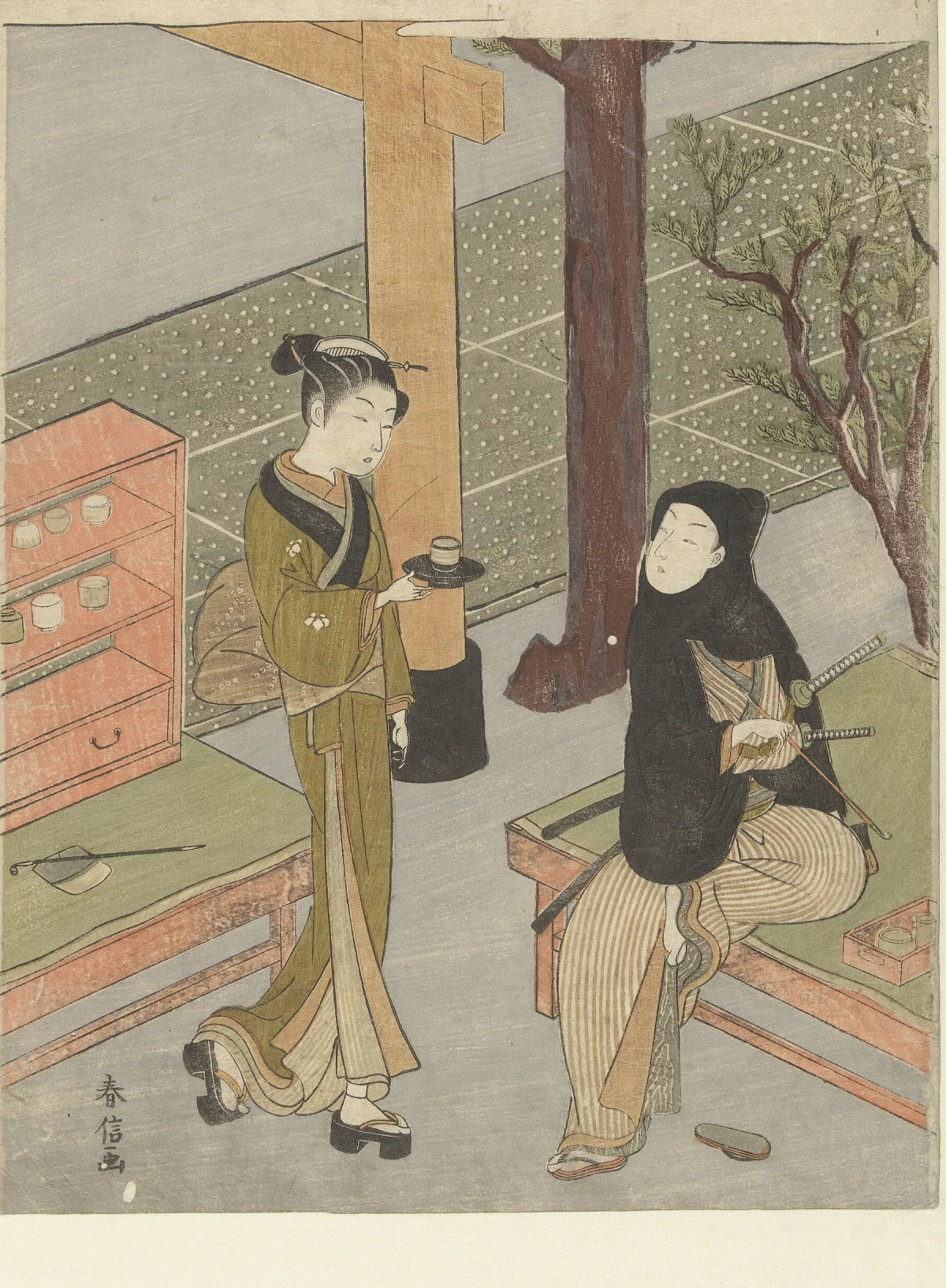
In 1735, Baisaō (売茶翁) opened the tea pavilion Tsūsentei in Higashiyama, Kyoto. Some call it Japan's first kissaten, though it served tea, not coffee.
1888: Kahiichakan, Tei Ei-kei's salon in Ueno
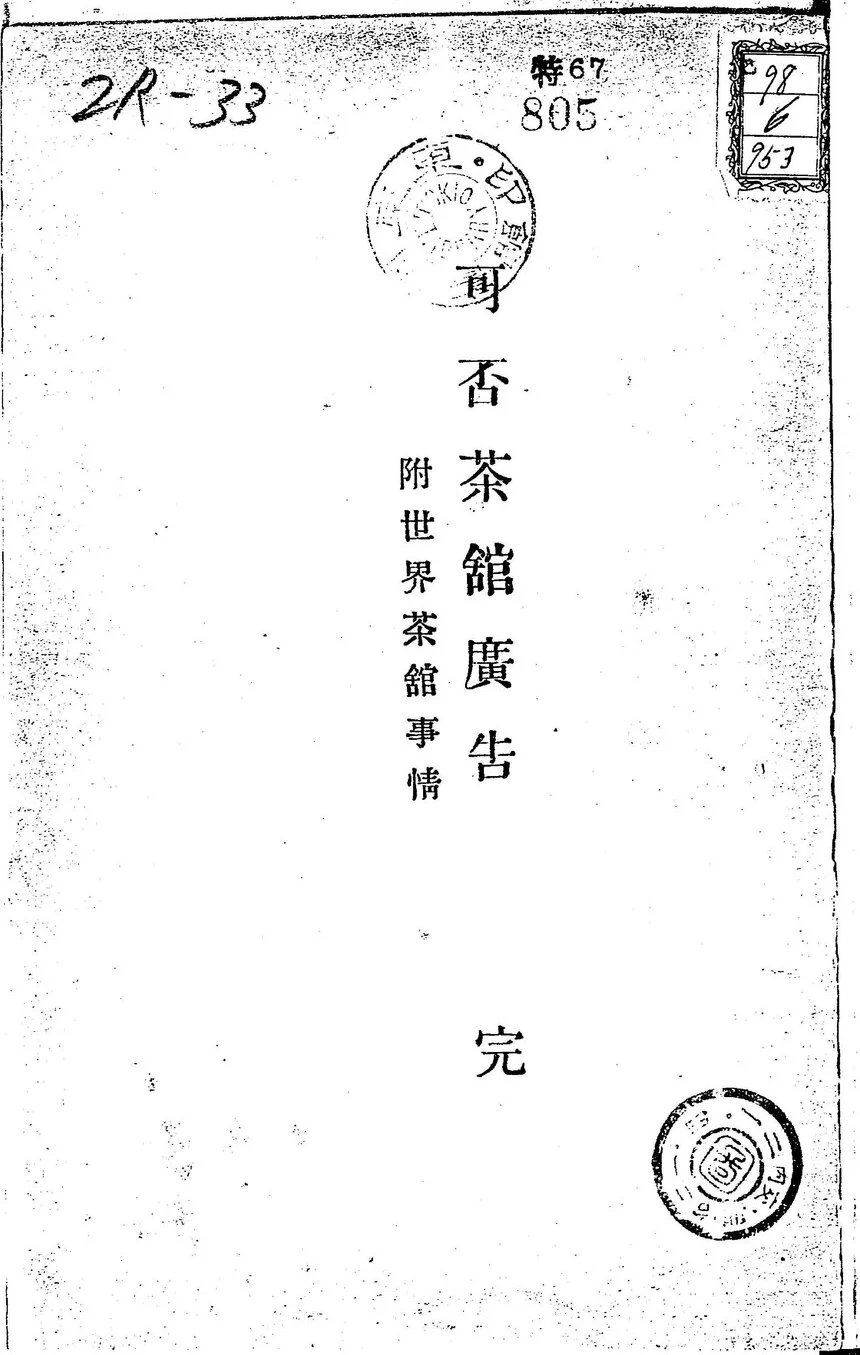
On 13 April 1888, Kahiichakan (可否茶館) opened in Ueno, Tokyo, at what is now Ueno 1-1-10 in Taitō-ku. It is most often cited as the first Japanese kissaten.
Its founder, Tei Ei-kei (鄭永慶), was born in Nagasaki in 1858 into a family of Chinese interpreters. He learned Chinese in Beijing, then French in Kyoto. In 1874, still a teenager, he entered Yale University, but kidney disease forced him to leave in 1879 without a degree.
Back in Japan, he taught in Okayama, then joined the Ministry of Finance in 1882. His wife Ju died in 1886, aged 22. He left the ministry in 1887, and the family's house in Ueno burned down the same year. With borrowed money, he built a two-storey wooden Western-style building on the site, hesitating between a school and a coffee house.
He chose coffee. Tei had seen coffee houses in the United States and seems to have judged they would be useful in Japan. The upper class met at the Rokumeikan; he wanted a social salon for ordinary people and students.
The ground floor offered billiards, cricket and card games, changing rooms, showers, and a reading room with newspapers, magazines and art books. The coffee room was upstairs, serving coffee, black tea, bread, castella and a few simple dishes.
It was too early. Coffee was still expensive and café culture had not reached the public. Kahiichakan closed within a few years, and Tei, ruined by share speculation, fell deep into debt. Yet it inspired other Western-style coffee shops across Tokyo.
Nobody agrees on how to read 可否茶館. The National Diet Library notes that several readings coexisted at the time, including "Kahhī-sakan" (かっひーさかん) and "Kahi-chakan" (かひちゃかん). "Kahisakan" (かひさかん) is another accepted reading, and English texts usually write Kahiichakan.
From milk halls to Café Paulista: when did cafés and kissaten part ways?
Around 1897, milk halls (ミルクホール) appeared in student districts such as Kanda, Hongō and Shiba. They sold milk, bread and sweets, and kept newspapers, then expensive. They also held the official gazette, where students checked their exam results: the writer Kikuchi Kan learned of his admission to the First Higher School (一高) that way.
In 1905, the Taiwan Kissaten (台湾喫茶店) opened in Ginza to promote oolong tea. For a fee, its upstairs room let customers read or write for hours.
Coffee for everyone came with Café Paulista. Mizuno Ryū, head of an emigration company, obtained 1,000 bags of Brazilian coffee a year for free from the São Paulo state government. In return, he sent Japanese emigrants to Brazil and promoted its coffee. About 35,000 Japanese left for Brazilian coffee farms between 1908 and 1924.
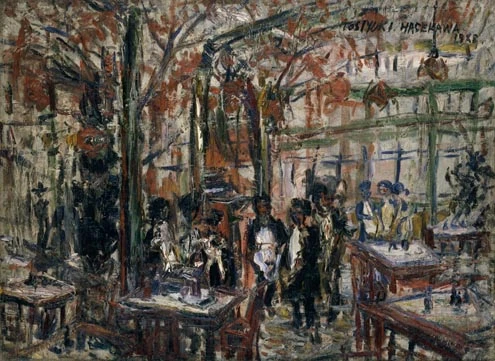
The Ginza shop opened in December 1911, with a cheap cup at just 5 sen. Akutagawa Ryūnosuke, Hiratsuka Raichō, Keiō students and office workers all came. Branches followed in Nagoya, Kobe, Yokosuka and elsewhere. After the 1923 Great Kantō earthquake destroyed most of its shops, Paulista moved into importing and roasting.
Café Printemps and Café Lion also opened in 1911. They sold liquor and employed waitresses, while Paulista stuck to coffee and boy waiters. That split shaped the century.
By the 1920s and 1930s, some cafés offered waitresses, alcohol and noise. Kissaten went the other way: sober rooms with phonographs, low lights and sofas.
The kissaten as we know it took shape in the Taishō period (1912-1926), modelled on Viennese and Parisian salons where writers read and debated for hours. It was also one of the few public places where women could meet without being linked to nightlife.
Music kissa: why did people go to listen in silence?
Live music was restricted, and records and good sound systems were luxuries. So in the late 1920s, music kissa opened as some of the few places to hear Western music.
The first kissa devoted only to jazz probably opened in 1929, and about 80 jazz kissa existed before the war, mostly in Tokyo. War closed them, and air raids destroyed many collections.
After the war, imported American records cost a fortune. Jazz kissa became schools for fans and musicians such as Toshiko Akiyoshi and Sadao Watanabe.
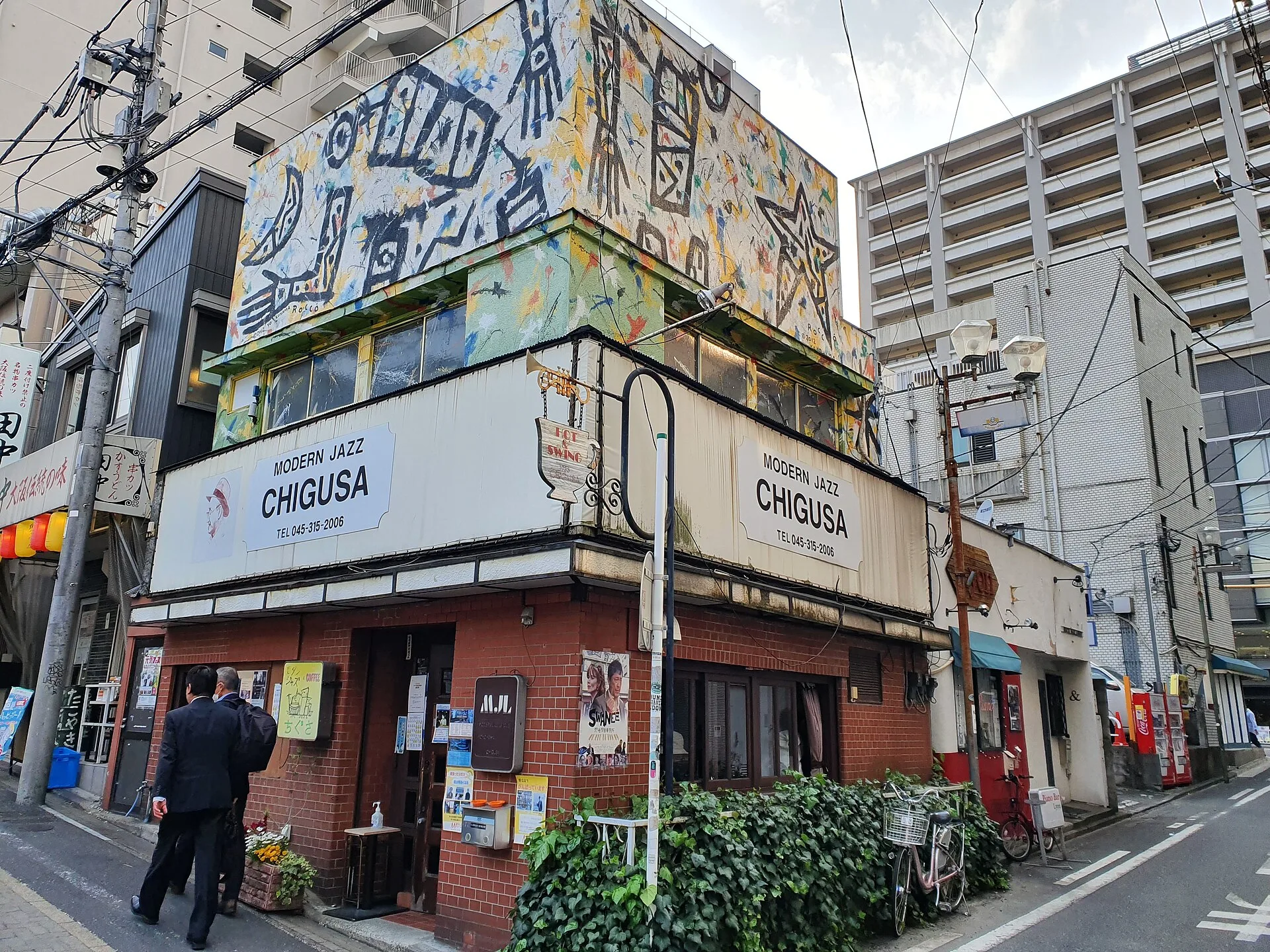
The rules were strict. A master (マスター), often the owner and only staff member, chose the music and served. Records played loud, often a full side at a time.
Patrons came alone or in pairs, listened in silence and stayed as long as they liked. Coffee cost more than elsewhere so that a few loyal customers kept the place alive.
In the mid-1960s, a darker style appeared: dim lights, deafening free jazz, no talking, and ties to the student New Left. Jazz kissa peaked at around 600 in the mid-1970s, before cheap stereos and then the CD thinned their ranks.
Classical music had its own version. Meikyoku kissa (名曲喫茶, "masterpiece teahouse") appeared in the 1950s, when most people could not afford LPs, and many take requests to this day.
The Shōwa golden age: junkissa, morning sets and a third place
Coffee imports were banned during the war and only resumed in 1950. In 1943, Café Paulista even had to rename itself Nichitō Coffee. Then recovery came, and with it the golden age of the kissaten. In 1960, Japan imported 15,000 tonnes of coffee; today it imports over 440,000 tonnes.
Kissaten spread from big cities to regional towns. Many were family-run, and regulars were known by name. They offered a third place, neither home nor office, where one coffee bought hours at a table.
Businessmen worked there alone; writers drafted novels over a single cup. In the 1960s and 1970s, feminist groups and anti-government activists met there too.
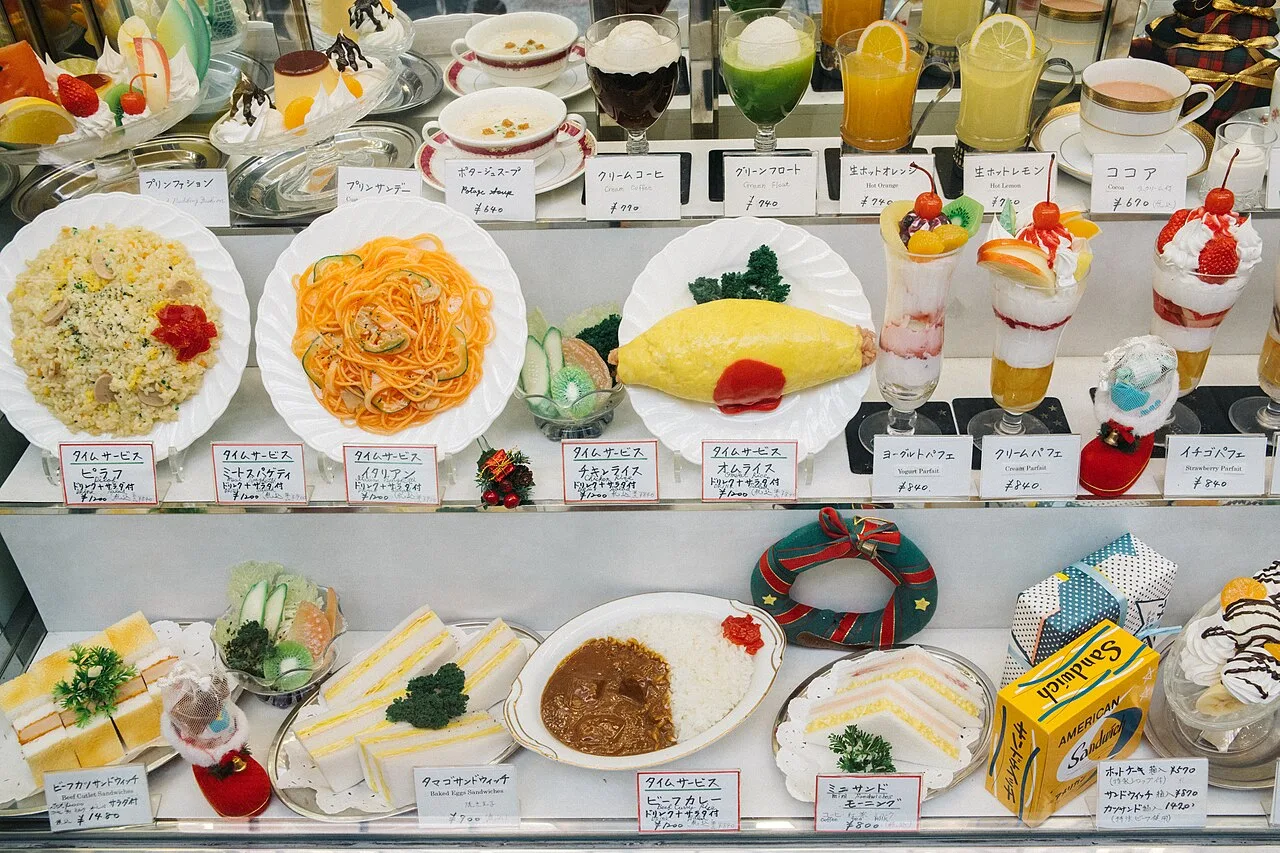
Upscale kissaten followed the lead of Danwashitsu Takizawa (談話室滝沢), opened in Tokyo in 1959. From the late 1960s to the 1970s, junkissa (純喫茶) were in vogue. In these owner-run shops, a master with strong views on taste brewed every cup himself.
Food mattered too. Around 1960, kissaten in Toyohashi, Toyota and Ichinomiya began a morning service: toast and a boiled egg free with a coffee until about 10 a.m. It spread across the Nagoya area, where cafés competed with miso soup, spaghetti or fried chicken for the price of a coffee. Today, regulars in Aichi and Gifu still keep coffee tickets (11 cups for the price of 10) in pockets on the wall.
The siphon: how a 19th-century device became a kissaten signature
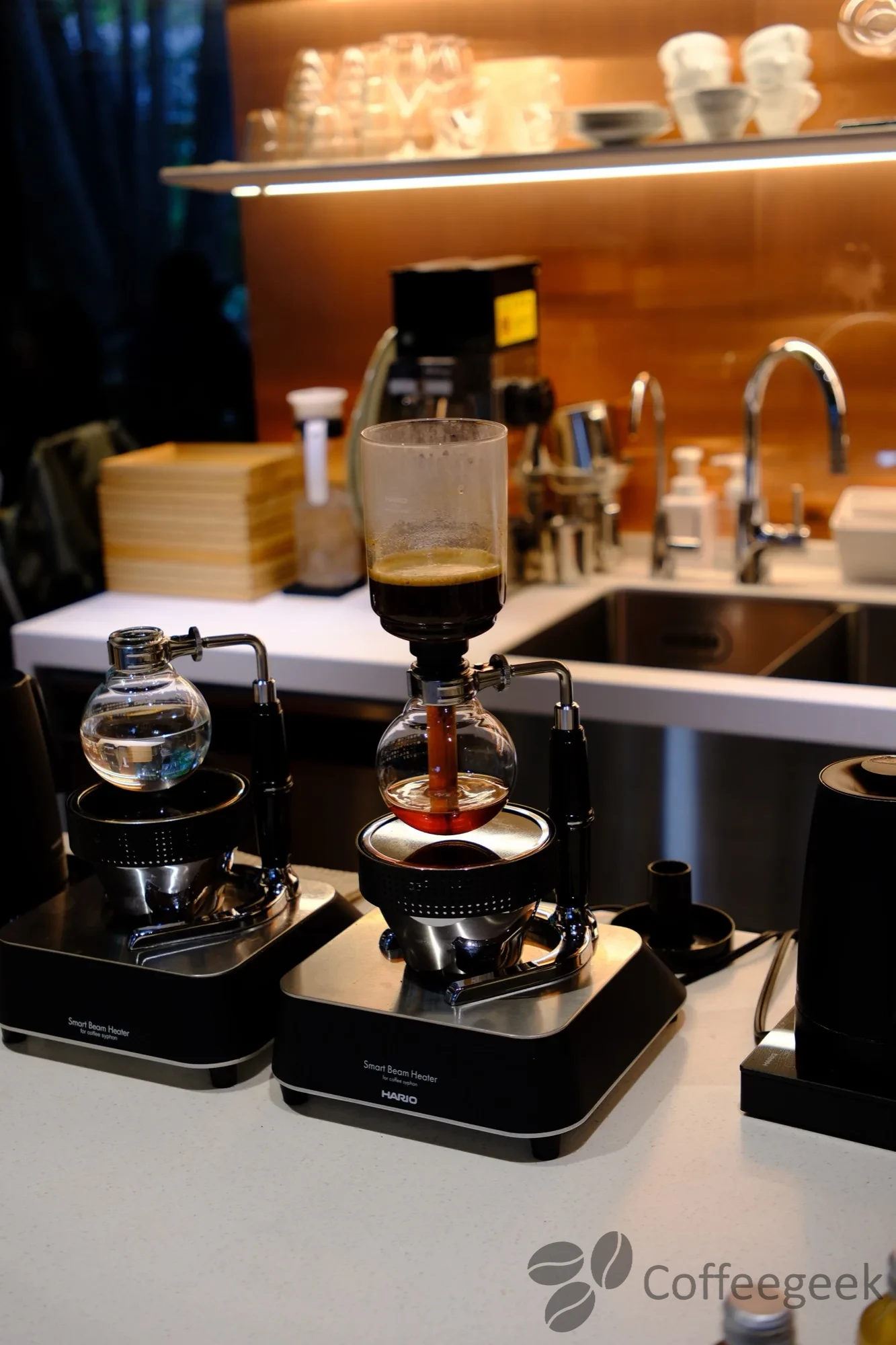
A counter lined with glass siphons under dim light is the classic kissaten image. Yet the device is neither Japanese nor new. Johann Nörrenberg invented the vacuum coffee maker in Germany in 1827.
The principle is simple. Heat the lower vessel and vapour pressure pushes the water up a tube into the upper one. There, it brews with the grounds just below 100 °C. Remove the heat and the pressure drops: the coffee is drawn back down through a filter of cloth, paper, metal or nylon, leaving the grounds behind.
Prized for its clear cup, the siphon was widely used until the mid-20th century. It still has a following in parts of Asia, including Japan and Taiwan. It produces clean, complex flavours, and its preparation looks more like a ritual than a routine.
That suits the master who brews each cup by hand. In 2022, Tiger Corporation even launched the Siphonysta, an automated electric siphon.
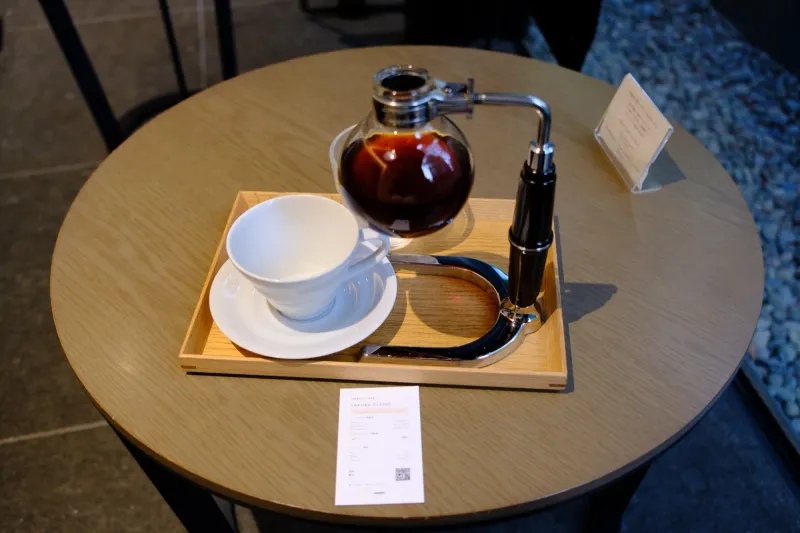
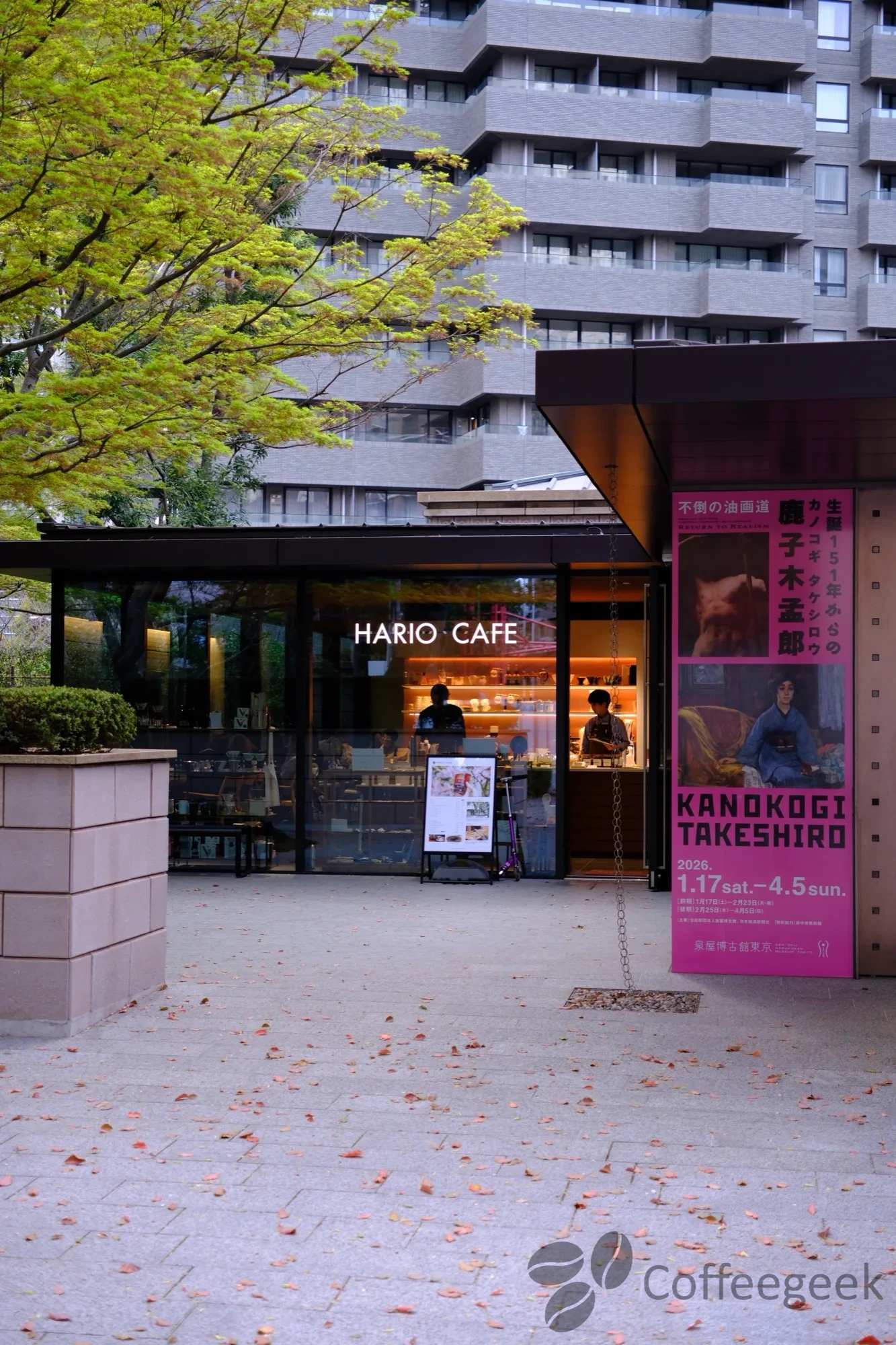
I saw the ritual for myself in March 2026 at the Hario Café in Tokyo, a modern café rather than a kissaten. Two siphons stood on the counter, heated not by a flame but by Hario's Smart Beam Heater. My Sakura Blend came to the table in its siphon, on a wooden tray, with a white cup on the side.
Anecdotes from the kissaten's early days
Tei Ei-kei's last journey to Seattle
After the failure, Tei's second wife Toku died in 1890, also aged 22. A former pupil found his suicide note and talked him out of it. In 1892, as Nishimura Tsurukichi, Tei sailed secretly from Kobe to Vancouver, then washed dishes in Seattle. He died there on 17 July 1894, in the city that would later give birth to Starbucks.
"Gin-bura" and a famous customer
Paulista's old website claimed that "gin-bura" meant going to Ginza for a Brazilian coffee. It is a folk etymology: the word usually means strolling in Ginza. John Lennon and Yoko Ono did visit the Ginza Paulista in 1978.
A writer in khaki at the Taiwan Kissaten
In an account published in 1913, the critic Yokoyama Kendō described "a gentleman in a khaki military uniform" sitting in a corner of the Taiwan Kissaten. It was the novelist Mori Ōgai.
From Doutor to Shōwa retro: the kissaten's second life
In 1970, a new Café Paulista opened in Ginza 8-chōme, with copies of its old cups and spoons. Ten years later, in 1980, Doutor opened Japan's first coffee chain, fast and self-service, and reached 100 shops by 1987. Starbucks opened its first store outside the United States in Ginza in 1996; Japan now has over 1,000. Tully's followed in 1997.
Bright lights and fast service drew customers away, and many kissaten closed as ageing owners retired without successors.
Their roots run deep, though. In 2006, Osaka counted about 12,000 kissaten and Aichi about 11,000. Gifu and Nagoya households spent over 13,000 yen a year in them, against a national average of 5,128 yen. Komeda Coffee, born in Nagoya, has since expanded nationwide.
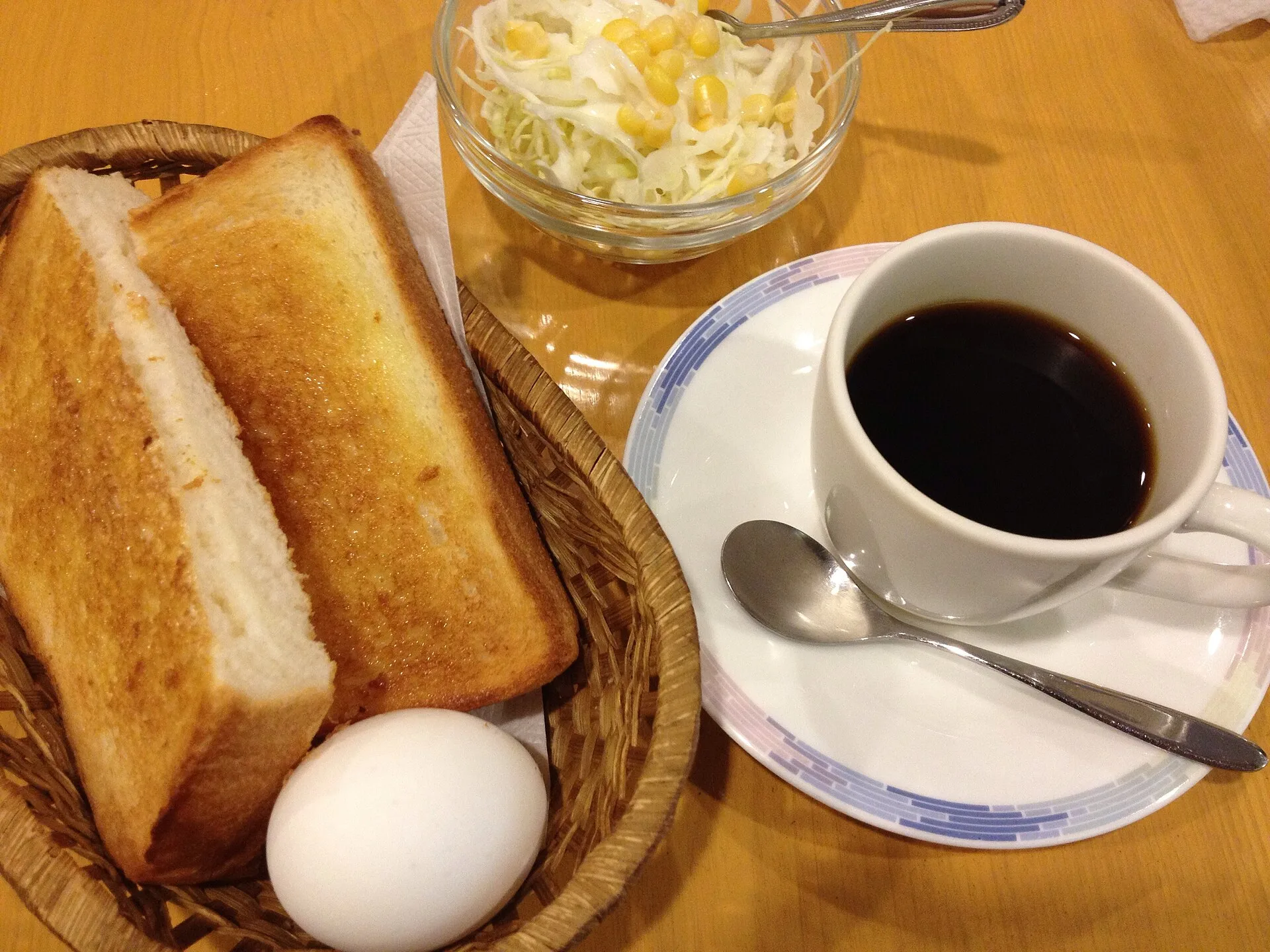
The 2020s brought a quiet revival known as Shōwa retro. Younger customers see kissaten as an antidote to fast, digital city life. New cafés borrow their wood panelling, analog menus and vintage cups. Jazz kissa are fewer but still open, and at least 50 listening bars inspired by them have appeared abroad.
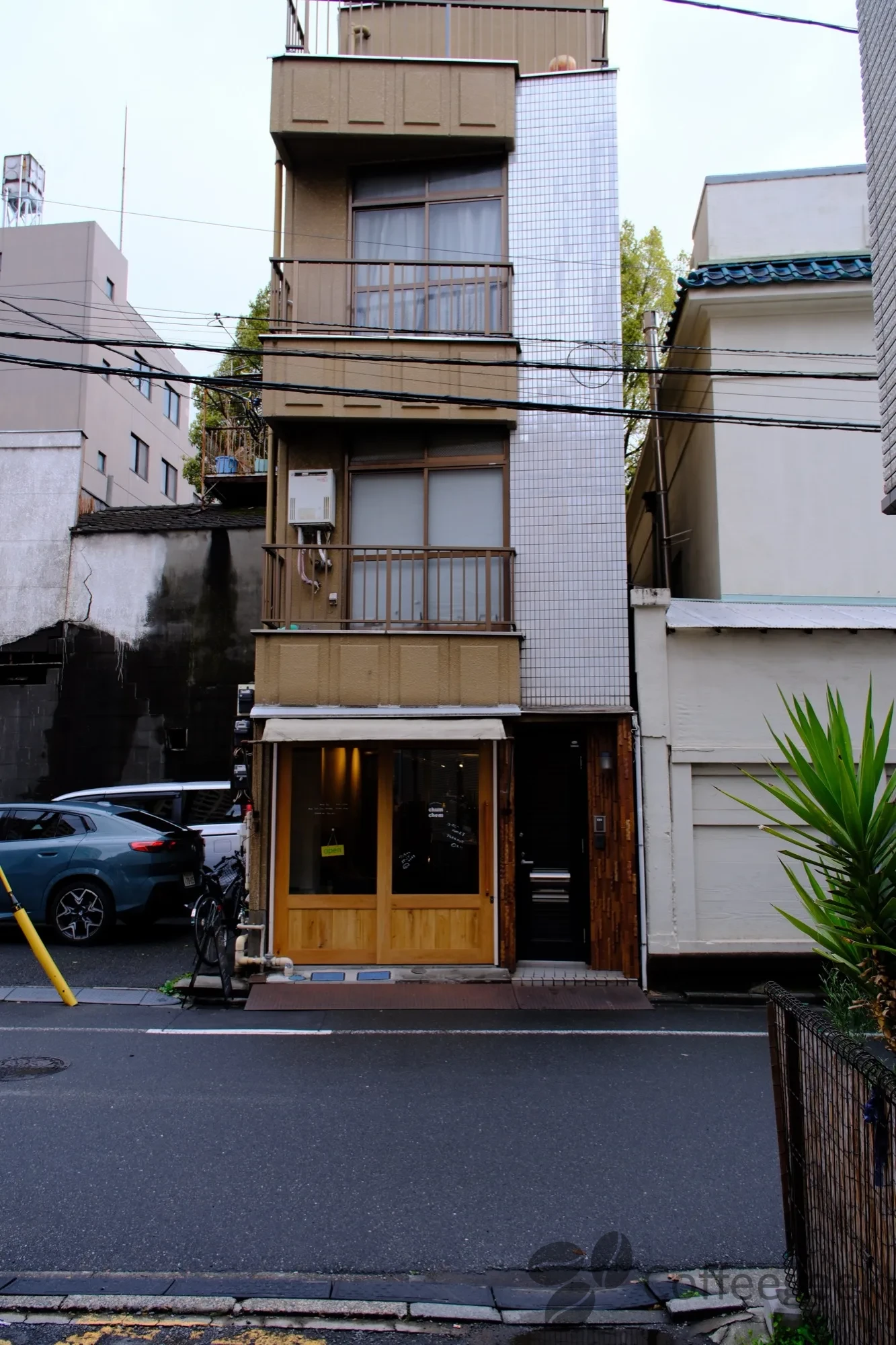
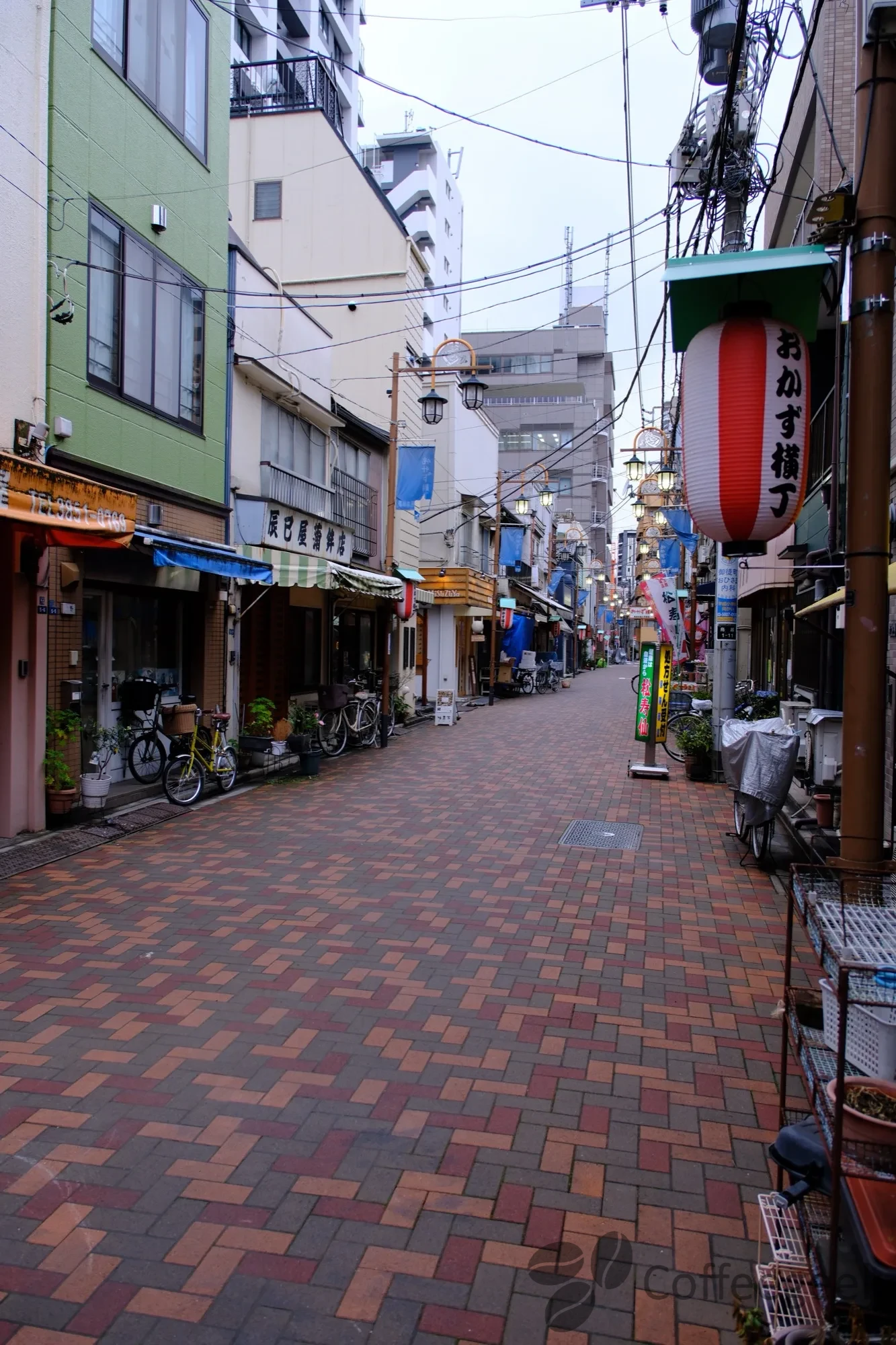
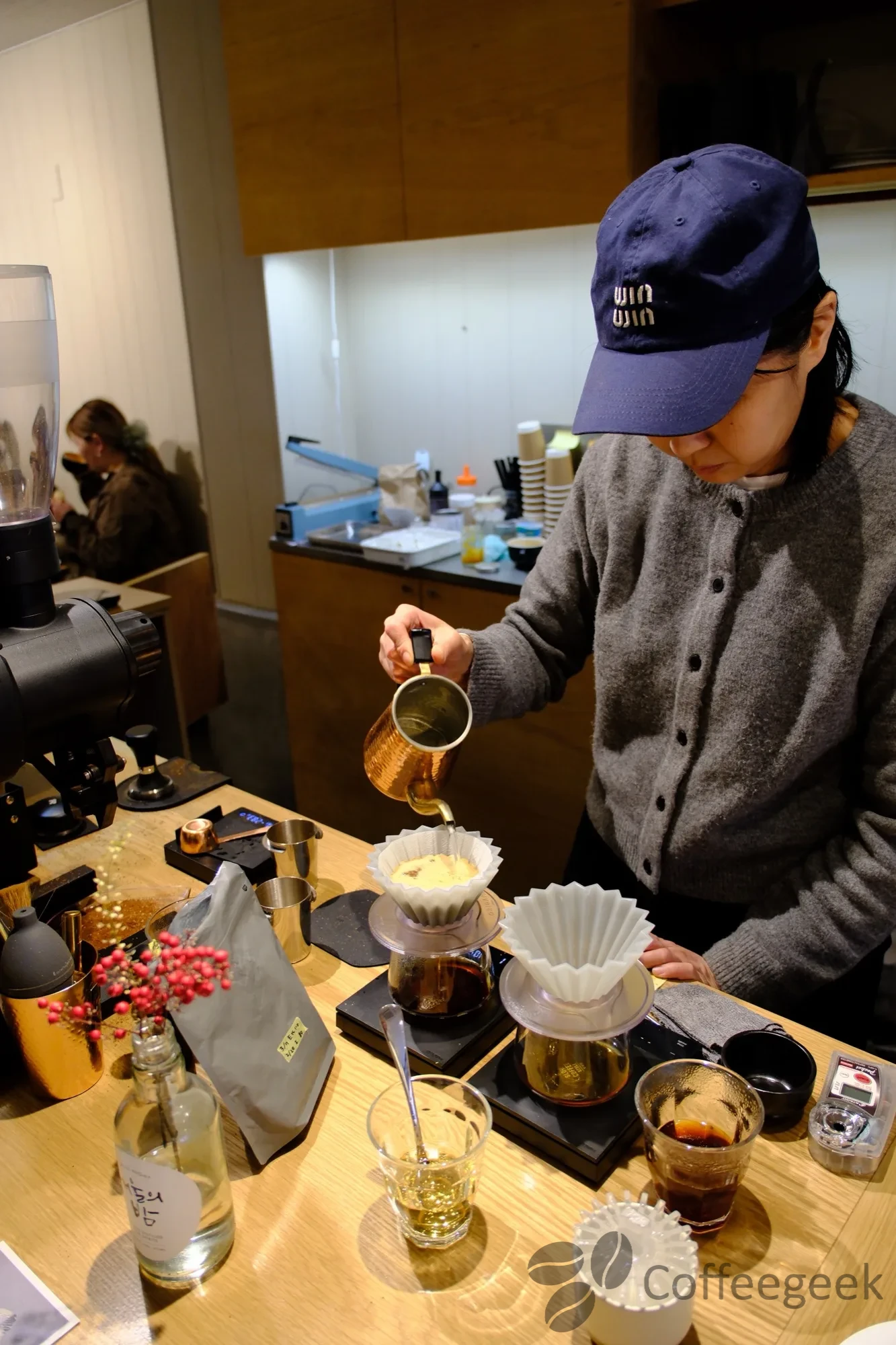
Hand brewing lives on in small neighbourhood shops too. In Torigoe, near the Okazu Yokochō shopping street, I found a tiny coffee shop on the ground floor of a narrow building. The barista brewed by hand, with a copper kettle and paper filters.
The old rituals hold on. People keep coming for breakfast: thick toast, eggs, ham or bacon, and a coffee.
For a coffee lover, the lesson is simple: take your time. Find a counter, order a siphon coffee and thick toast, and listen to a full side of a record.