

Discover the 1Zpresso J-Ultra coffee grinder, an essential choice for espresso enthusiasts who appreciate superior quality and practical features. In this article, I share my personal experience and highlight the notable differences compared to the previous model, the J-Max. You'll also be able to appreciate the elegant design and technical characteristics of this high-end tool. Dive into the world of refined coffee with this premium option and explore my usage tips to get the most out of it.
Recently, I realized that I was often recommending the 1Zpresso J-Ultra as an excellent coffee grinder for espresso. The only issue is that I hadn't yet written a user review for you. In truth, I already owned the J-Ultra's big brother, the J-Max. The only difference between the two grinders is that one has a retractable handle and the other doesn't.
This retractable handle is the result of an attempt by a competing German brand that filed a complaint (because of the handle's shape) against 1Zpresso to block sales in Europe. So, 1Zpresso was forced to modify the handle of some of its grinders, including the J-Max, in order to continue selling it in Europe under the name J-Ultra.
I therefore purchased the J-Ultra to present it to you.
Unboxing the 1Zpresso J-Ultra
The coffee grinder comes with several accessories:
- Carrying case
- Brush for cleaning the grinder
- Small bellows
- Silicone bracelet, to be installed on the grinder according to your choice
- Card with a QR code, redirecting to the user manual
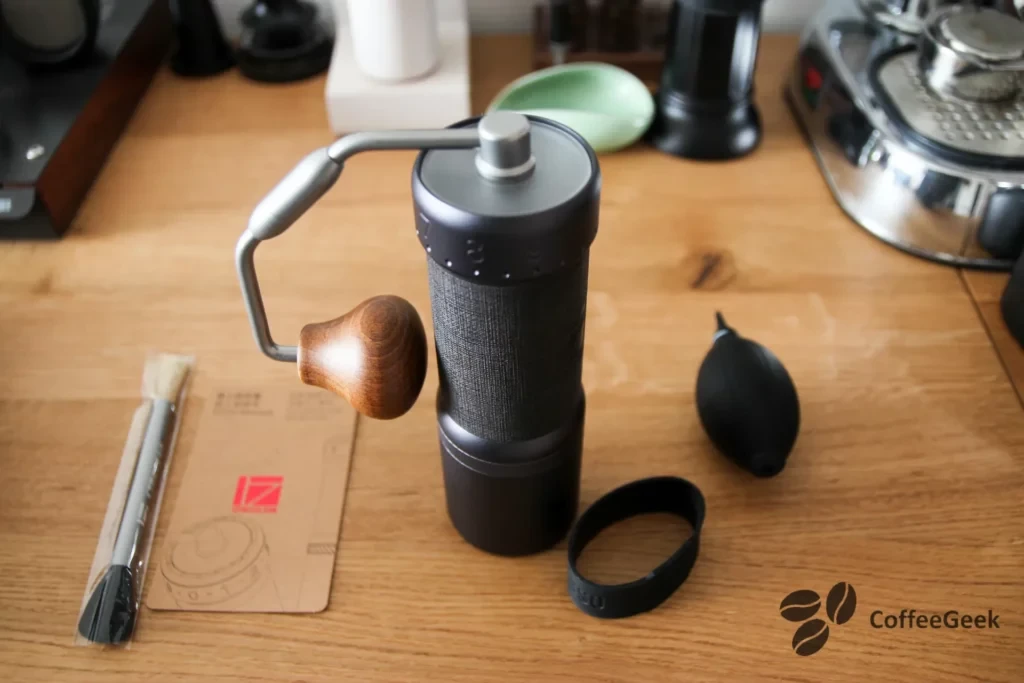
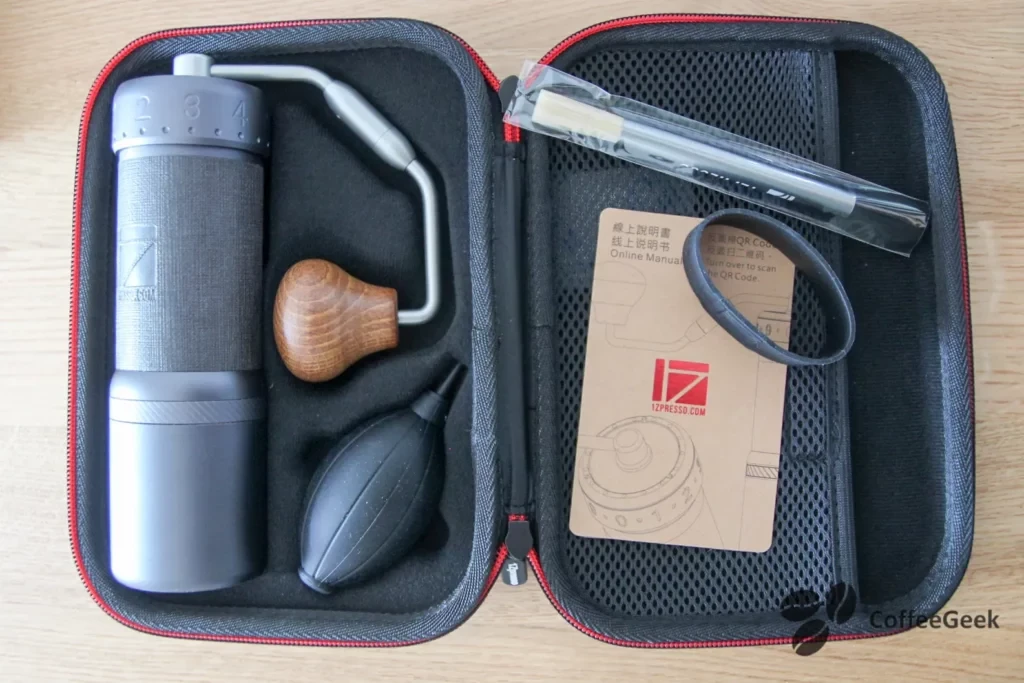
The accessories are of high quality.
Design of the 1Zpresso J-Ultra
When you first hold the J-Ultra, you immediately get a sense of quality. Very honestly, you can tell right away that it doesn't play in the same league as the Kingrinder that I tested previously. Before detailing each part of the grinder, here is my overall impression.
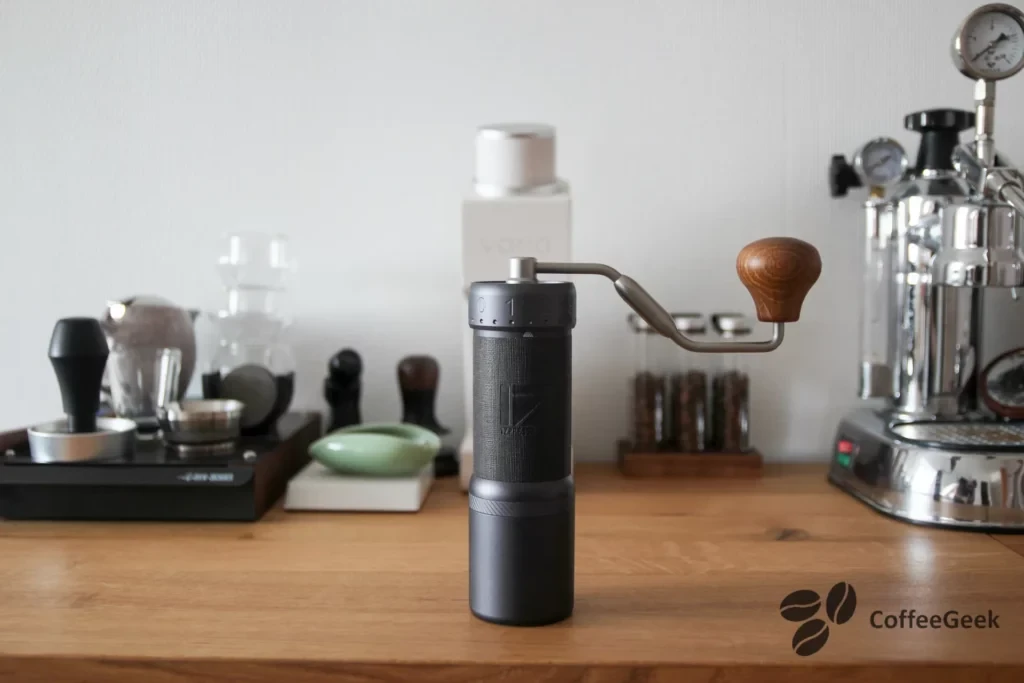
The 1Zpresso is heavier, its magnetic container is securely attached thanks to its numerous magnets, and the grinder is well-balanced, with a center of gravity low enough to prevent it from tipping over easily. The adjustment dial is really pleasant to use, offering some resistance at each click, and the settings are so fine (8 µm) that it makes this a coffee grinder totally dedicated to espresso.
Main features of the coffee grinder
Here are the main features of the 1Zpresso J-Ultra manual coffee grinder:
- Precise adjustment : 8 microns per click
- Burrs : 48 mm burrs, optimized for espresso
- Materials : Wood, polycarbonate, silicone, stainless steel, aluminum alloy
- Ergonomic design : Rounded body for comfortable grip
- Magnetic container : Secure attachment and easy removal
- Weight and dimensions : 700g, 19 x 18.5 x 5.5 cm, 35-40g capacity
- Accessories : Cleaning brush, blower, carrying case
- Warranty : One year, material and manufacturing defects
The J-Ultra Handle
Those who follow coffee news probably already know this, but 1Zpresso has been subject to complaints from a competing German manufacturer. The latter filed a complaint against 1Zpresso, accusing the company of using a handle too similar to their products. In response, 1Zpresso completely redesigned the shape of the handle knob and made it retractable. However, some 1Zpresso products, such as the J-Max, were withdrawn from the market because of this handle.
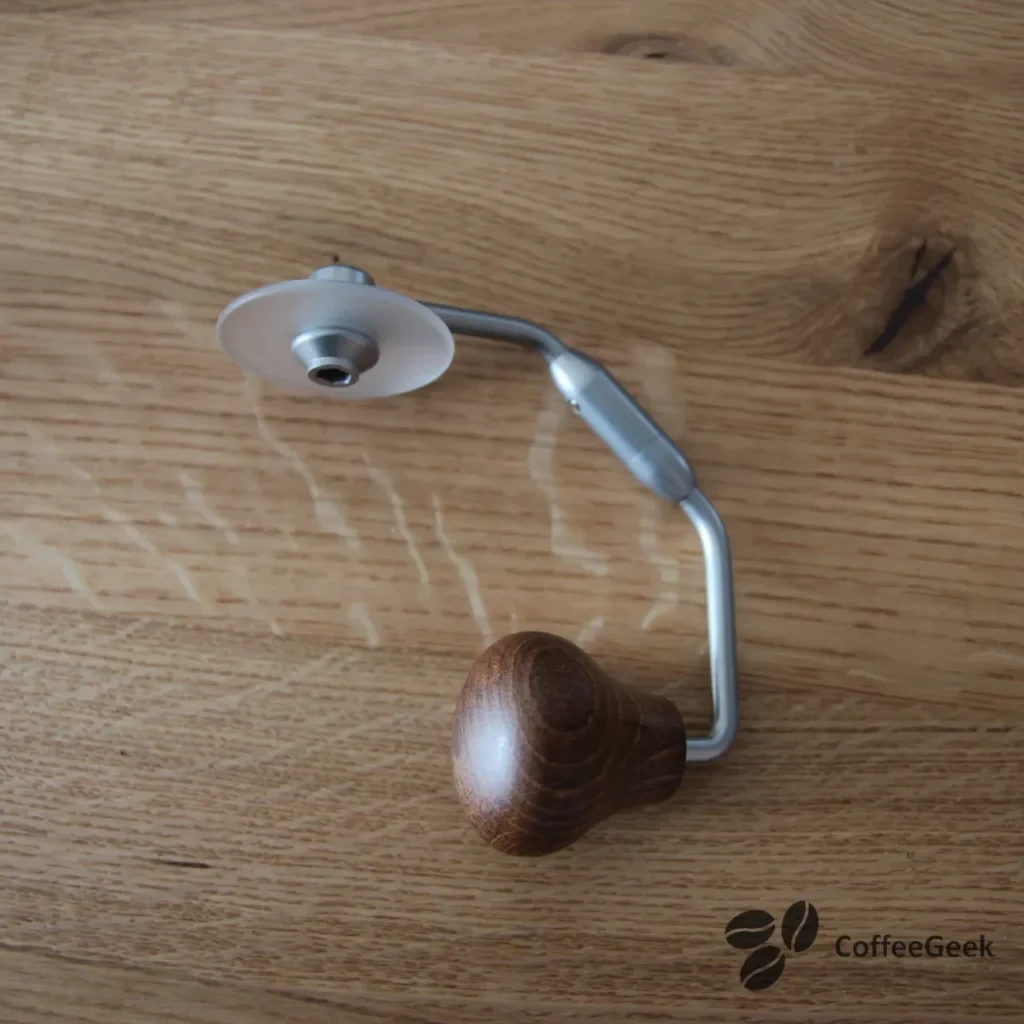
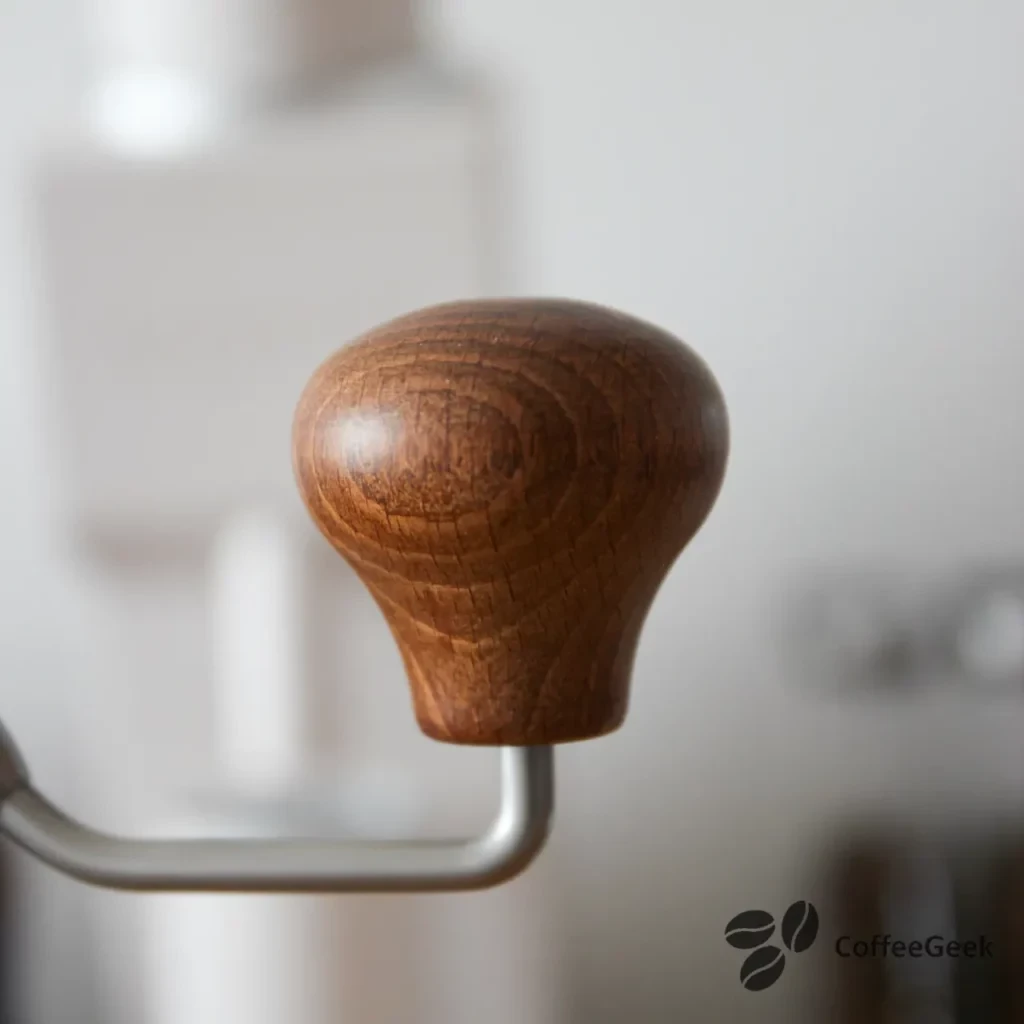
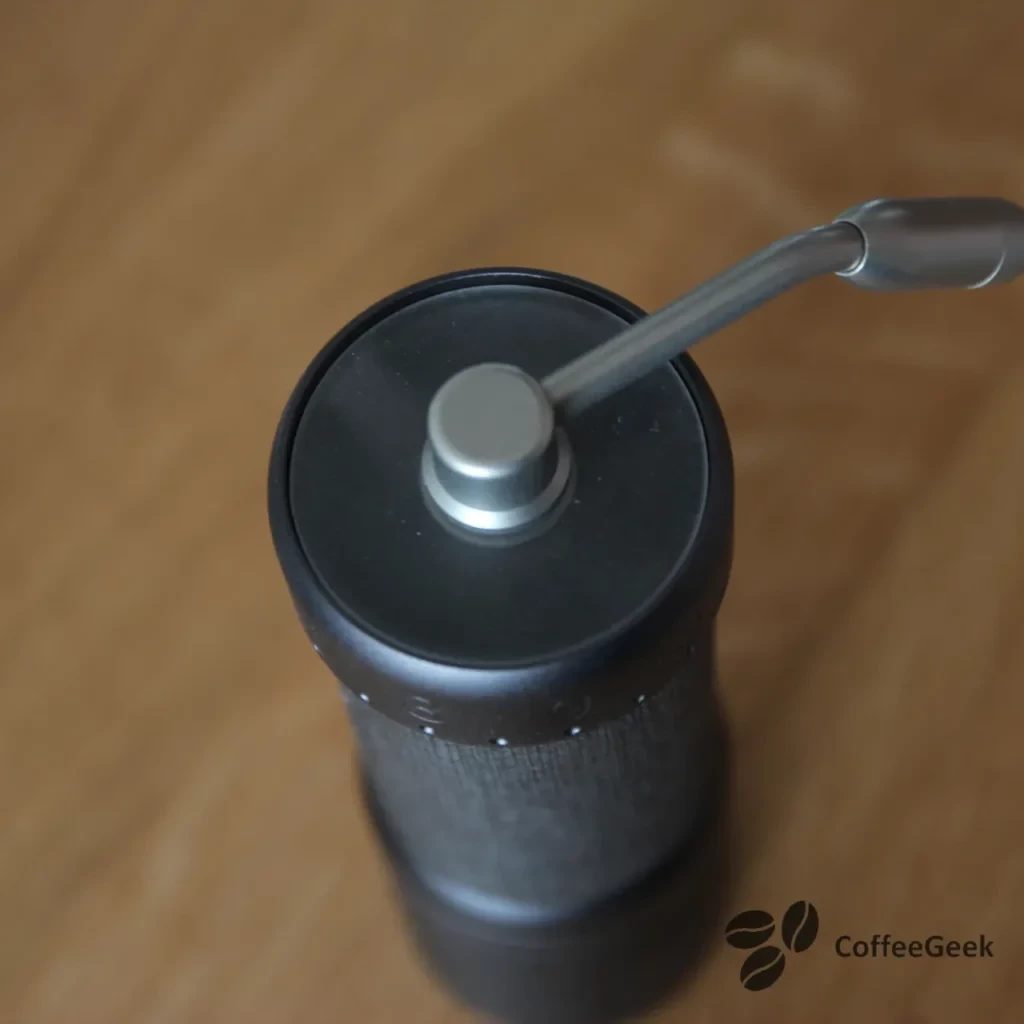
The J-Ultra's crank is attached to the cap, one of the only plastic parts of the grinder. It is foldable, and this is the first time I've used this system from 1Zpresso, which gives a feeling of solidity. However, I find the system less pleasant to use than that of Timemore. 1Zpresso probably couldn't integrate the Timemore system due to non-existent agreements or patents. The crank's retractability is a major advantage, as it allows the grinder to take up less space and balance better.
The crank knob has a new shape, offering an excellent grip. It is wide and ergonomic. While the early 1Zpresso models were reminiscent of the El Comandante C40 crank, the current design is more evocative of the Apollo by BPlus.
The J-Ultra coffee grinder body
1Zpresso coffee grinders feel very good in hand. With the J-Ultra, I have the same feeling as with the other models from the brand I've tried (JE-Plus, J-Max...). The texture surrounding the grinder offers excellent grip, eliminating the need to add silicone bands for a better hold, as I do with the Apollo by BPlus.
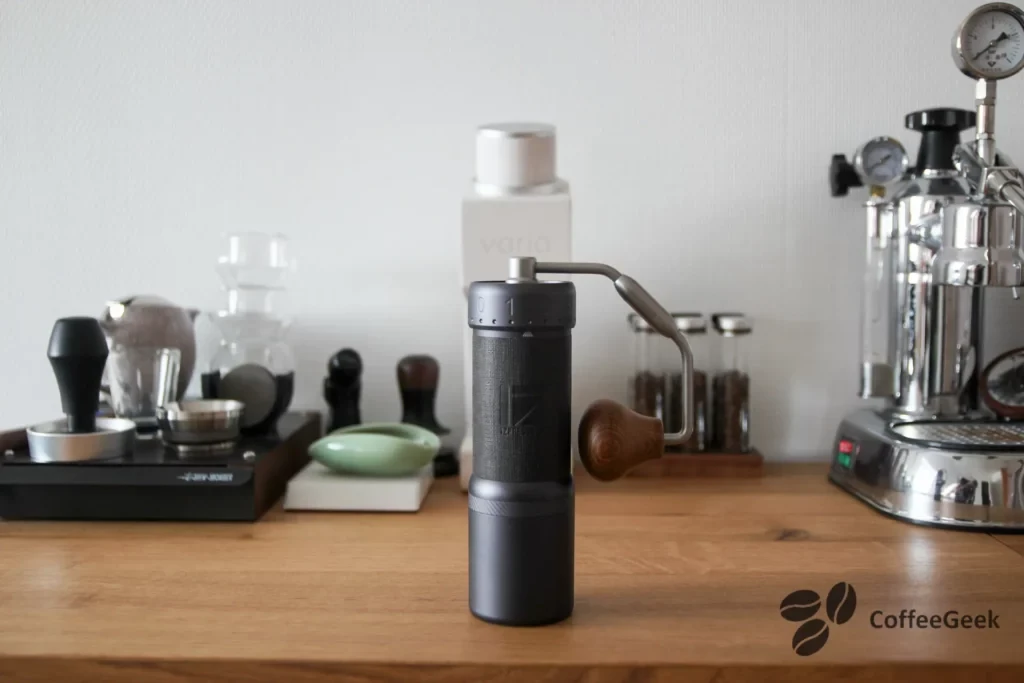
The external adjustment dial protrudes slightly, ensuring a solid grip that prevents the grinder from slipping out of your hands. This is an improvement over the Timemore Chestnut X, where I had noted this issue.
The magnetic catch cup of the 1Zpresso J-Ultra
The magnetic catch cup for collecting ground coffee is well designed. It has numerous magnets that attach it securely to the grinder, resisting shaking without detaching. It is heavy enough to maintain the balance of the grinder, even with the handle not retracted. This detail is important, as I observed tipping problems with the Timemore Chestnut X when the handle was not retracted. Additionally, the catch cup has a rubber pad underneath, preventing scratches on the countertop.
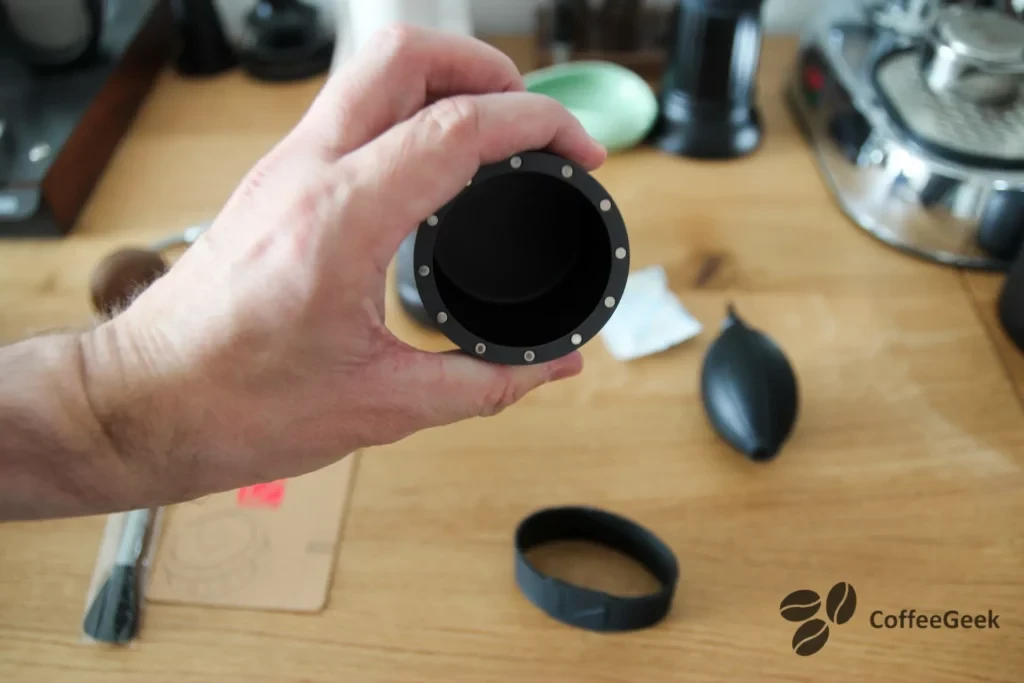
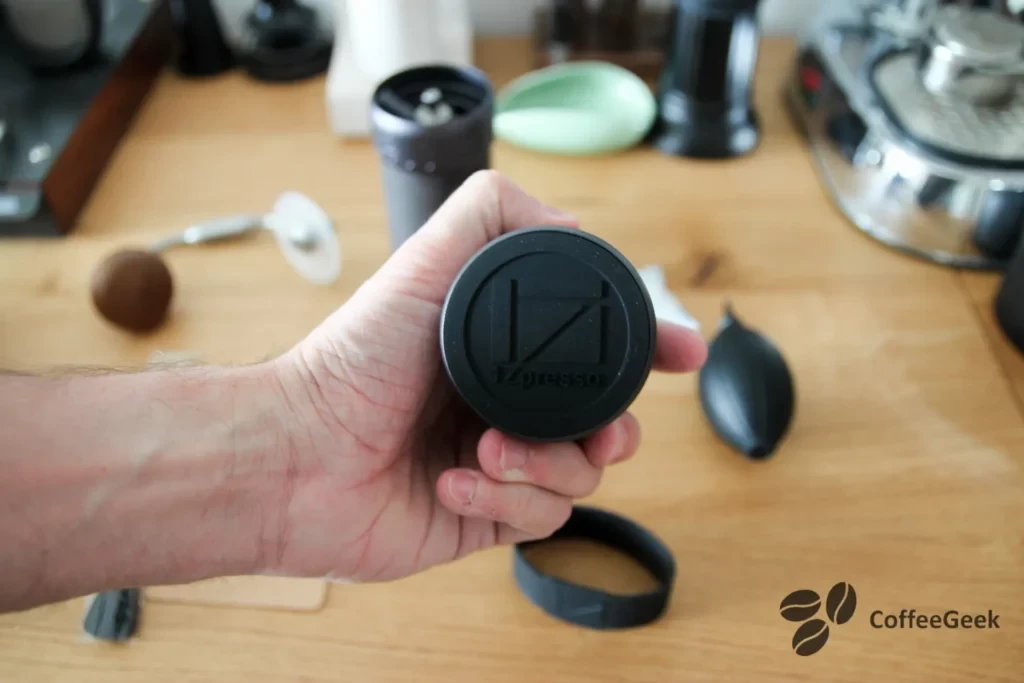
The manufacturer has integrated a gentle slope into the catch cup, extending from the bottom to the magnets, to avoid coffee grounds retention. Unlike other manufacturers, this gentle slope prevents an obstacle that retains coffee when pouring it into the portafilter, a problem I observed with the C40 and Kinu.
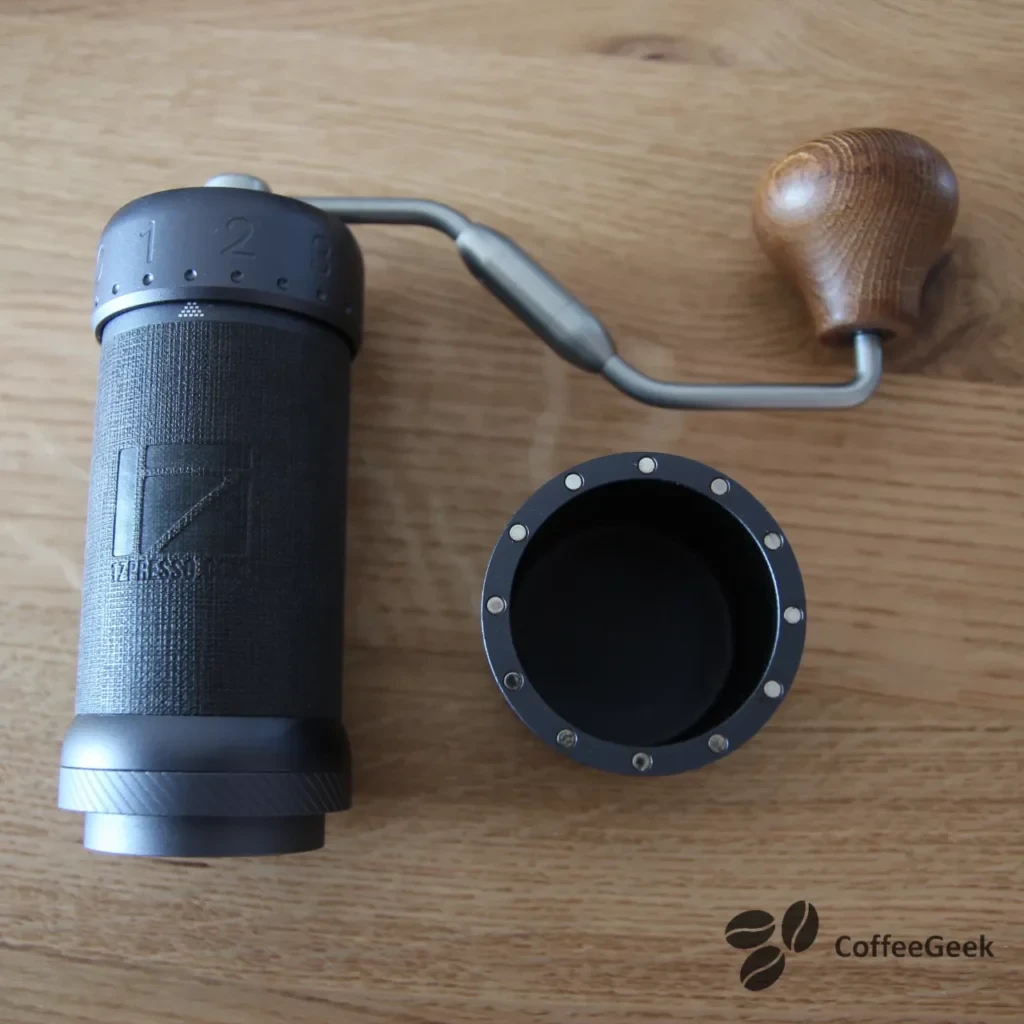
Another feature I appreciated with the magnetic attachment of this container is the addition of a recess in its design. This prevents the container from detaching when pressing on it at an angle during use of the grinder. This design makes it much more difficult for the container to accidentally detach under such circumstances.
The adjustment dial
The adjustment dial is located on the top of the grinder, on the outside, allowing a burr spacing of 8 µm per click. This precision is particularly suited to espresso as it promises very high adjustment finesse. With other grinders, especially those that adjust from the bottom, you don't get this level of precision and sometimes, in the cup, the ideal setting falls between two clicks.
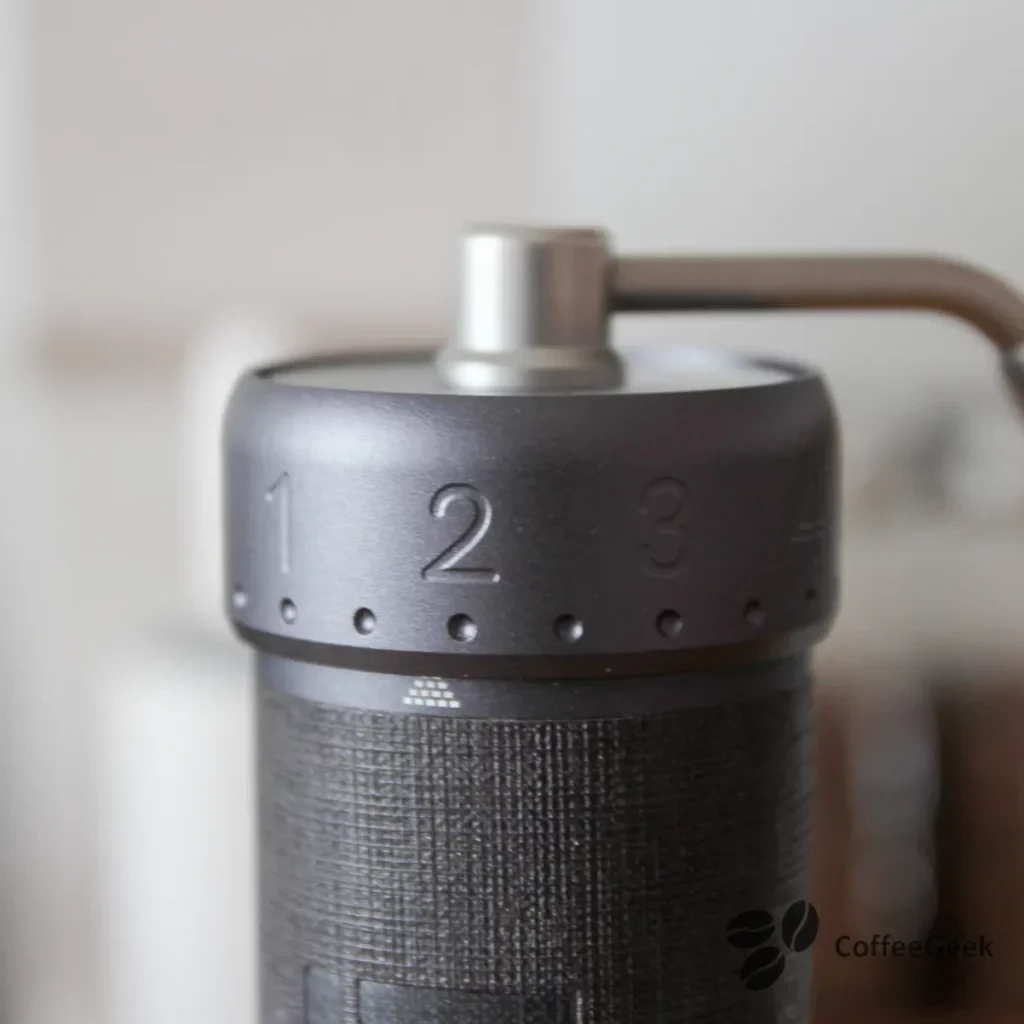
Recommended settings:
How to read positions: the X.Y.Z format indicates the number of complete turns (X), the position on the adjustment dial (Y), and the micro-adjustment in clicks (Z). For example, 1.4.2 means 1 complete turn + position 4 on the dial + 2 clicks of micro-adjustment.
- Espresso100 to 170 clicks(position 1.0.0 to 1.7.0)
- Moka200 to 270 clicks(position 2.0.0 to 2.7.0)
- Aeropress200 to 270 clicks(position 2.0.0 to 2.7.0)
- Pour Over270 to 330 clicks(position 2.7.0 to 3.3.0)
- French Press400 to 440 clicks(position 4.0.0 to 4.4.0)
These settings are indicative and may vary depending on your coffee and preferences.
The burr
The J-Ultra burr is 48 mm in diameter and is designed for espresso. In the cup, I'll come back to this, but it's confirmed.
If you're looking for a coffee grinder dedicated to espresso, consider three important elements:
- Grind adjustment fineness: The J-Ultra's precision of 8 µm per click allows for very fine adjustment, essential for espresso.
- Burr size: Larger burrs (47-48 mm) reduce grinding time. For example, with smaller burrs (38-40 mm), it takes about 1 minute 30 seconds to grind by hand. With 47-48 mm burrs, the grinding time for 16 g of coffee is about 40 seconds.
- Burrs designed for espresso: Grind quality depends on its consistency. A large disparity in the size of ground coffee particles negatively affects the coffee's taste. Some burrs are optimized for consistent and fine grinding, essential for espresso. Other burrs can be versatile, offering a grind consistent enough for pour-over and espresso, but without reaching the quality of dedicated burrs.
These aspects are crucial for obtaining quality espresso.
Find the 1Zpresso J-Ultra coffee grinder on Amazon
The 1Zpresso J-Ultra: your ally for perfect espresso
I hesitated between using my La Pavoni or my Lelit Mara X to present you with an espresso made with the 1Zpresso J-Ultra. I ultimately chose my Lelit Mara X, as I haven't talked about it in a while (and it's easier to photograph the extraction than with my La Pavoni). To focus on the use and handling of the grinder, I decided not to go into the details of the steps for making an espresso, as these topics have been covered in more detail in other articles.
To make my espresso, this time I'm going to grind 18g of coffee, because today I feel like changing my usual water/coffee ratio by concentrating it a bit.
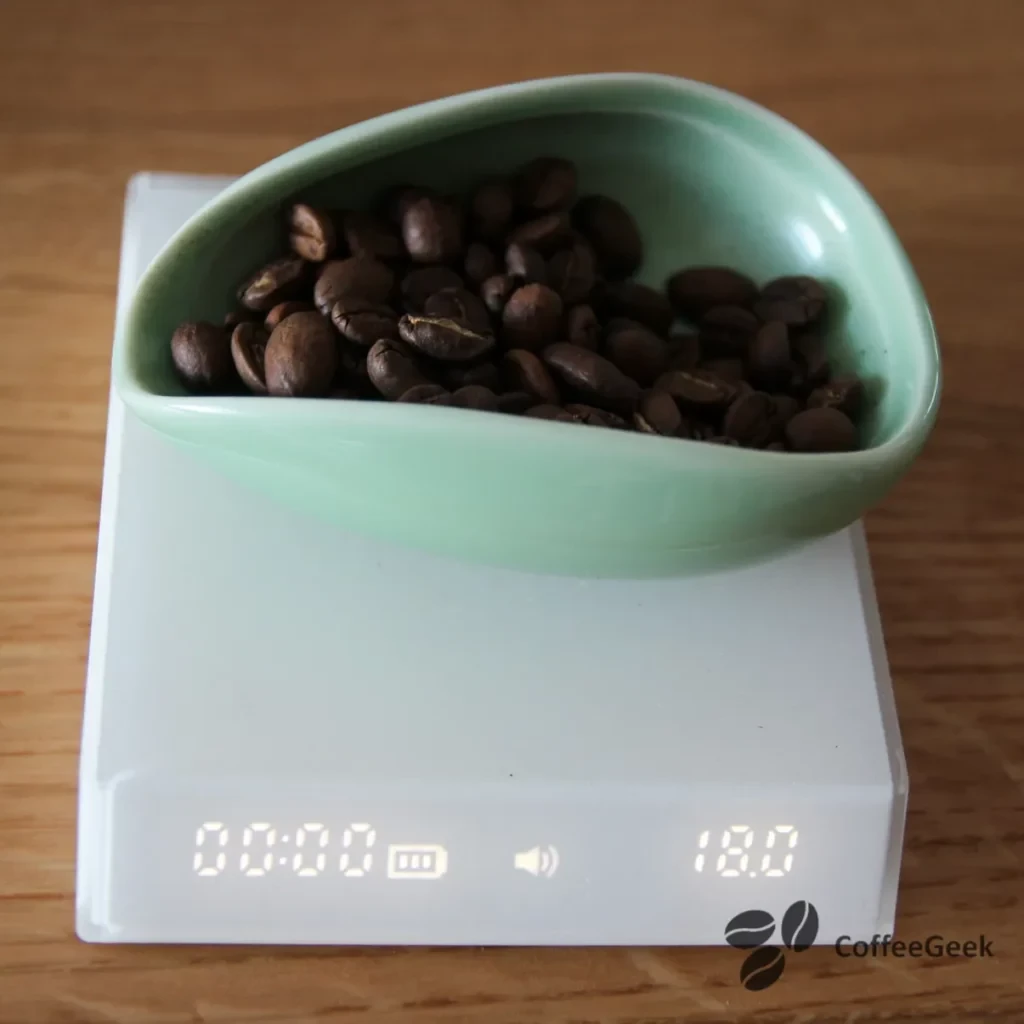
Using my scale, I weigh 18g of coffee and add a few drops of water to reduce the static electricity that can appear when using the grinder. This static electricity causes clumping and coffee retention within the grinder.
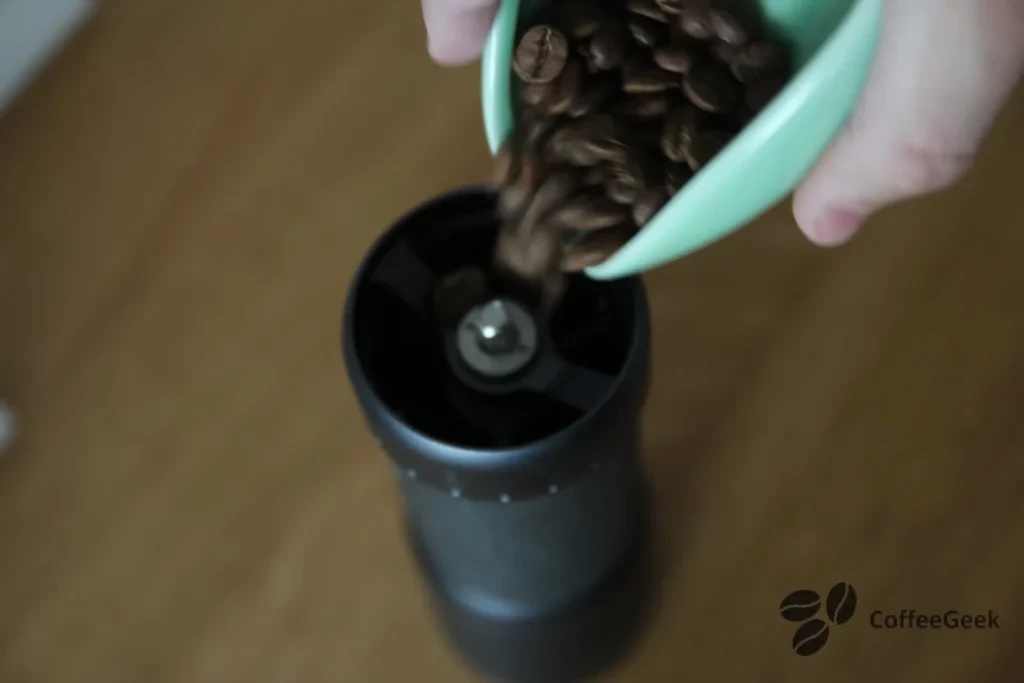
Next, I transfer the coffee beans into the grinder to grind them. The opening, wide enough, allows pouring the beans without spilling any.
Then, I unfold the crank and start grinding. To give you an idea, to grind 18g of coffee with this grinder, I use the following setting: one complete turn of the dial then position 1.0. To grind all the coffee, it took me between 40 and 50 seconds.
What is the retention of the 1Zpresso J-Ultra?
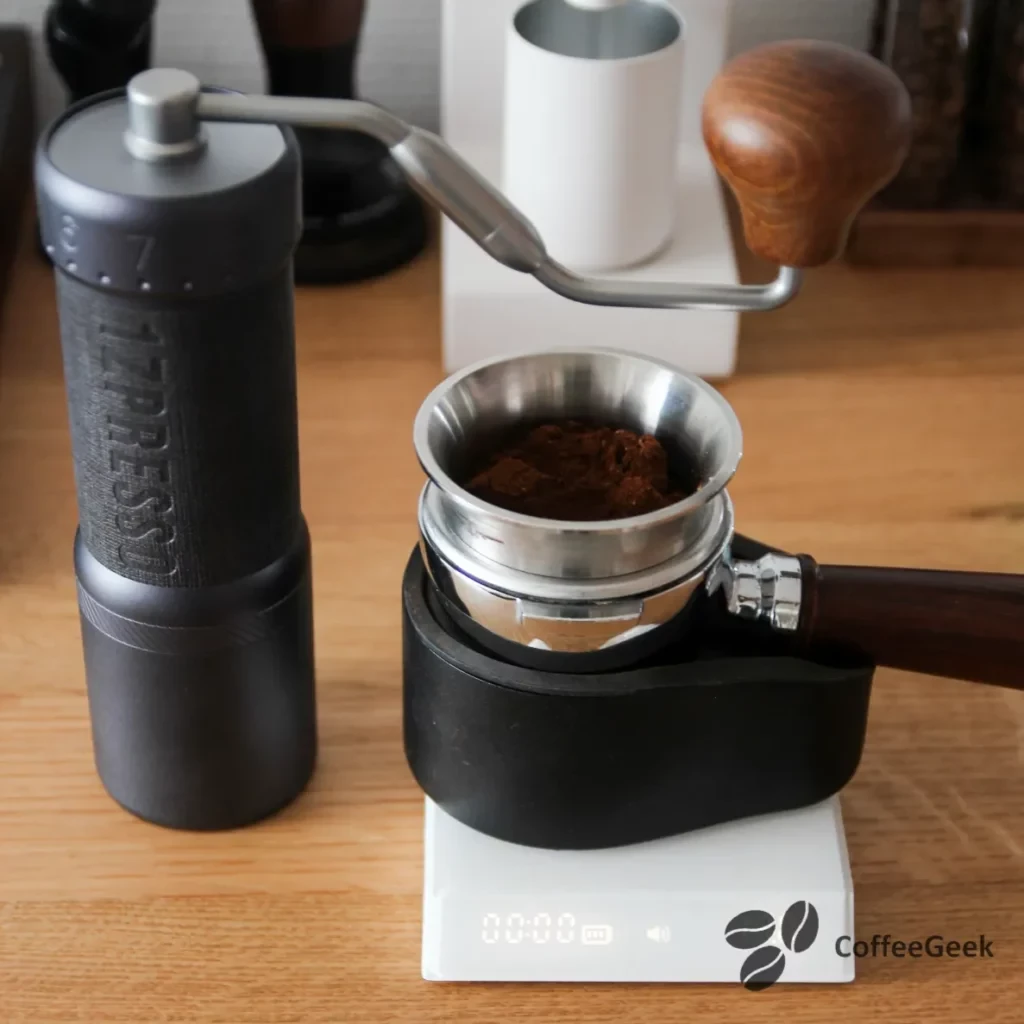
To measure the retention of coffee by this grinder, I first weighed the coffee before grinding it, then weighed it again once in the portafilter. The photos speak for themselves: retention is extremely low with this grinder.
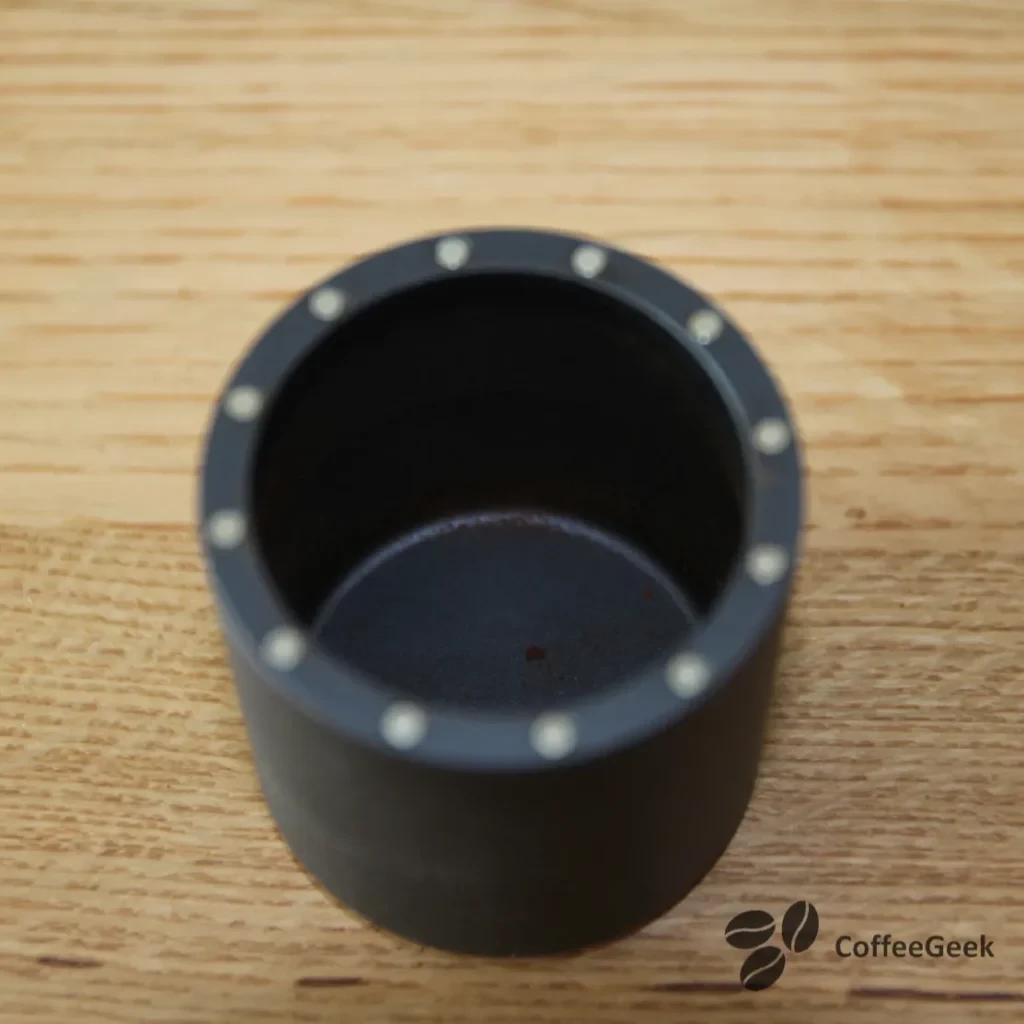
From experience, I know that retention can occur in two main places on a hand grinder:
- At the burr exit: This retention can be easily reduced by using the RDT technique (Ross Droplet Technique).
- In the container, due to its shape or the materials used. I've already used high-end grinders where the manufacturer had placed a rim inside the container. This rim, intended to hold the container's attachment system, blocked coffee every time you poured it into the filter.
With the 1Zpresso J-Ultra, no problem. The manufacturer opted for a gentle slope instead of a rim, which doesn't retain coffee. Additionally, the paint used is of very good quality and doesn't cause retention. I should mention that retention is largely reduced by using the RDT technique. It's also important to be aware that during initial uses, retention may be higher because the grinder is loaded with static electricity due to plastics from shipping and manufacturing.
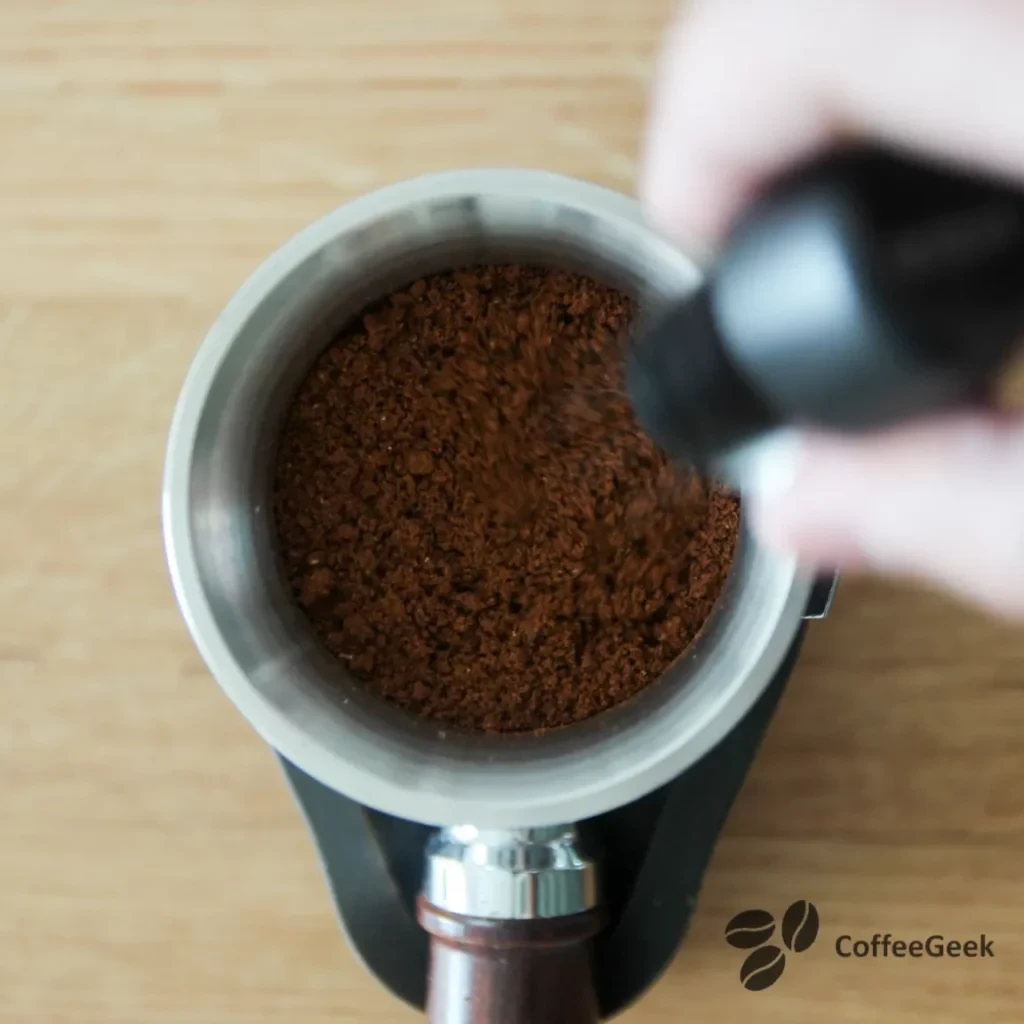
Once the coffee is ground and poured into the portafilter, to minimize channeling as much as possible, I use my WDT to distribute the coffee well before tamping straight with my guided tamper. Then, I add a puck screen.
My Lelit has been on for a few minutes, my cups are nice and warm, and my portafilter is ready. I can pull my shot.
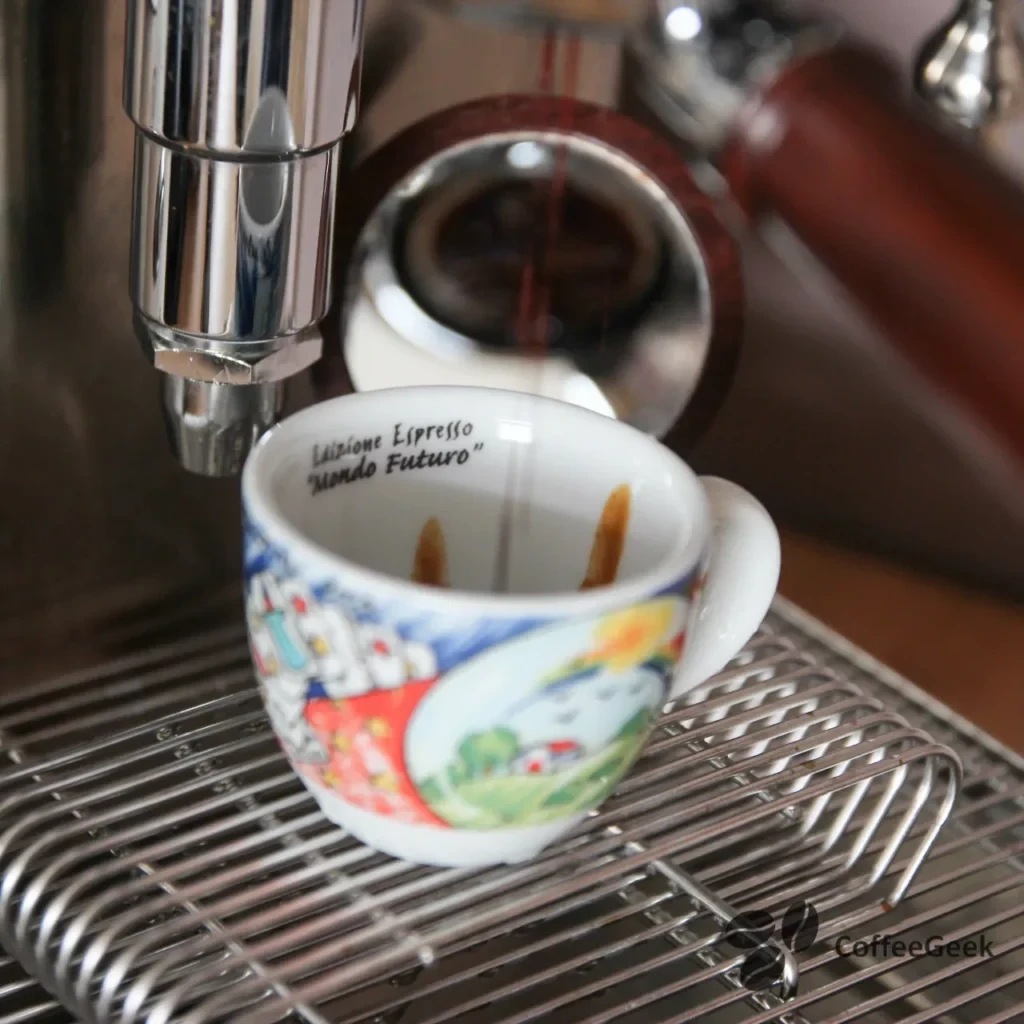
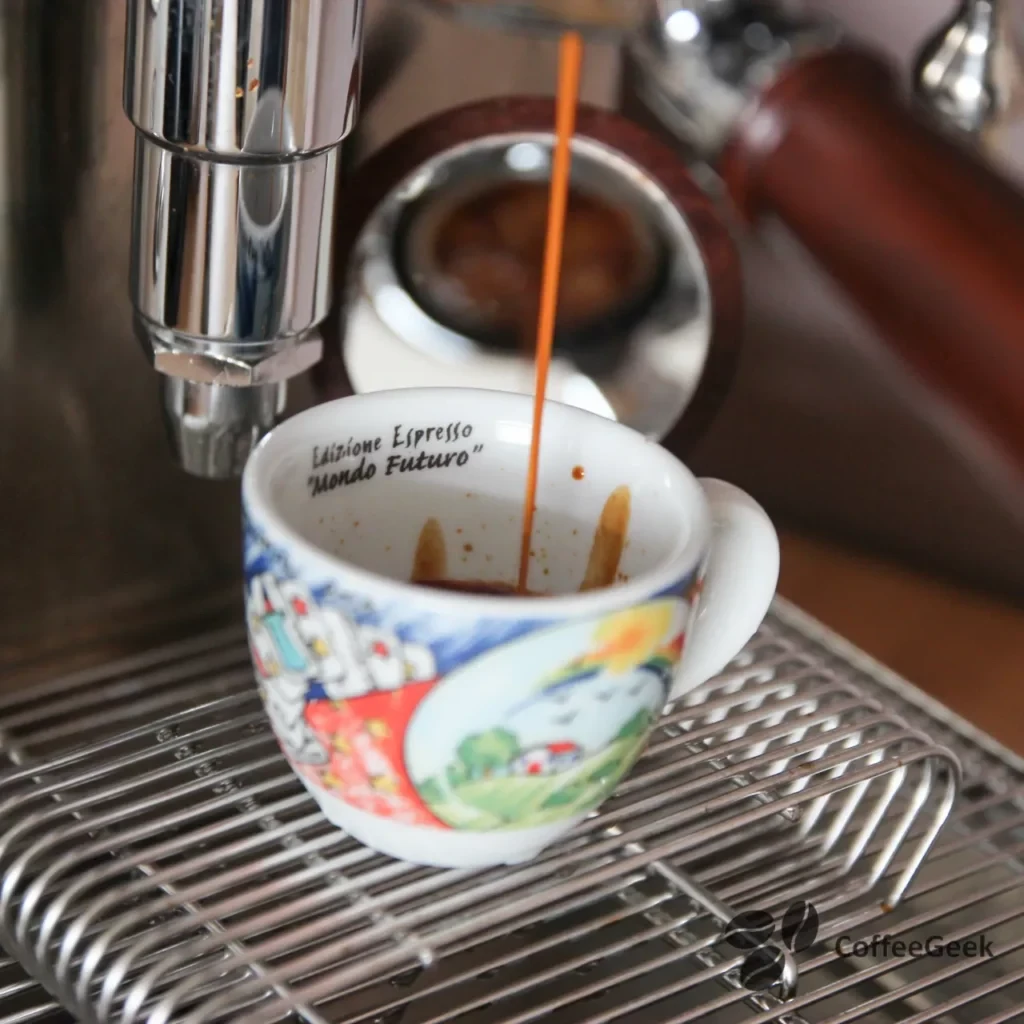
My extraction is performed in 25 seconds, at 9 bar (my Lelit Mara X has flow control) with 40 ml of coffee in the cup. Below are images at different moments of the extraction.
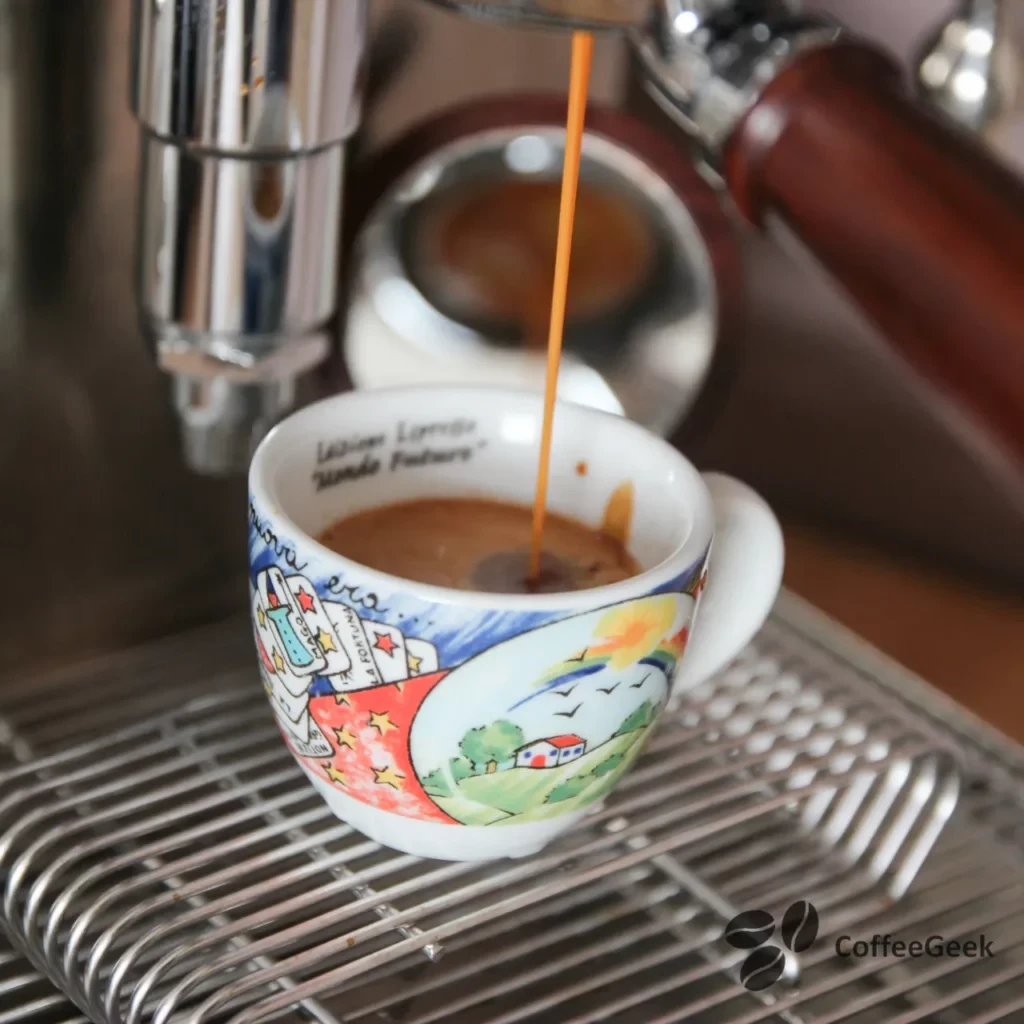
And here is the final result:
The photo shows the coffee obtained with the 1Zpresso J-Ultra coffee grinder and my Lelit Mara X V2. The flavor wheel below expresses, through a chart, my sensory experience and mouthfeel when tasting this coffee.
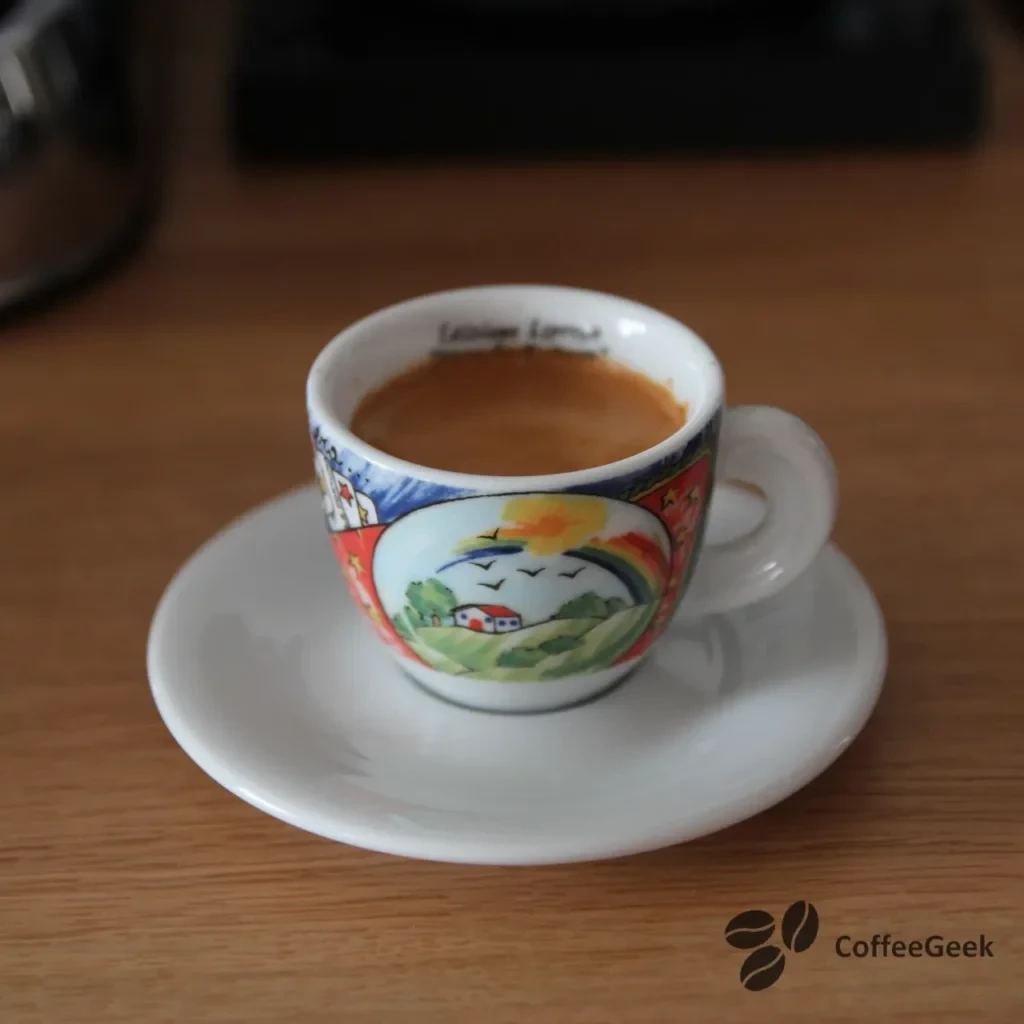
Espresso cup Ancap
Coffee information
- Country of origin: Honduras Uluma
- Coffee type: Arabica - Typica / Pacas
- Altitude: 1200 - 1700m
- SCA Score: 84/100
- Roaster description: a complex, highly aromatic coffee with bright, lively acidity and a smooth, velvety body.
Find the 1Zpresso J-Ultra on Amazon
Can we make V60 with a 1Zpresso J-Ultra?
Yes, you can use an espresso-dedicated coffee grinder to make V60. However, as mentioned in the burr section of the article, some burrs are designed to be more efficient with specific grind sizes. Therefore, some burrs will be more efficient than the 1Zpresso J-Ultra for pour-over / V60. I tested the same coffee I use for espresso, but in V60. The coffee had a roast that was perhaps a bit dark for V60, which generally prefers very light roasts, but my coffee was really delicious.
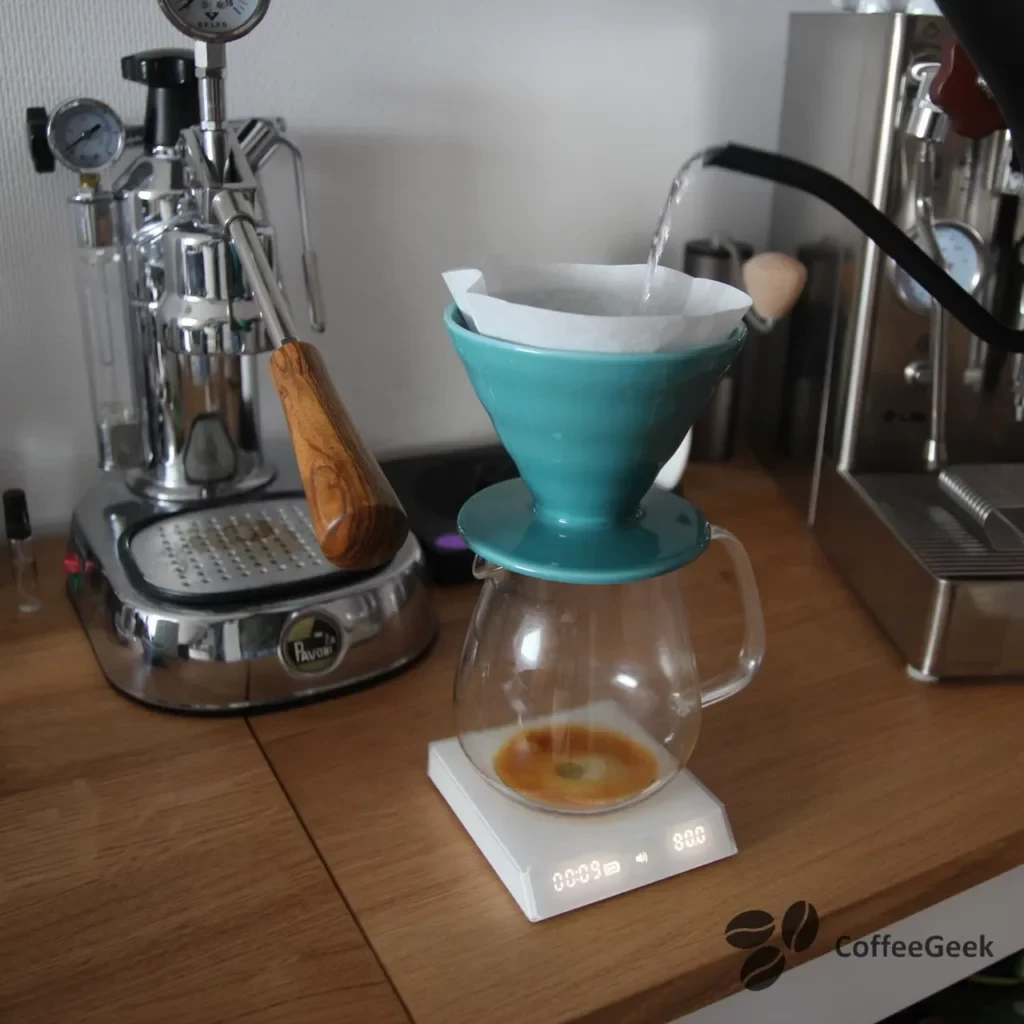
For serving, I use my Kinto teapot that doubles as a V60 server.
How to disassemble the 1Zpresso J-Ultra?
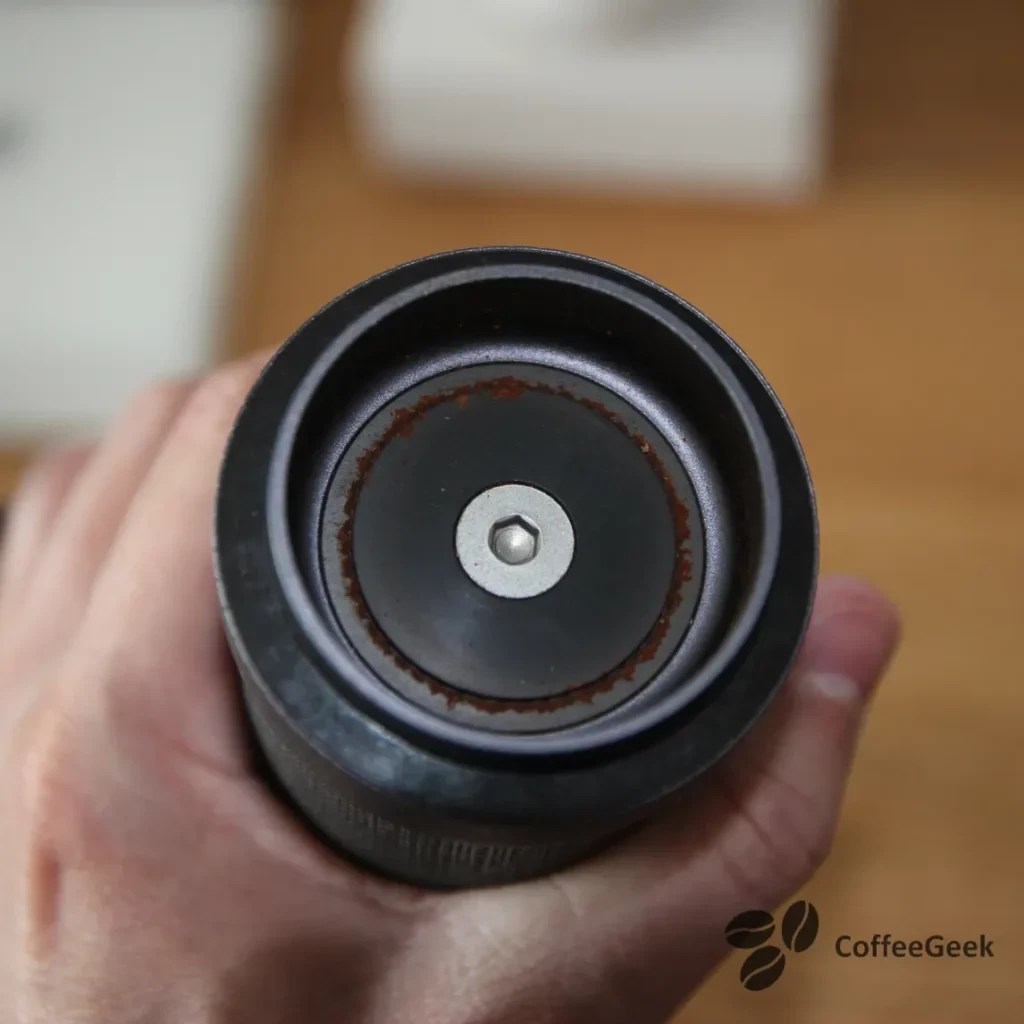
To disassemble the 1Zpresso J-Ultra, simply unscrew the nut holding the central shaft by blocking the burr with your finger, then remove the burr. Then, using the brush and pump provided, you can clean the grinder.
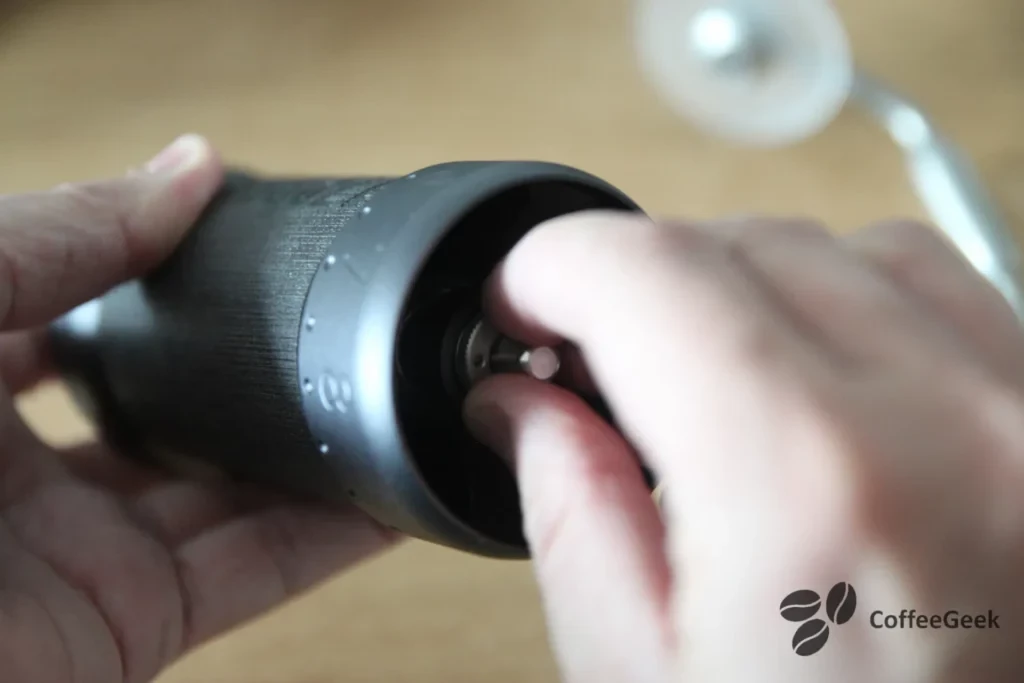
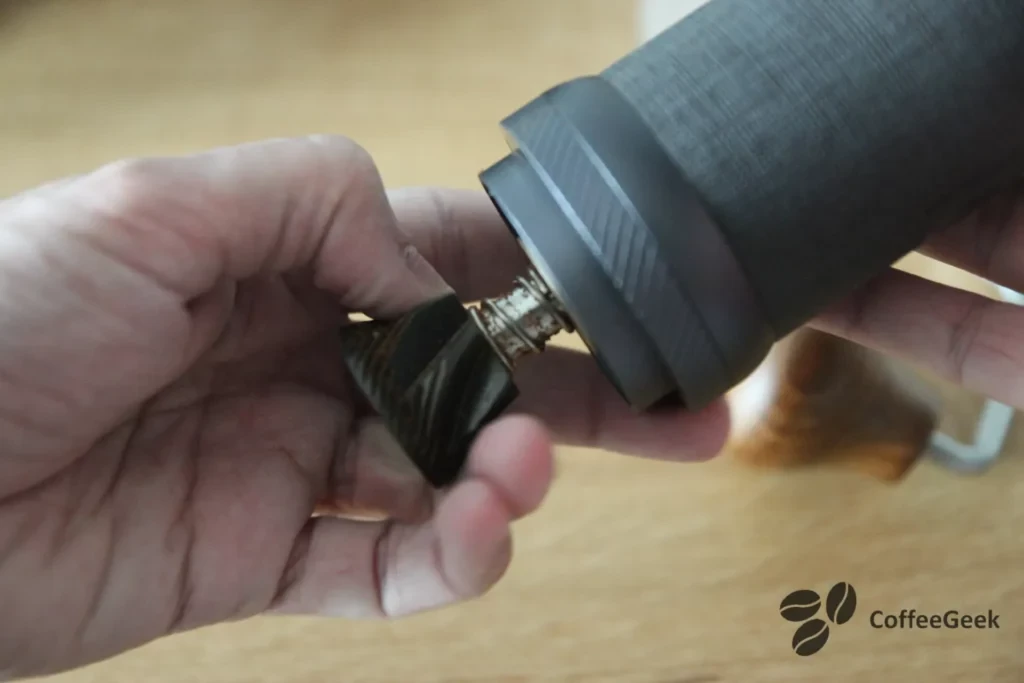
Below, a photo of the burrs' condition after several coffees without having cleaned them.
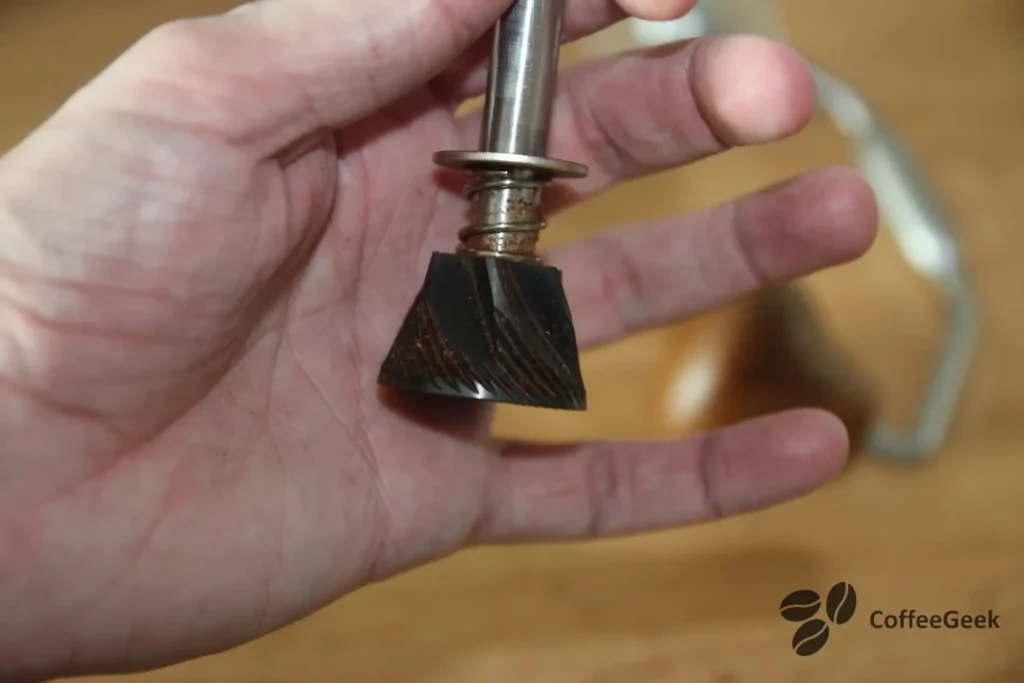
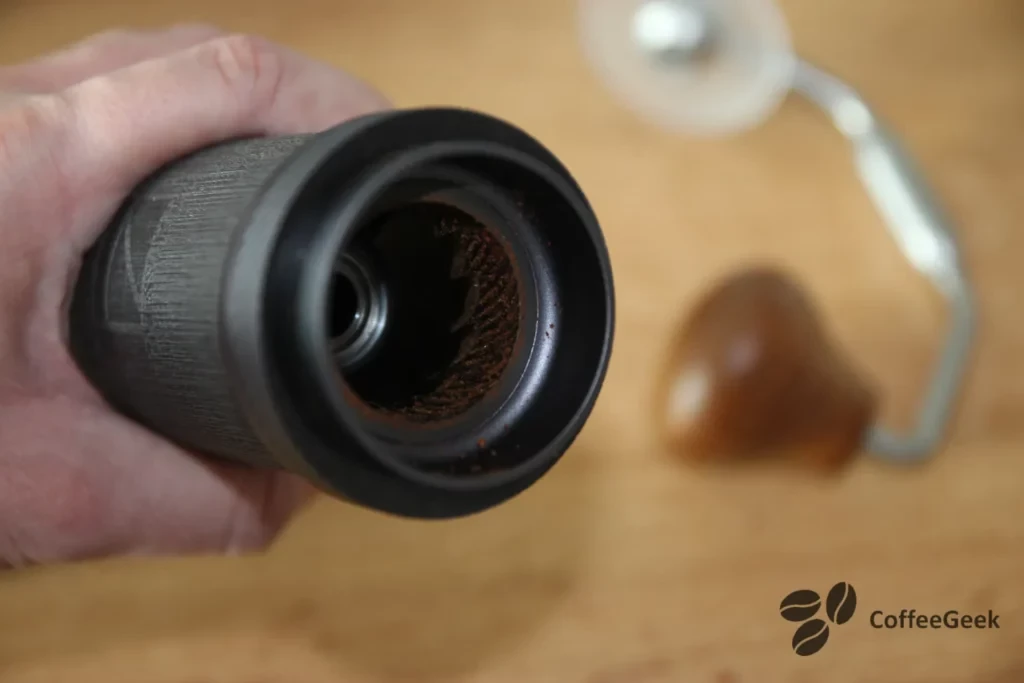
It is also possible to disassemble the fixed burr to clean the grinder even more thoroughly.
Conclusion: Is the 1Zpresso J-Ultra the best grinder for espresso?
The J-Ultra is a premium coffee grinder, remarkable for both its build quality and its cup results. Honestly, I found no flaws with this grinder. Its many advantages include an attractive design, excellent handling, very precise adjustment with numerous clicks, and the ability to disassemble and align the burrs if necessary (a rare feature). It also comes with a carrying case and accessories.
Compared to other grinders featured on the site (Kingrinder, El Comandante C40, Timemore S3, Apollo by BPlus), the 1Zpresso J-Ultra is the best for espresso. Although the cup result is similar to that of the Apollo or VS3 (which have specific burrs for espresso), the handling of the J-Ultra is significantly superior. The El Comandante C40 and Timemore S3 are less effective for espresso, as their burrs are more designed for pour over and their adjustments are less suited to espresso. The Kingrinder K6, with its hybrid burrs, is less efficient for espresso but offers good results at a lower cost.
In conclusion, if your budget allows and you focus on espresso extraction, the 1Zpresso J-Ultra is the ideal choice. If your budget is more limited and you also want to make pour over, the Kingrinder is a good alternative.
- Carrying case with included accessories
- Very good grip and handling
- Retractable crank
- Very precise adjustment
- Excellent espresso grind
- Tool-free disassembly
- The price