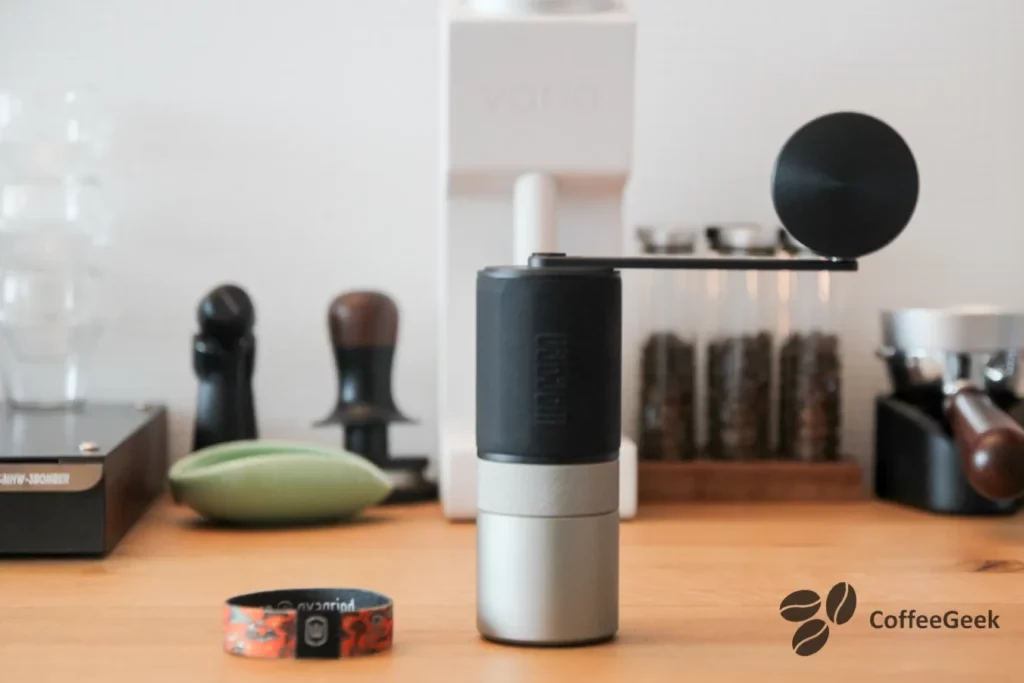
Explore the Wacaco Exagrind portable coffee grinder, a perfect solution for coffee enthusiasts on the go. This accessory, subjected to impartial testing to ensure an objective evaluation, stands out with its foldable crank and compact design, allowing you to enjoy freshly ground coffee wherever you are. Discover the unique features of this grinder and how it can enhance your tasting experience.
As part of my exchanges with Wacaco, I expressed my interest in the Wacaco Exagrind travel coffee grinder, which they agreed to send me. I want to clarify that this test is completely independent, without any directives or influence from them. As a coffee enthusiast and having evaluated numerous grinders, I see an excellent opportunity to share my expertise with you once again.
Design of the Wacaco Exagrind travel grinder
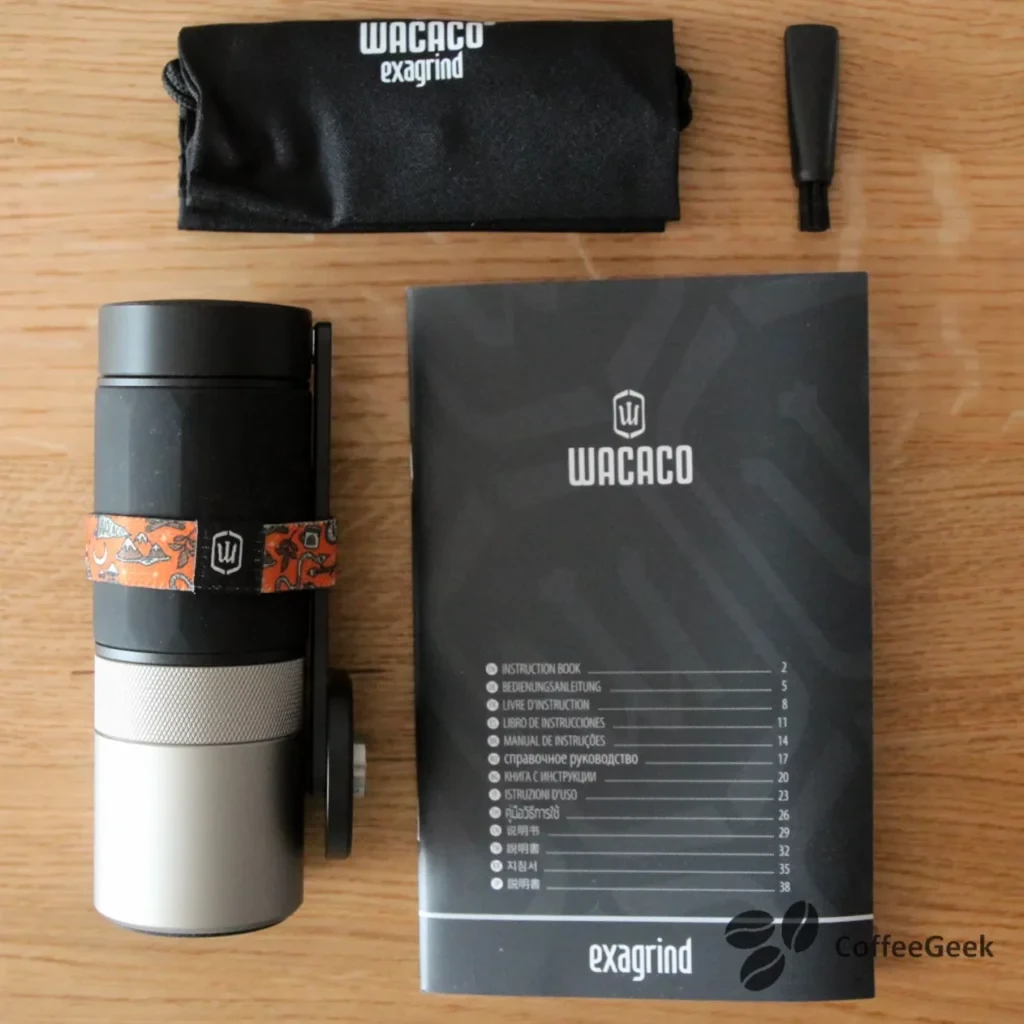
Box contents
The Wacaco coffee grinder comes with a small carrying case, a cleaning brush, and a multilingual user manual.
The crank
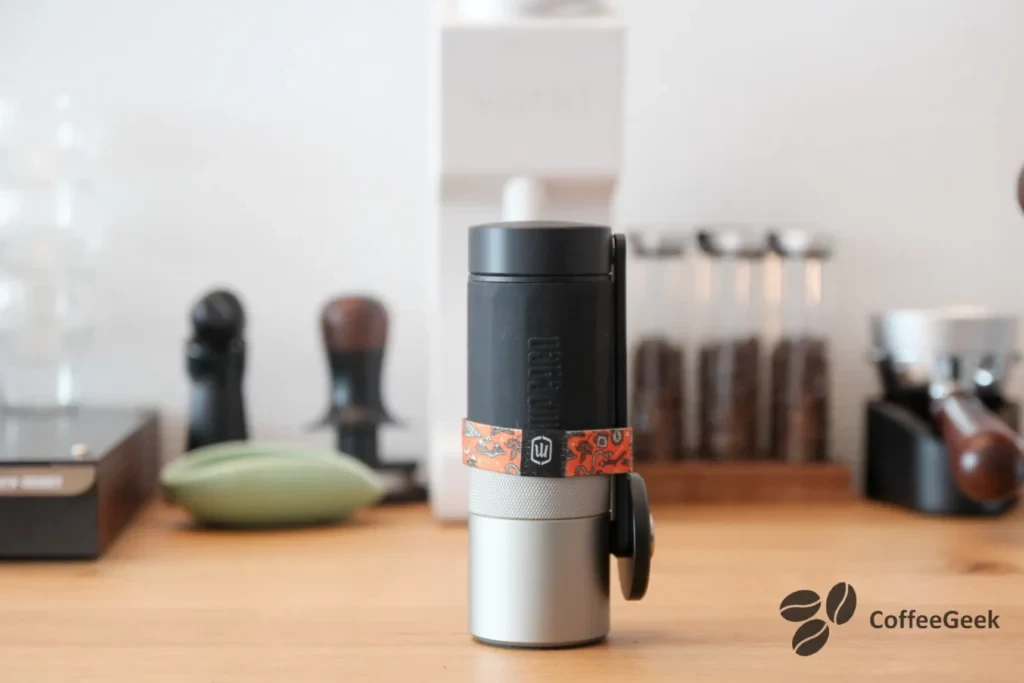
A few weeks before receiving this grinder, I had bought the Timemore C3 ESP Pro because I was looking for a compact grinder to prepare coffee on the go. I can assure you that the Wacaco Exagrind is much more compact than the Timemore. Indeed, one of the unique features of this grinder is its crank that folds down completely, allowing for considerable space savings.
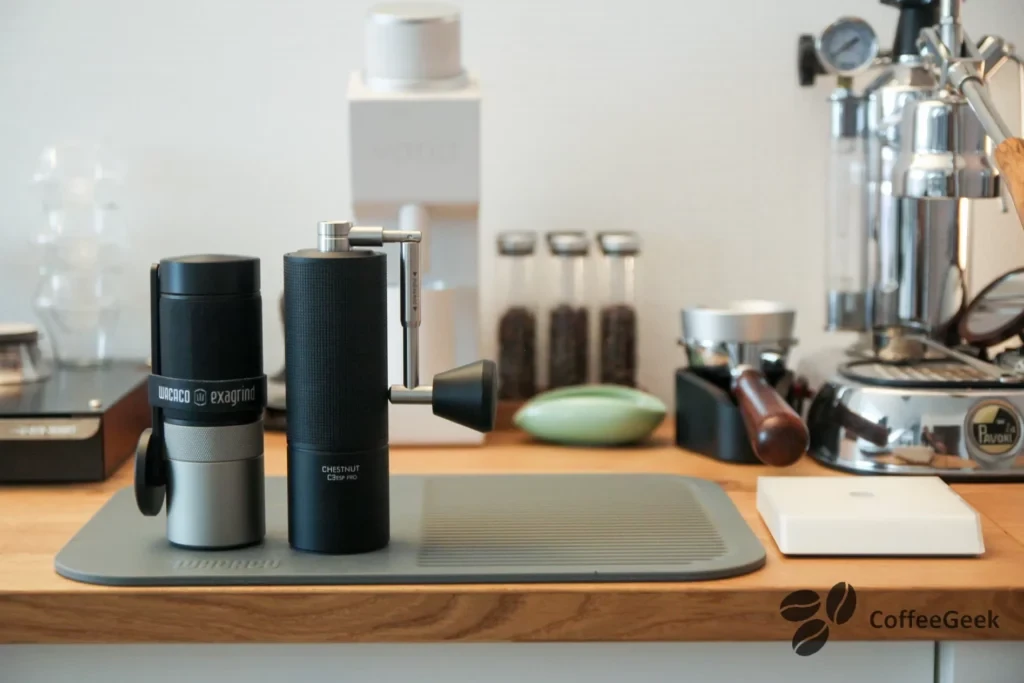
Wacaco Exagrind coffee grinder
When the crank is folded down, a rubber stopper prevents the metal part of the crank from coming into contact with the grinder body.
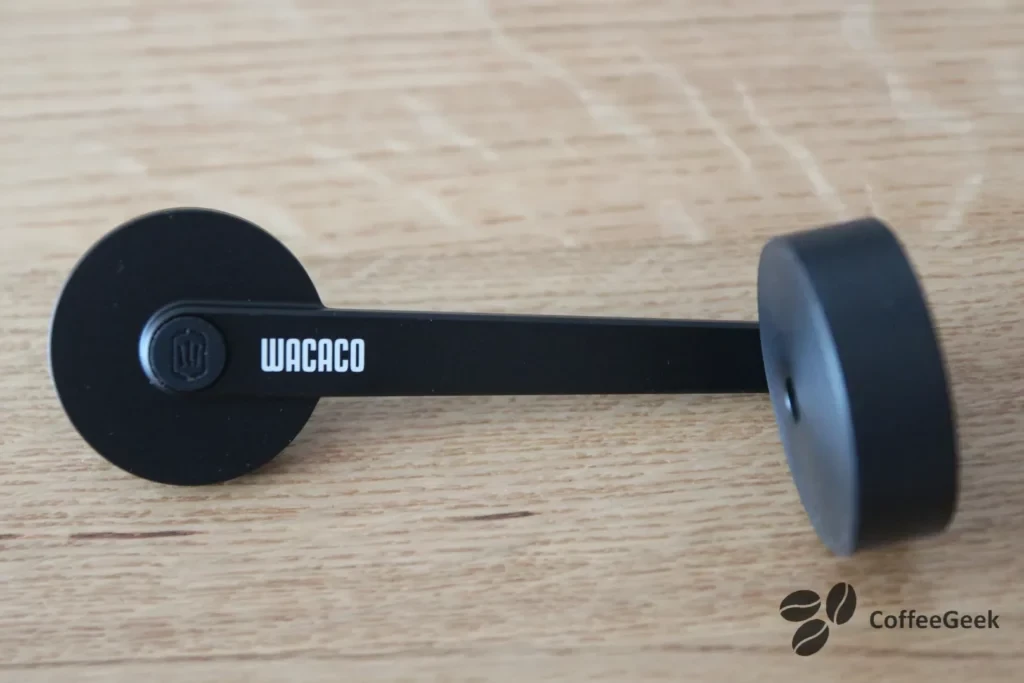
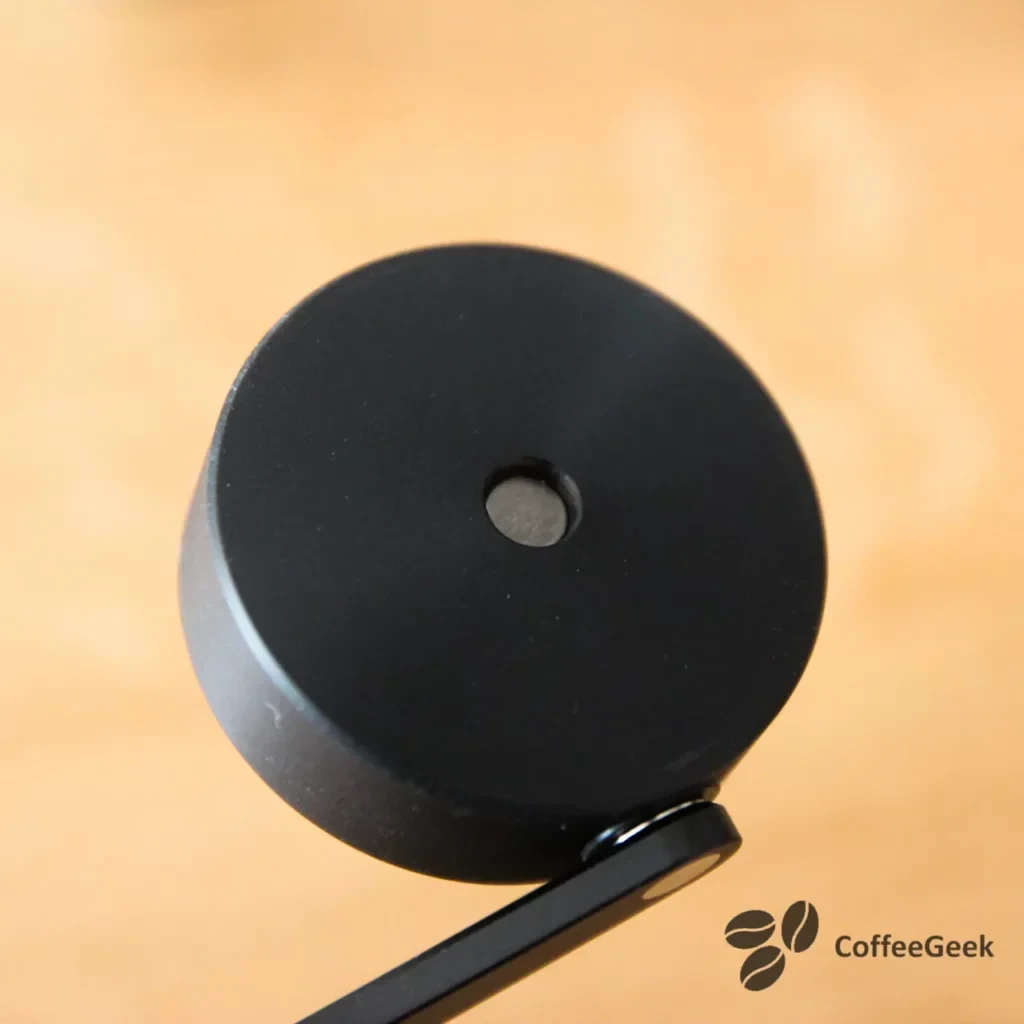
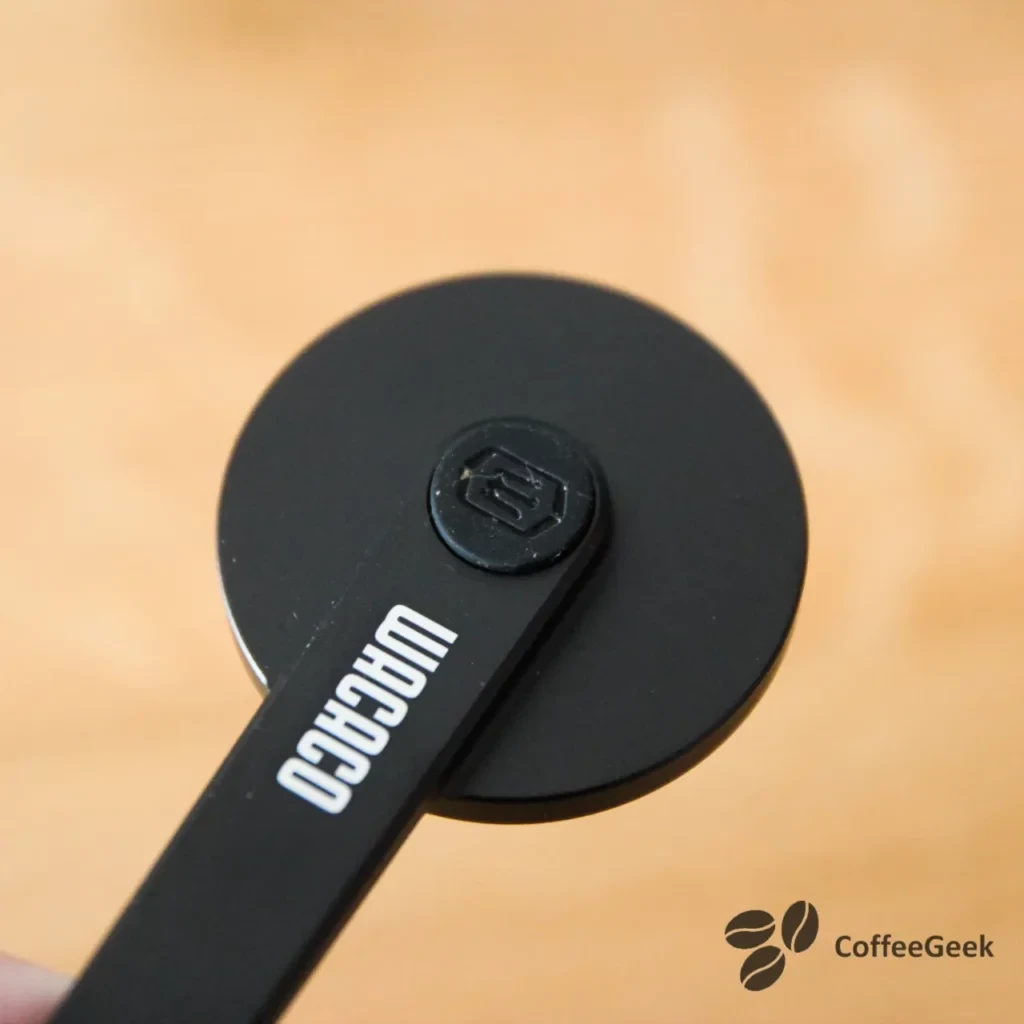
During use, one might think that the shape of the handle would make the crank uncomfortable. On the contrary, the grip is very pleasant, which makes grinding coffee easier.
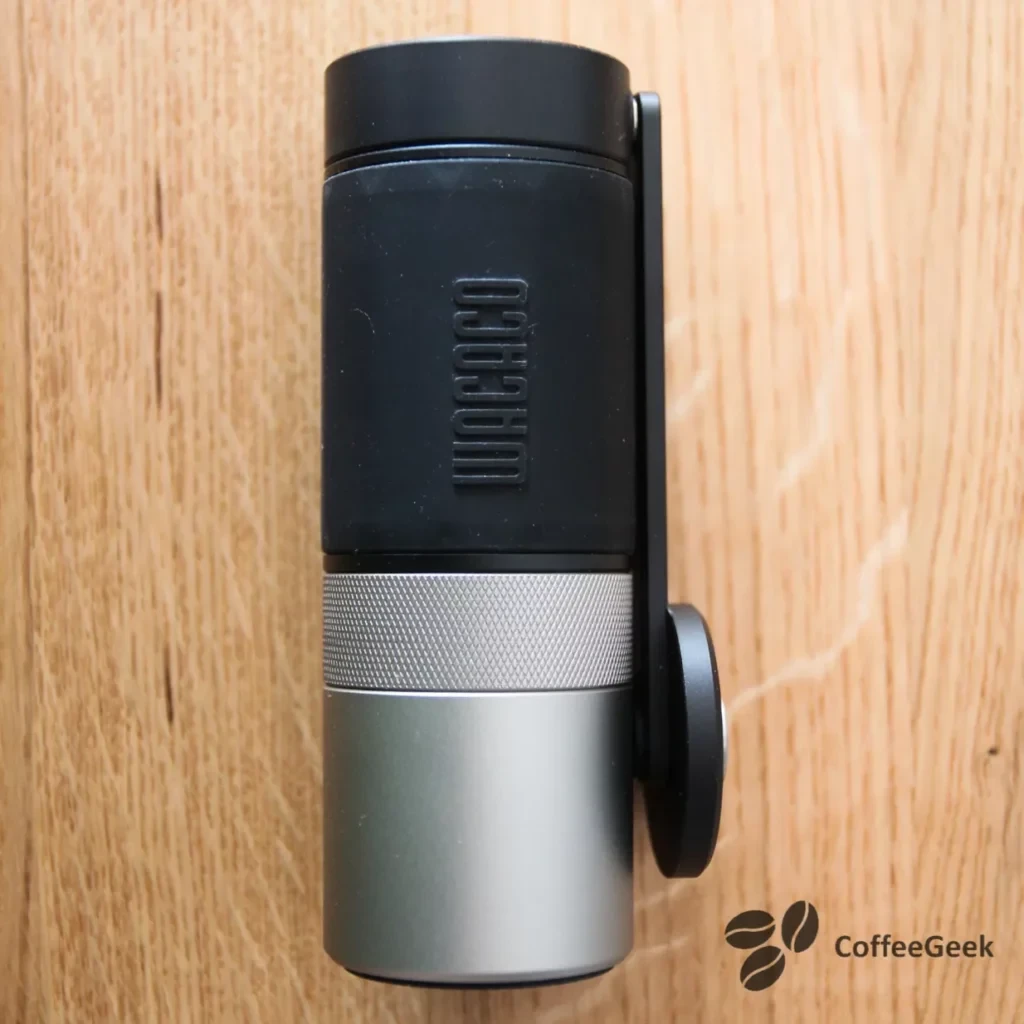
To facilitate storage, Wacaco has integrated a small magnet on the crank handle. When it is placed on top of the grinder, a slight magnetic attraction holds everything in place. Additionally, Wacaco has provided an elastic band to prevent the crank from moving around when stored, ensuring an even more secure attachment.
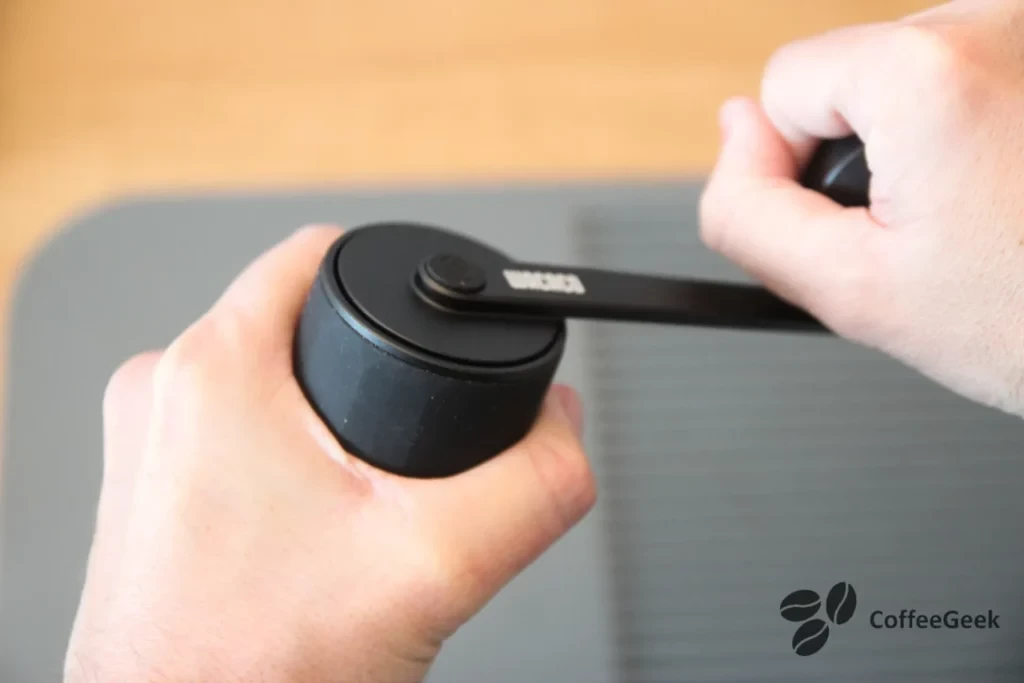
Another important point to highlight is the handle attachment system with a ball bearing, ensuring smooth rotation and preventing its removal by simply pulling on it. Unlike the clip systems used by some competing brands, this attachment is much more solid. Clip-based models present an increased risk of the handle detaching, forcing some users to contact after-sales service. Wacaco therefore stands out for the robustness of its system, an excellent point in its favor.
The grinder body
The grinder body is made of aluminum covered with silicone, which makes handling pleasant and prevents slipping during use. Additionally, Wacaco has opted for a dodecagon design (12 sides), reminiscent of the Pipamoka style, rather than a classic round body.
Personally, I find the handling very comfortable. During use, the grinder remains stable and does not rotate on itself, thanks to the materials used and its ergonomic shape.
The adjustment dial
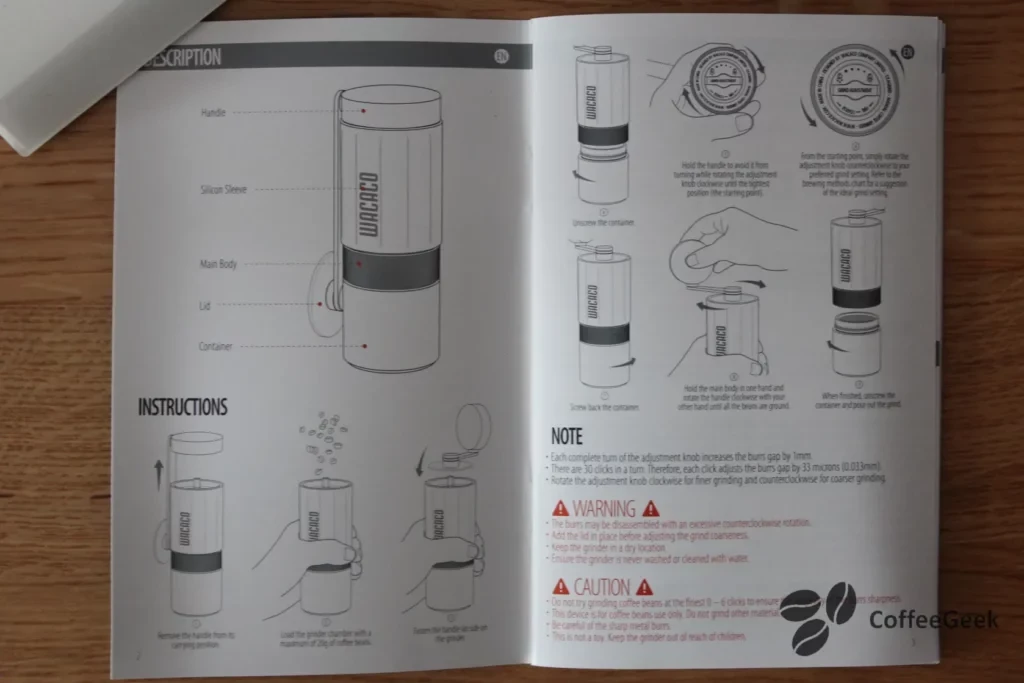
The adjustment dial is located at the base of the grinder, directly at the burr level. It offers 30 clicks per turn, with a spacing of 33 µm per click. Wacaco has added indicators to guide the user on the rotation direction of the dial to achieve a finer or coarser grind. However, it is regrettable that the manufacturer did not include graduations. This forces the user to count the clicks starting from zero (zero corresponding to the moment when the burrs touch) to find the desired setting.
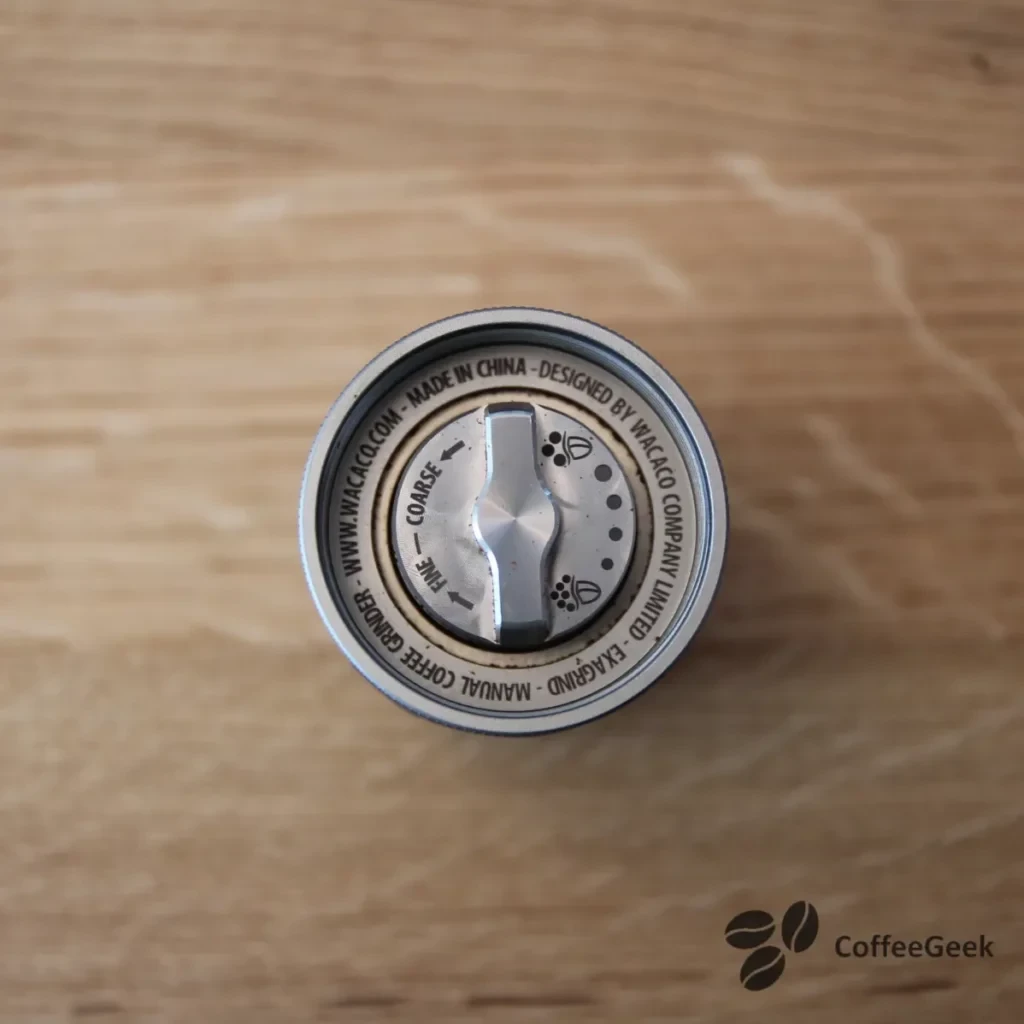
Here are the recommended settings according to extraction type (manufacturer data) :
- Espresso: 10 to 20 clicks from zero
- Filter coffee: 20 to 26 clicks from zero
- Pour over: 34 to 42 clicks from zero
- French press: 42 to 46 clicks from zero
The burr
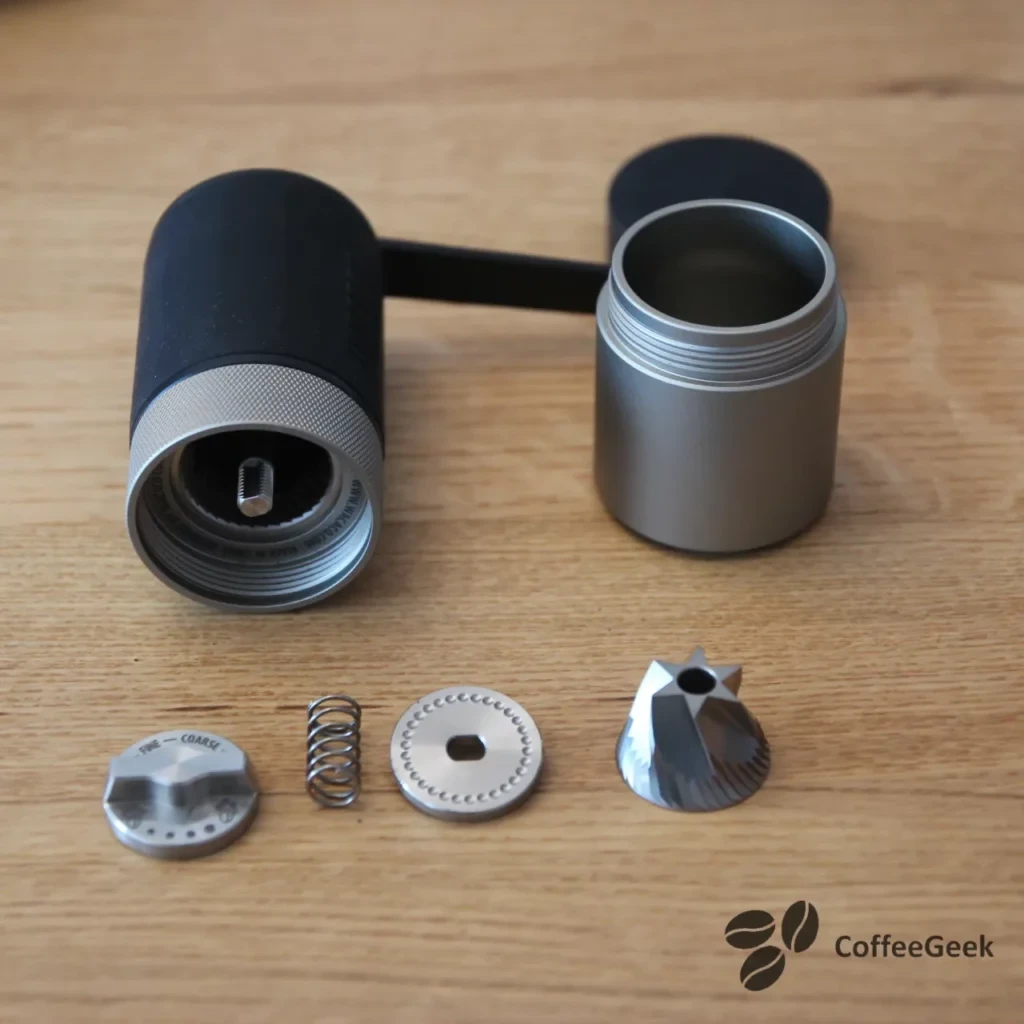
The grinder's burr measures 38 mm, which is standard for grinders with bottom adjustment. Compared to my other conical burr coffee grinders (Timemore S3, C3 ESP Pro, Bplus Apollo, to name just the manual ones), the Wacaco Exagrind burr stands out for its ability to produce a coarse and very consistent grind. I believe Wacaco designed this grinder specifically for extractions requiring a coarse grind and optimized the burr design for this purpose.
The Container
In my experience, the quality of the container often reveals the overall design of a grinder. For example, the Kinu Phoenix is equipped with a plastic container that is too light, which unbalances the grinder when placed on a countertop. The C40, on the other hand, has an internal rim that retains coffee, complicating pouring into the filter.
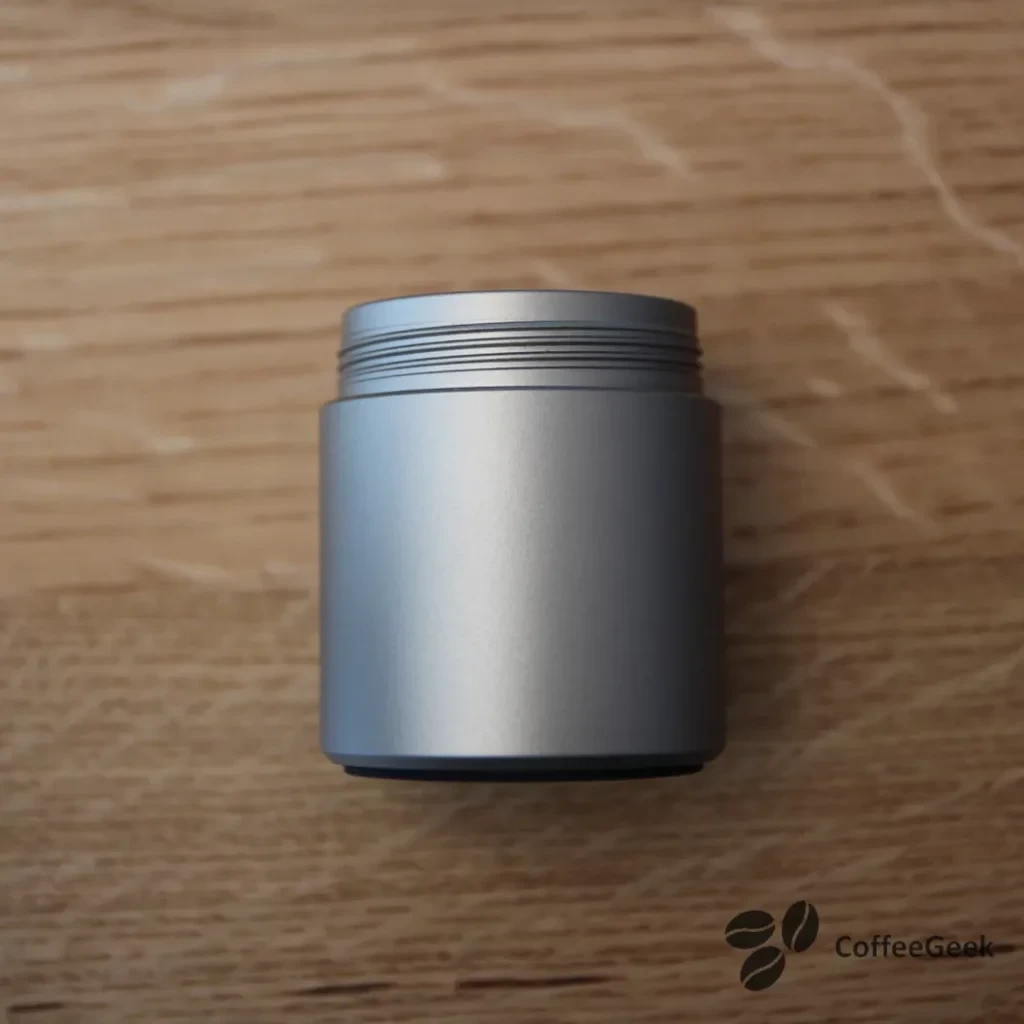
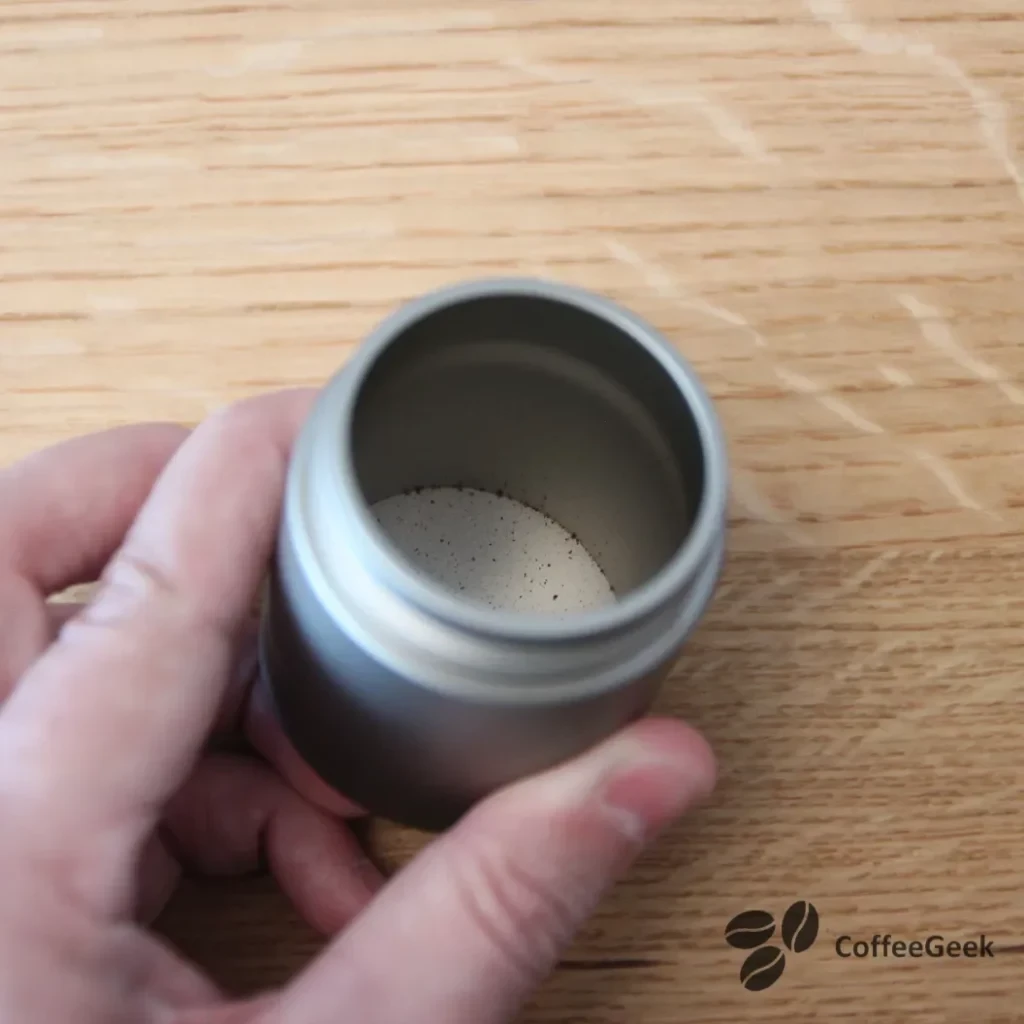
The container of the Wacaco Exagrind, on the other hand, is free of any internal rim, thus avoiding coffee retention. Its weight, well balanced, lowers the center of gravity, ensuring good stability. Unlike 1Zpresso models, the screw-on attachment reinforces the robustness of the assembly.
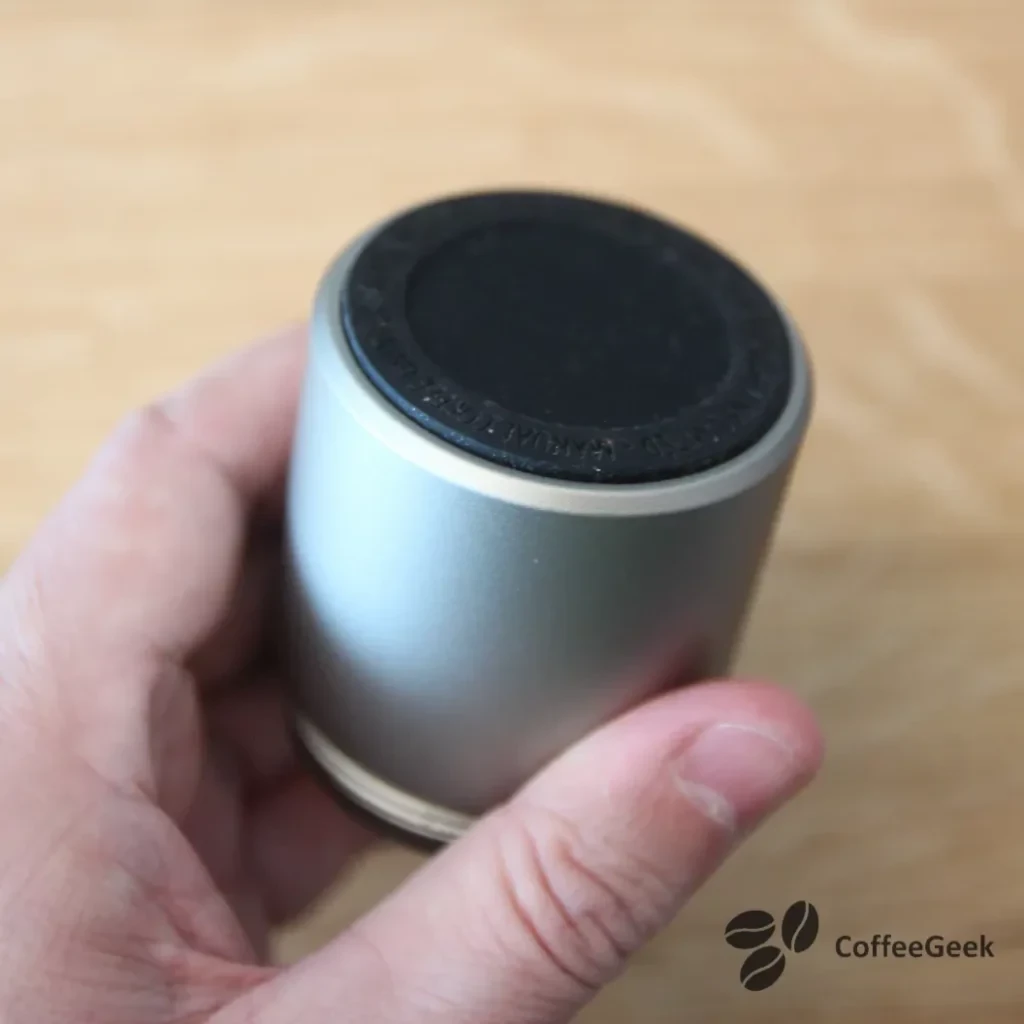
Additionally, the container base is equipped with a rubber coating to protect the countertop, a detail that demonstrates the care put into the design.
Pulling an espresso with the Wacaco Exagrind
Pulling an espresso with a semi-professional machine like my Lelit Mara X V2 proves complex with the Wacaco Exagrind. Although it has 30 clicks per revolution, like the Timemore C3 ESP Pro, the spacing per click is 33 µm for the Wacaco, compared to 23.5 µm for the Timemore.
This 9.5 µm difference is explained by a steeper thread angle on the Wacaco, which results in greater spacing with each click. This makes espresso adjustment less precise, as the gap between two clicks is sometimes too large to find the ideal point. I often had the impression that the perfect setting was between two clicks.
It is possible to compensate by adjusting other parameters, such as the amount of coffee used, but this remains a significant limitation for dedicated espresso use. If you are looking for a grinder fully optimized for espresso, I recommend turning to the 1Zpresso J-Ultra or the Kingrinder K6.
As I explained when discussing the burr, in my opinion, Wacaco designed this travel grinder not for professional espresso, but rather for brewing methods requiring a coarse grind.
Espresso Made with a Lelit Mara X V2
Here is a demonstration of an espresso made with my Lelit Mara X V2 and the Wacaco Exagrind.
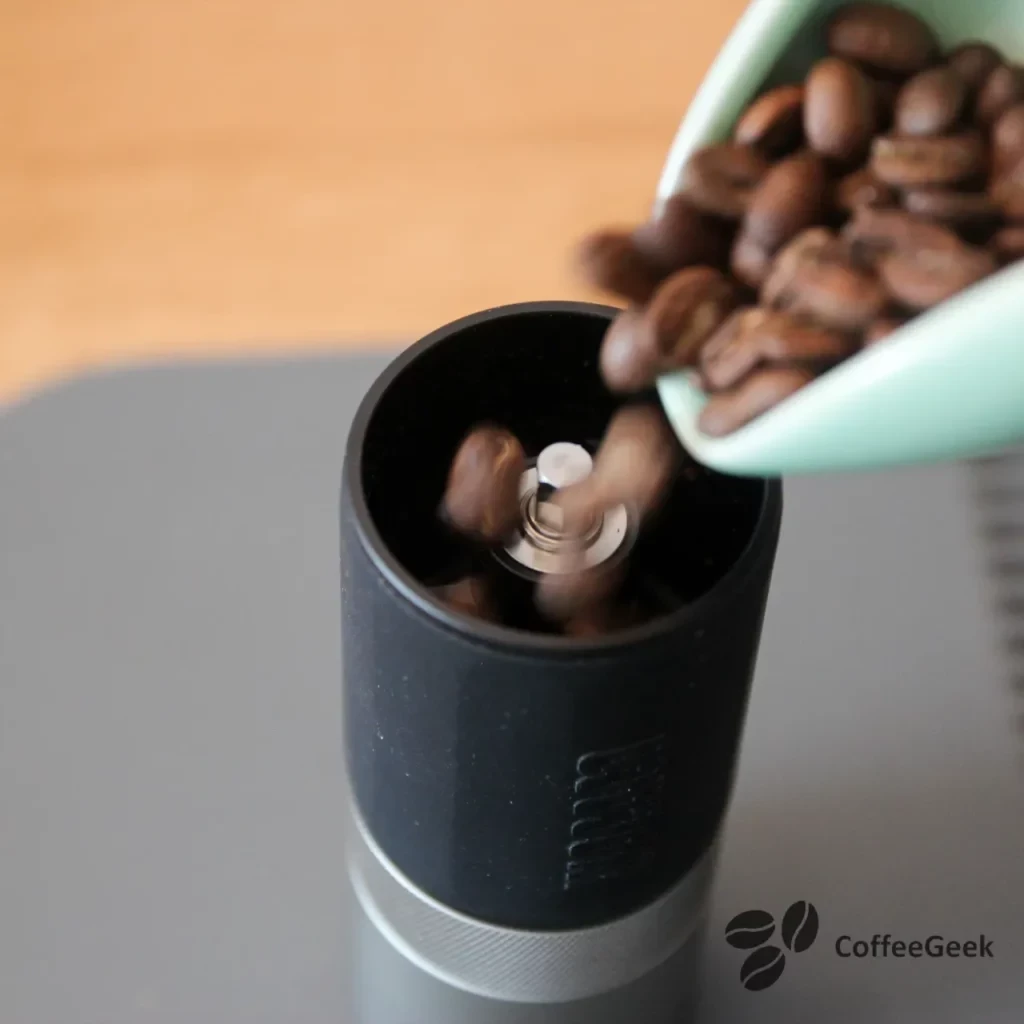
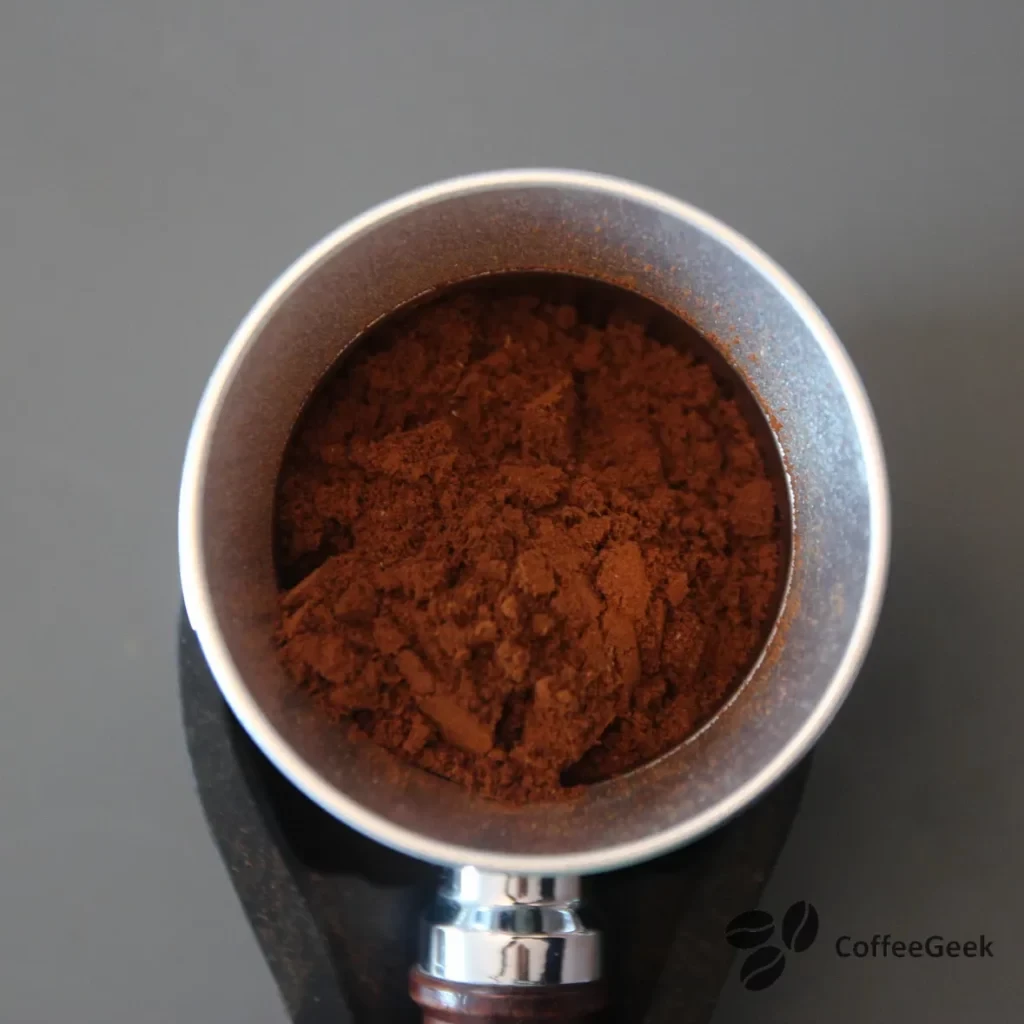
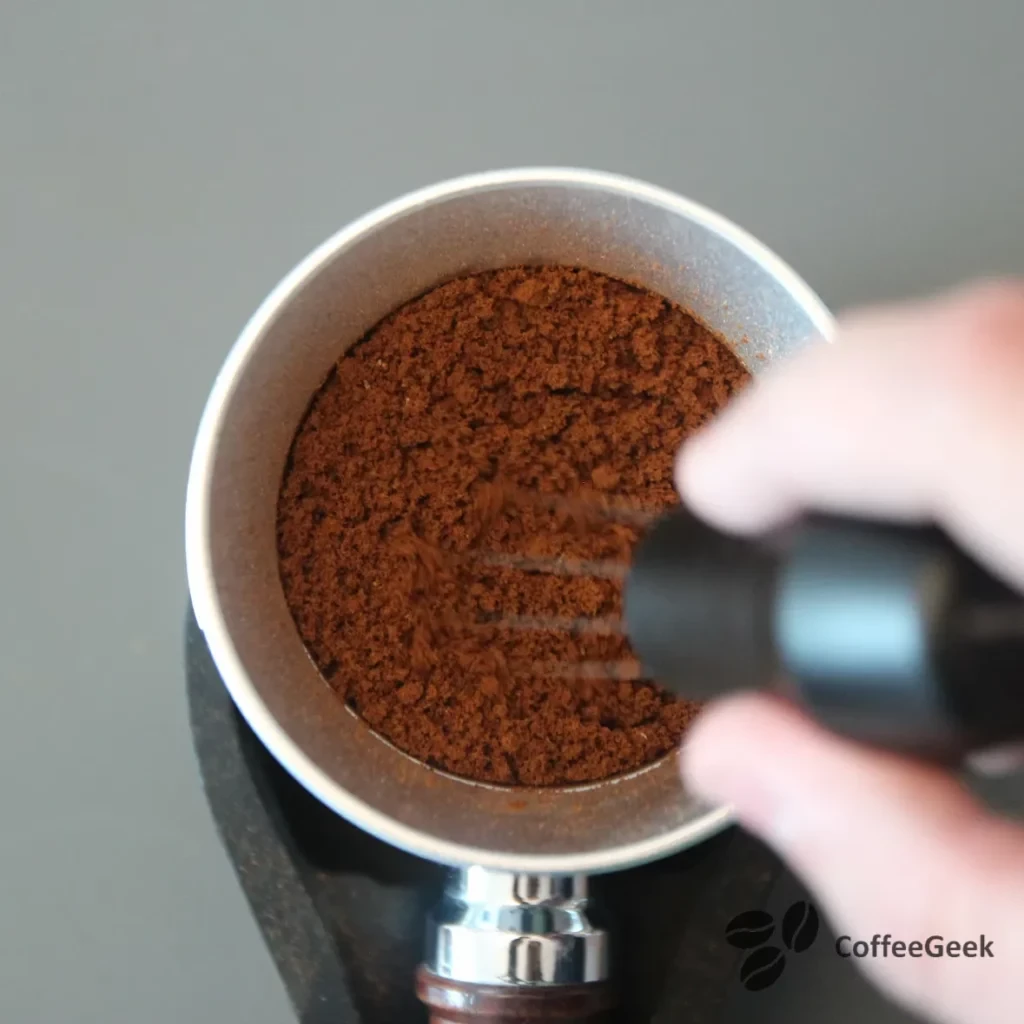
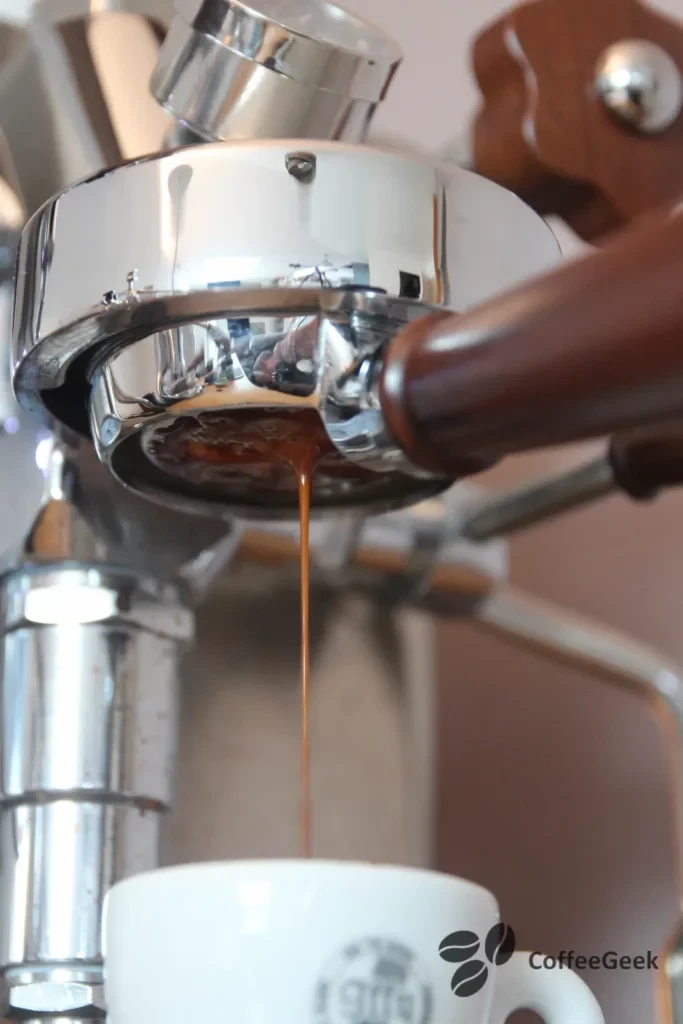
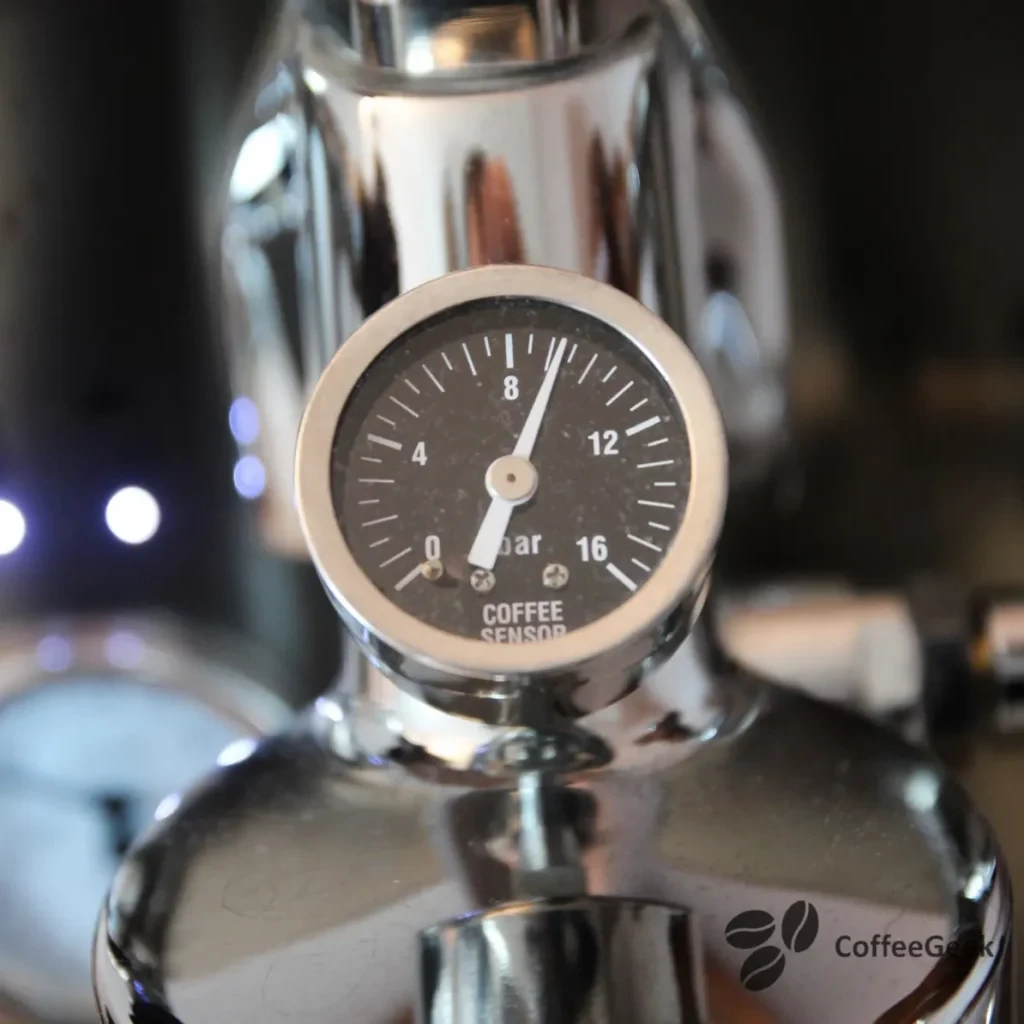
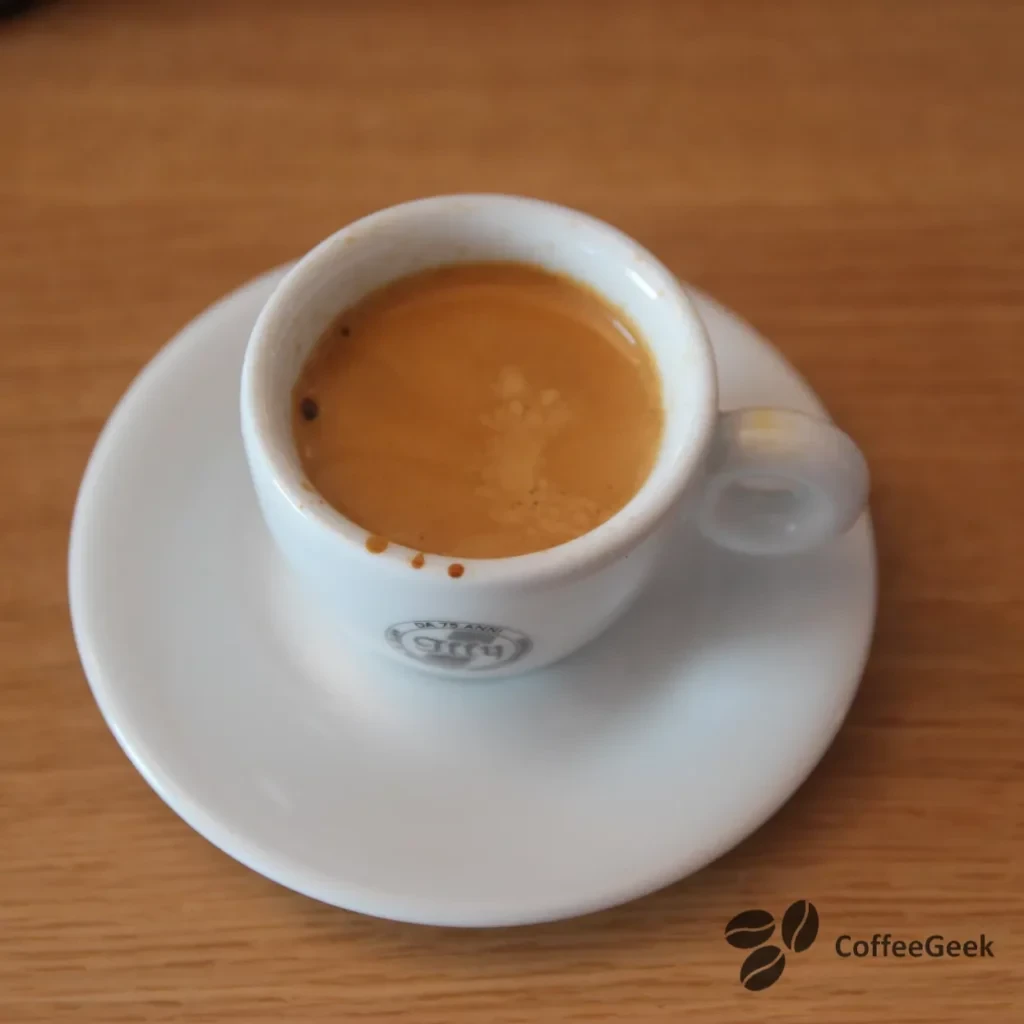
As the images show, extracting an espresso is entirely possible. In terms of flavors, the coffee is smoother, with less acidity compared to what I get with my electric grinder, the Varia VS3.
Espresso extracted using the Wacaco Minipresso GR2
Wacaco had also sent me the small coffee machine Wacaco Minipresso GR2, with which I performed extractions. In this case, the Wacaco Exagrind proves to be well suited.
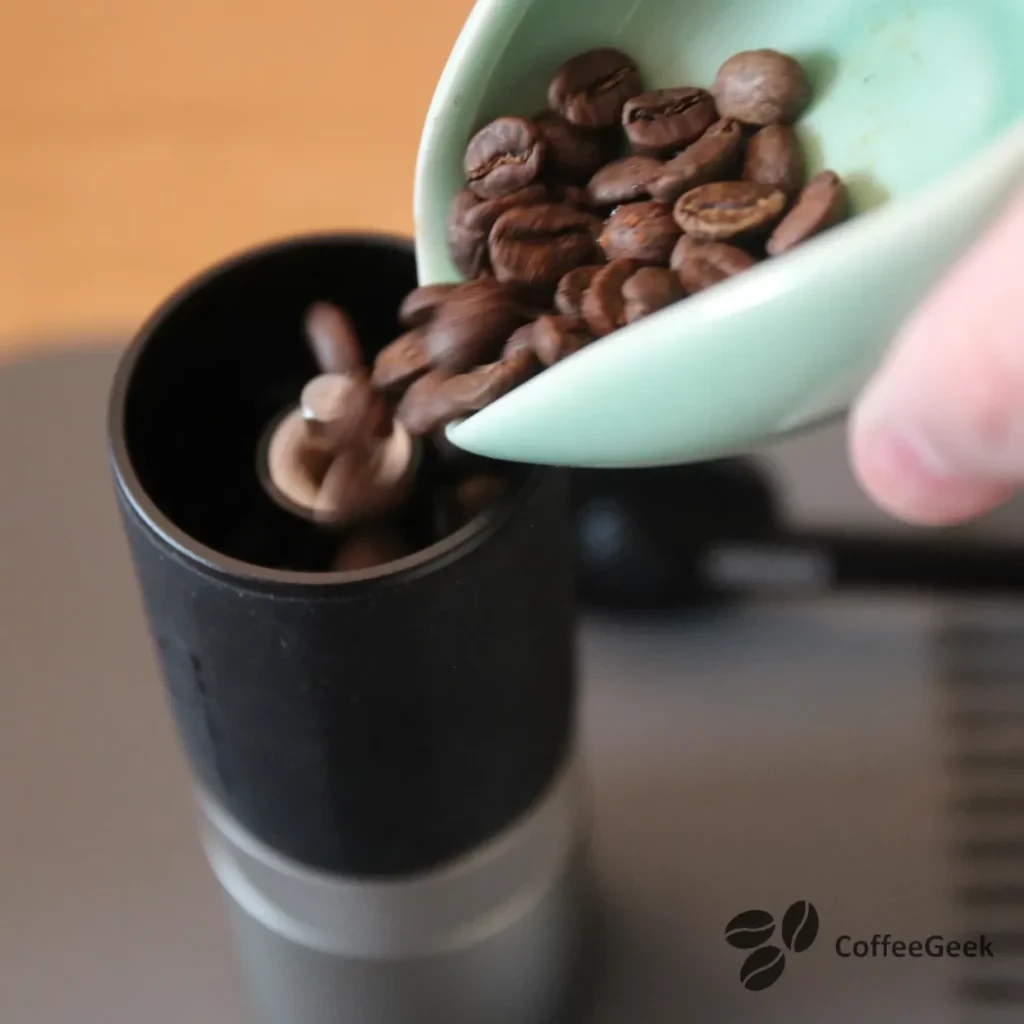
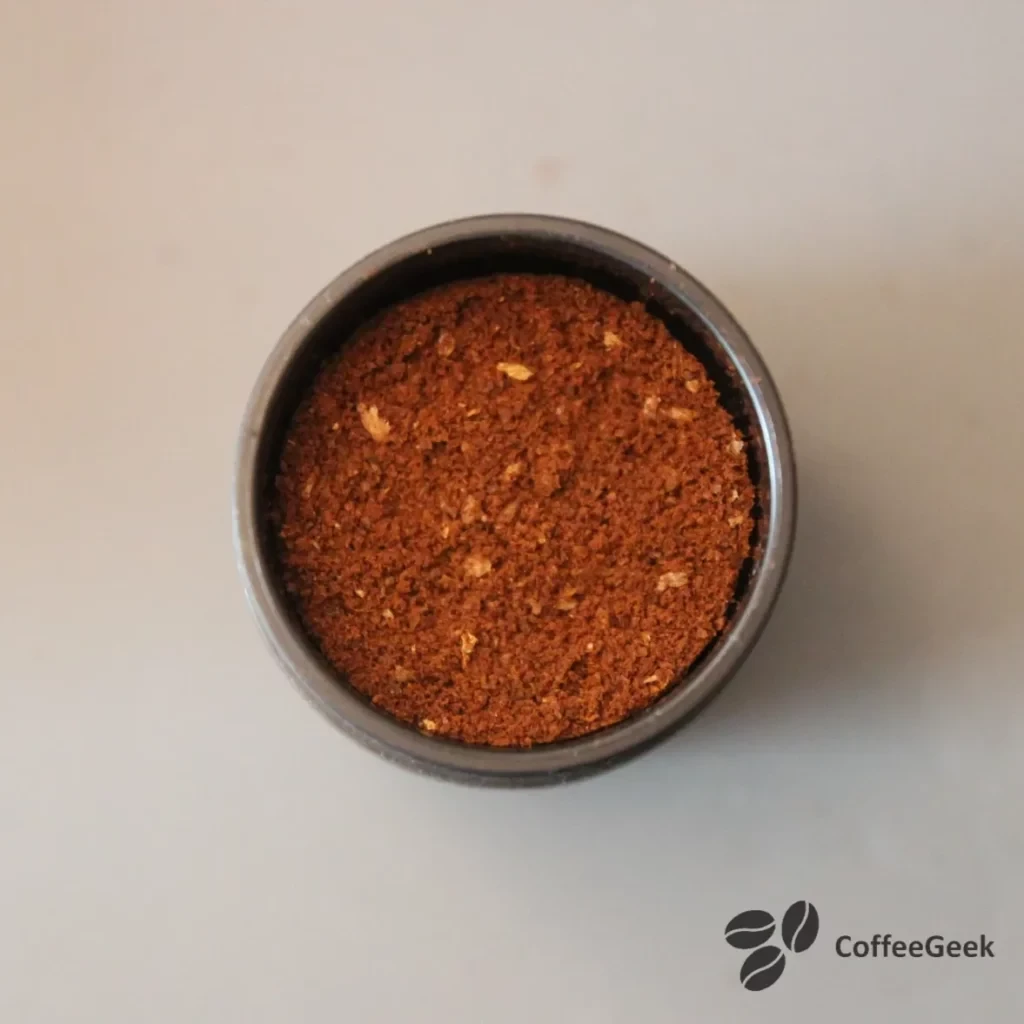
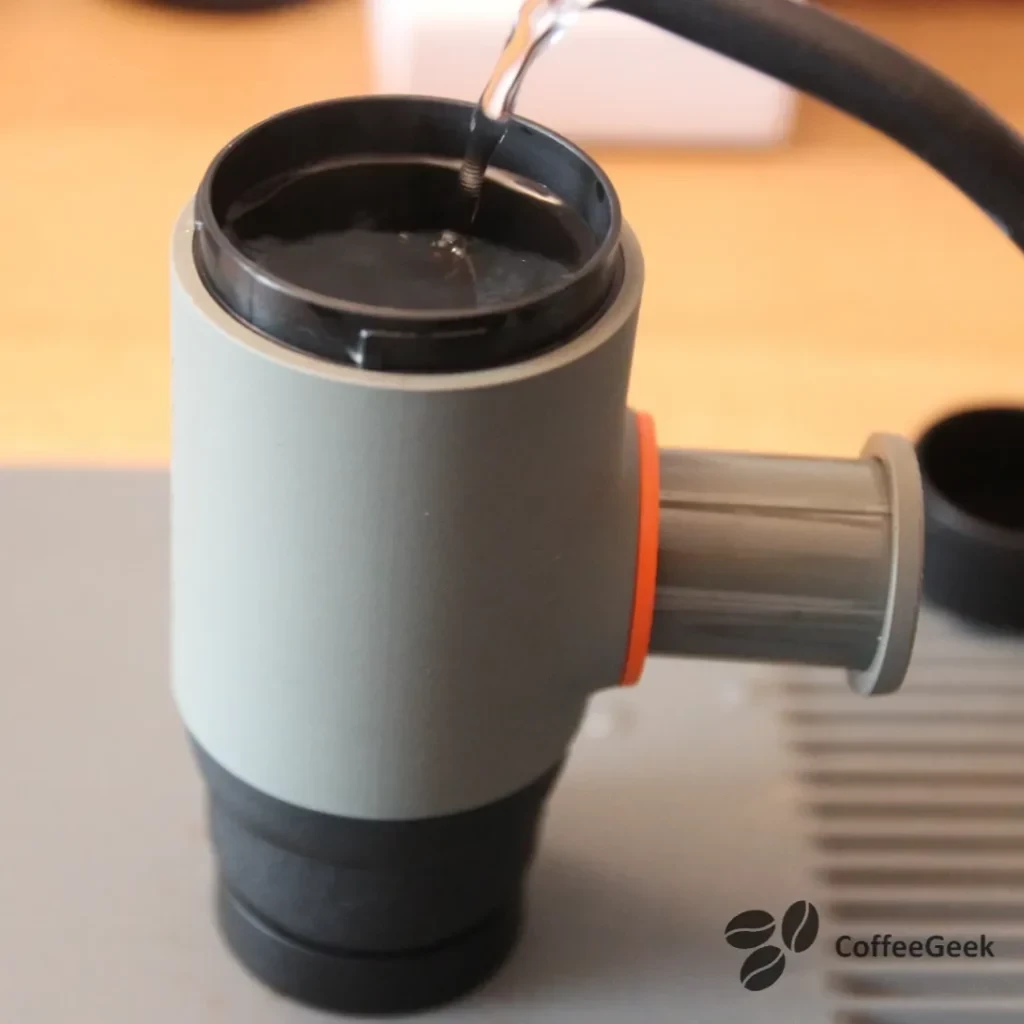
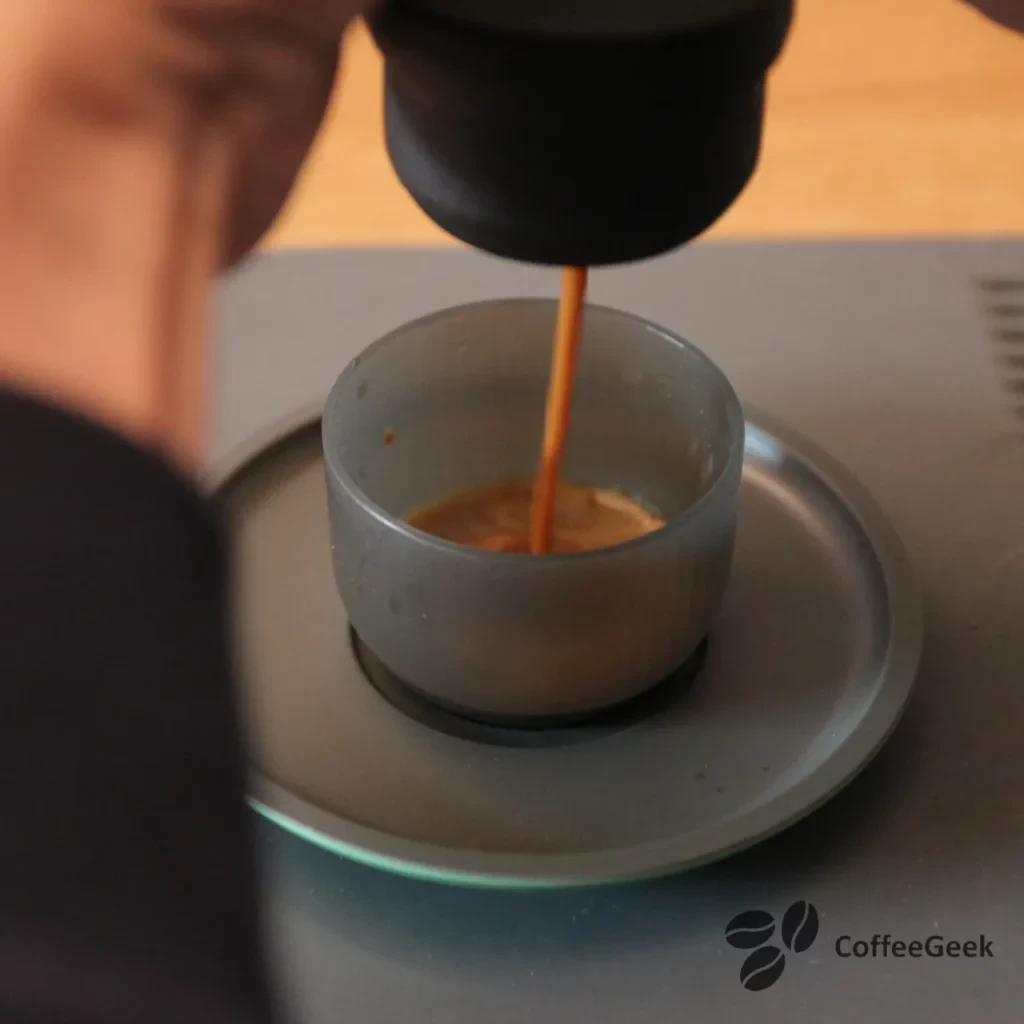
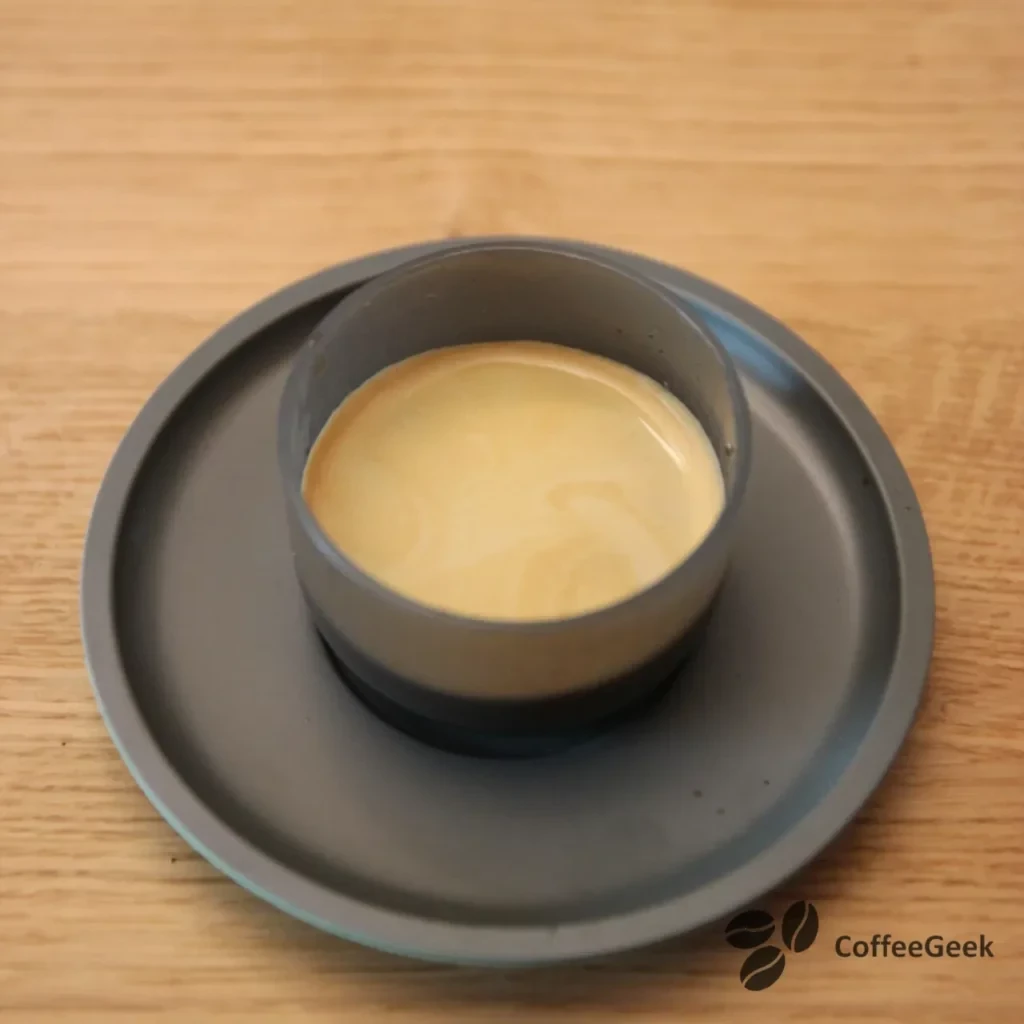
You can find the detailed review of the Wacaco Minipresso GR2 here. Honestly, the Exagrind / GR2 combination is ideal for traveling. The GR2 requires less demanding adjustment than my semi-professional espresso machine to achieve successful extractions.
What about filter coffee extracted with the Exagrind?
As expected, using the Wacaco Exagrind for V60, Aeropress or French Press extractions is very effective. The grind obtained is consistent and allows the coffee aromas to develop well.
This is the category where the Wacaco Exagrind truly excels. When traveling, I primarily use my Aeropress Go or my Wacaco Pipamoka, as these methods are less complex for achieving a successful extraction. Thanks to the quality of its grind and its compact format, I have fully adopted this grinder for my travels.
Wacaco Exagrind coffee grinder
Extraction with an Aeropress Go
To learn more about coffee extraction with my Aeropress Go, you can consult my dedicated article here.
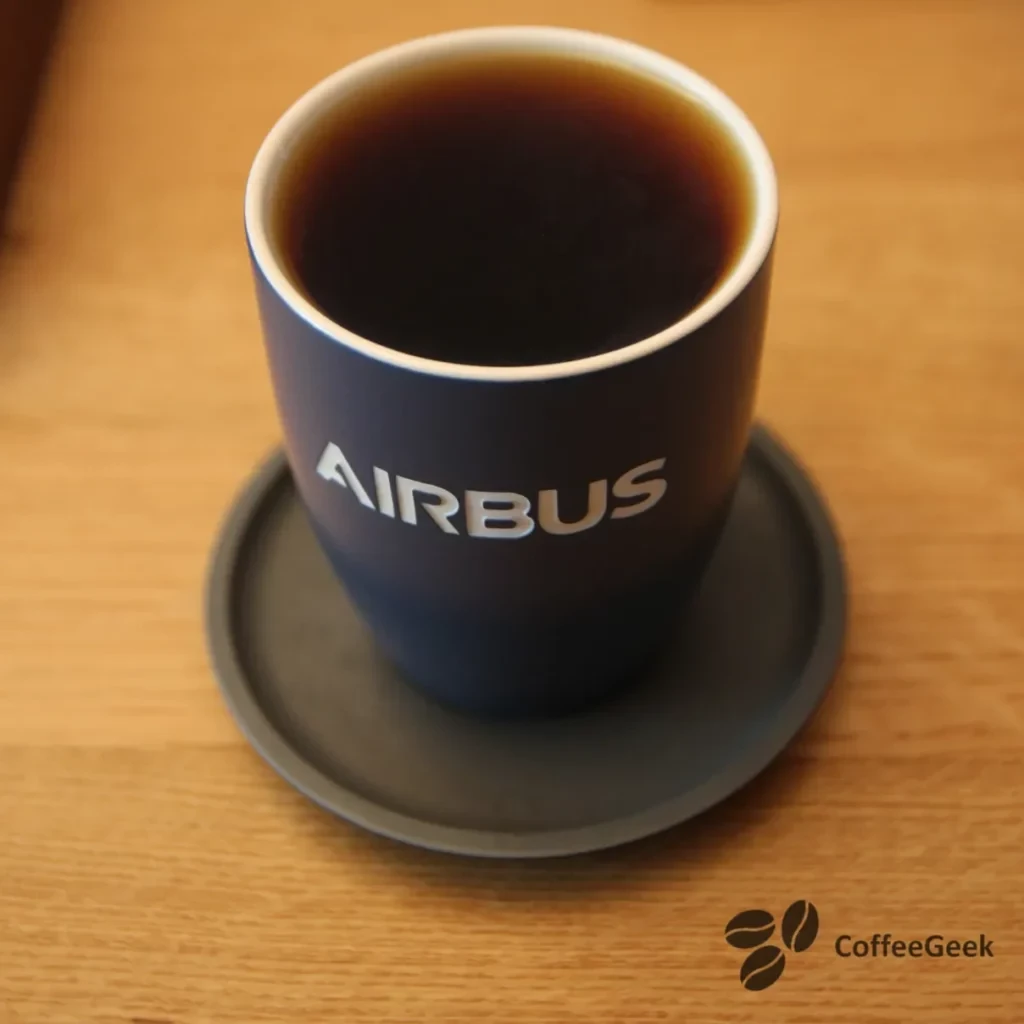
I used 15 g of ground coffee with a setting of 19 clicks on the Wacaco Exagrind. For the infusion, I followed one of the Aeropress world champion recipes.
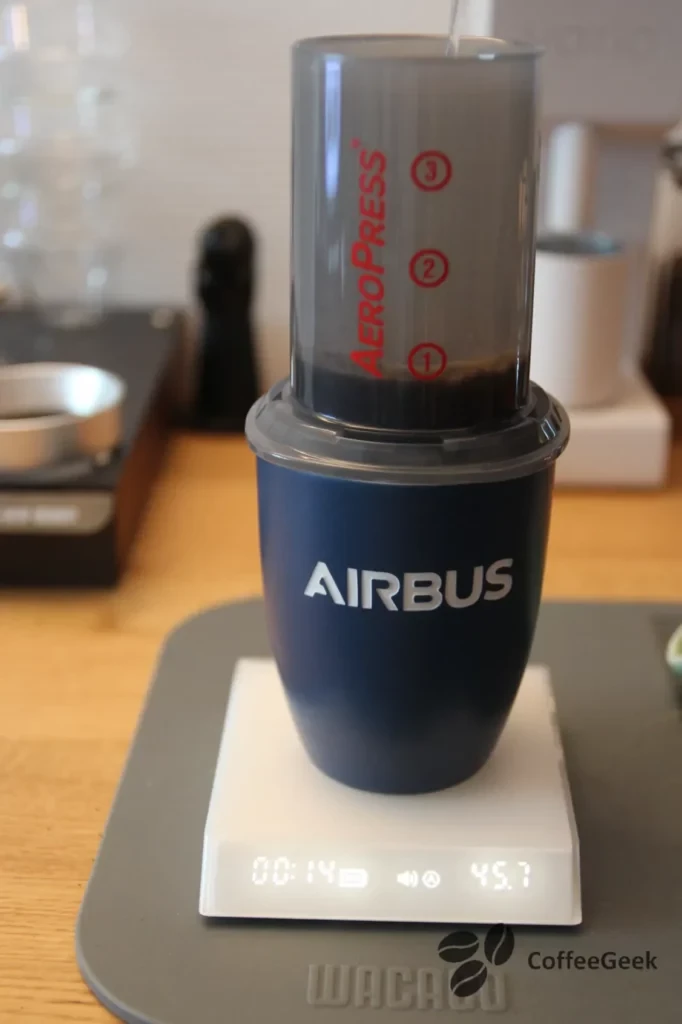
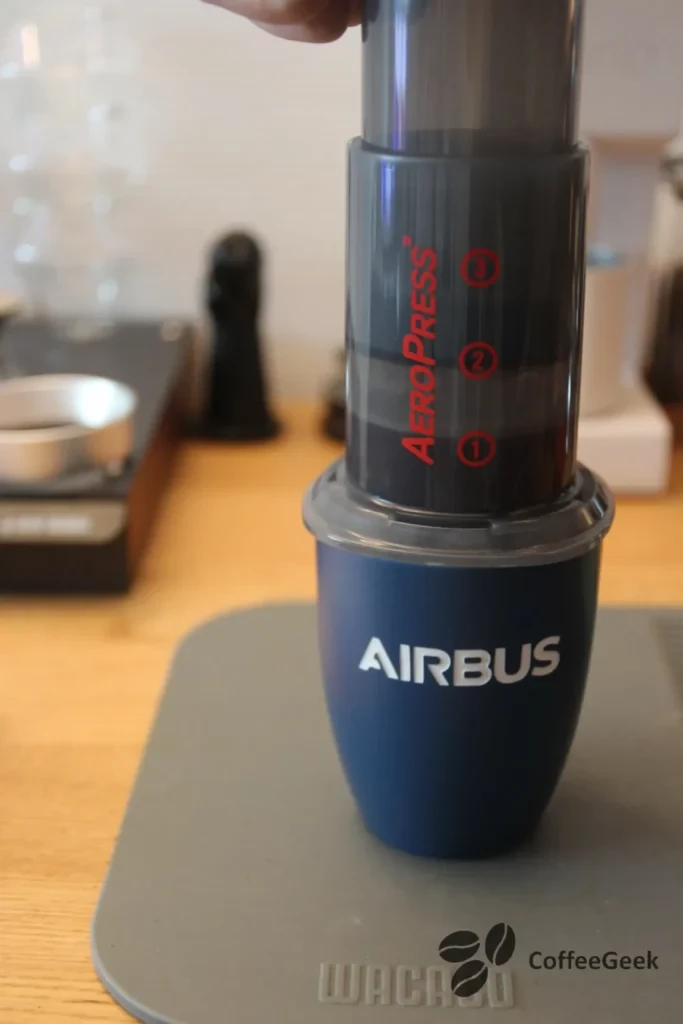
V60 Brewing
I brew my coffee in a V60 following James Hoffmann's recommendations: I ground 15 g of coffee with a setting of 26 clicks on the Wacaco Exagrind.
Small tip: as a carafe, I use the Kinto Unitea teapot. By removing the tea filter, it becomes perfectly compatible with a V60.
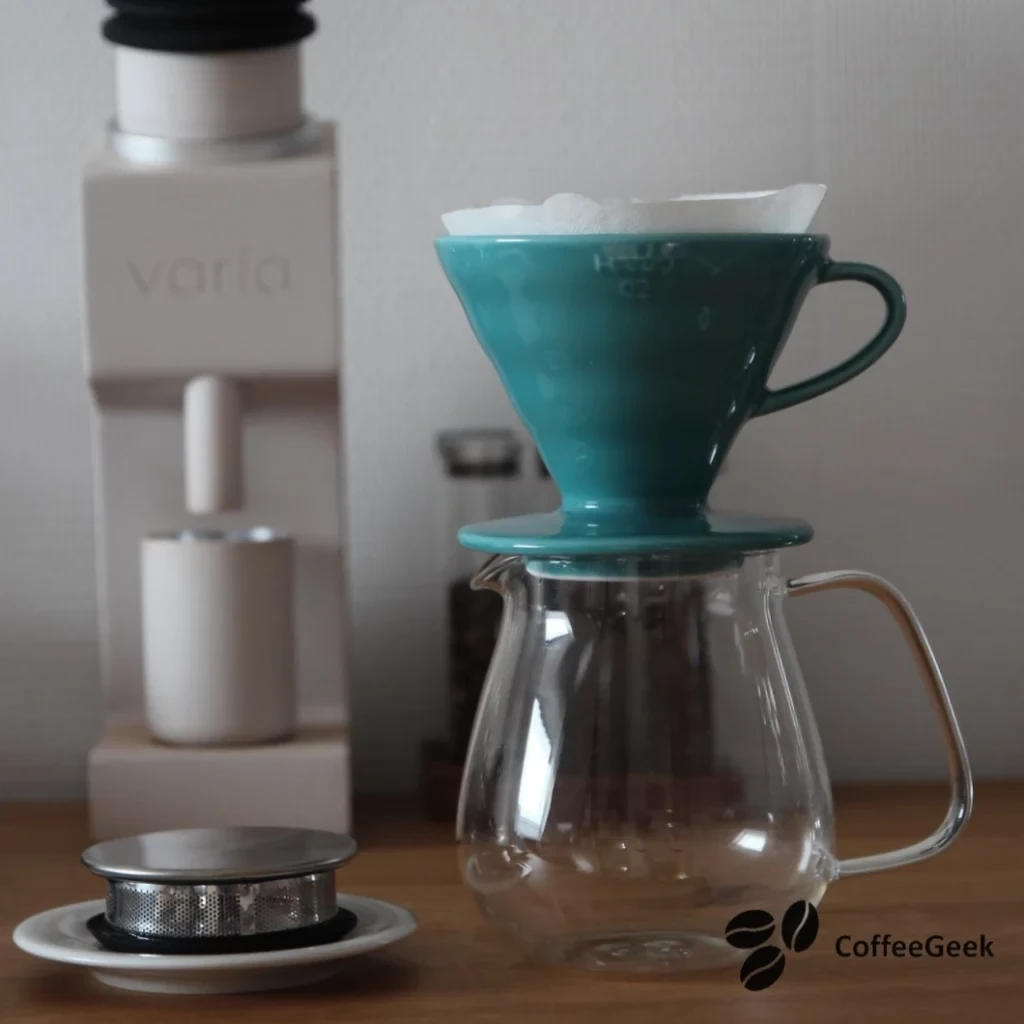
The result is really interesting. The grind is perfectly suited to extractions requiring a coarse grind.
Disassembling and Cleaning the Wacaco Exagrind
To reassemble and clean the grinder, it's very simple. Here are the detailed steps:
- Fully unscrew the adjustment dial to release the burr.
- Remove the central rod, which allows access to the inside of the grinder.
- Clean the inside of the grinder with a brush or dry cloth to remove coffee residue.
- Reassemble the grinder in reverse order: replace the central rod, reinstall the burr, then screw the adjustment dial back on.
These steps ensure easy and quick maintenance of the grinder, thus ensuring its durability and performance.
Conclusion
The Wacaco Exagrind perfectly fulfills its role as a compact travel grinder thanks to its fully retractable handle. It's clear that Wacaco paid great attention to detail to offer a product of optimal quality. In use, you benefit from a pleasant grip, a feeling of robustness, and an excellent grind.
Unlike some manufacturers who opt for hybrid burrs, Wacaco designed its grinder to excel specifically in producing coarse grinds. In the coffee world, there are specialized burrs, like those of the 1Zpresso J-Ultra, optimized for espresso. The Wacaco Exagrind follows the same logic, but for coarse grinds. Hybrid burrs, while suitable for various grind types, don't excel in any particular area. They offer acceptable results, whether for espresso or pour-over, but without reaching the performance of specialized burrs.
Tip: add 2 or 3 drops of water to the coffee beans before grinding. This technique, called RDT, helps reduce static electricity that causes grind clumps.
-
Value for money
-
Affordable price
-
Grind quality for pour over
-
Ease of use
-
Comfortable grip
-
Build quality
-
Extremely low retention
-
Extremely compact
- Not fully compatible with espresso