
Timemore's S3 became something of a modern classic among manual grinders, but no product is perfect, and the brand clearly listened to what its community had to say. The S5 Pro isn't just a cosmetic refresh: it's a genuine evolution built around the exact pain points S3 owners had raised for years, from the flimsy click resistance to the cramped handle.
I've spent time putting the S5 Pro through its paces on both pour-over and espresso, and I want to walk you through everything: the materials, the new burr, the adjustment mechanism, and of course, what ends up in the cup. Before diving in, my usual transparency note: this grinder was provided to me by Timemore for testing, but as always, my opinion here remains completely free and independent.
Design and Ergonomics: A Grinder That Asserts Its Status
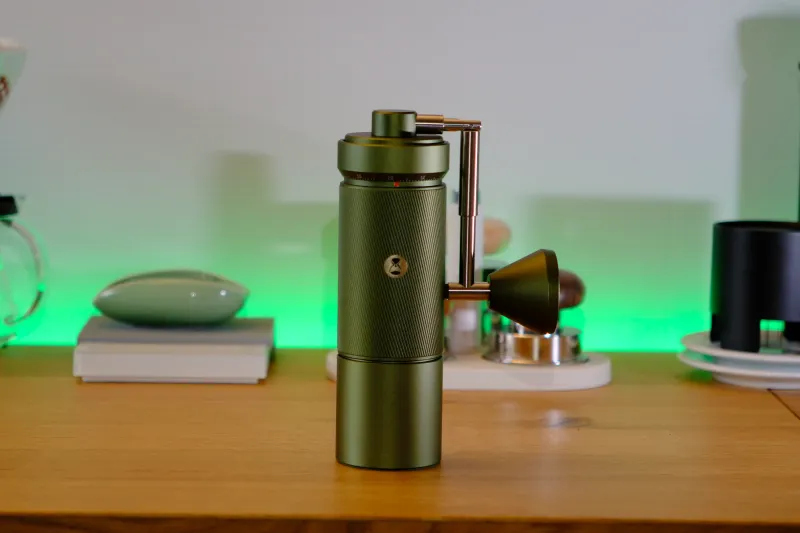
From the moment you pick it up, the S5 Pro asserts its status. The body is machined aluminum, 56 mm in diameter, with a well-balanced weight close to 800 g. The grooves cut into the surface guarantee a firm grip that never slips between your fingers, even when you're leaning into a tough espresso grind.
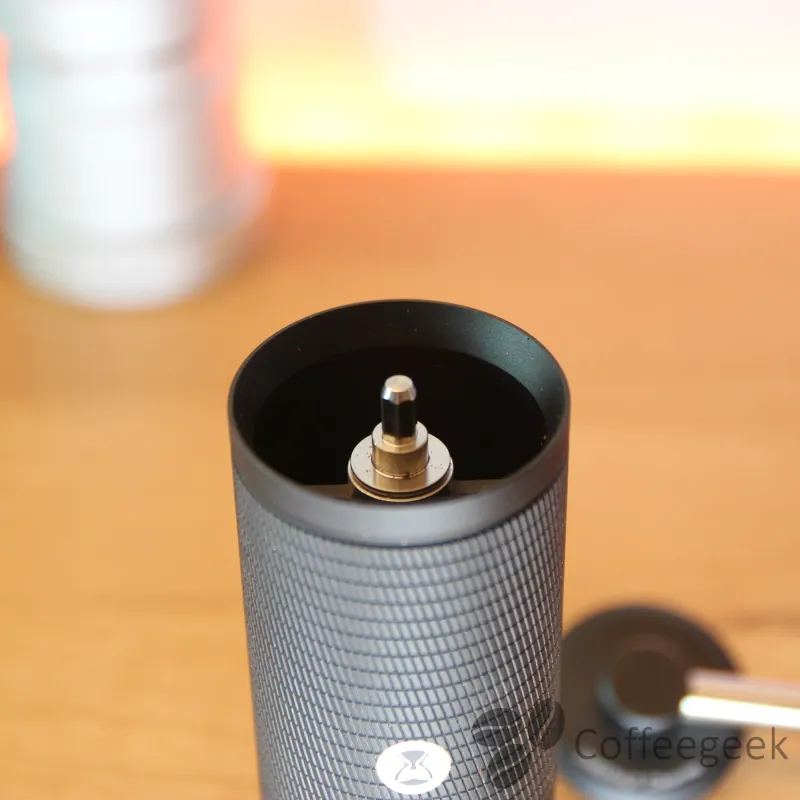
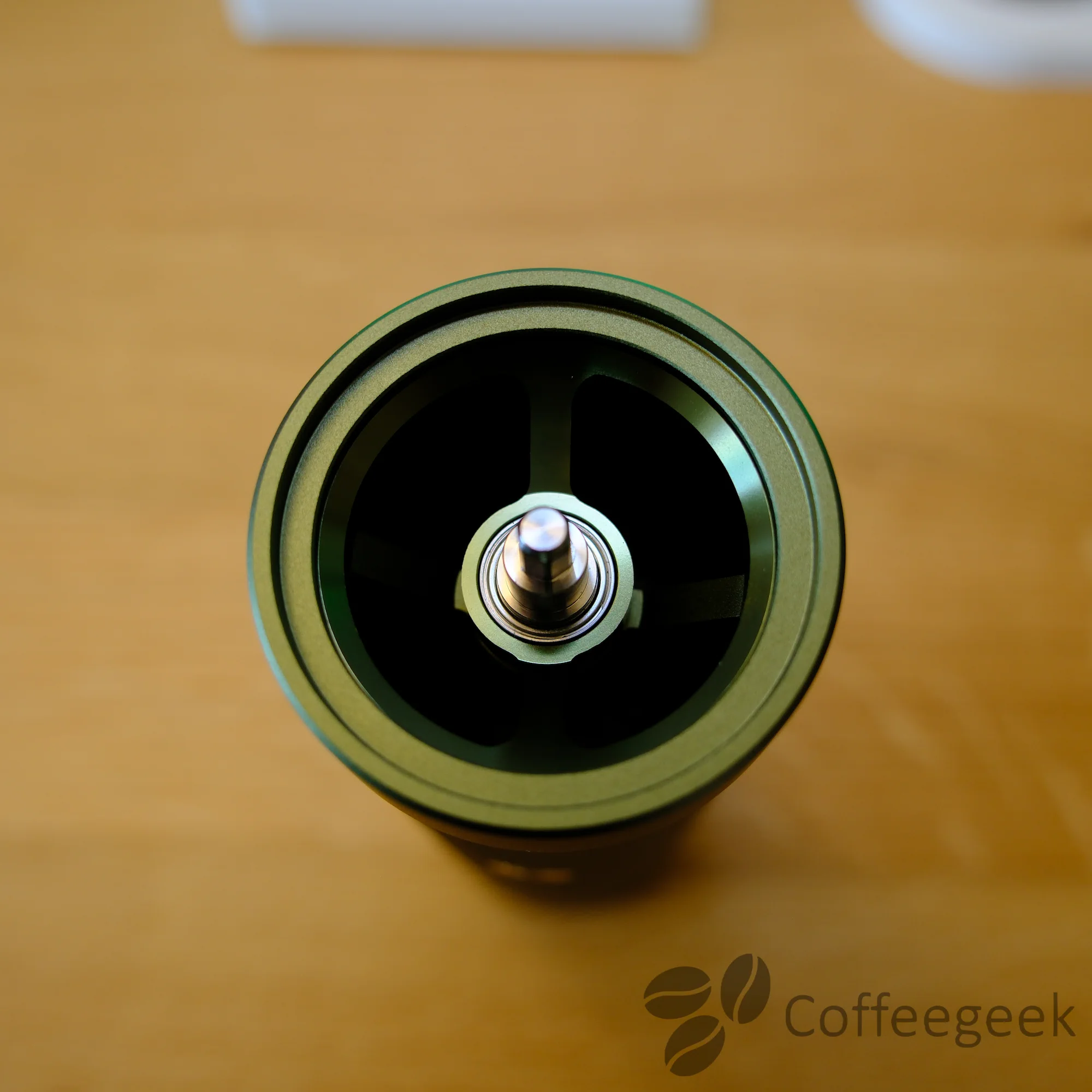
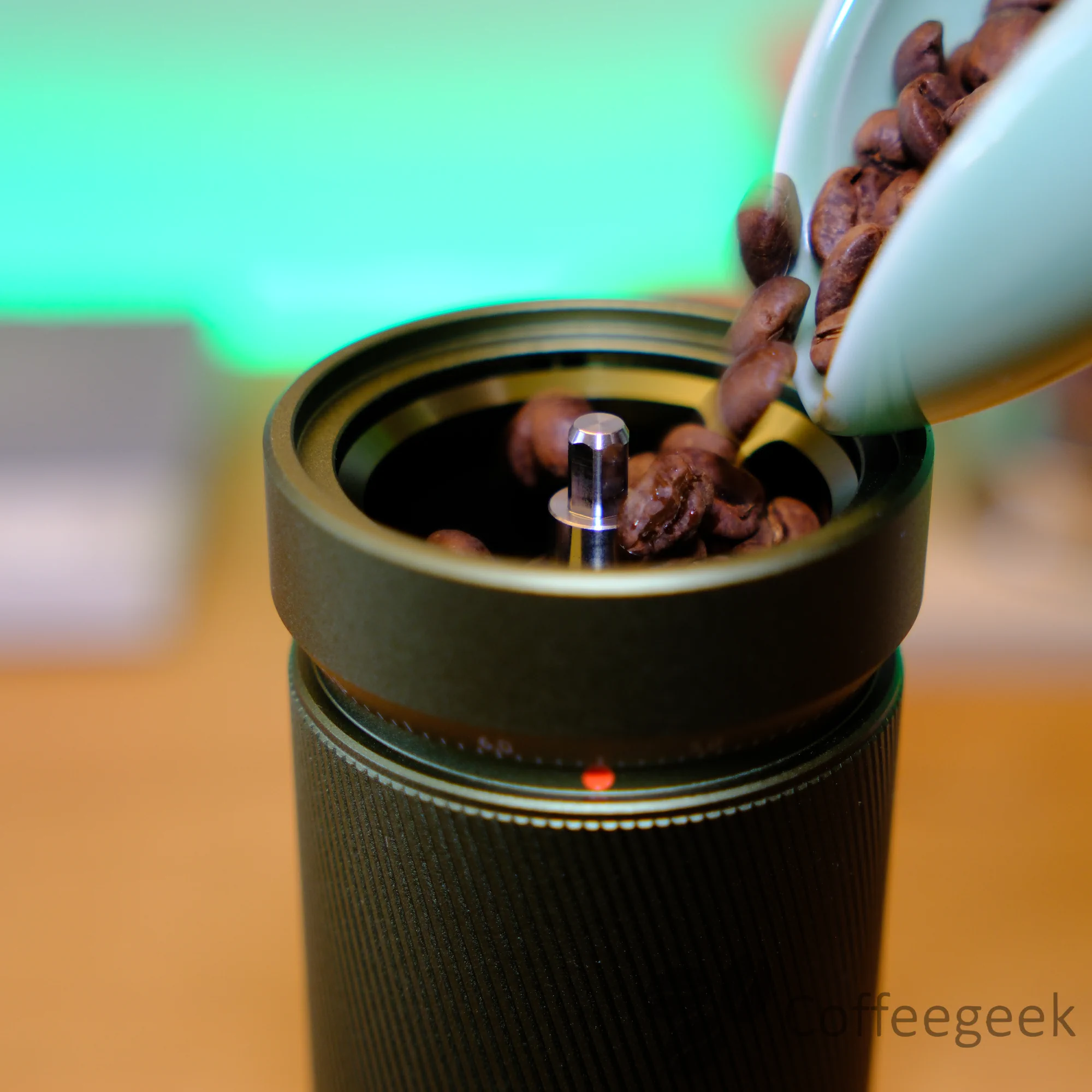
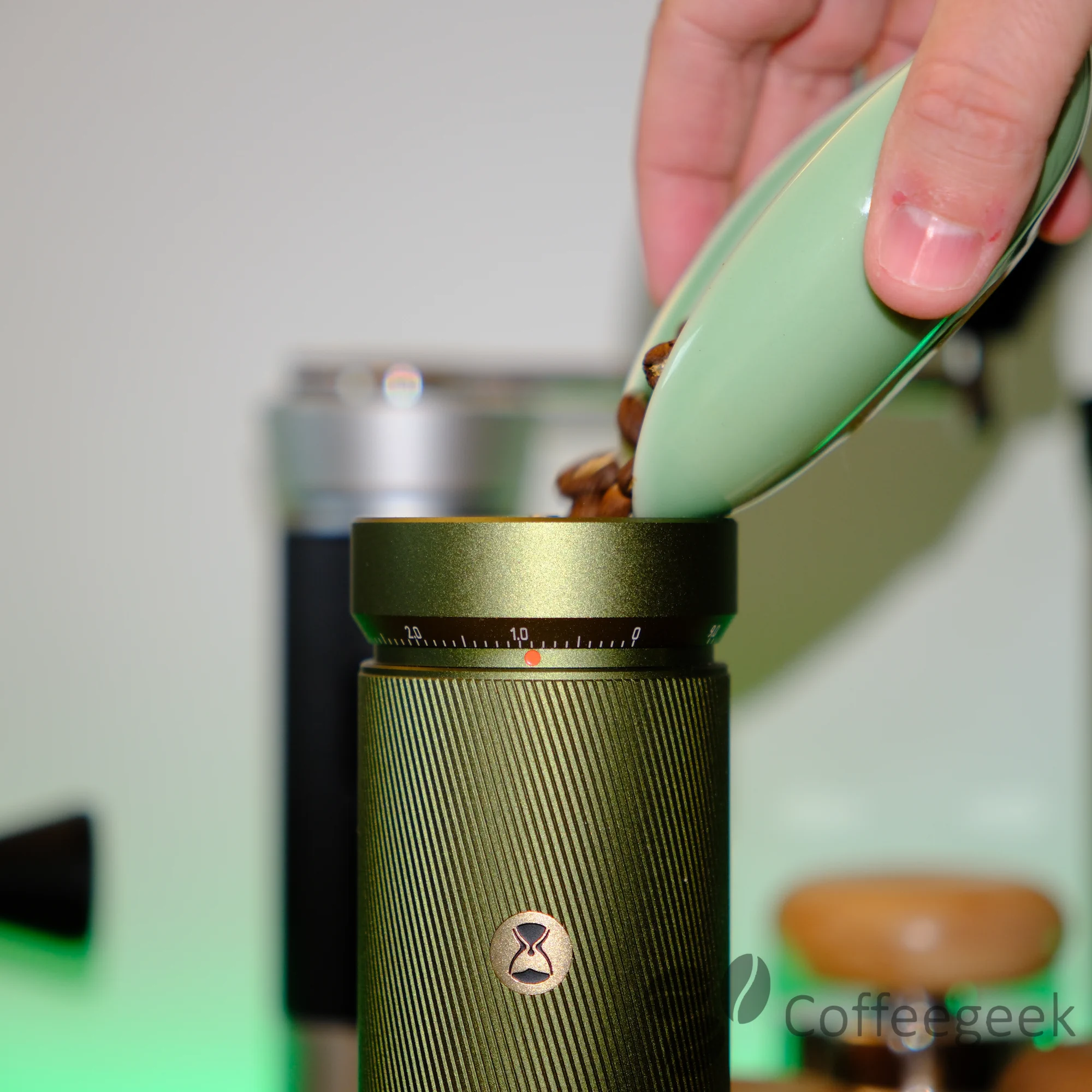
The first concrete improvement over the S3 is the sloped incline Timemore added inside the hopper, which naturally guides coffee beans toward the grinding chamber. The opening itself has also been widened significantly. No more beans bouncing off the rim and scattering across the counter as you pour them in a small detail, but one that makes pouring beans in noticeably less fiddly.
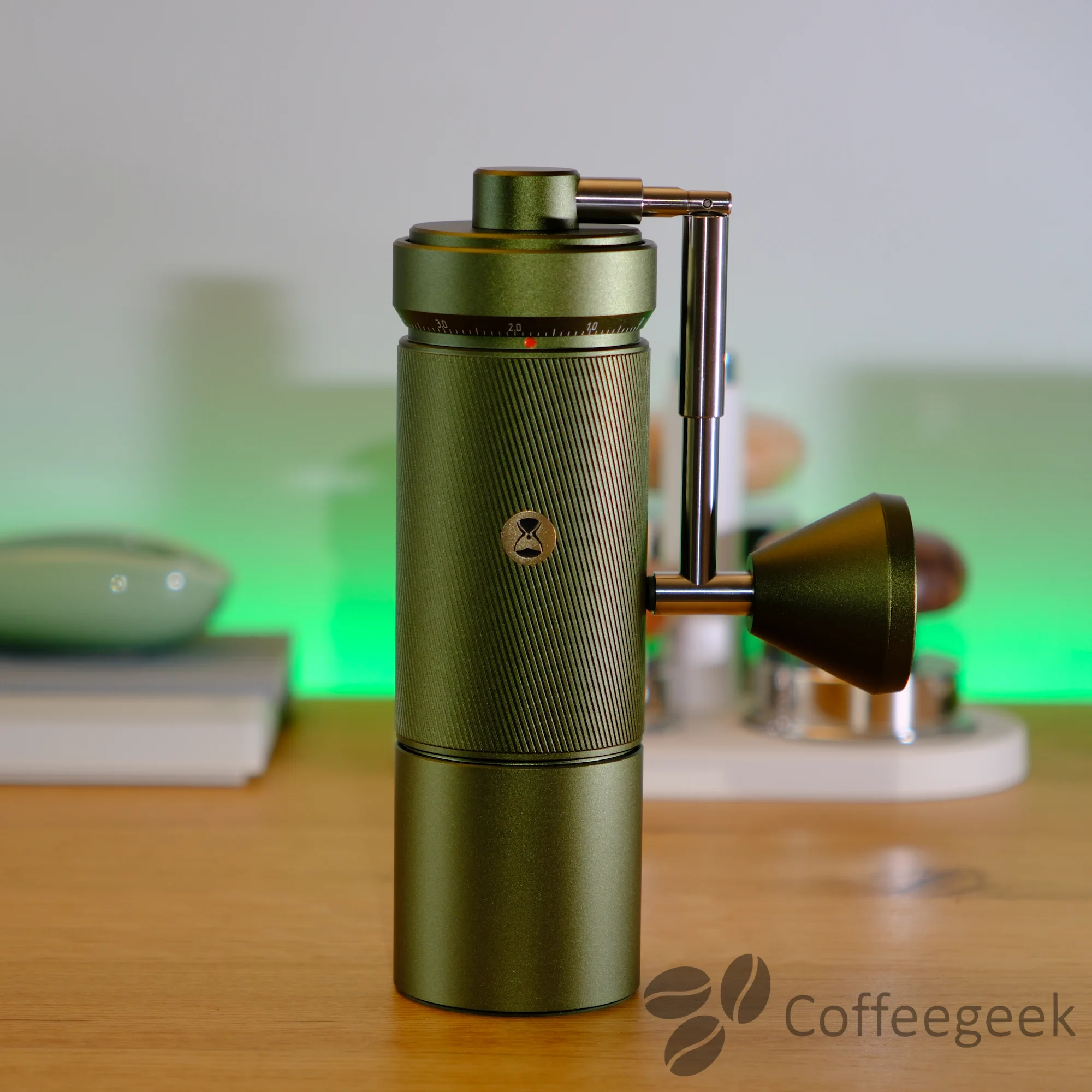
The S5 Pro also keeps Timemore's patented folding crank. When folded down, it lowers the grinder's center of gravity, which helps keep it steadier on the counter thanks to more weight sitting near the base. A small silicone piece built into the body also protects the aluminum from scuffing when the crank folds back against it.
To use it, you simply lift the crank until it locks into place, and to retract it, you pull the small release piece and fold it back down. It's an elegant system that takes seconds to learn. But the real headline change is the size of the handle itself: compared to the S3, Timemore made it 63% wider and 82% larger by volume. It makes a genuine difference in hand, especially when you're applying more force, since the burr itself is also larger than on the previous generation.
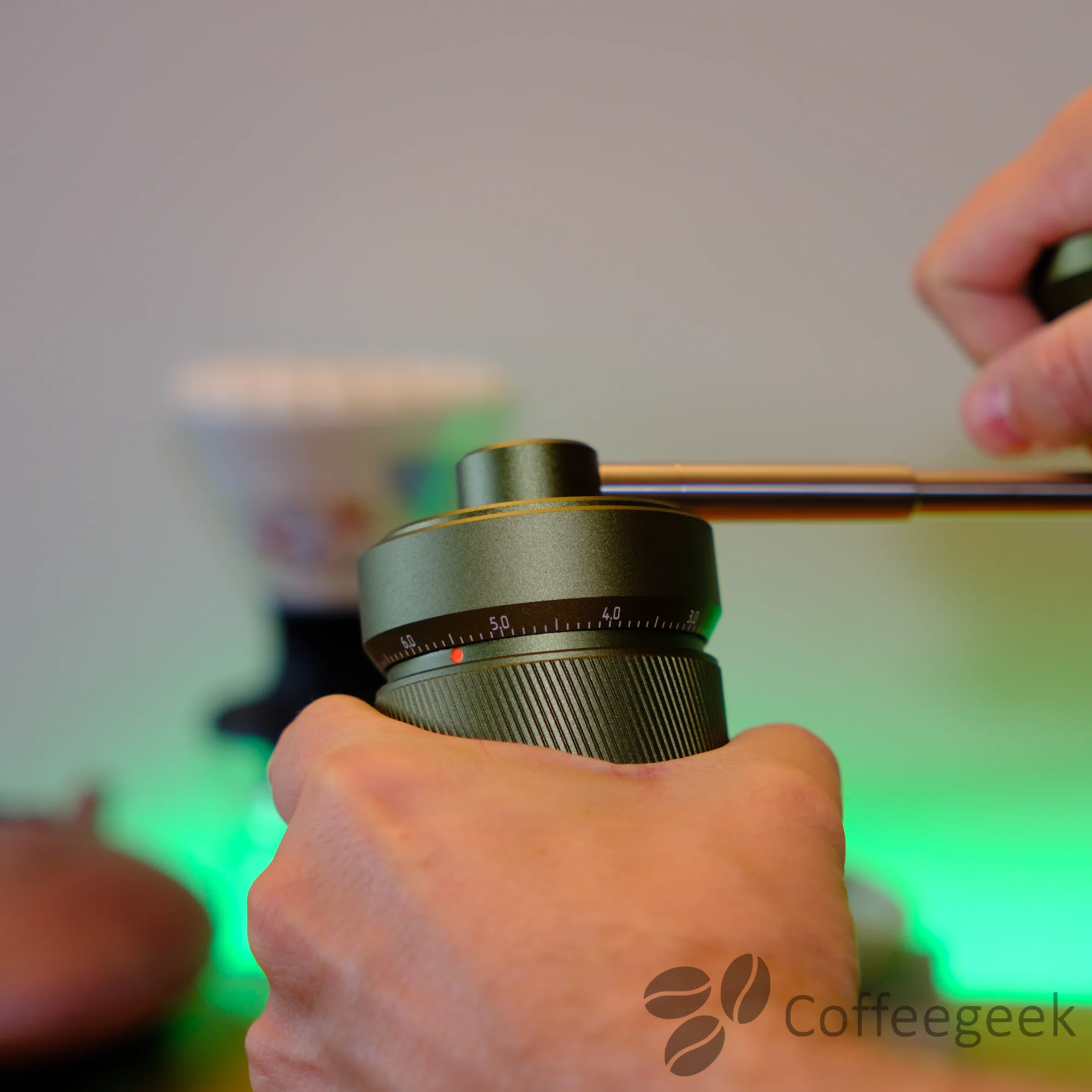
Historically, Timemore has favored fairly compact crank handles, and they always felt fine in the hand. But going bigger on the S5 Pro is one of those changes you don't fully appreciate until you've felt it: more leverage, more comfort, and less fatigue over a full grinding session.
Settings and Precision: 90 Clicks You Can Actually Trust
The grind adjustment collar sits at the top of the grinder, just below the hopper, and it offers a full 90 grind settings. Between each click, there's a gap of just 0.015 mm, or 15 μm, an extremely fine resolution that matters enormously for espresso, where you're often hunting for the one setting that sits precisely between two coarser clicks on lesser grinders.
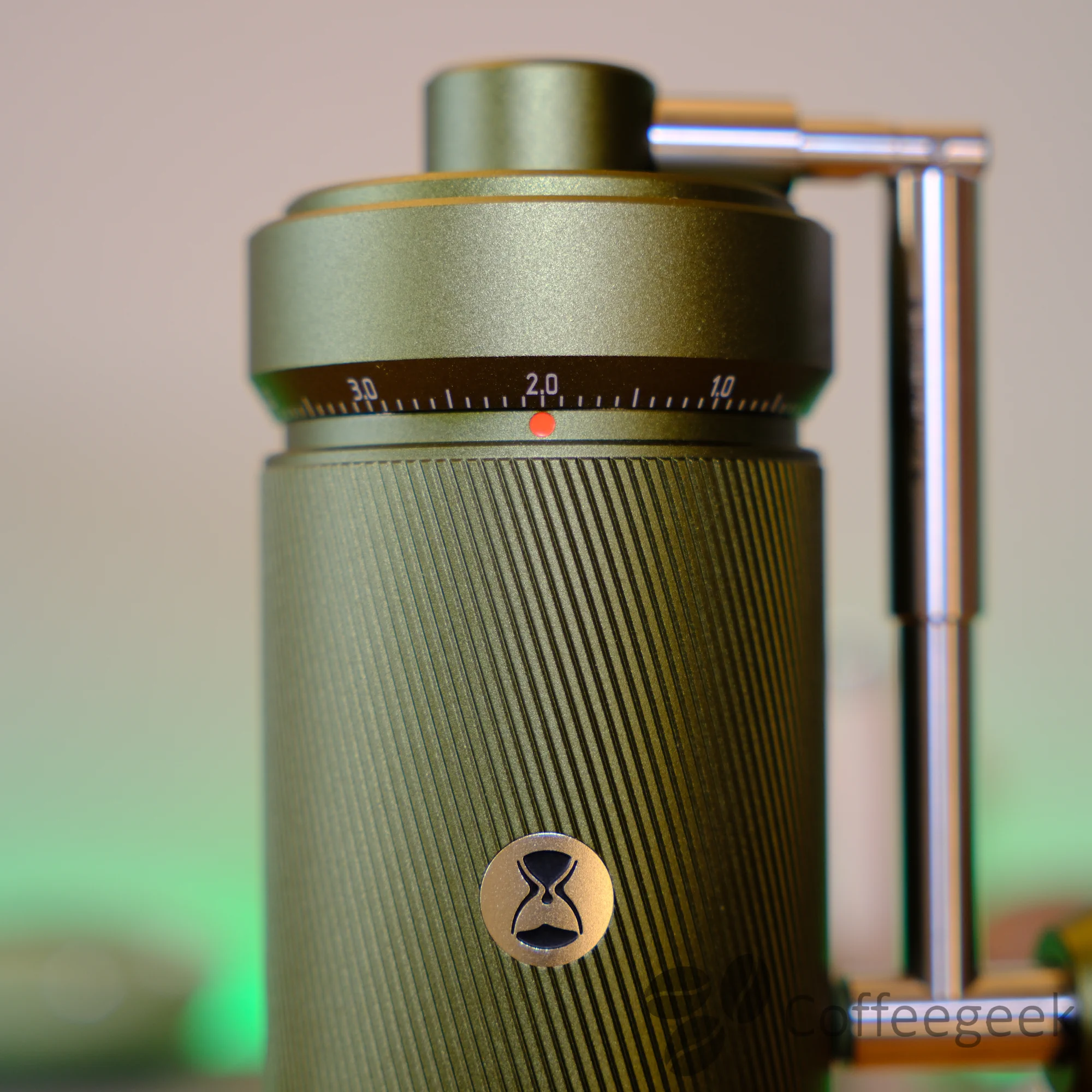
What struck me immediately is how different the clicks feel and sound compared to the S3. On the S5 Pro, each click is far more pronounced, both audibly and physically, with noticeably more resistance as you turn the collar. That's not a trivial detail: it directly answers one of the most common complaints about the S3, where users generally found the click resistance very weak even though a setting actually skipping was very rare, and only happened if you held the grinder unusually high on the body.
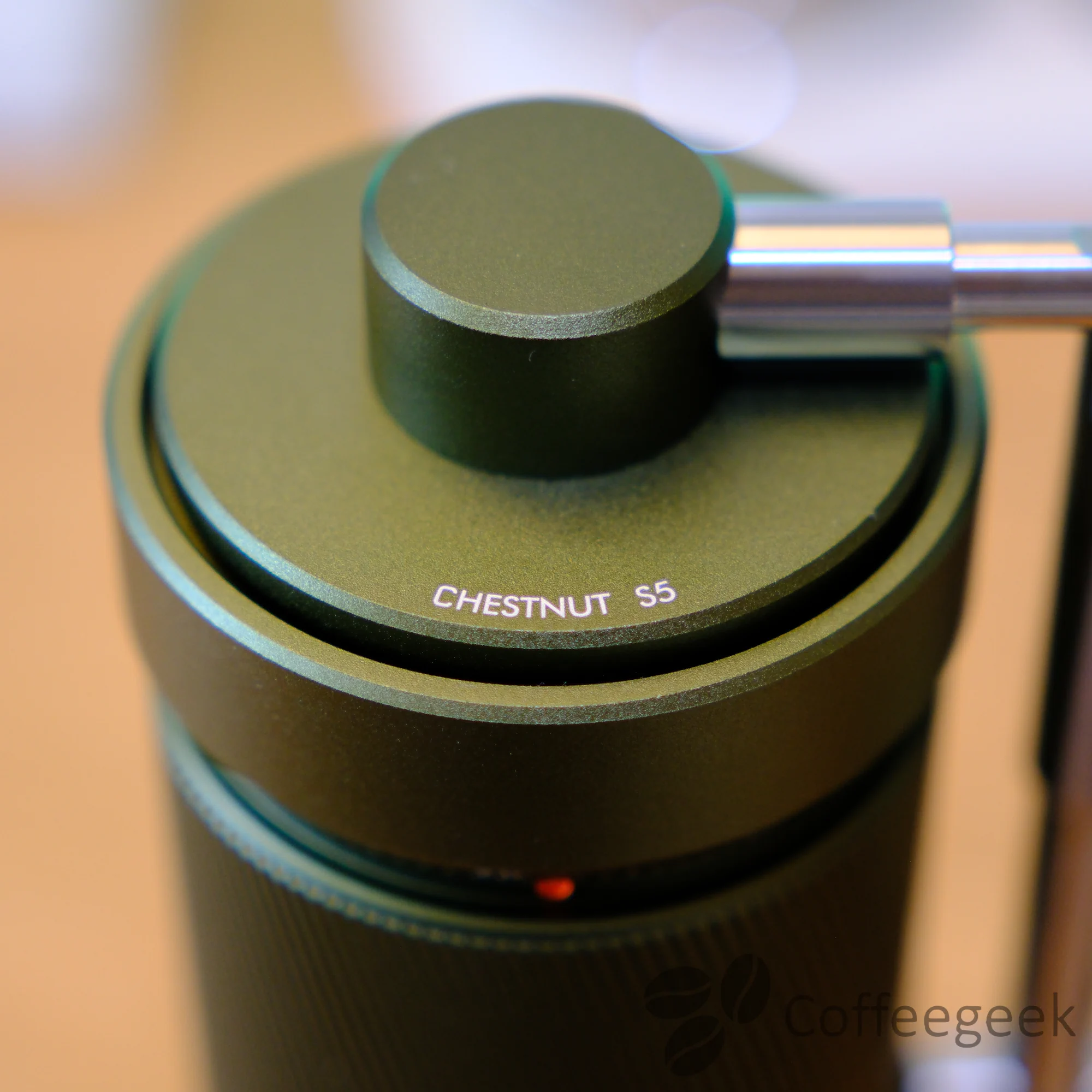
With the S5 Pro, an accidental skip is essentially impossible. The resistance is strong enough that you'd have to deliberately force the collar to shift it, which gives real peace of mind once you've dialed in a recipe you like. Timemore also marked the recommended adjustment ranges for different brewing methods directly on the collar and lid, making it easy to find your way back to filter or espresso territory.
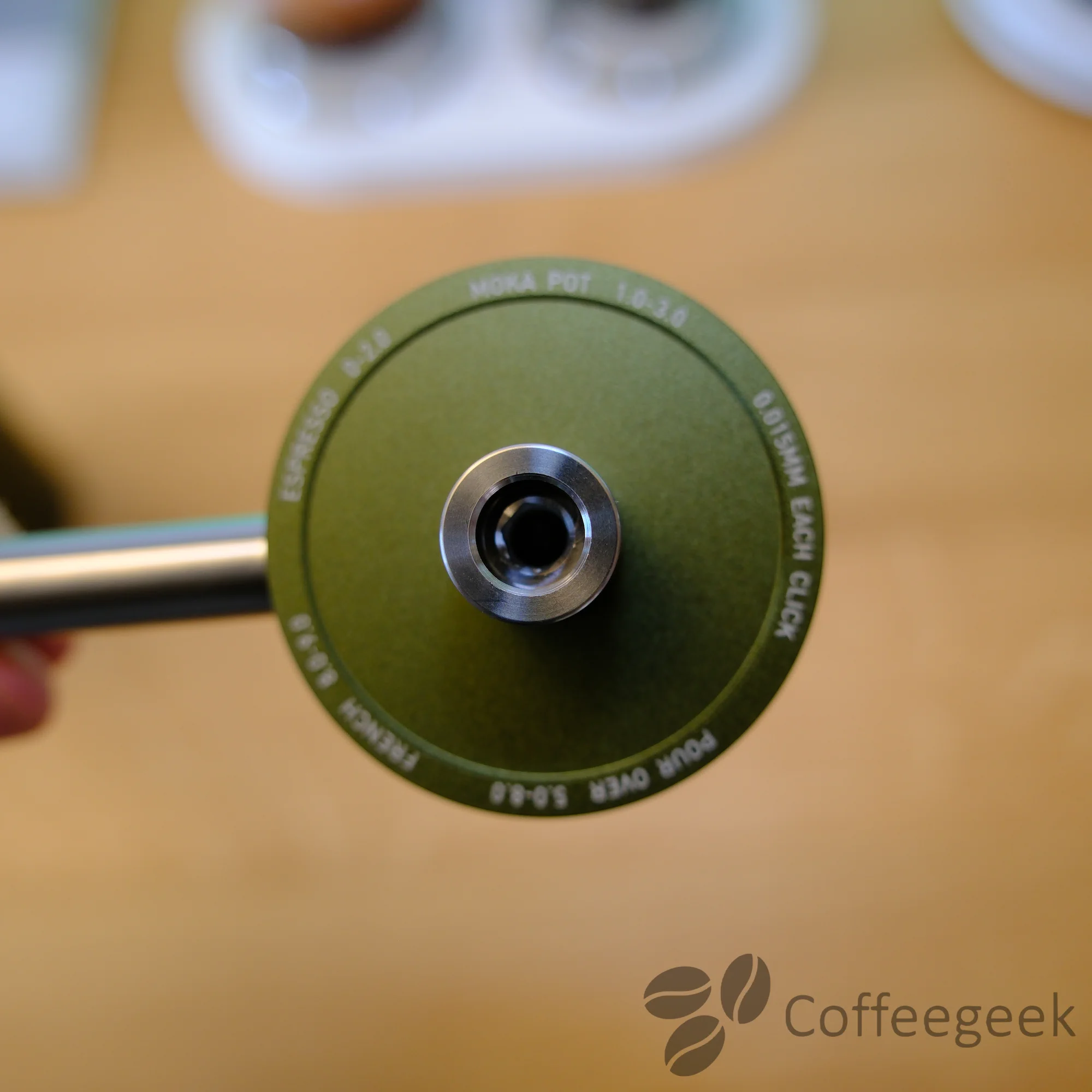
Recommended settings:
- Espresso1 to 20 clicks
- Moka20 to 30 clicks
- Pour Over50 to 80 clicks
- French Press80 to 90 clicks
These settings are indicative and may vary depending on your coffee and preferences.
Even if you crank the adjustment collar all the way down to zero, the burrs on the S5 Pro never actually touch. Timemore built in a small permanent gap of 75 μm, which means you can't damage the burrs even by over-tightening the collar out of curiosity or habit.
The catch cup itself holds up to 30 g of ground coffee and simply screws onto the base of the grinder. Inside, there's no lip at all, meaning the wall is completely smooth. That matters more than it sounds: pouring ground coffee into a portafilter or a filter basket from a cup with an internal lip almost always causes some retention, something I've run into on other grinders before.
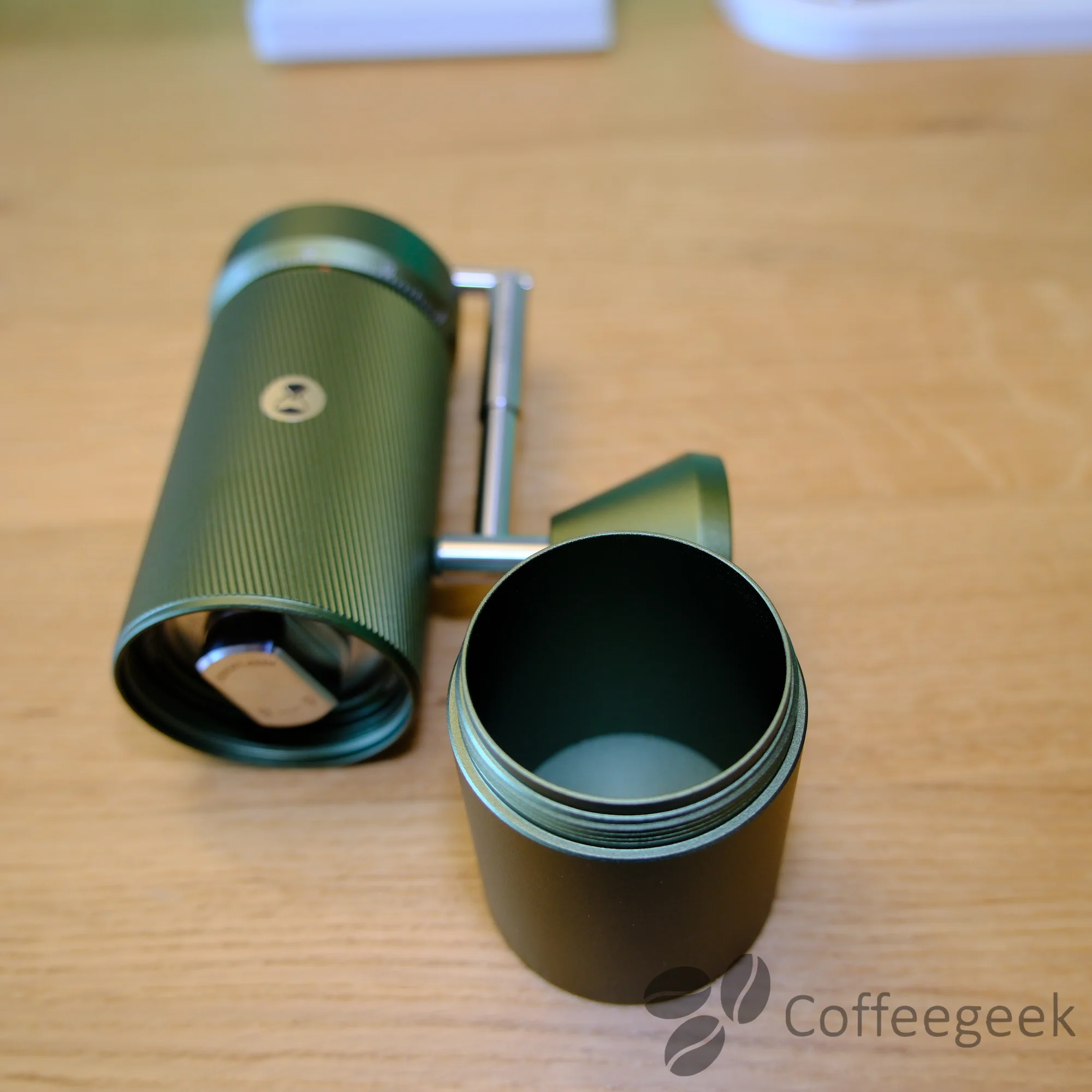
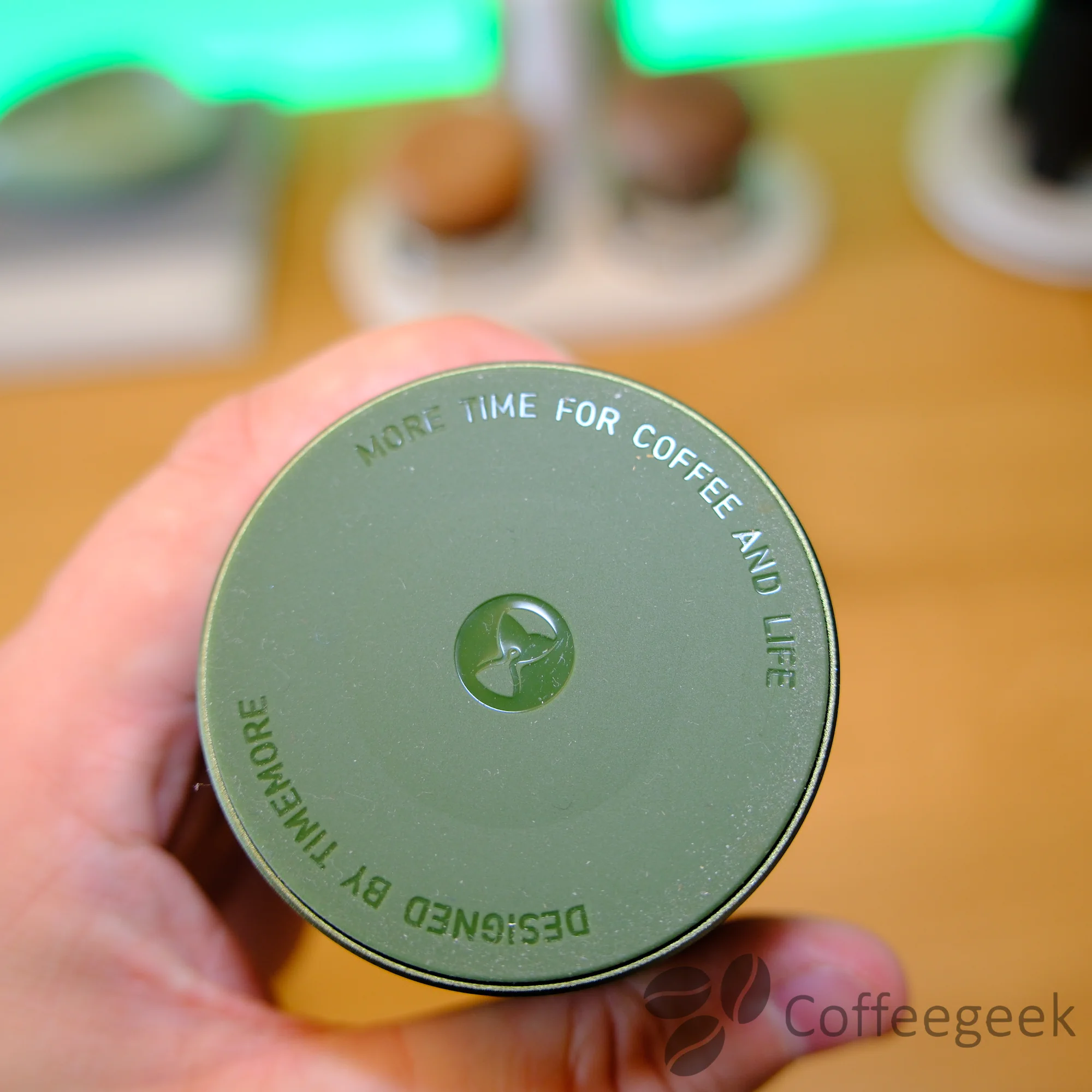
The underside of the catch cup is itself coated in silicone, which serves two purposes: protecting your countertop from scratches, and helping keep the grinder steady while you crank, so it doesn't slide around under pressure.
The Heart of the Grinder: Meet the TriB-048-I Burr
The heart of the S5 Pro is its new 48 mm conical burr, named TriB-048-I, a competition-grade design that solves a paradox familiar to anyone who's used a large-burr manual grinder before. Generally, the bigger the burrs, the harder they are to crank by hand because of the increased torque required. So why does the S5 Pro still feel so smooth to operate despite going up in burr size from the S3?
The answer lies in the pre-crushing geometry built into the top of the burr. Twelve alternating points sit above the main cutting zone, and their job is to pierce and break up each bean before it even reaches the burr's core grinding surface. This staged approach means the coffee never jams, the effort required stays constant and linear throughout the grind, and, crucially, it avoids bean-on-bean collisions that generate excess dust and unwanted fine particles during extraction.
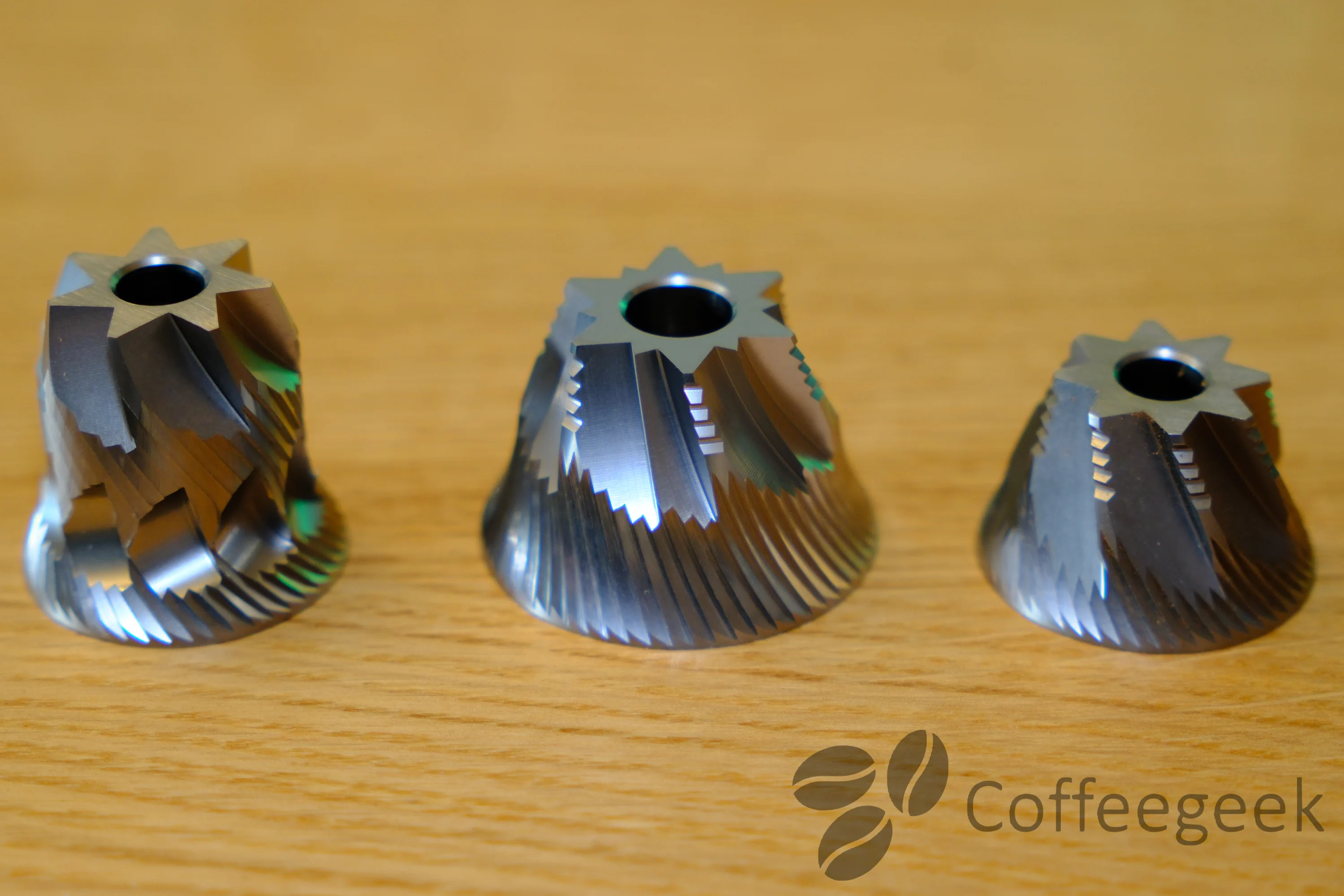
Seeing the three burrs side by side really drives the point home. The S5 Pro's TriB-048-I is visibly larger than the S3's burr, yet the pre-crushing teeth mean you don't pay a torque penalty for that extra size. It's a smart piece of engineering that lets Timemore chase both bigger particle consistency and comfortable hand-cranking at the same time, two goals that usually pull in opposite directions.
These charts were recreated from images provided by Timemore on their official website. The data points are therefore approximate, but they provide a good overview of the particle size distribution for each grinder.
Practical Tests: Pour-Over Extraction
For my pour-over test, I started by weighing out 16 g of coffee, aiming for a final ratio of 1:15. I misted the beans lightly with a spray bottle before grinding — a small habit better known as the Ross Droplet Technique, which helps cut down on static electricity and the retention it causes inside the grinder's chamber.
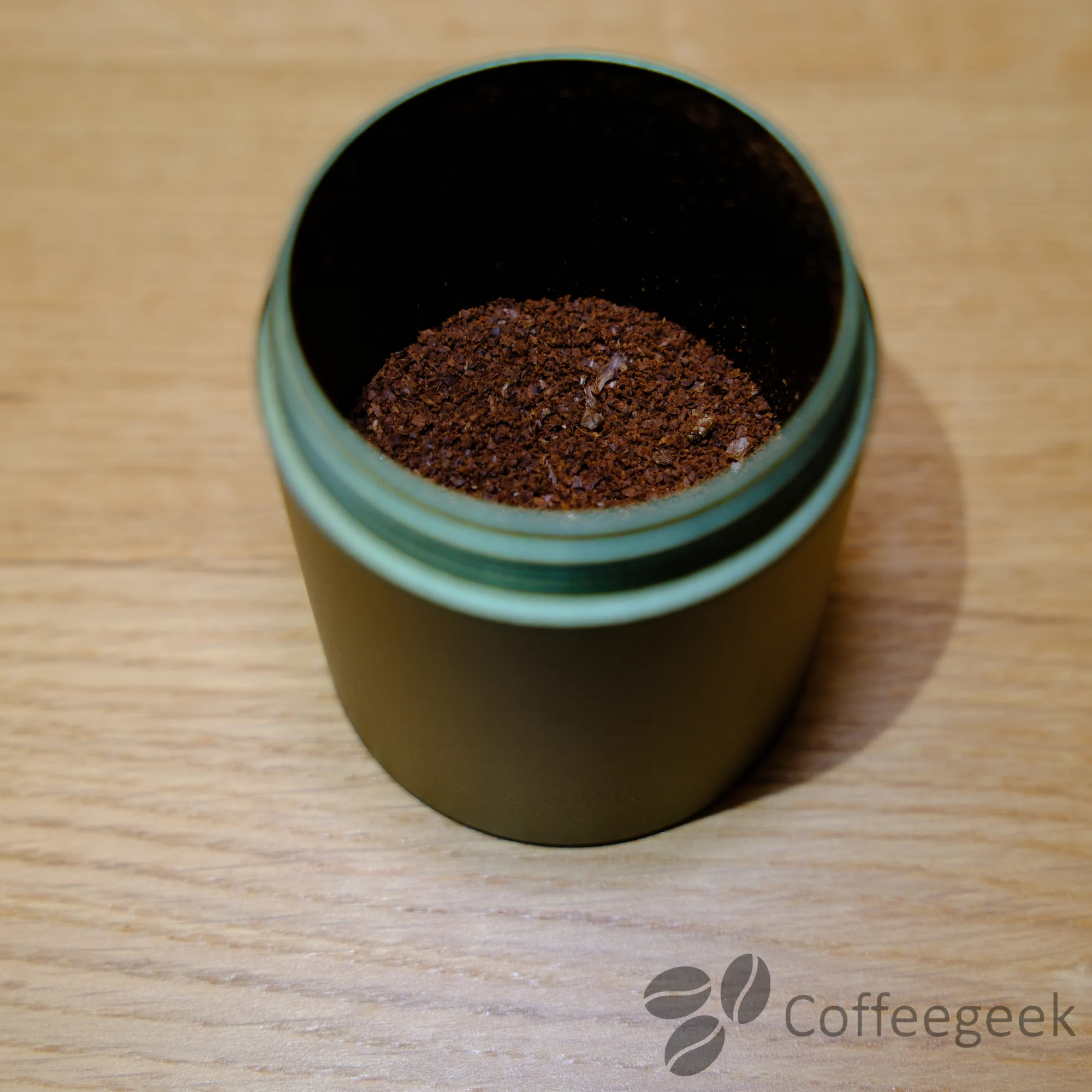
I set the collar to position 60 to get a fairly coarse grind suited to my brewing method, and grinding the full 16 g took me between 20 and 30 seconds, a genuinely quick process for a hand grinder at this coarseness. I then transferred the grounds into my Timemore Crystal Eye VECTOR Dripper and started the extraction with water heated to 91°C.
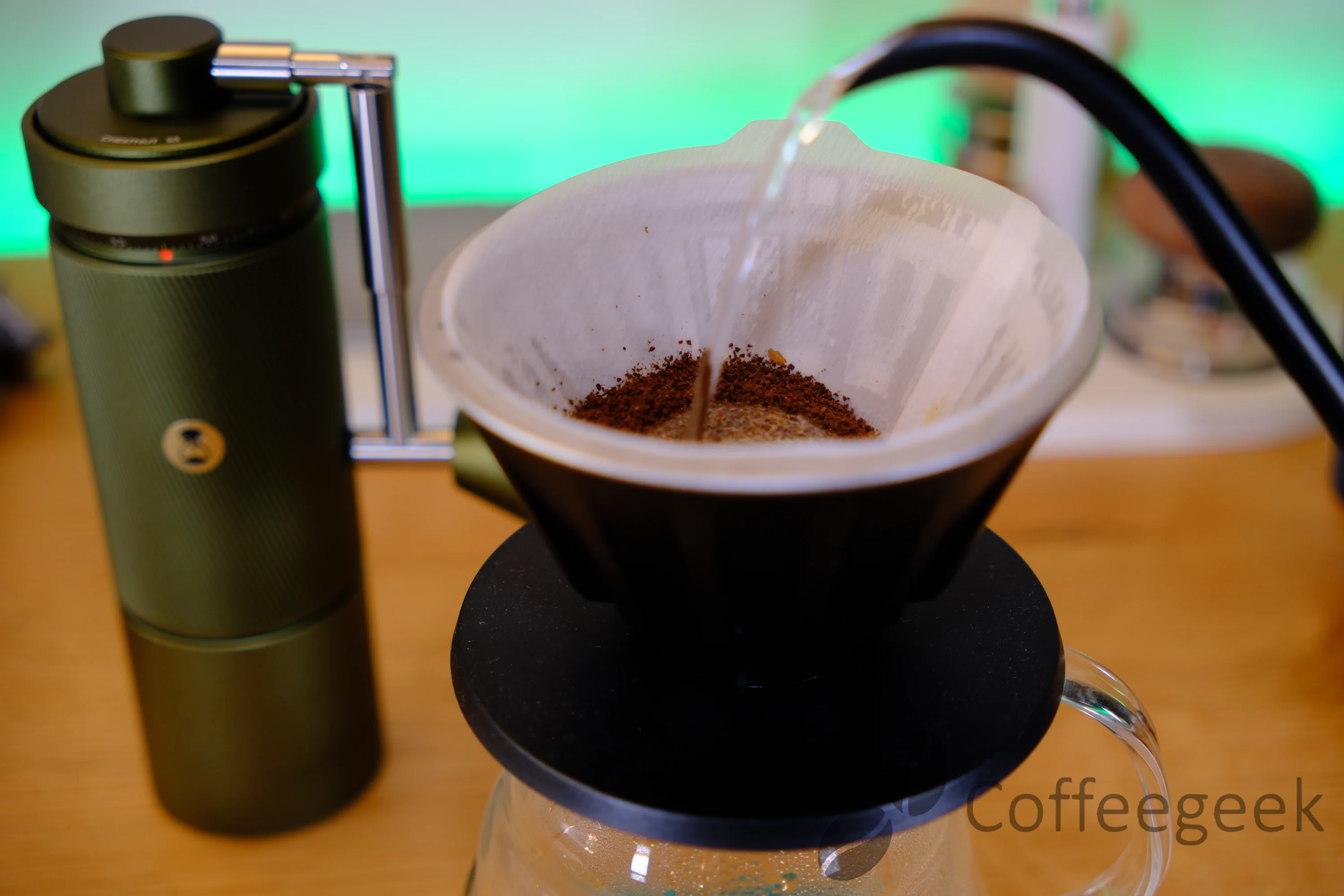
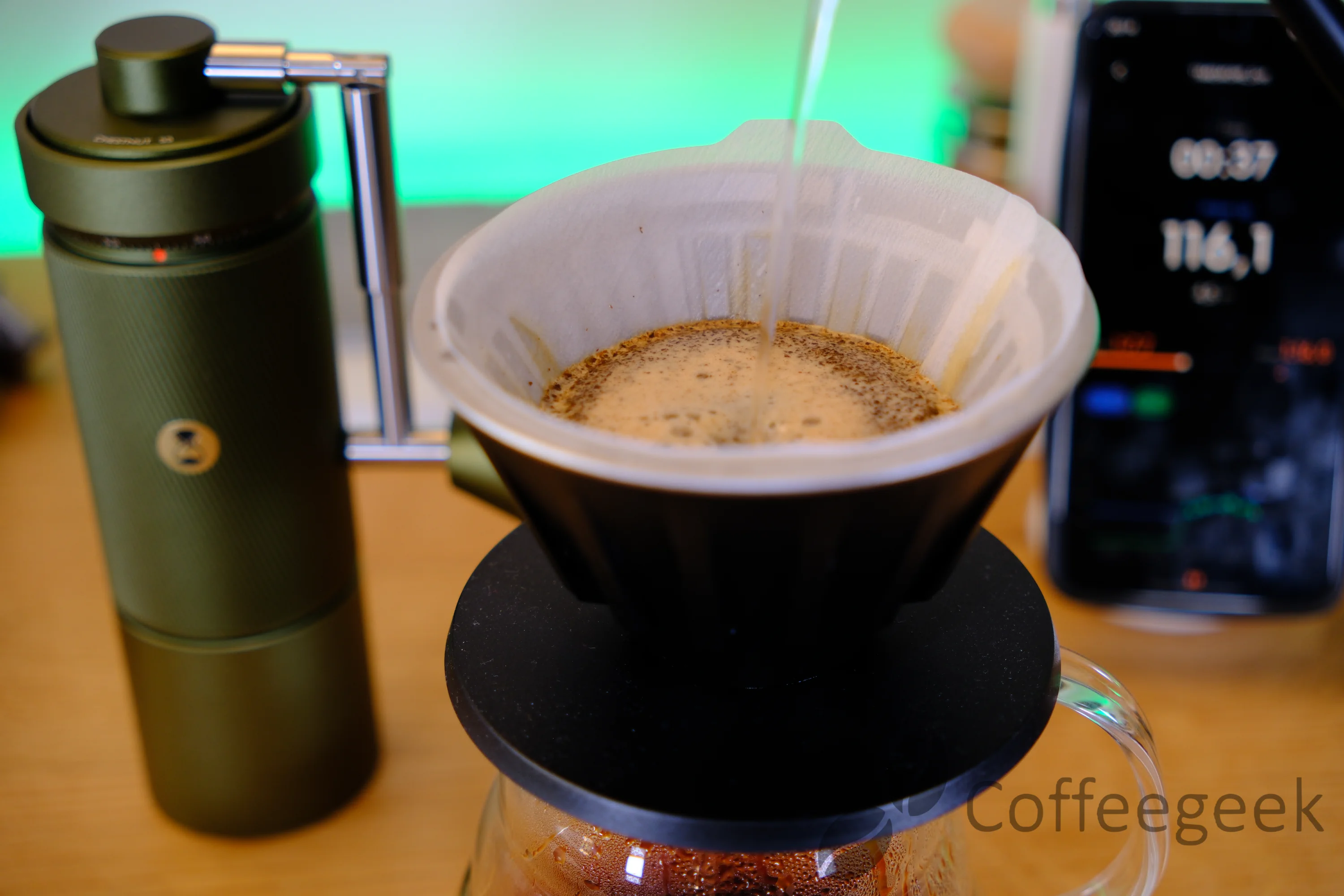
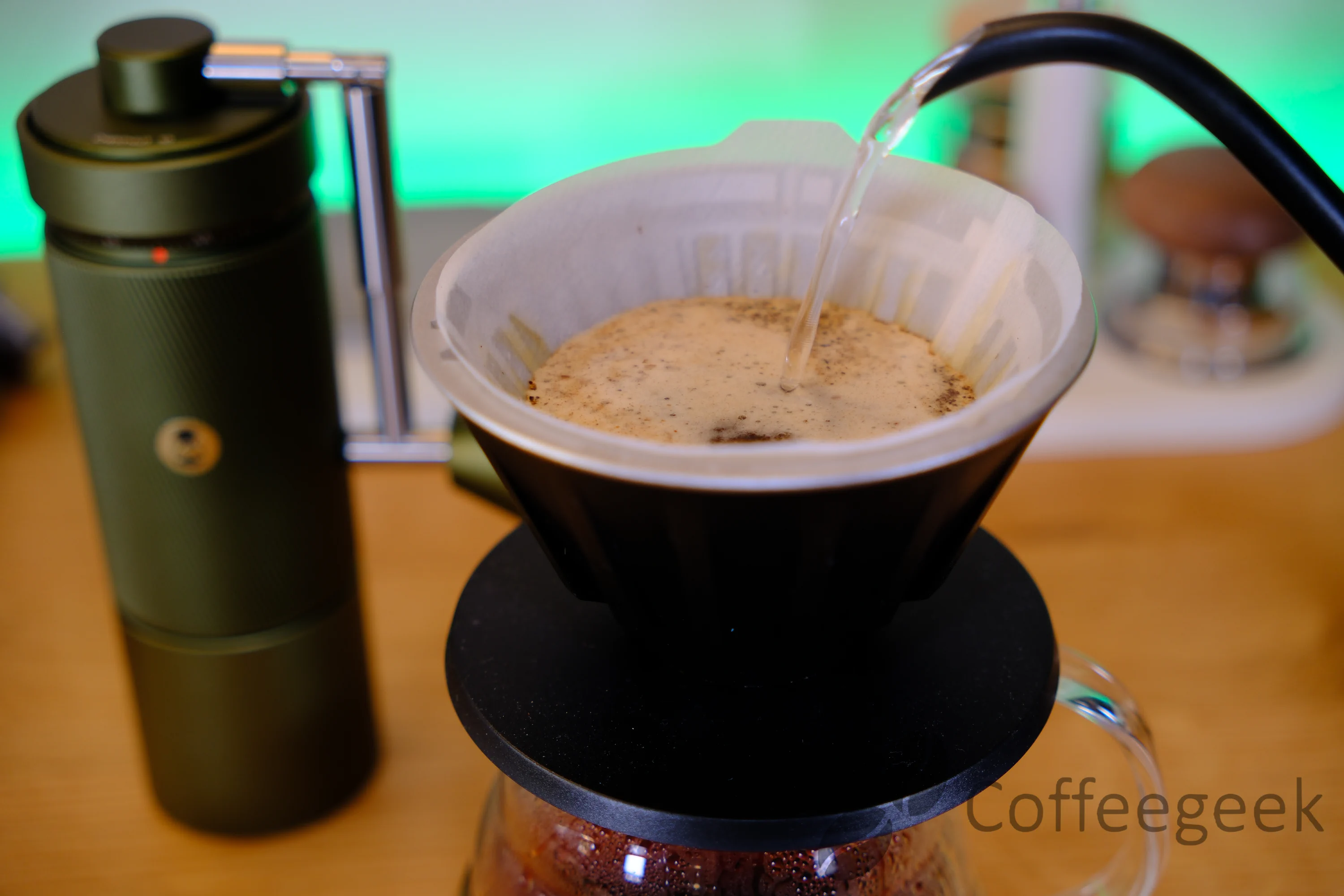
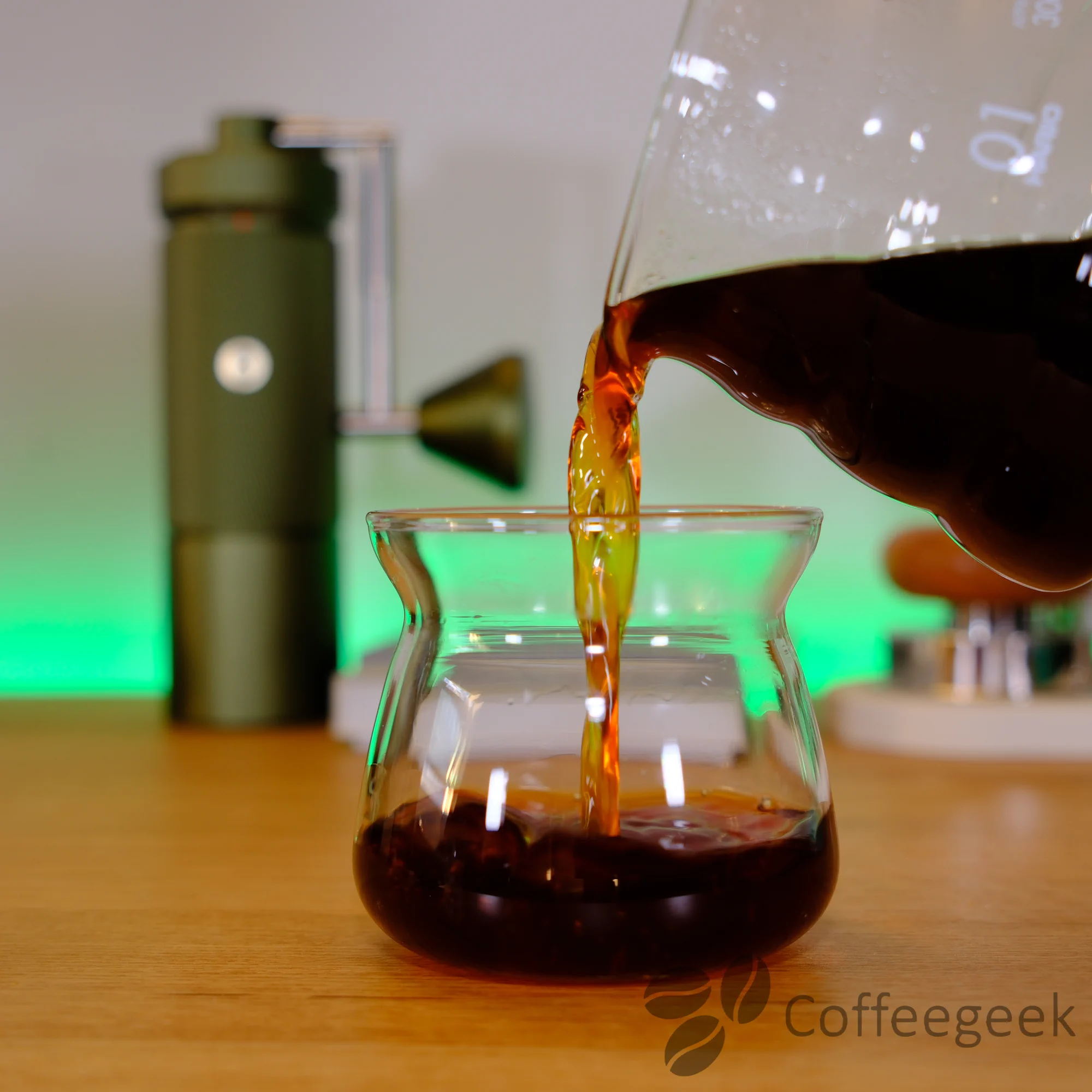
In the cup, this Bourbon variety delivered fruity notes with hints of caramel and black tea, exactly the kind of clarity I was hoping for. The burrs on the S5 Pro are genuinely optimized for pour-over, and that's a real achievement on Timemore's part, because as I'll get into next, this same grinder also handles espresso convincingly, something that's historically forced brands to compromise one method for the other.
Practical Tests: Espresso Extraction
For espresso, I weighed out 18 g of coffee, again misting it beforehand to limit static and retention inside the burr chamber. Grinding 18 g down to an espresso-fine setting took between 45 seconds and a full minute, understandably longer than pour-over given how much finer the particles need to be.
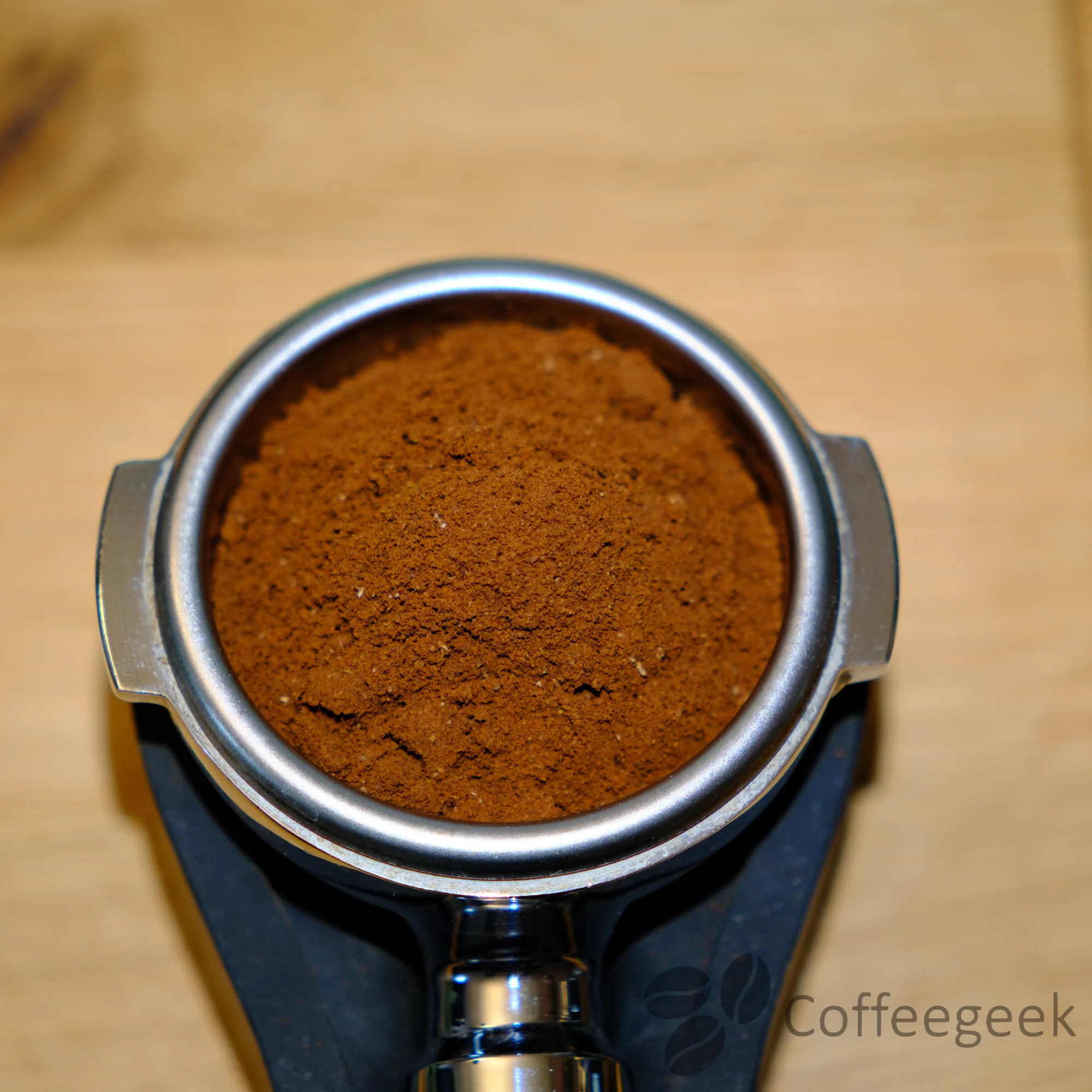
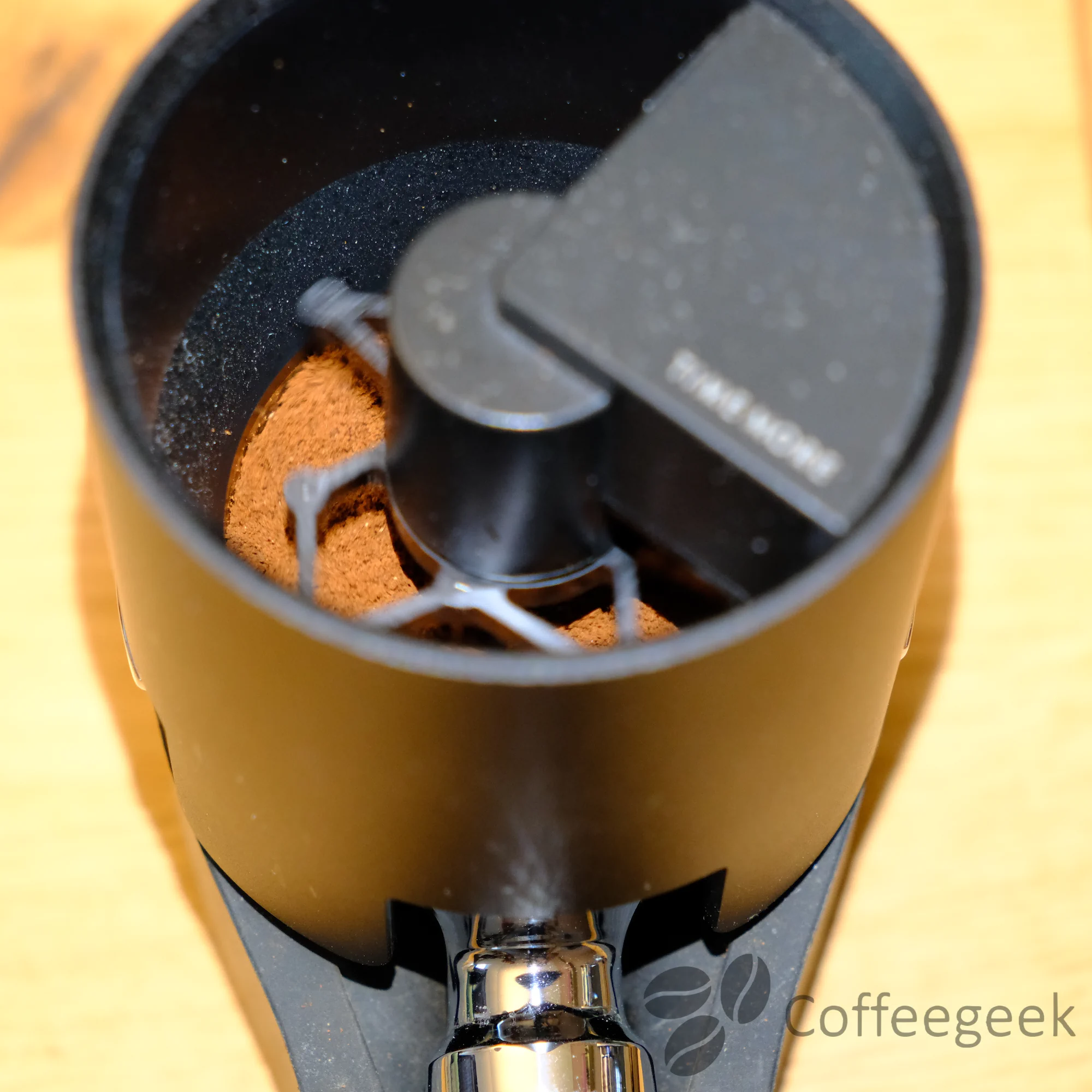
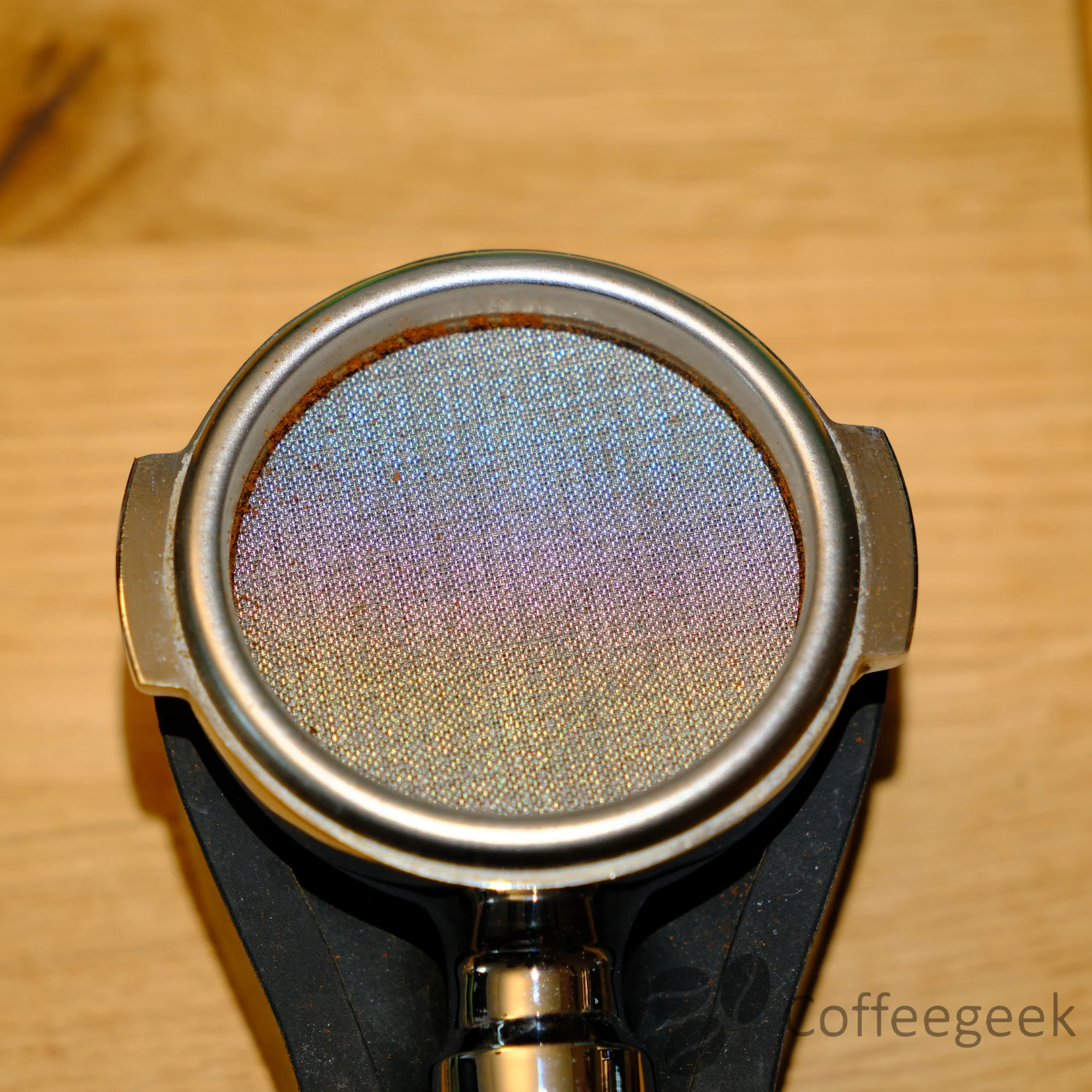
Once ground, I distributed the coffee in the portafilter using a WDT tool, tamped with a calibrated tamper, placed a puck screen on top, and started the extraction. The result surprised me in the best way: there's a slight acidity that comes through, which isn't overwhelming and stems directly from the fact that these burrs are tailored primarily for pour-over rather than pure espresso duty.
4 tips to avoid channeling with a bottomless portafilter
Discover how to avoid channeling during your espresso extractions with a bottomless portafilter.
Read the article →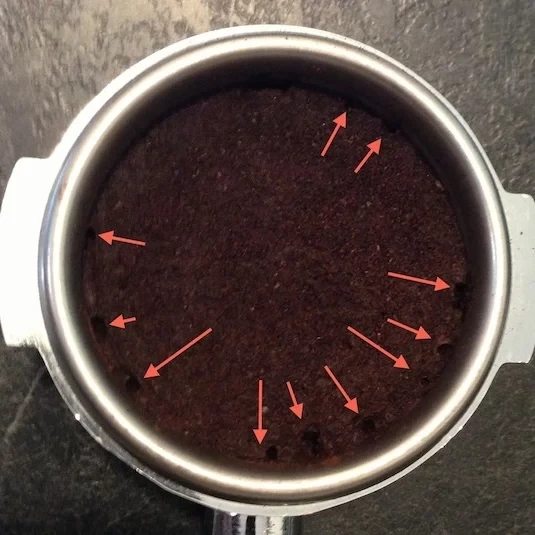
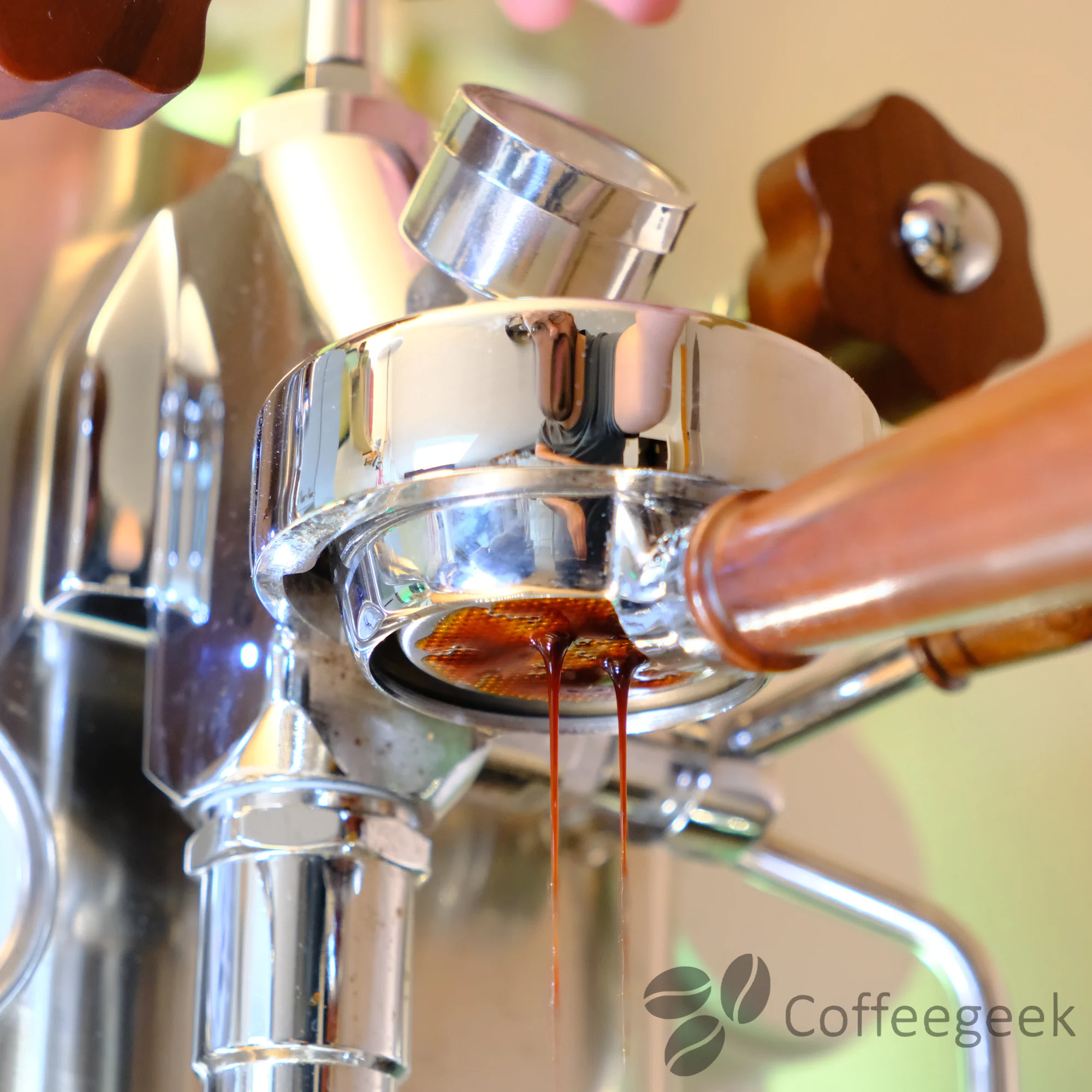
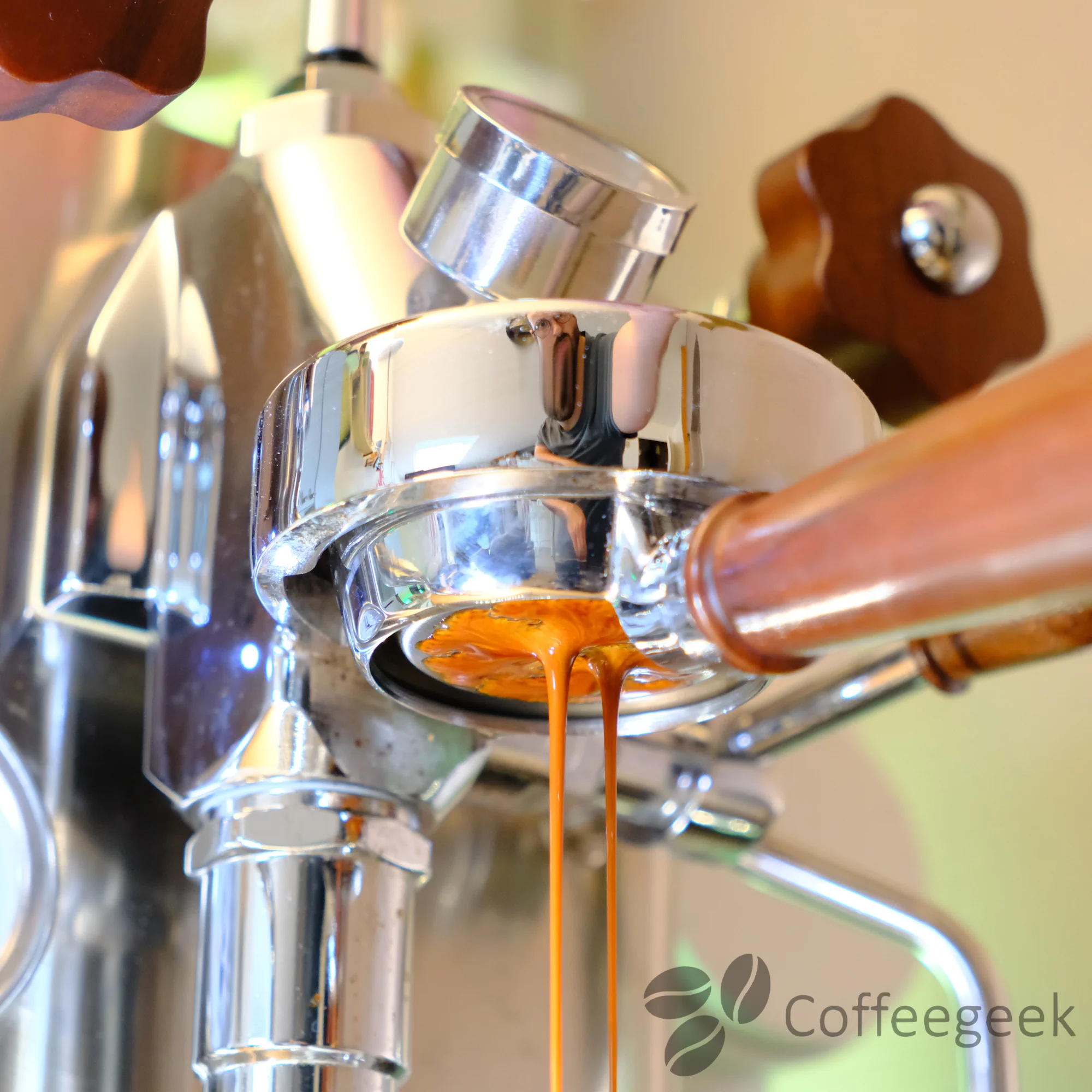
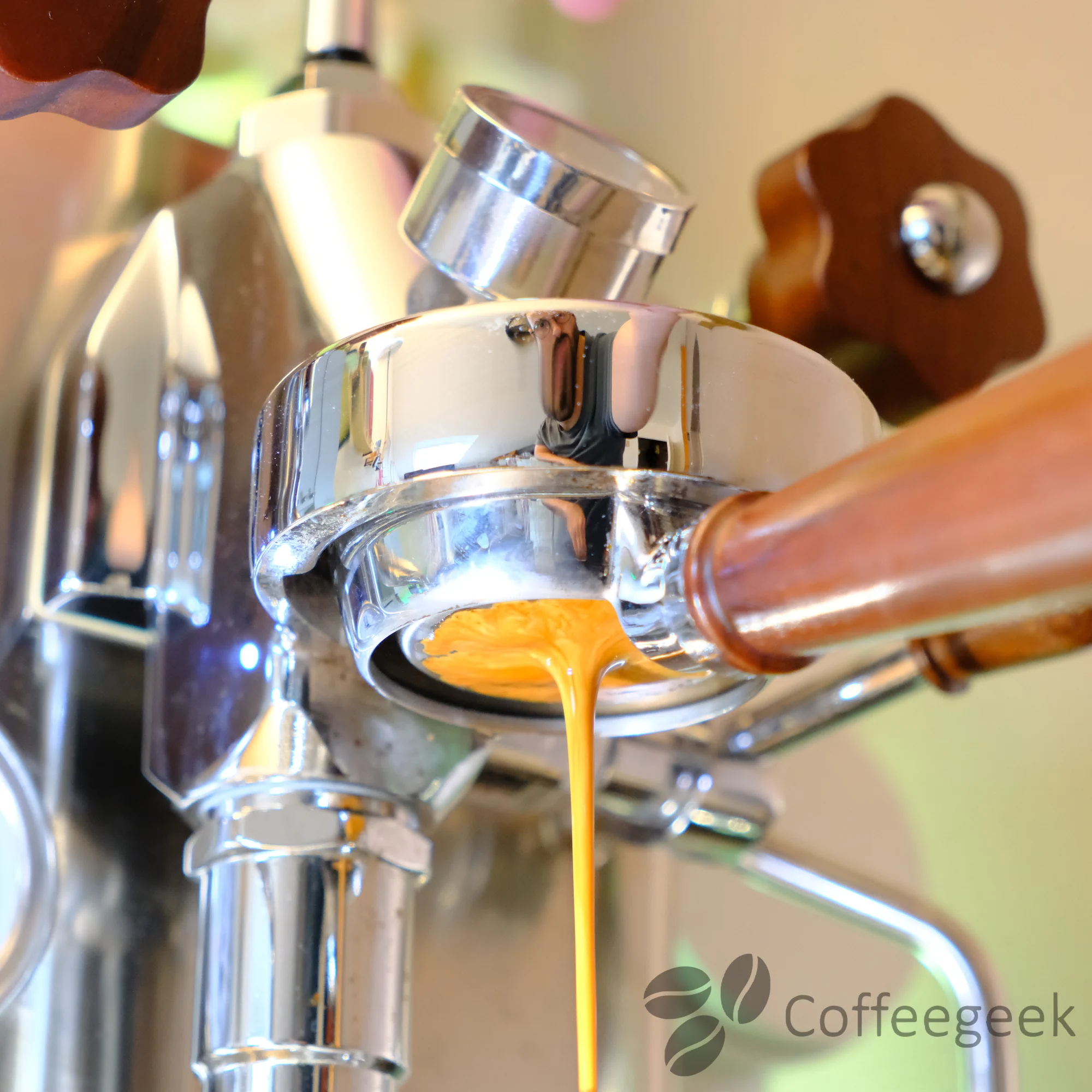
What stood out most was the clarity of flavor in the shot, a real achievement considering this grinder's burr geometry wasn't designed with espresso as its sole priority. Despite that specific design intent, the S5 Pro still delivers the kind of pulled shots that make you want to keep dialing in different beans, which is exactly why I'm comfortable rating its espresso performance as highly as its pour-over performance.
Maintenance, Disassembly, and Comparison With the S3
Taking apart the S5 Pro for cleaning couldn't be simpler. Start by unfolding the crank, then remove the catch cup, and while holding the crank steady, unscrew the body using the dedicated dial built into the design.
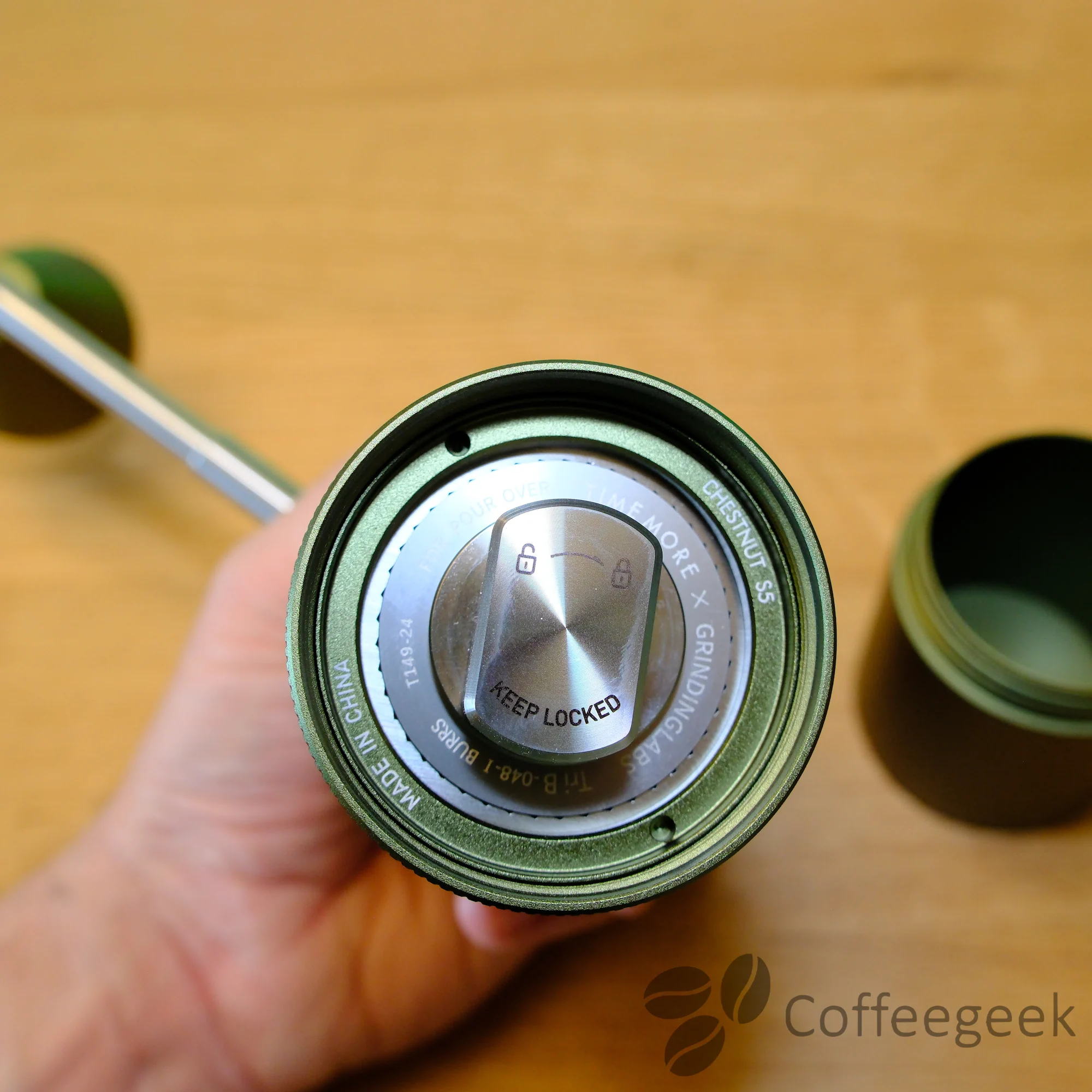
Once unscrewed, the burr lifts out cleanly, ready to be brushed down with the small cleaning brush that comes included in the box. It's a process that takes well under a minute once you've done it a couple of times, and it's reassuring that Timemore didn't overcomplicate a task you'll be repeating often.
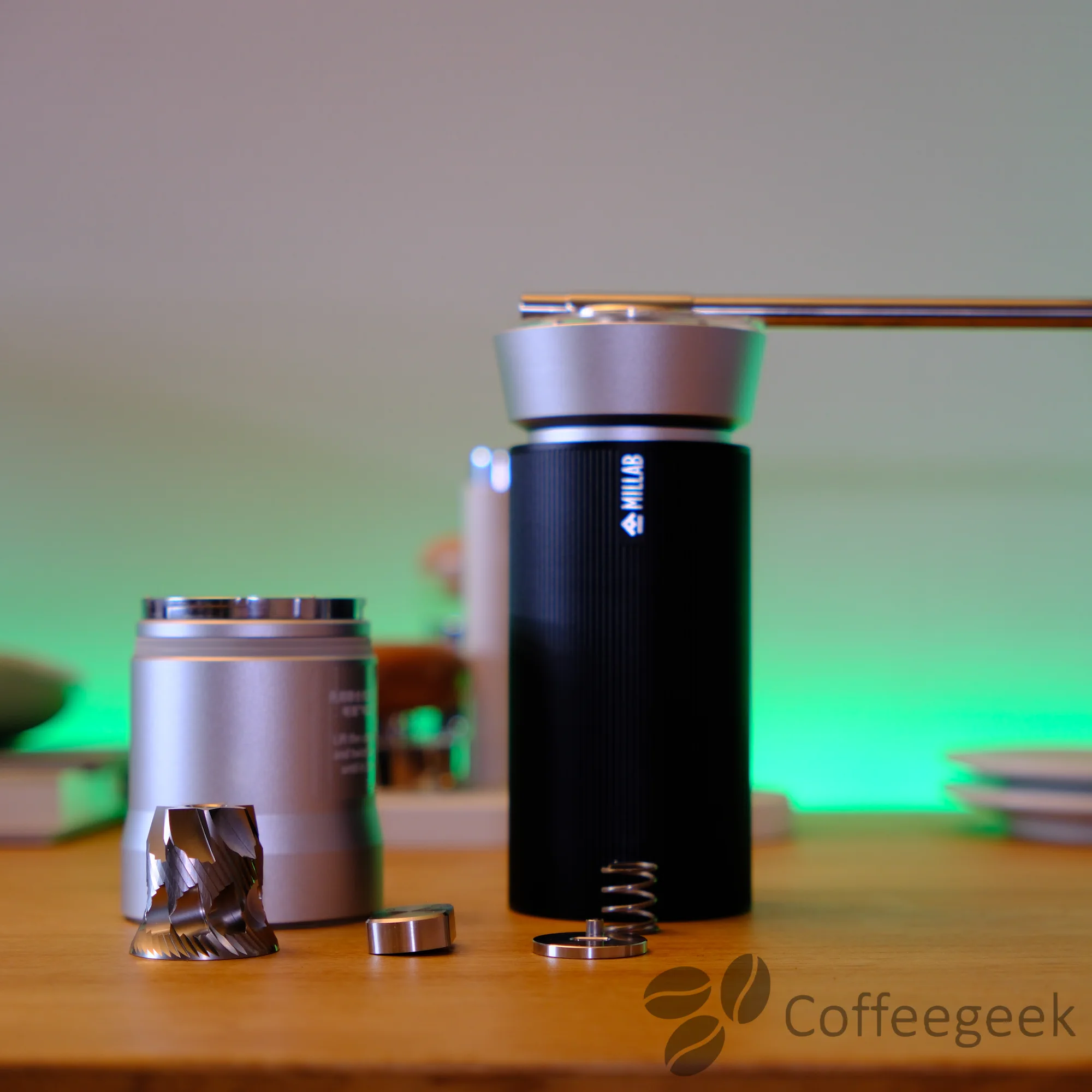
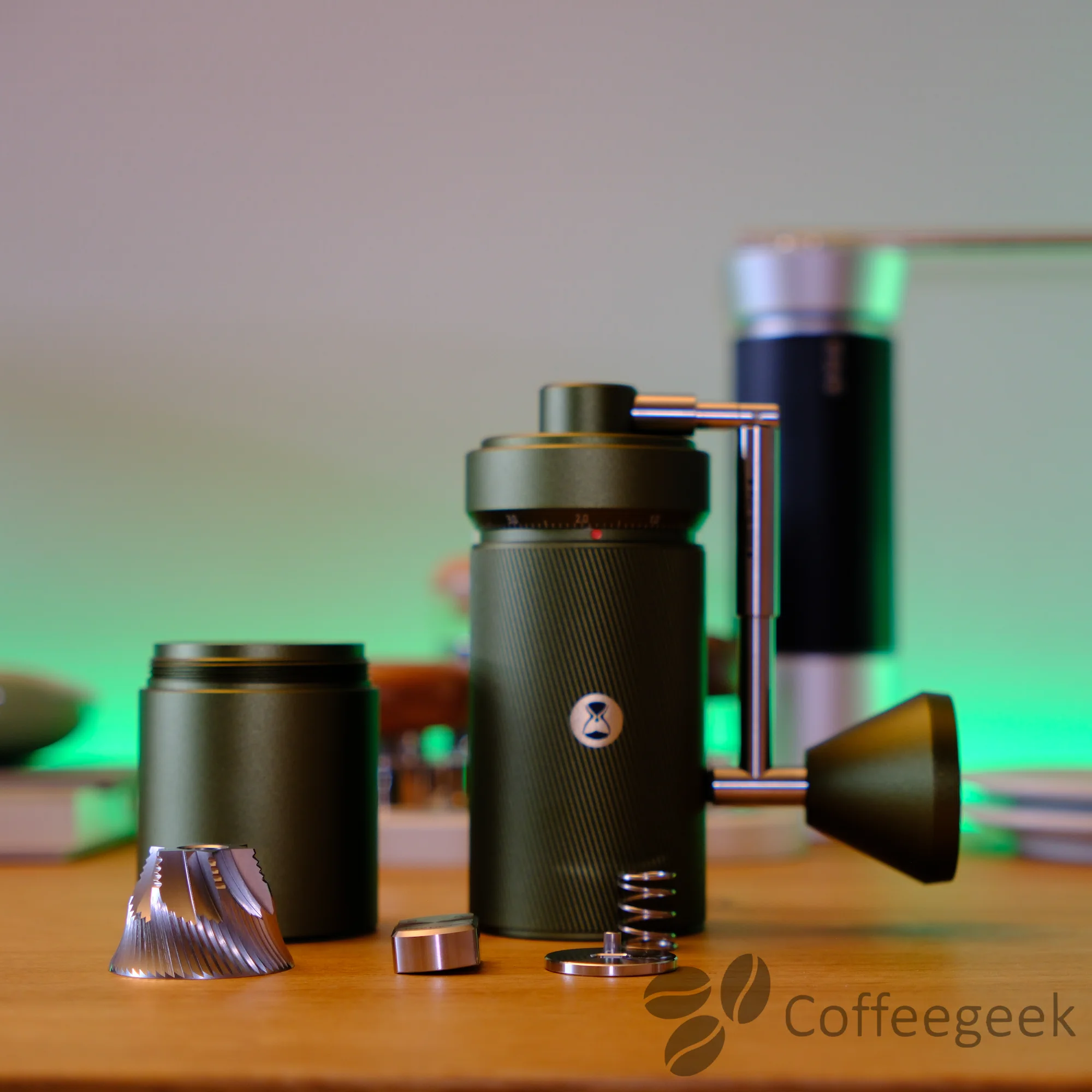
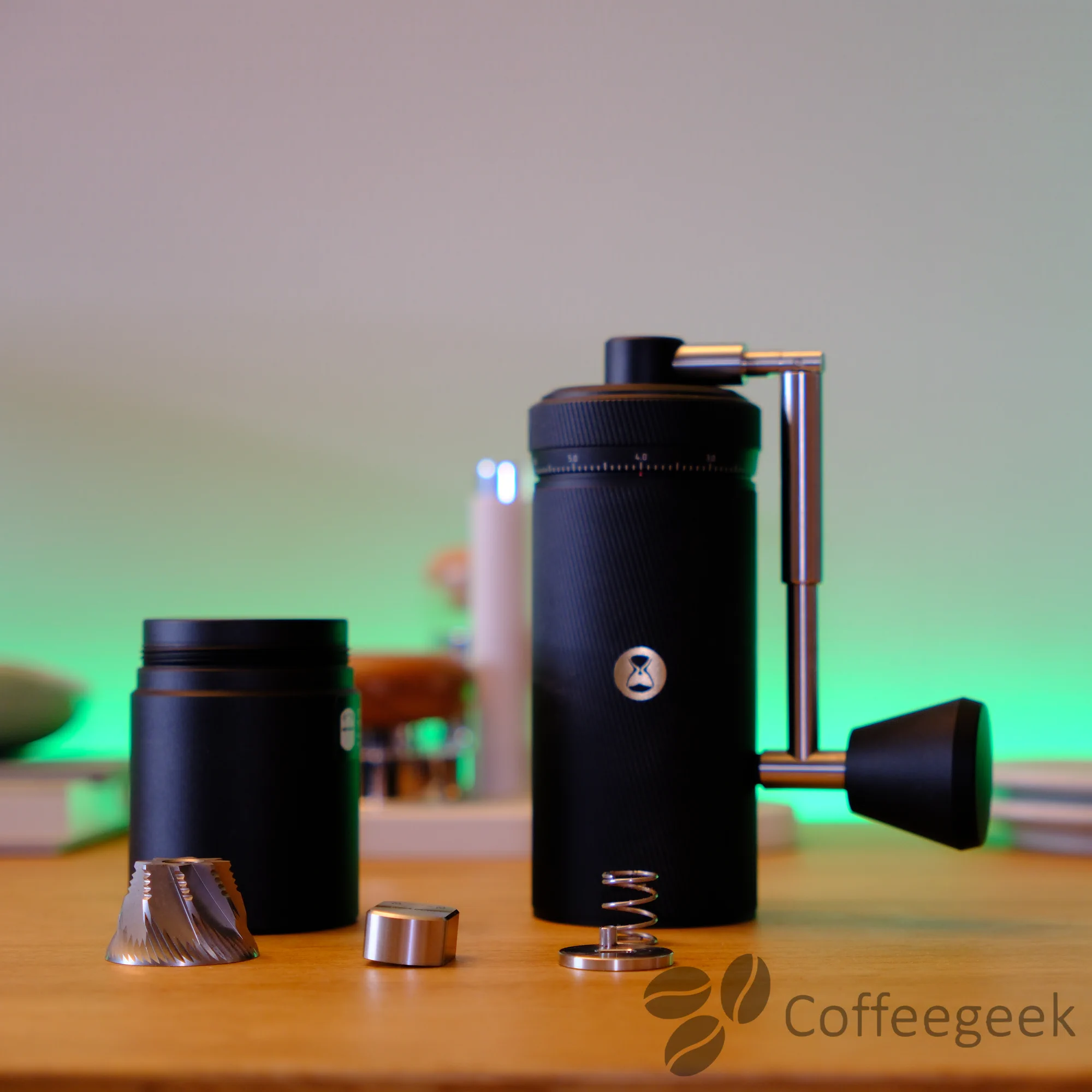
Comparing the disassembled S5 Pro to both the S3 and the Millab M01 side by side really highlights how much thought went into this new generation. To sum up the major improvements over the S3 and S3 ESP: bigger 48 mm burrs, true filter-and-espresso versatility in a single model, a handle enlarged by 63% in width and 82% in volume, a much crisper and more resistant click on the adjustment collar, and a widened hopper opening that makes pouring beans in far less messy. And despite the larger burr, I found it no harder to crank than the smaller S3, which speaks well of that pre-crushing geometry doing its job.
Conclusion: One of the Most Accomplished Manual Grinders on the Market
The Timemore S5 Pro is without a doubt one of the most accomplished manual grinders on the market today at this price point. Every complaint I ever had about the S3 the flimsy clicks, the cramped handle, the narrow hopper has been directly and thoughtfully addressed, without sacrificing anything that made the original so beloved in the first place.
If you're looking for a single, durable grinder capable of genuinely excelling at both pour-over and espresso, with uncompromising ease of use and precision you can actually feel through the collar, this one is close to flawless. The only real caveat is its weight, which makes it more of a dedicated home-counter grinder than something you'd casually toss into a travel bag.
- Exceptional ergonomics - the enlarged handle (63% wider, +82% in volume) transforms grinding comfort compared to the S3.
- Audible, trustworthy precision - 90 settings with a 15 μm gap between clicks, and a built-in 75 μm safety gap protects the burrs.
- Genuine dual-purpose performance - the TriB-048-I burr delivers excellent pour-over clarity while still pulling convincing, well-balanced espresso.
- Thoughtful design details - a lip-free catch cup, a widened hopper, and tool-free disassembly for easy cleaning.
- At close to 800 g, it's a stay-at-home grinder rather than an ultralight travel companion. If you need something to toss in a bag, the Timemore C5 ESP Pro is a far better fit.
- The espresso profile leans slightly acidic, a direct trade-off of burrs tuned primarily for filter coffee.
Transparency note: This grinder was provided to me by Timemore for testing purposes. As always, the opinions expressed in this review remain completely free and independent.
Further reading
Timemore Chestnut S3 Review: Best Manual Pour-Over Grinder
Complete review of the Timemore S3 manual grinder: precision, design, and pour-over excellence. Why it shines for filter coffee but cannot do espresso.
Read the article →
Timemore S3 ESP Review: Espresso-Focused Manual Grinder
Complete review of the Timemore S3 ESP, the espresso-dedicated version of the S3 with redesigned burrs. Precision, grind consistency, and in-cup performance.
Read the article →
Timemore C5 ESP Pro Review: Next-Gen Manual Grinder
Complete review of the Timemore C5 ESP Pro: 42 mm burrs, 15 µm precision for espresso and filter. The next generation of Timemore manual grinders.
Read the article →