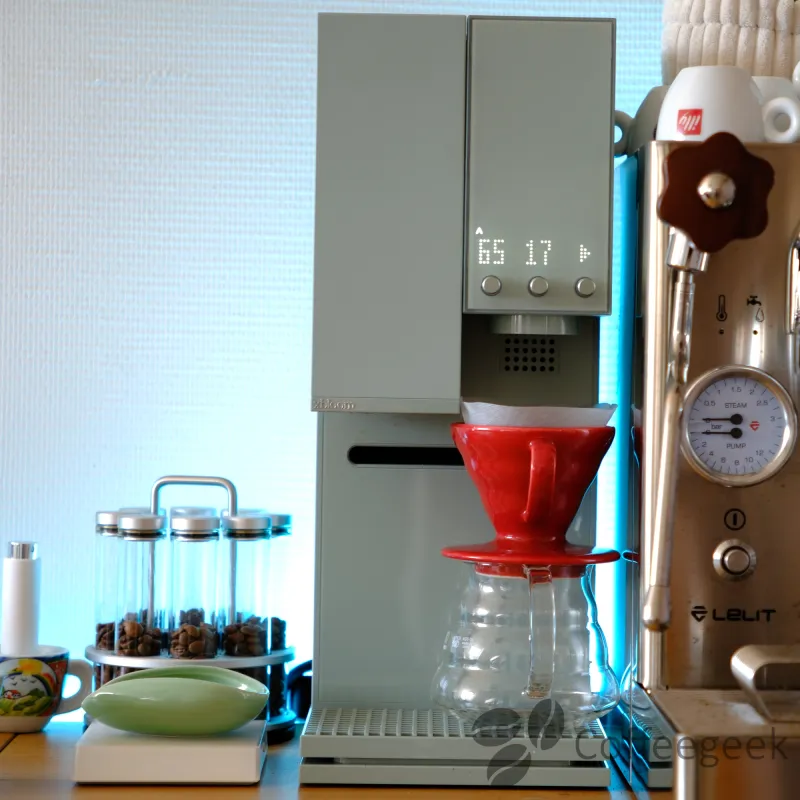
The 48mm conical burr grinder is one of the key components of the xBloom Studio. With its 80 grind settings and adjustable speed, it promises precision worthy of dedicated grinders. But does it deliver on its promises?
This machine was sent to me by xBloom. However, my opinion remains completely independent: I say what I think, without compromise.
This article is part of a complete series on the xBloom Studio: presentation, extraction modes, grinder and accessories.
Technical Specifications
| Feature | Detail |
|---|---|
| Burr Type | Stainless steel conical |
| Diameter | 48mm |
| Number of Settings | 80 |
| Gap Between Clicks | ~18.75 microns |
| Speed | Adjustable from 60 to 120 RPM |
| Measured Retention | < 0.3g |
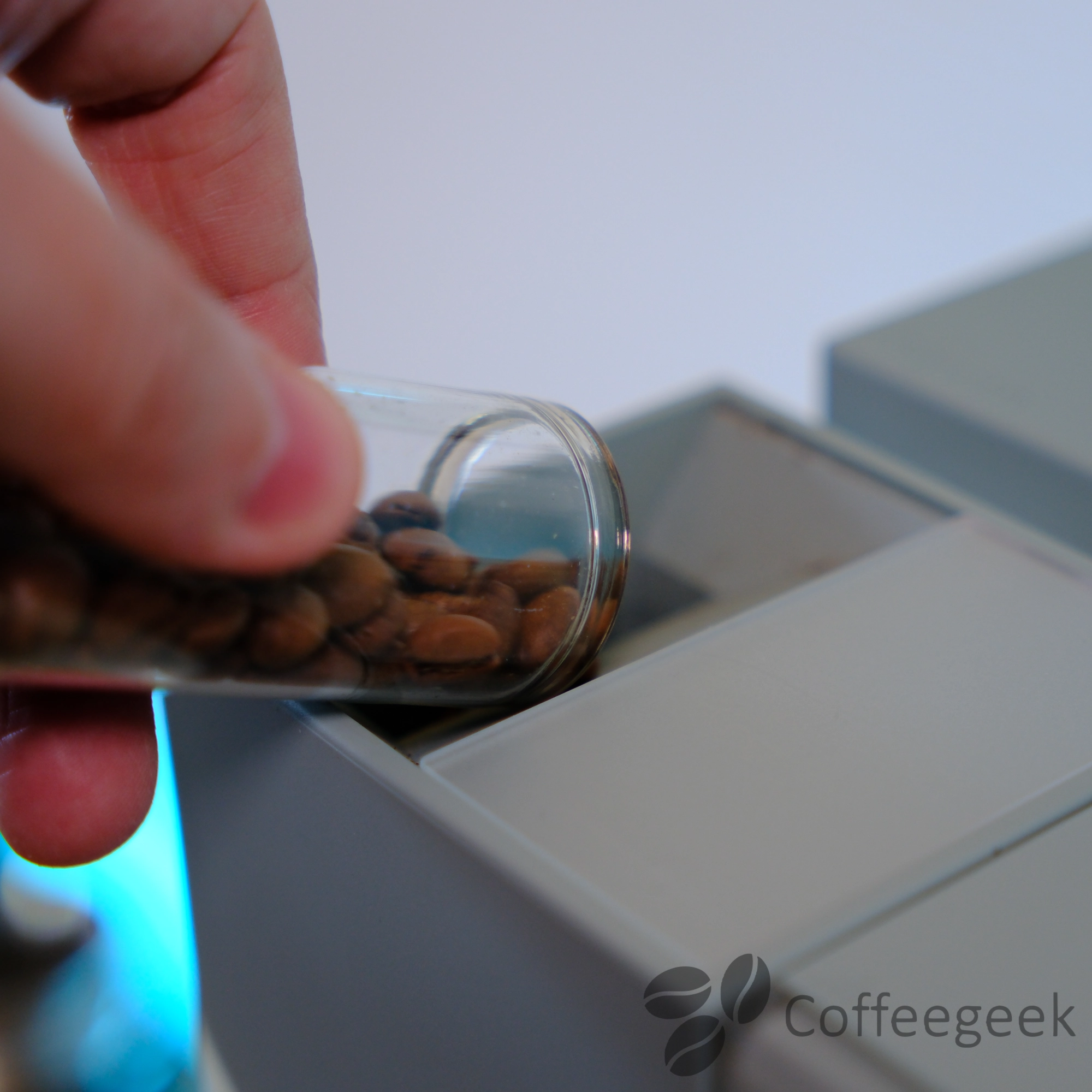
Recommended Grind Ranges
The grinder covers a wide spectrum, from espresso to french press:
Recommended settings:
- Espresso1 to 15 clicks
- Aeropress15 to 40 clicks
- Pour Over30 to 70 clicks
- French Press55 to 80 clicks
These settings are indicative and may vary depending on your coffee and preferences.
On paper, this adjustment range covers the entire spectrum - from espresso to French press. But as we'll discover in the rest of this review, the burrs have clearly been optimized for coarse grinds. The xBloom is a pour-over machine, and its grinder reflects that purpose.
Pour-over performance: excellence
It's in pour-over that the grinder reveals its full potential - and that makes sense, since it was designed precisely for that.
Grind quality
The 48mm conical burrs offer remarkable particle consistency across the entire coarse grind spectrum. I compared visually with several dedicated grinders, and the distribution is excellent.
Here are the coffee and recipe used for the test.
The result in the cup? Aromatic clarity worthy of the best grinders with well-defined notes and homogeneous extraction. Specialty coffees with fruity or floral profiles are particularly highlighted.
I compared the xBloom grinder to several of my high-end grinders: the Millab E01, the Millab M01, and the Timemore S3. In terms of cup results, I place it between the Timemore S3 and the Millab E01: grind consistency, aromatic definition and cup clarity clearly in the high-end range for pour-over. An impressive performance for a grinder integrated into an automatic machine.
Espresso performance: capable but not specialized
It's a question many people ask: can the xBloom Studio grinder grind fine enough for espresso?
The short answer: yes
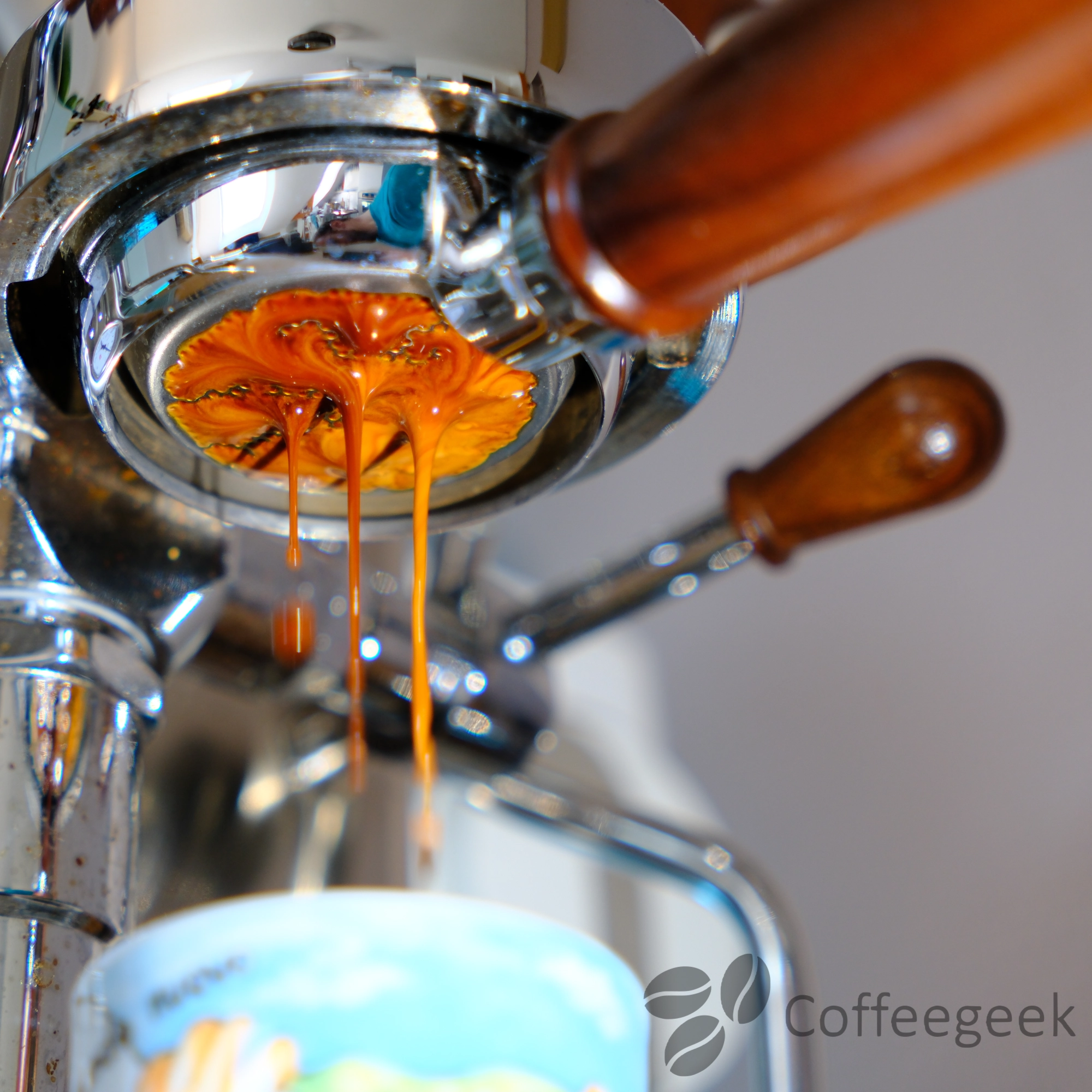
With its 80 settings and a gap of 18.75 microns between each step, the grinder goes fine enough to produce a grind suitable for espresso. I tested it with my espresso machine, and the results are convincing.
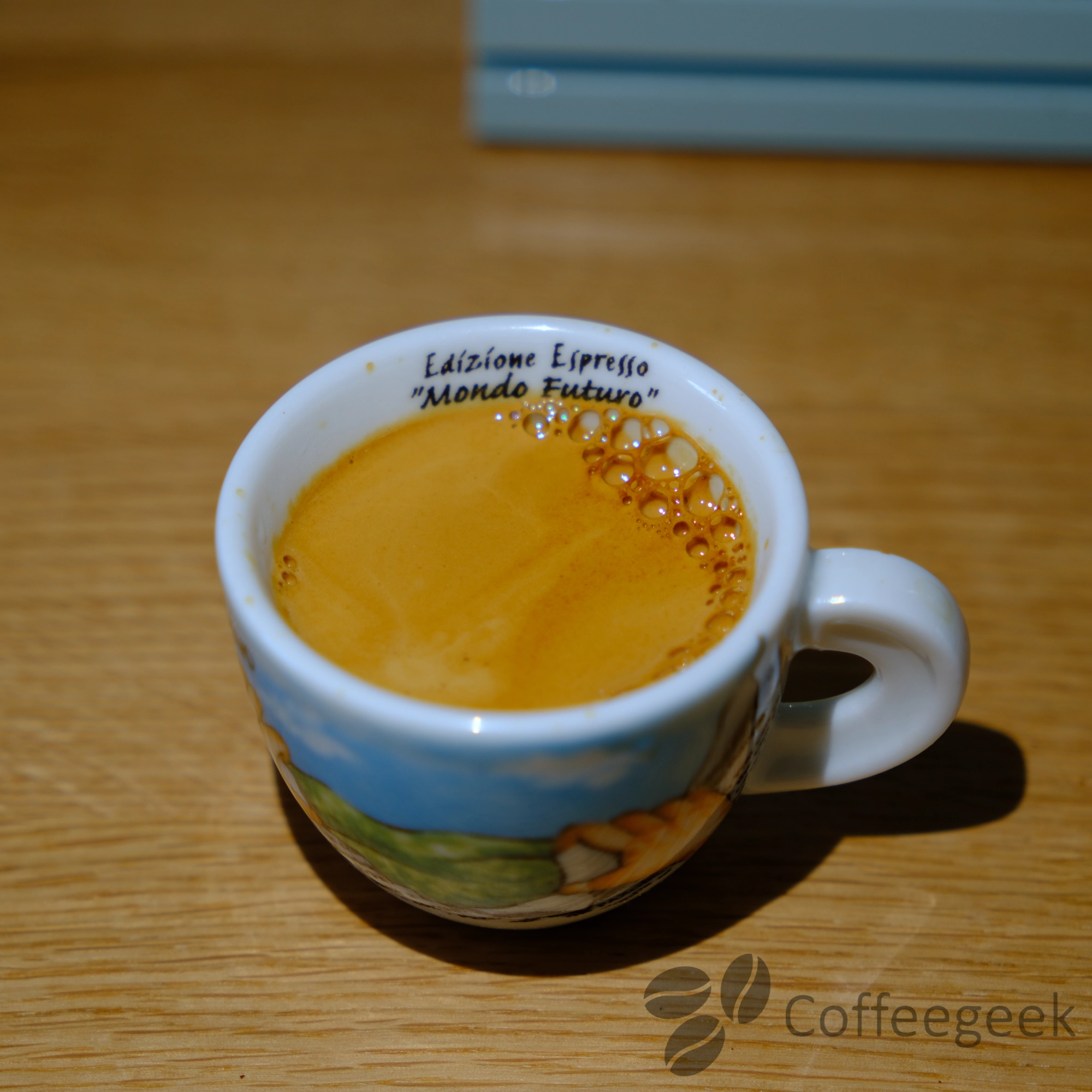
Flavor profile in espresso
The result in the cup shows a profile that is slightly more acidic than what you would get with a dedicated espresso grinder. This makes sense: the xBloom Studio's conical burrs are optimized for pour-over, which favors clarity and acidic notes.
The magnetic dosing cup
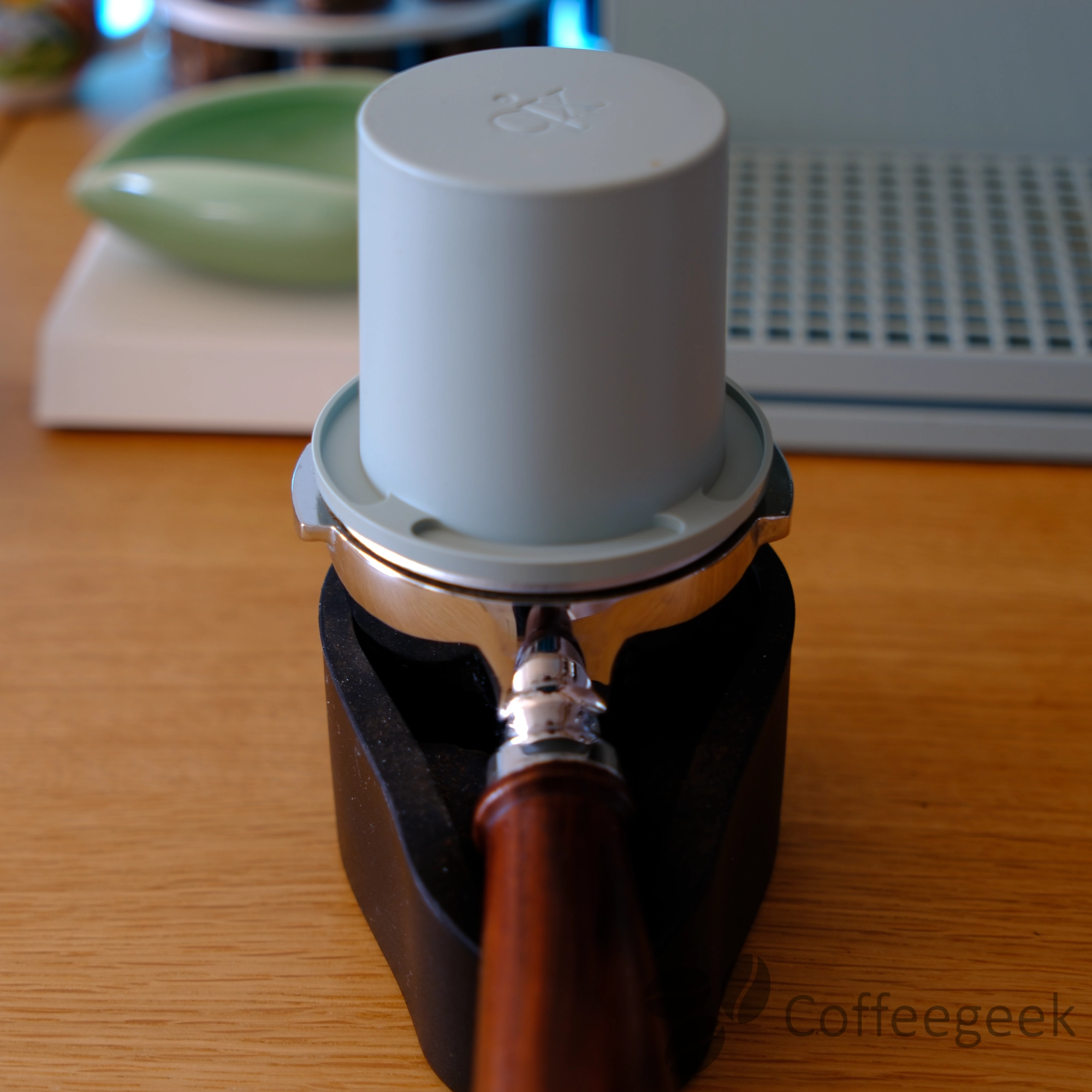
A well-thought-out detail: the magnetic dosing cup provided with the machine fits perfectly with 58mm portafilters. The transfer of grounds to the portafilter is clean and without loss.
The xBloom Studio grinder is not a dedicated espresso grinder, but it does an honorable job for those who occasionally want to prepare an espresso. In comparison, my grinders fully dedicated to espresso deliver a more complete result in the cup - the Timemore S3 ESP for example delivers a denser extraction and a more defined profile. For daily espresso use, a dedicated grinder remains preferable. But as a backup grinder, the result is there.
Retention: an excellent result
I measured the grinder's retention over several cycles:
| Measurement | Retention |
|---|---|
| Measurement 1 | 0.28g |
| Measurement 2 | 0.31g |
| Measurement 3 | 0.25g |
| Average | < 0.3g |
Less than 0.3g of retention after grinding - an excellent result for an integrated grinder. The anti-static technology helps limit the accumulation of grounds in the chute.
Rotation speed: the impact on flavor
An interesting feature: the rotation speed is adjustable between 60 and 120 RPM.
With conical burrs, the ideal is not to grind too fast: the higher the speed, the more friction generates heat, and heat alters the volatile aromas even before extraction. The 60 to 120 RPM range offered by the xBloom is therefore perfectly calibrated - we end up with the same speeds as when grinding by hand with a manual grinder.
Getting as close as possible to manual methods. Slow grinding at the speed of a hand grinder, controlled pours like an artisanal pour-over - the xBloom automates without sacrificing what makes specialty coffee quality.
Using an external grinder
An often underestimated feature: it is possible to disable the integrated grinder of the xBloom Studio, either from the app or directly on the machine by turning the adjustment dial after selecting the recipe.
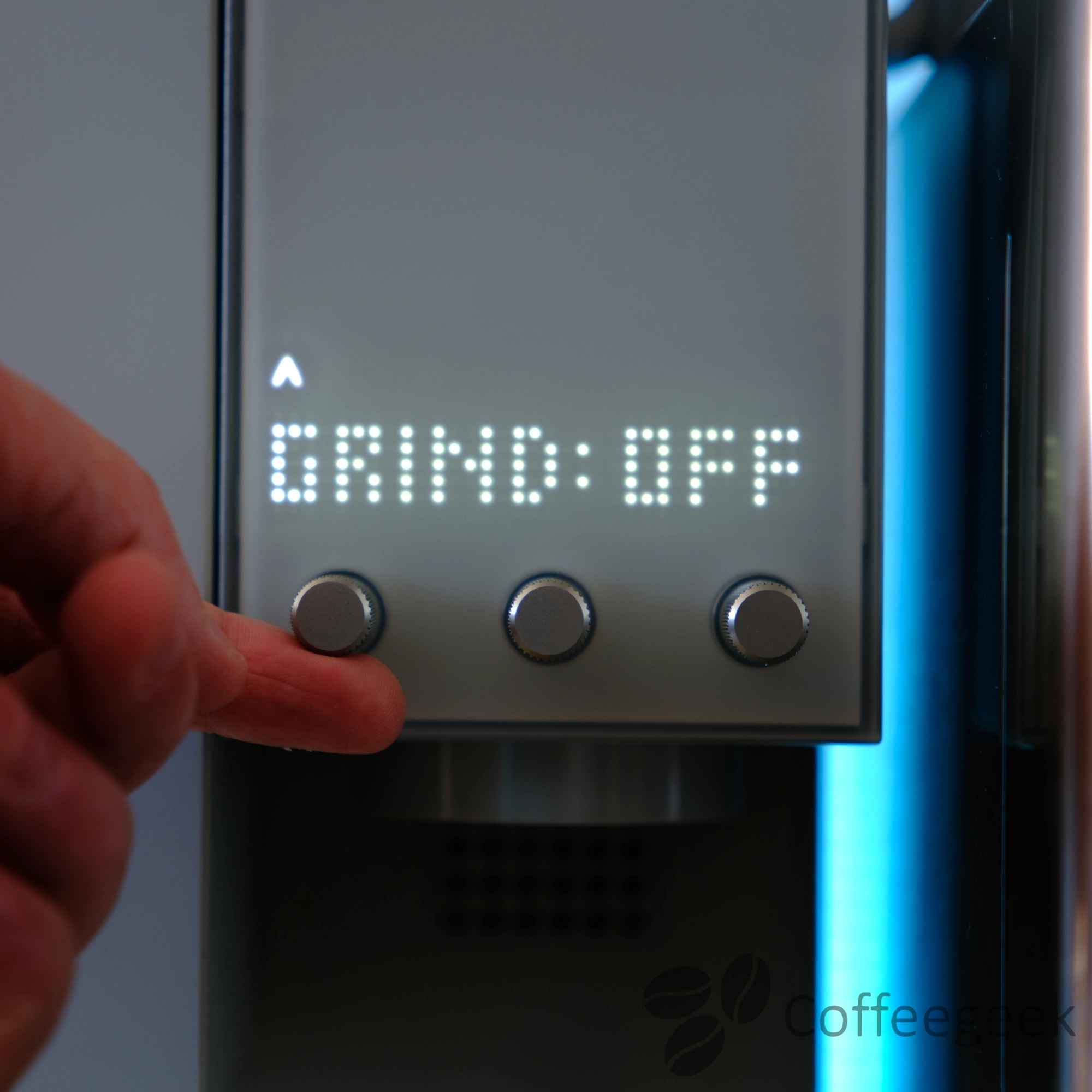
The big advantage? Being able to connect any other grinder to the machine. Grinders are a bit like camera lenses: each has its own characteristics, its rendering, its specialty. Replacing a grinder fundamentally changes the aromatic profile in the cup.
Personally, I often use this option - I must say I have a nice grinder collection. It allows me to perform extractions with different grinders while keeping a strictly identical recipe.
This is how I test grinders on this blog: the xBloom standardizes the recipe and the extraction - I only change the grinder. This makes it possible to clearly perceive the aromatic differences from one grinder to another, with a rigorously identical protocol each time.
Grinder Maintenance
Maintenance is simple and infrequent:
Regular Cleaning
- A quick brush (included) in the chute from time to time
- The anti-static technology limits accumulation
Deep Cleaning
For a more thorough cleaning, you can use Puly Grind or equivalent. Run a few grams through, then purge with coffee.
It is also possible to disassemble the grinder for a complete cleaning. That said, having had the machine for about two months at the time of writing this review, I haven't done so yet - passive cleaning has been sufficient so far.
Calibration
If you notice imprecision in the grind (coffee flowing too fast or too slow for a given setting), the machine offers an automatic calibration accessible from the app.
Conclusion
The xBloom Studio grinder perfectly fulfills its primary mission: producing an excellent grind for pour-over.
Its 80 settings, its low retention, and its adjustable speed make it a quality component that rivals dedicated grinders. The espresso option, while not optimal, adds welcome versatility.
It's one of the elements that convinced me that the xBloom Studio represents an excellent value for money - the grinder alone would be worth €350-400 as a standalone equivalent.
- 80 fine settings - 18.75 microns per click
- Retention < 0.3g - excellent for an integrated grinder
- Adjustable speed from 60 to 120 RPM
- Pour-over result comparable to dedicated grinders
- Compatible with an external grinder
- Complete cleaning requires disassembly
Going further
This article is part of a series on the xBloom Studio:
xBloom Studio: Why This Pour-Over Machine Won Me Over
xBloom sent me their coffee machine. But honestly, if they hadn't, I think I would have ended up buying it myself. Here's why.
Read the article →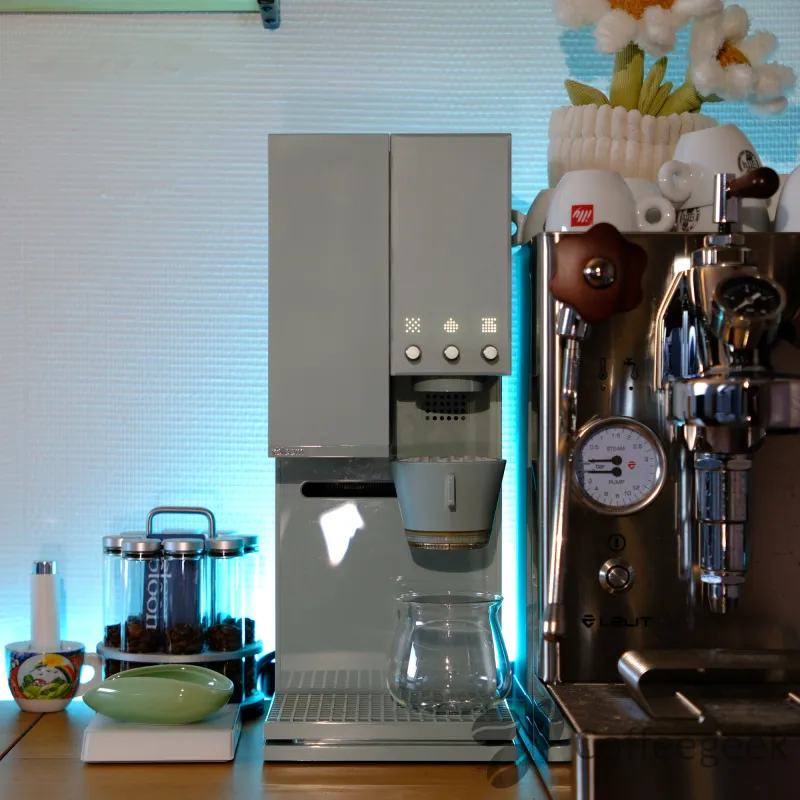
xBloom Studio: Full Review of the Pour-Over Machine
Discover our complete review of the xBloom Studio, an all-in-one automatic coffee machine combining grinder, scale, and brewer. With its 80 grind settings and three brewing modes, it promises specialty coffee worthy of a barista.
Read the article →