

I tested the original Wacaco Exagrind a while back. I liked it, but it sat clearly behind the Timemore C3 ESP Pro, mainly because of its 33 µm step per click, too coarse to fine-tune an espresso. So when Wacaco released the "Pro-E" (the E stands for External adjustment), I wanted to see whether it fixed those shortcomings.
It did. The Wacaco Exagrind Pro-E keeps the compact design of the original and takes on my main complaint, for around $99.90 / €109.90. Wacaco sent me this unit for testing, with no control over the content of this review.
Design and Ergonomics
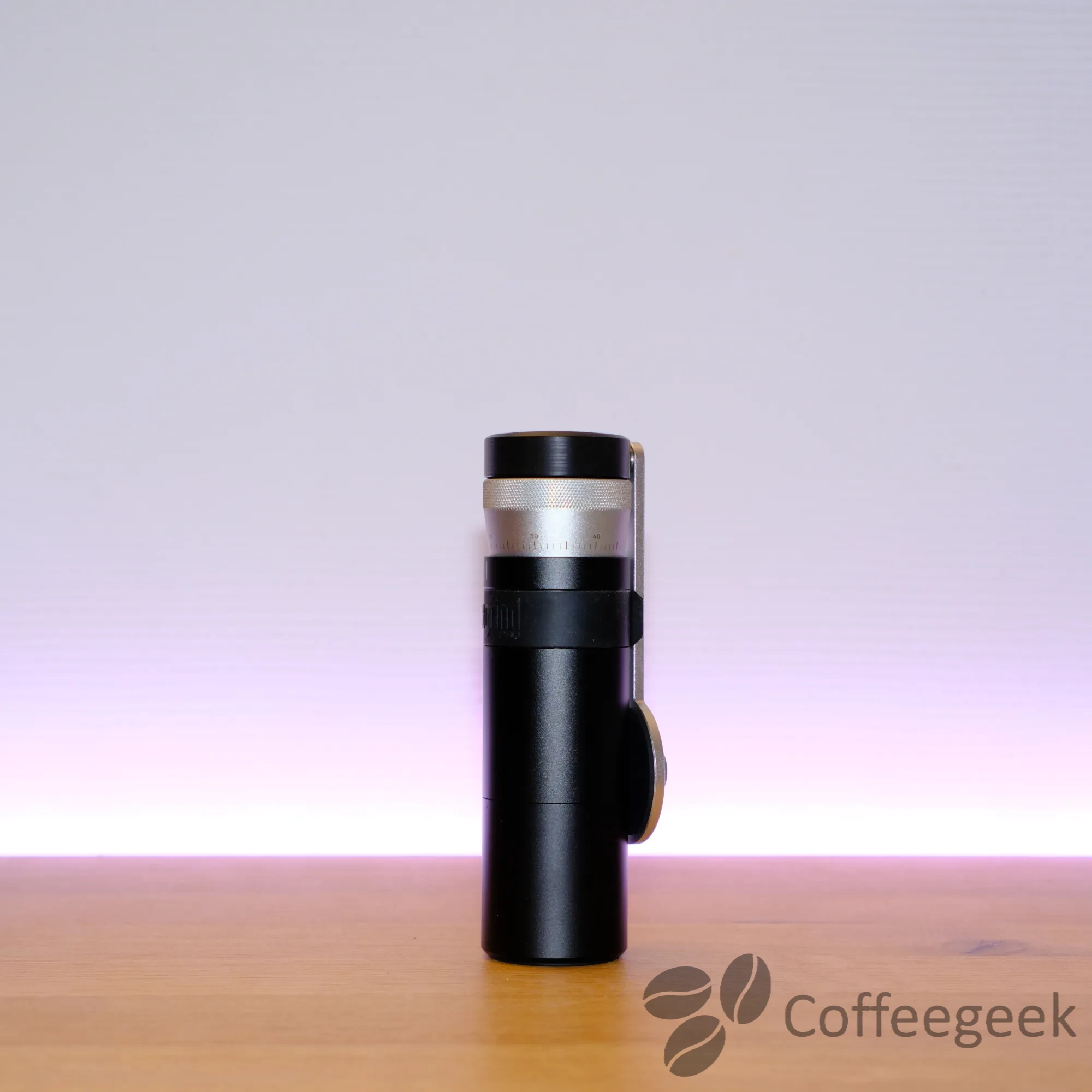
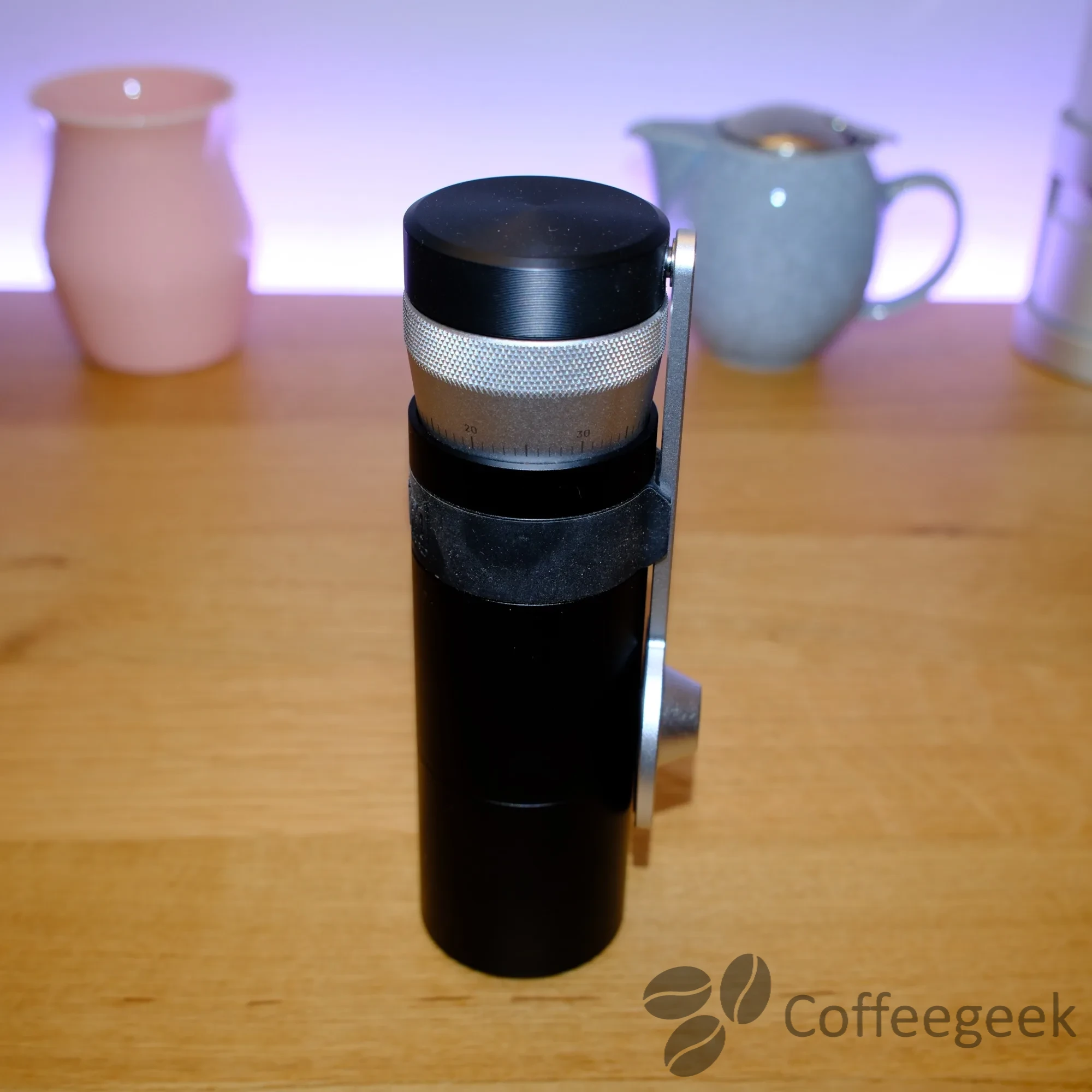
The Pro-E feels more substantial than its predecessor. The body is a CNC-machined aluminum unibody of 180 x 64 x 50 mm for 550 g, against 464 g and 143 mm for the original Exagrind. It is taller, heavier and more premium in the hand.
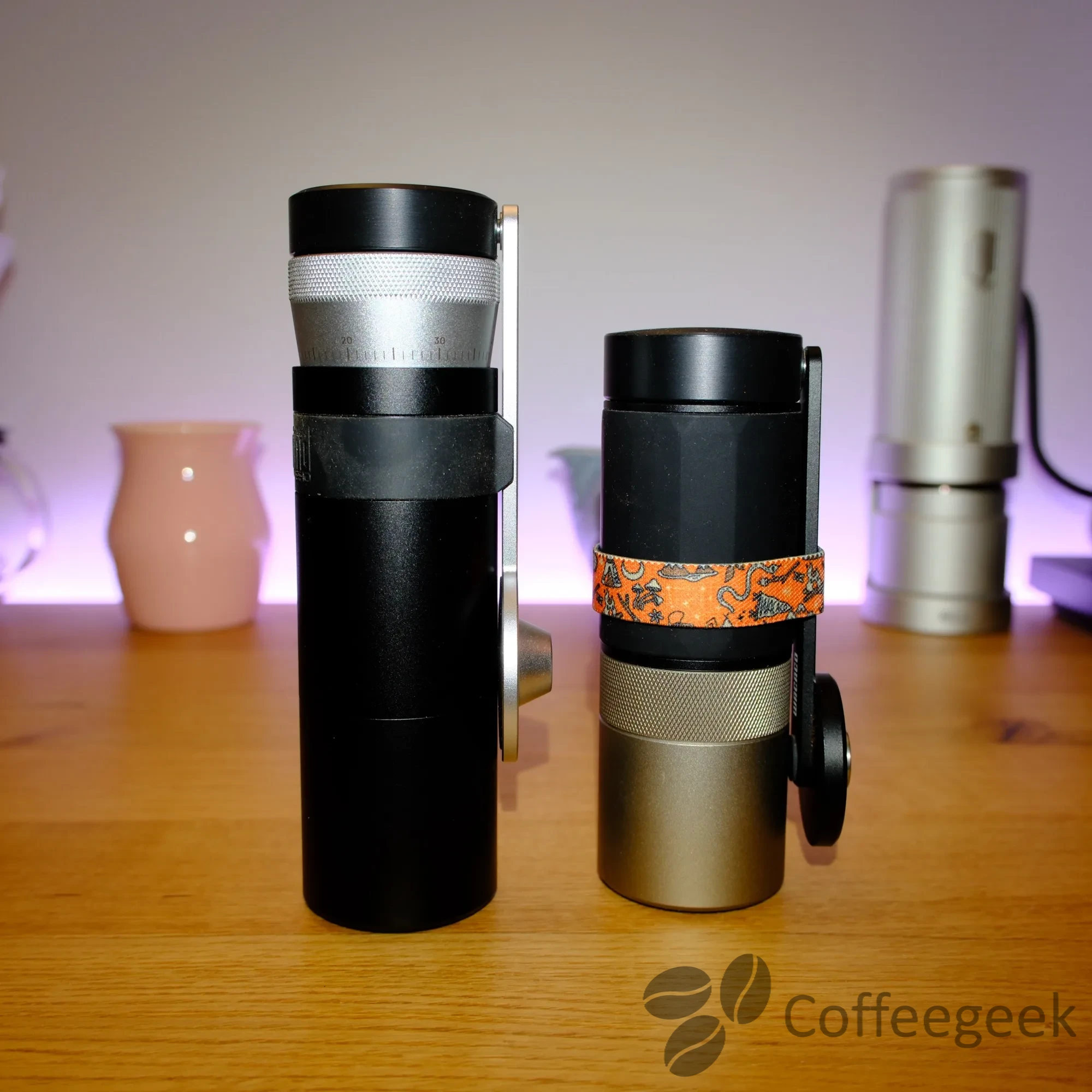
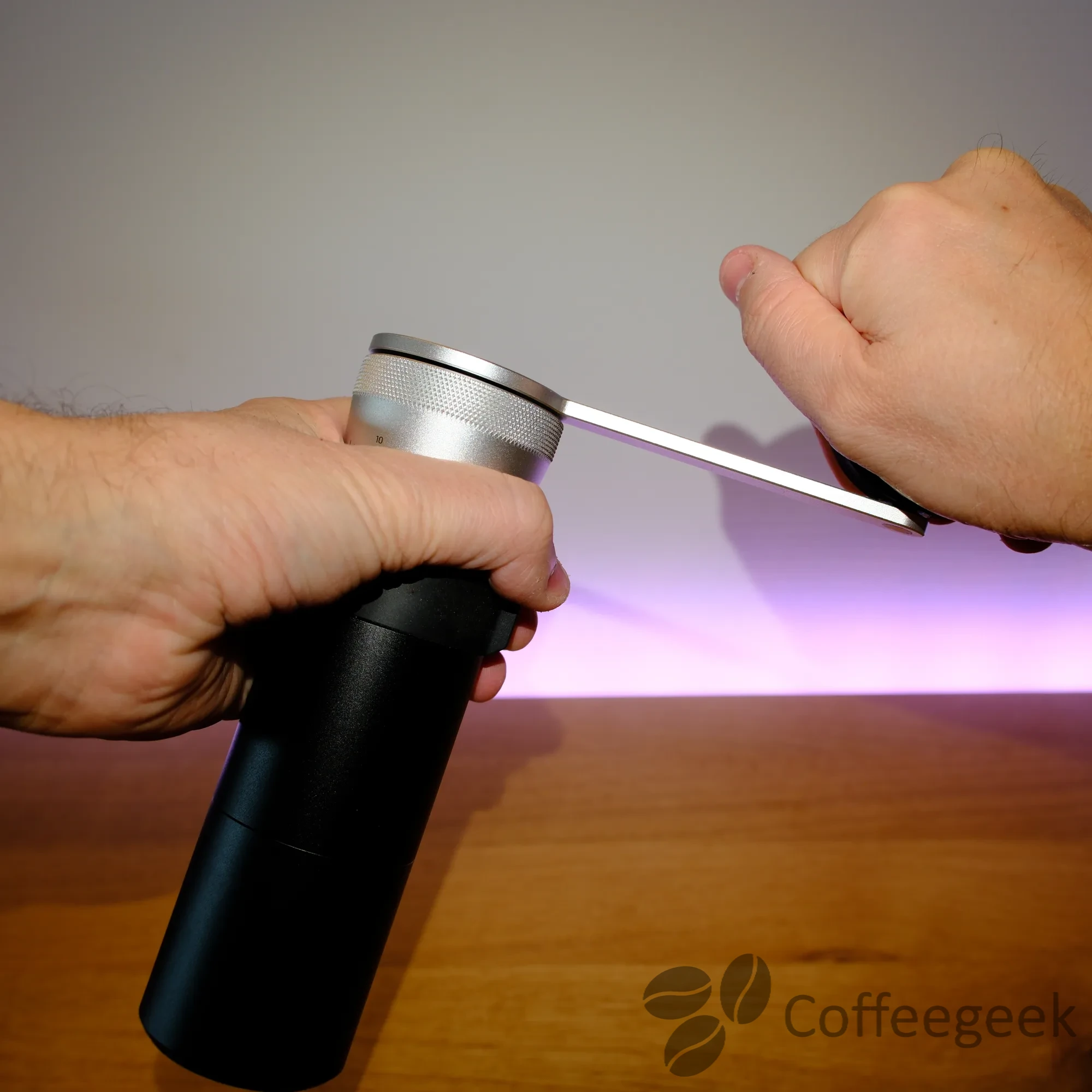
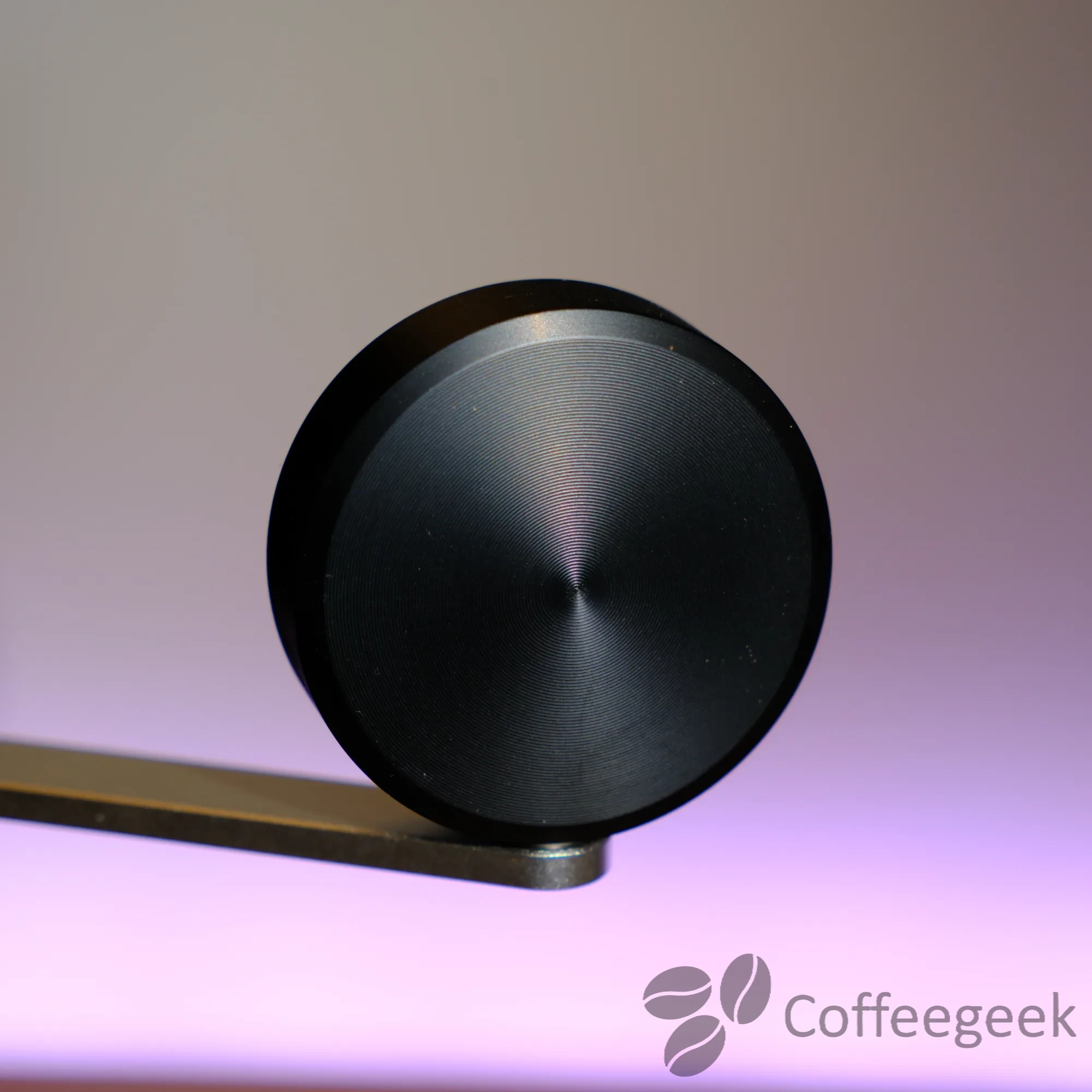
The upper body is wrapped in a textured silicone sleeve that gives a good grip. Grinding for espresso takes some effort, because of the torque. In the hand, it feels just like the original Exagrind. The weak point is the flat knob on the crank: it is less comfortable than the knobs on competing brands' grinders, especially for espresso, where gripping takes more effort.
The hopper now takes 24 g of beans, against 20 g on the original. It is a small but welcome change if you grind for two cups.
A Travel Grinder First
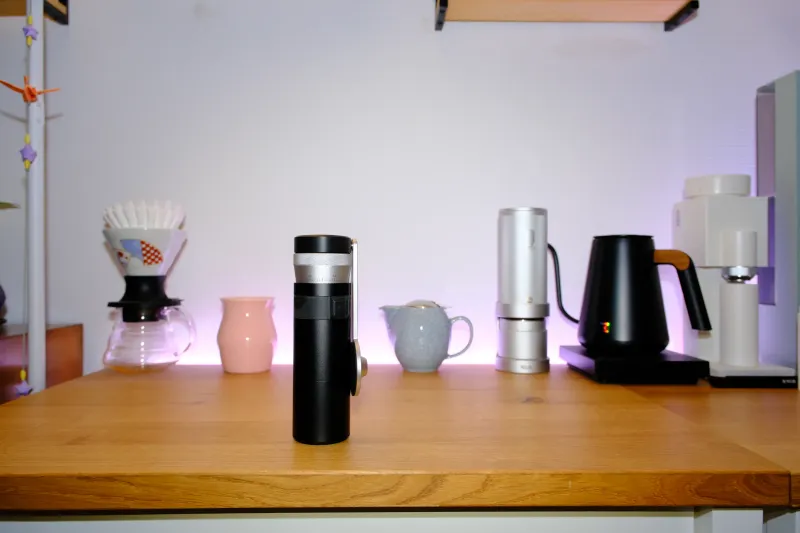
Wacaco kept the travel system of the first Exagrind: the crank folds flat against the body, and its knob is magnetic. As far as I know, it is still the grinder whose crank stows closest to its body, taking much less room than competitors such as the Timemore C5 ESP Pro or the C3 ESP Pro. Folding the crank also lowers the grinder's centre of gravity, which makes it more stable on the counter. A carrying pouch and a cleaning brush are in the box.
Settings and Precision
This is where the Pro-E earns its name. On the original Exagrind, you had to unscrew the catch cup to reach a dial under the burr: 33 µm per click, 30 clicks per turn, no markings. It worked, but adjusting a hidden dial with grounds on your fingers was never pleasant.
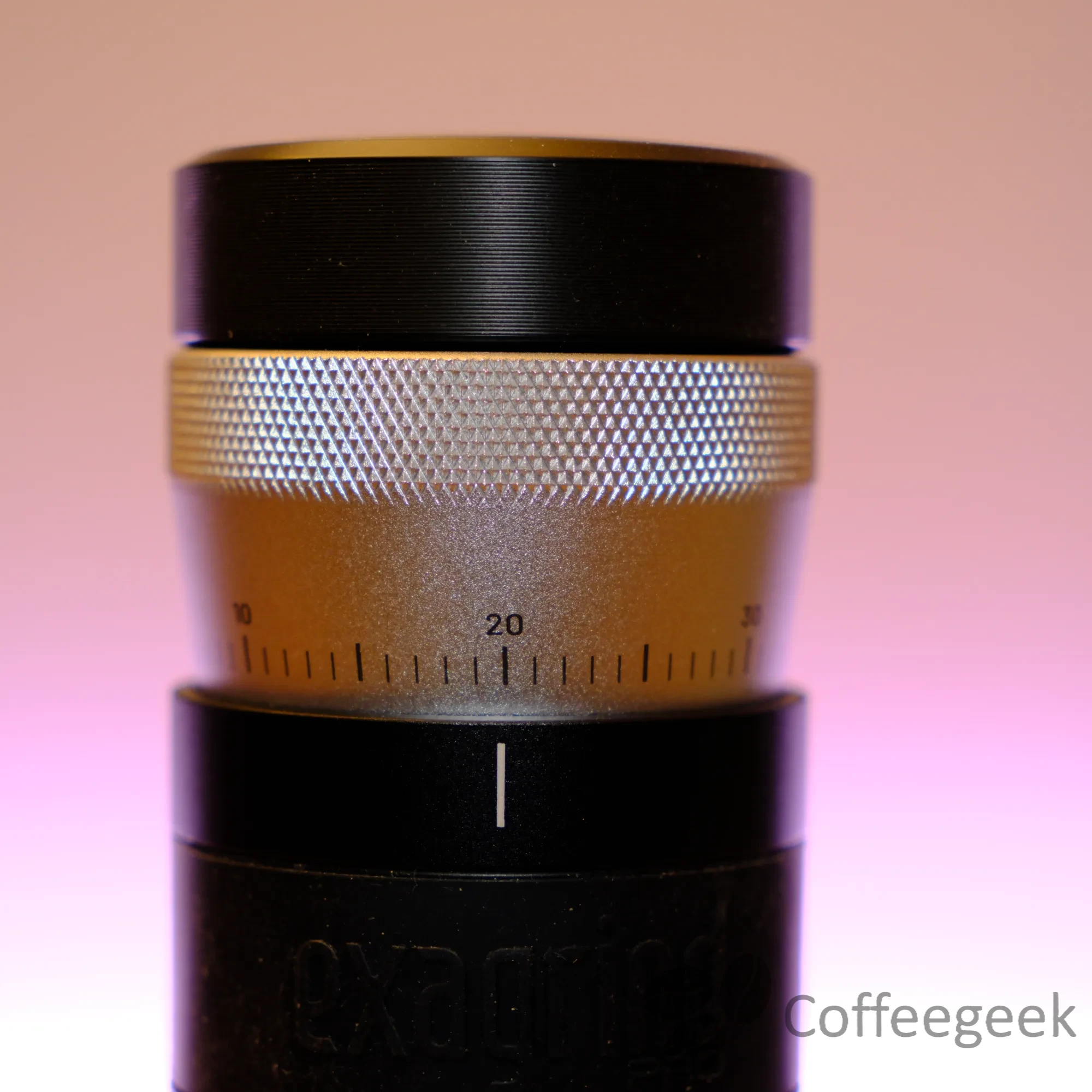
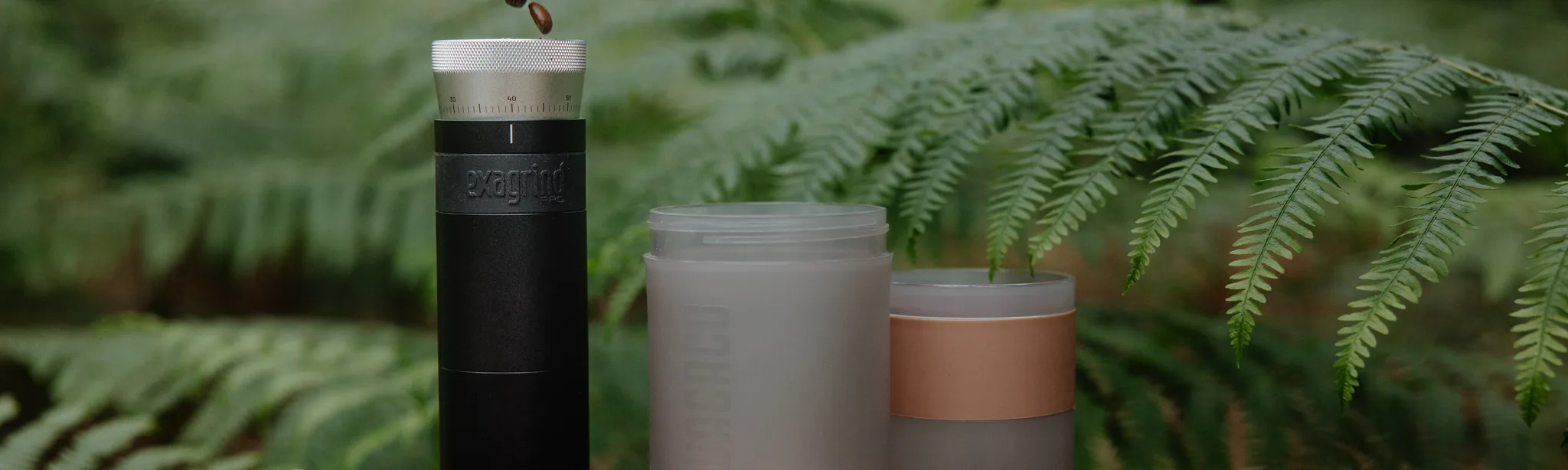
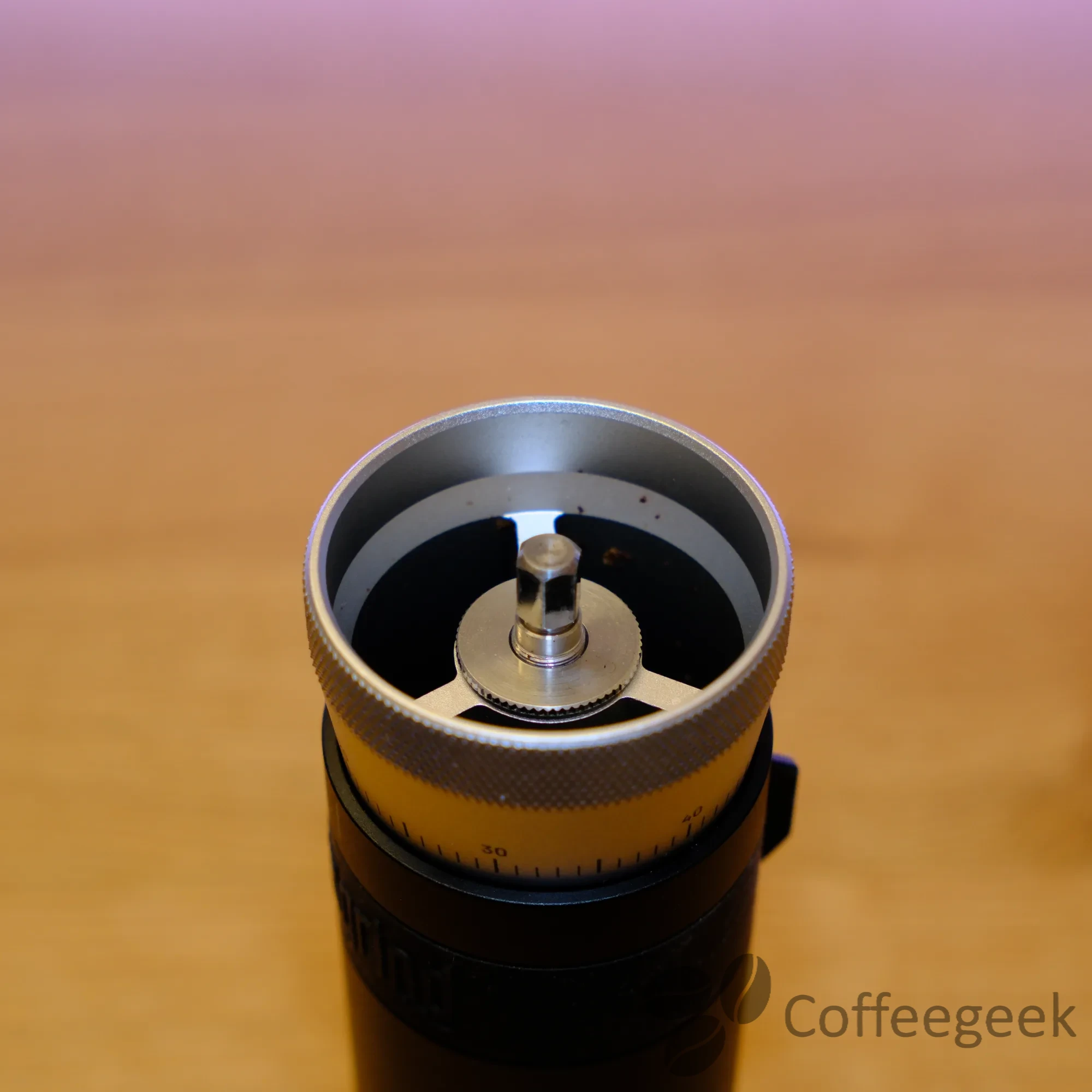
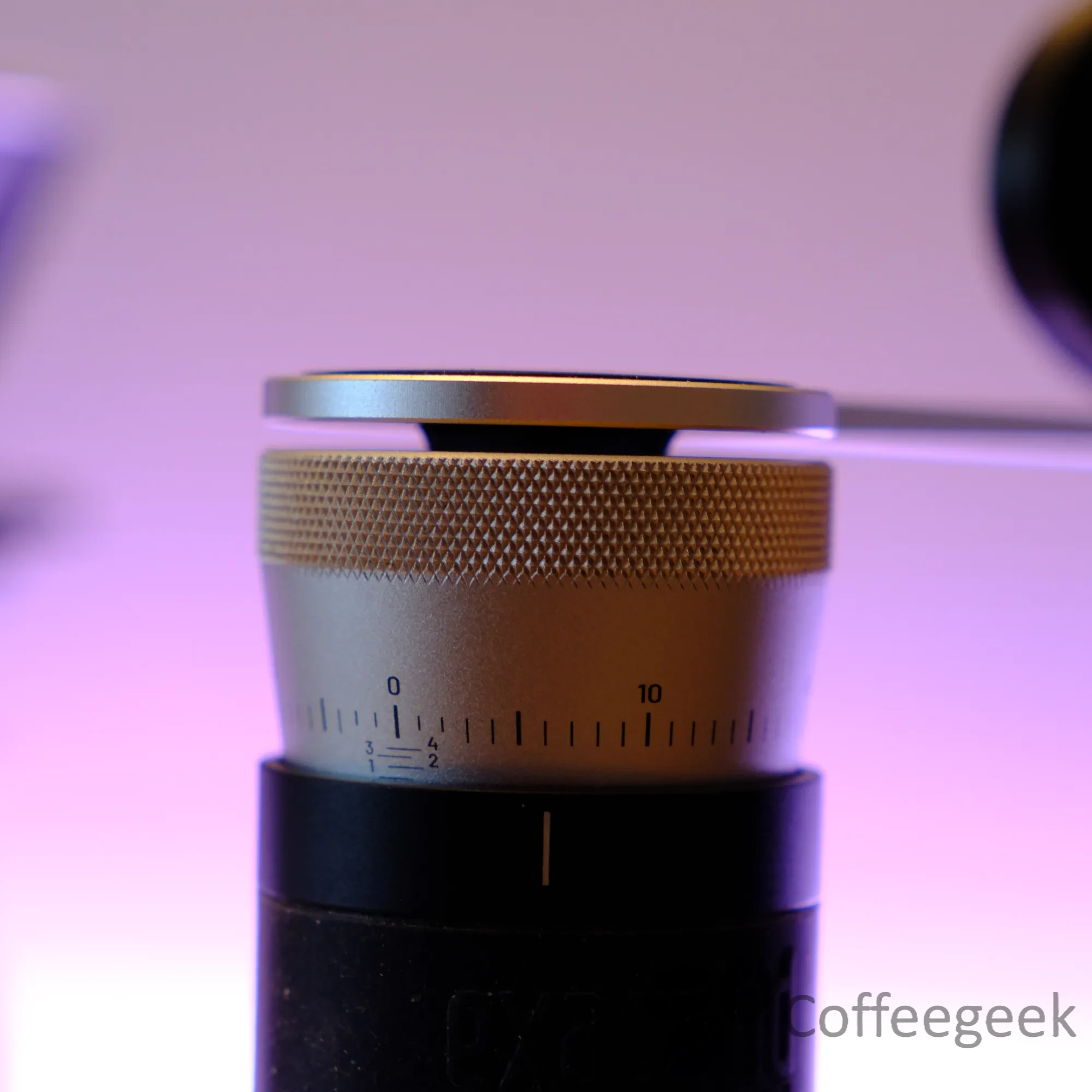
The Pro-E replaces it with a numbered external ring at the top of the grinder. Each click moves the burr by 14.5 µm, with 69 clicks per turn and 207 settings in total. That is more than twice the resolution of the original, and you feel it when you chase a shot time click by click.
These settings are indicative and may vary depending on your coffee and preferences.
The ring sits on the outside, so you can change the setting without unscrewing anything or touching the burr chamber. It saves time when you dial in a new bag of beans.
The Heart of the Grinder: 38 mm Conical Burrs
Under the ring sits a set of 38 mm 420 stainless steel conical burrs, on a stainless steel shaft held by dual ball bearings. There is no lateral play, and the rotation stays smooth even at espresso settings.
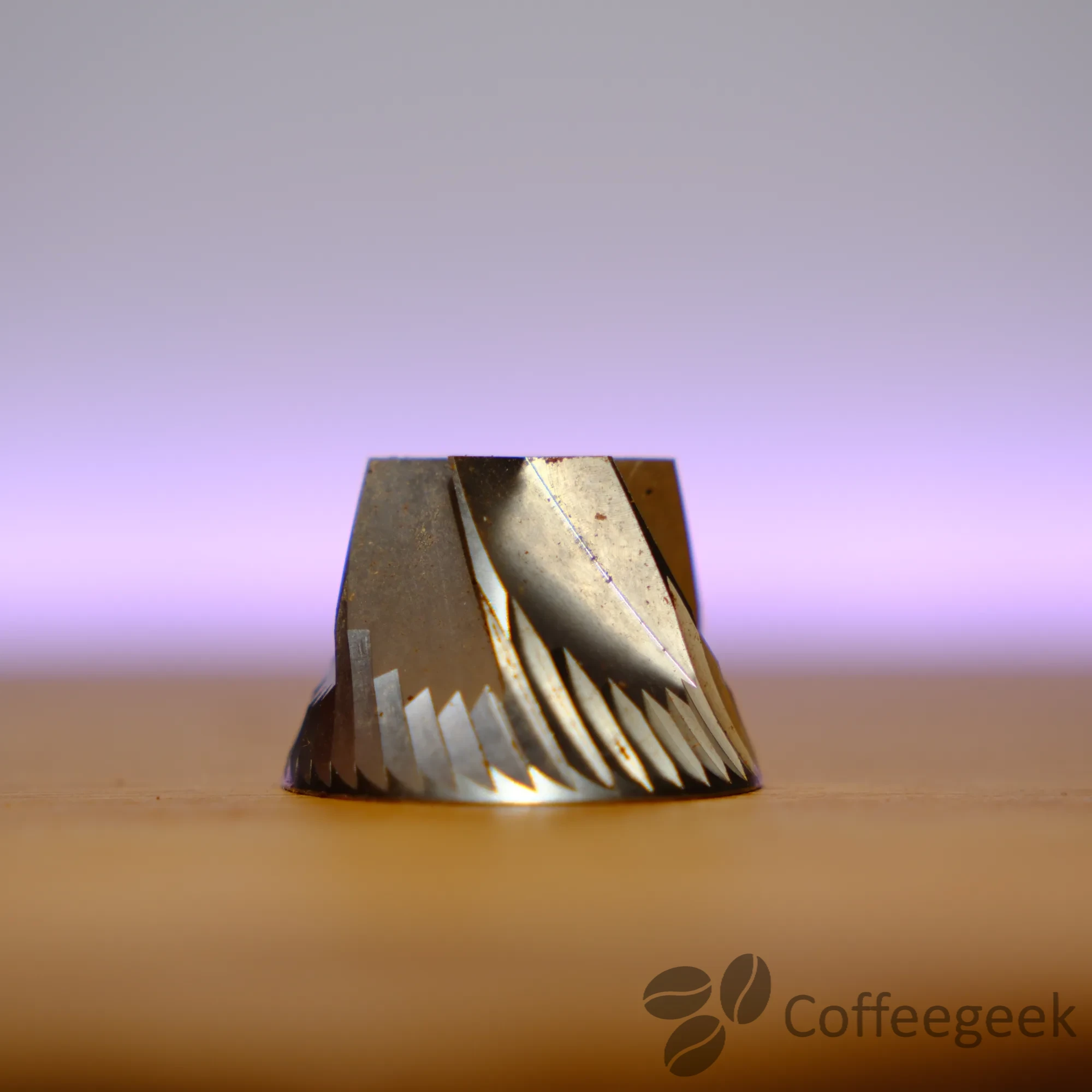
The grind is even across the range for a hand grinder at this price. I did not notice the excess fines that smaller burr sets often produce, and the absence of wobble shows at the fine end of the range.
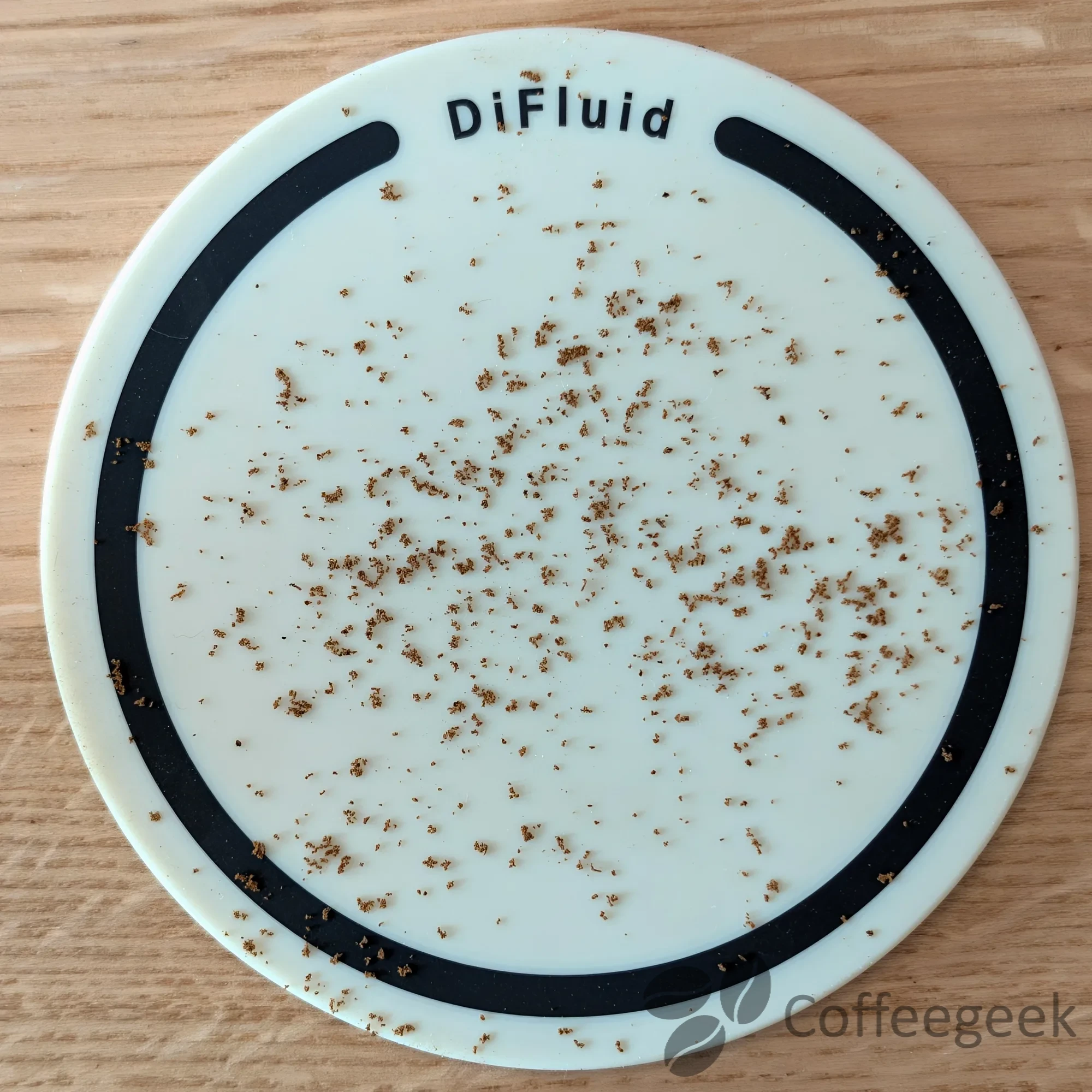
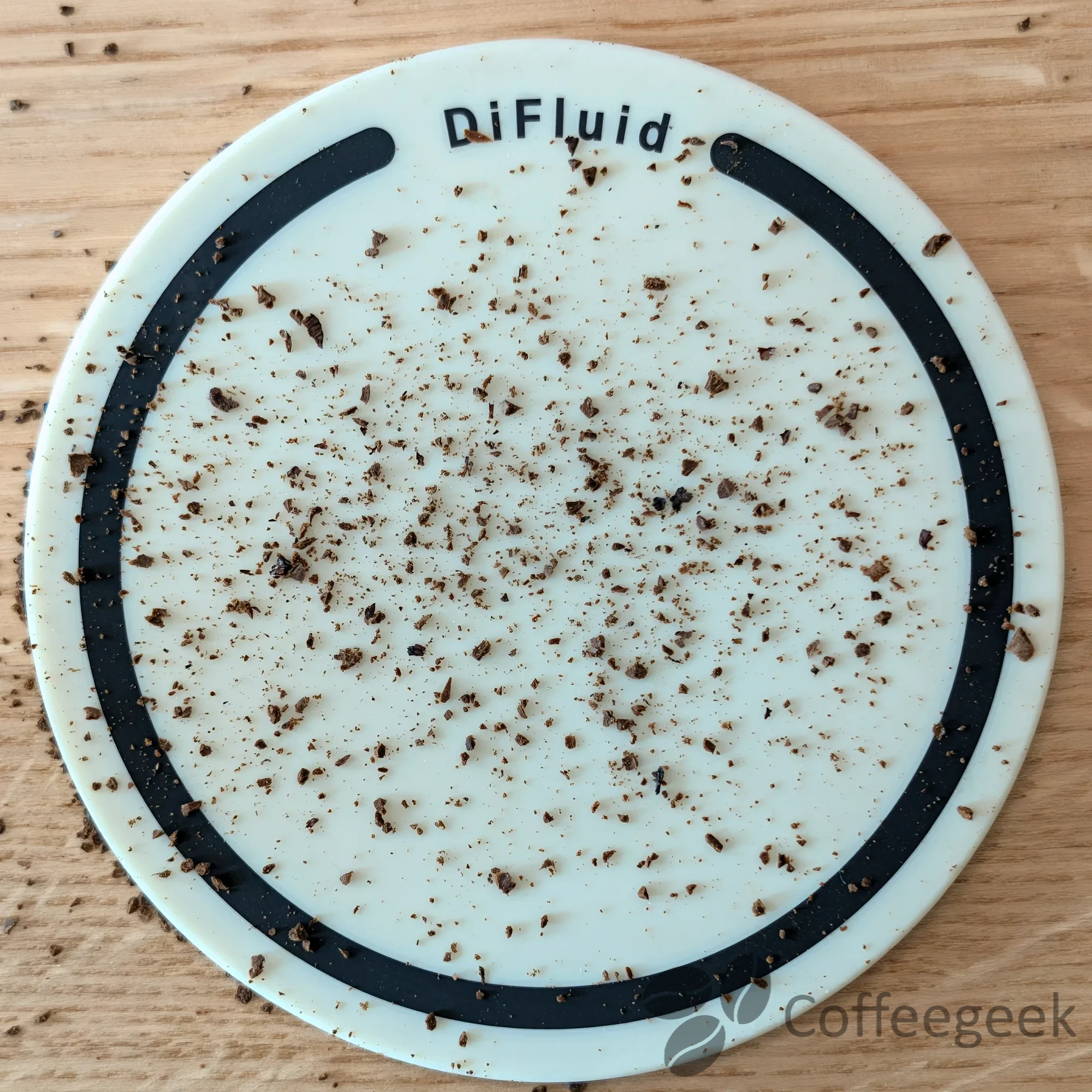
These two settings only show what the grinder produces. They are not the settings I use for my extractions, which are given in the tests below.
The Catch Cup
The aluminum catch cup screws onto the base and holds a full 24 g load. Inside, there is no lip, so the ground coffee pours into a portafilter or a filter with no retention.
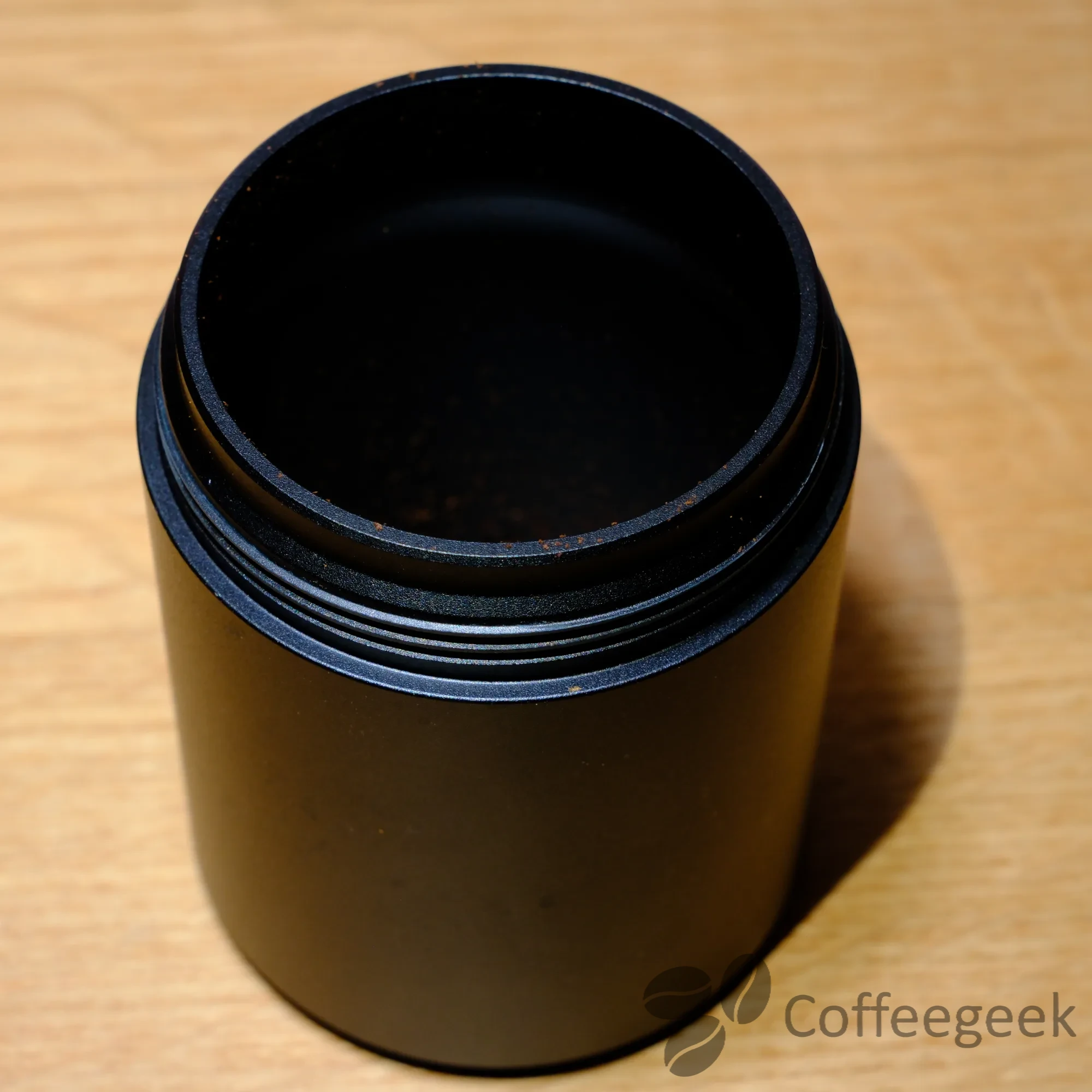
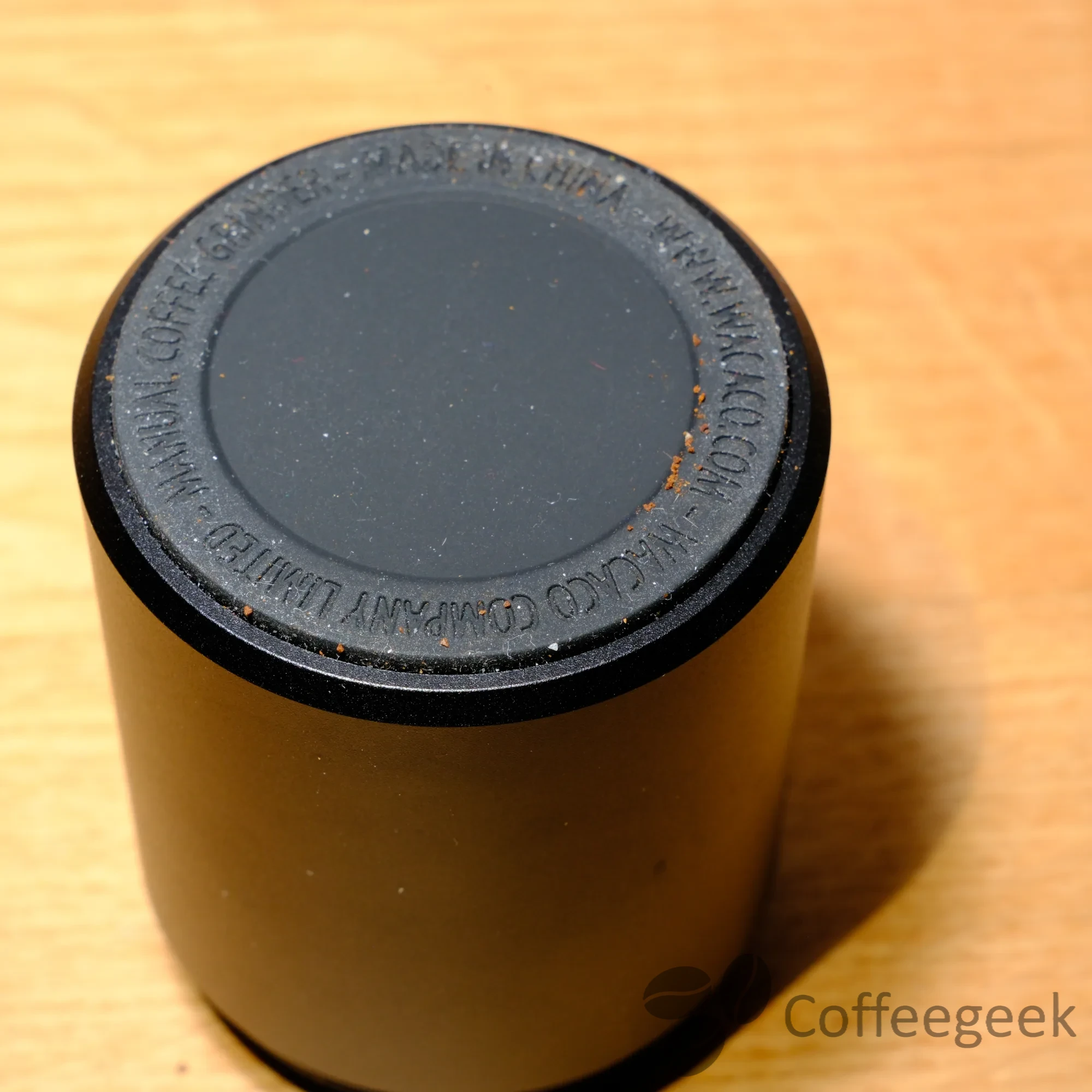
The underside of the cup is coated in silicone: it protects the counter and keeps the grinder from sliding when you set it down between two turns.
Practical Tests
I used the Pro-E with three very different brewing methods to see where it shines and where its limits are.
Travel Immersion with the Wacaco Prestina
The Wacaco Prestina is a travel coffee maker: an immersion brew, then a pressure extraction you push with the drinking cup itself. It is the natural travel partner for the Pro-E. The Exagrind Pro-E is in fact my go-to grinder for travel: it takes up less room and is lighter than the other models, and it pairs well with Wacaco's gear for brewing.
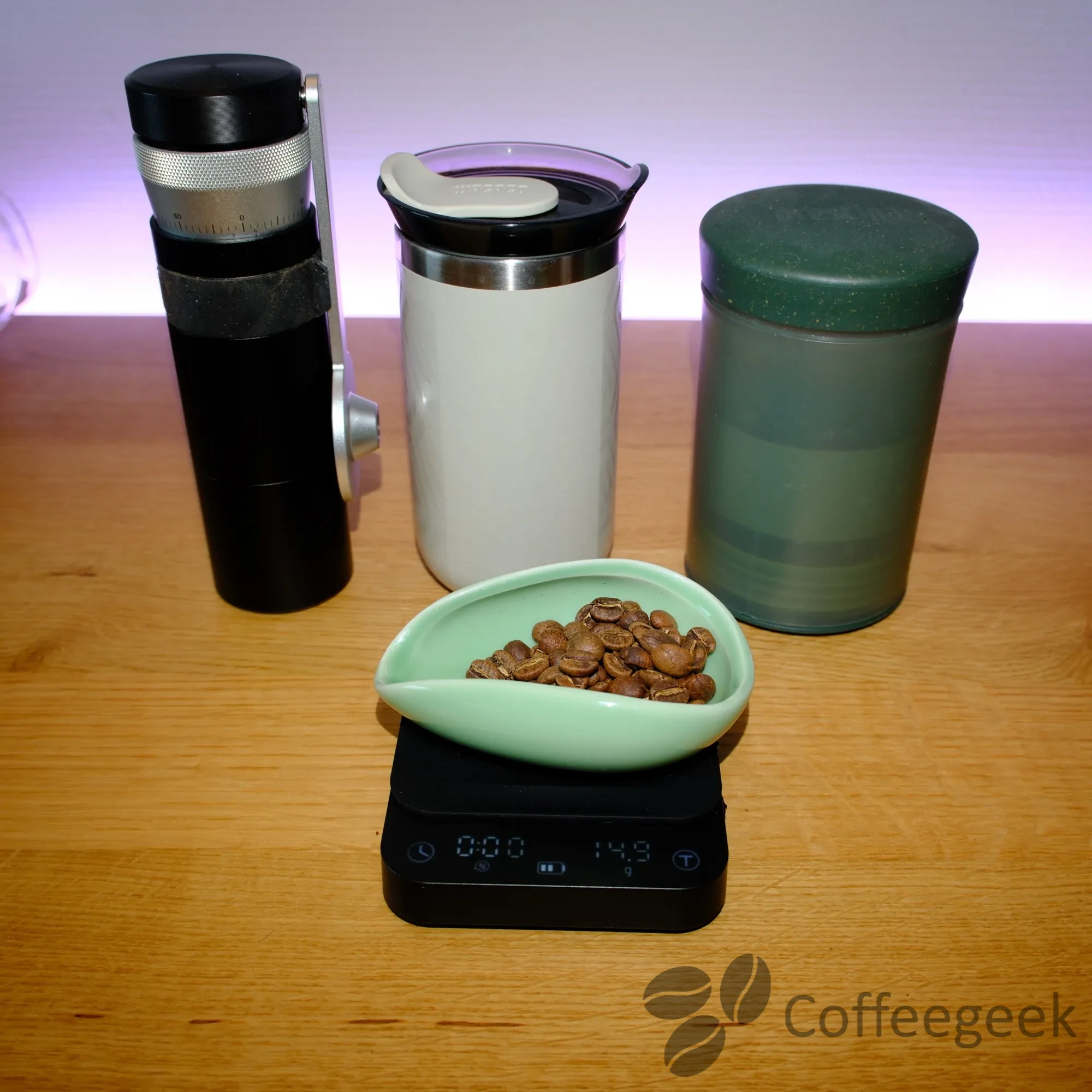
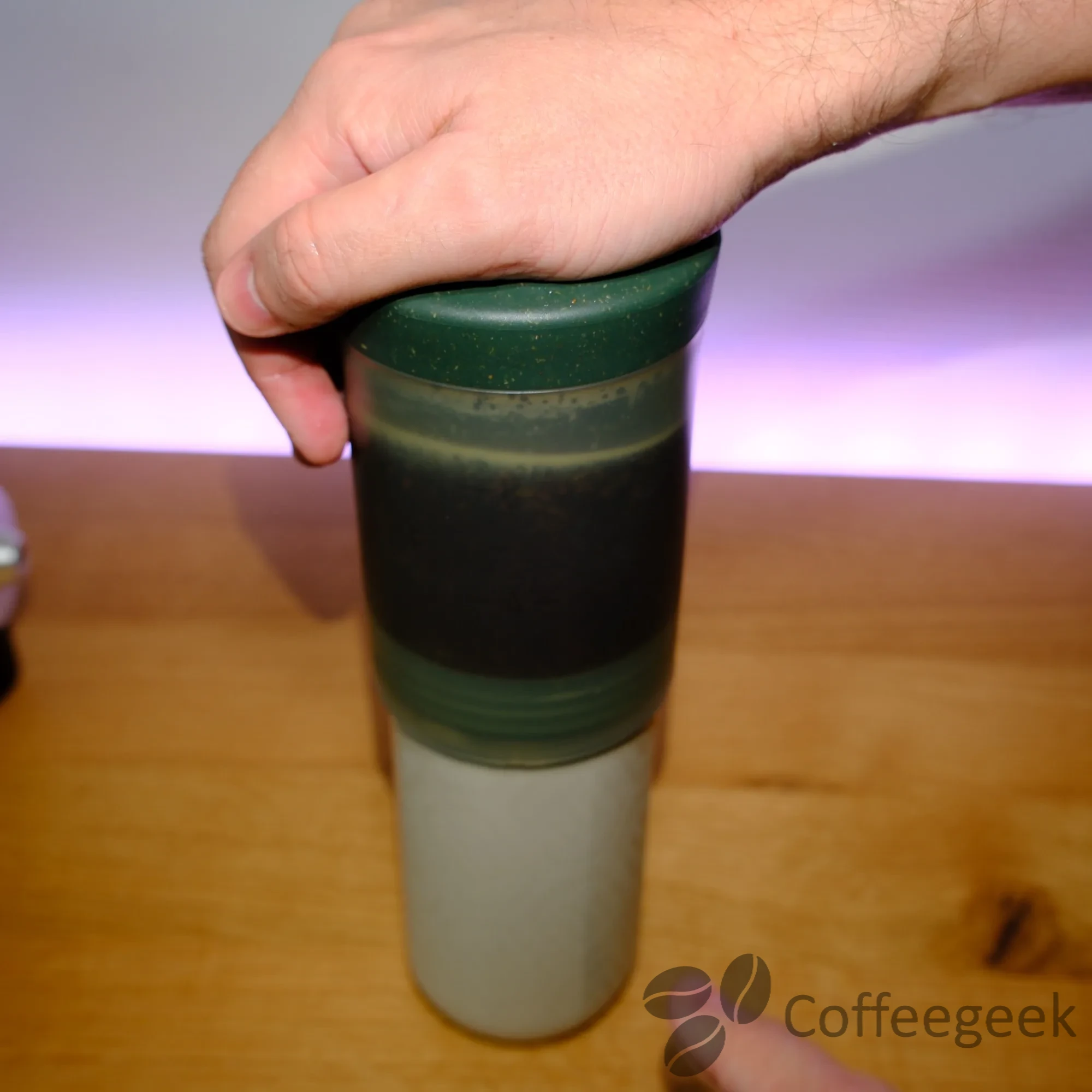
For the demo, I brewed in the Wacaco Prestina and served the coffee in a Wacaco Octaroma Lungo insulated mug. I used 16 g of coffee with a medium grind, water at 92 °C, a short steep, then pressed through the cup. The coffee was round, naturally sweet and not bitter at all, exactly what you want from a compact travel setup.
Pour-Over with the xBloom
I then used the Pro-E as an external grinder for the xBloom dripper, with the machine handling the pours: 15 g of coffee for 250 ml of water, at a medium pour-over setting.
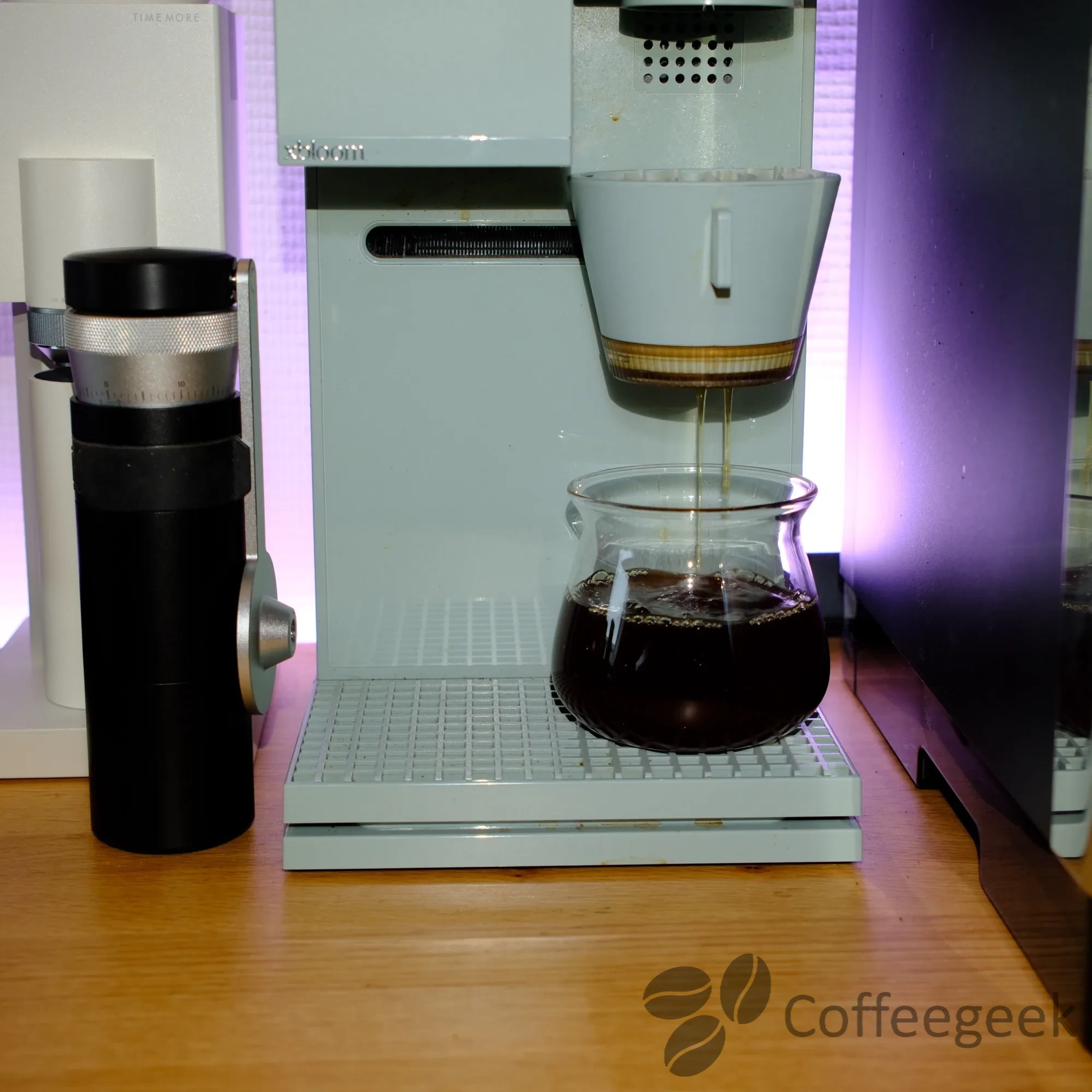
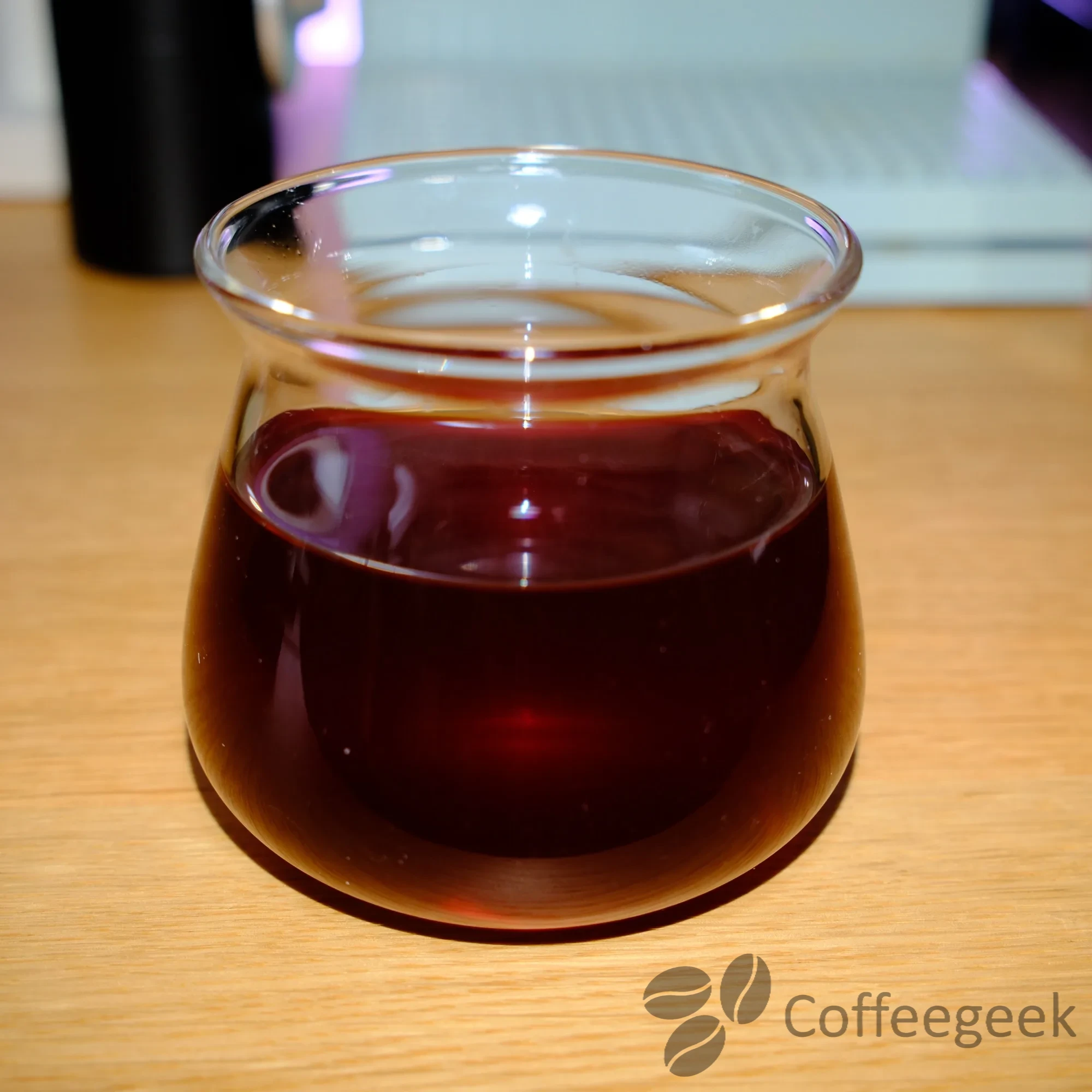
The drawdown was smooth and even, without the slowdown that excess fines usually cause: a sign that the 38 mm burrs cut cleanly. In the cup, the coffee was clean, floral and balanced.
Espresso on the Lelit Mara X V2
This was the real test. The Lelit Mara X V2 is an E61 espresso machine that does not make up for a sloppy grind: too coarse and the coffee gushes through in a few seconds, too fine and it only drips out.
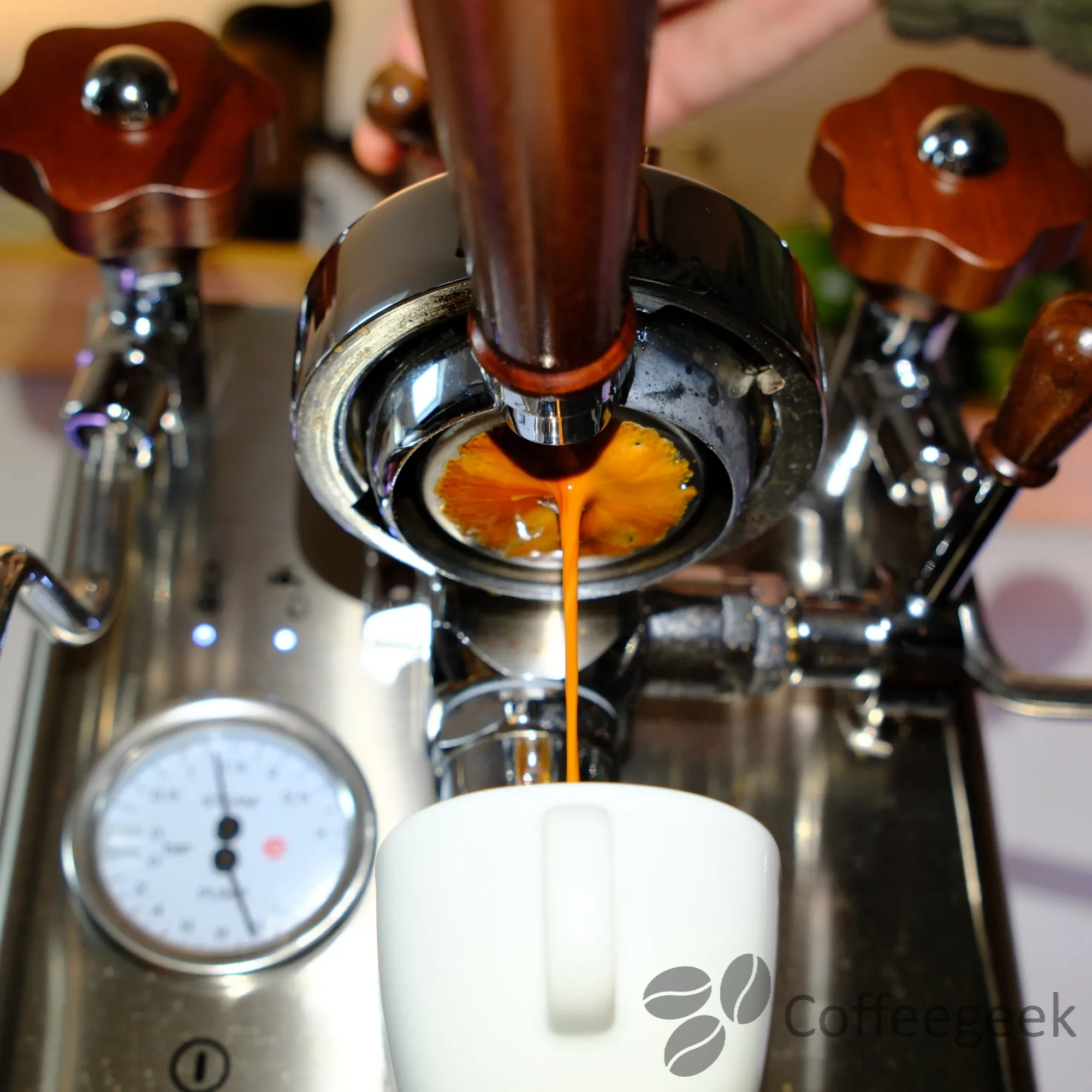
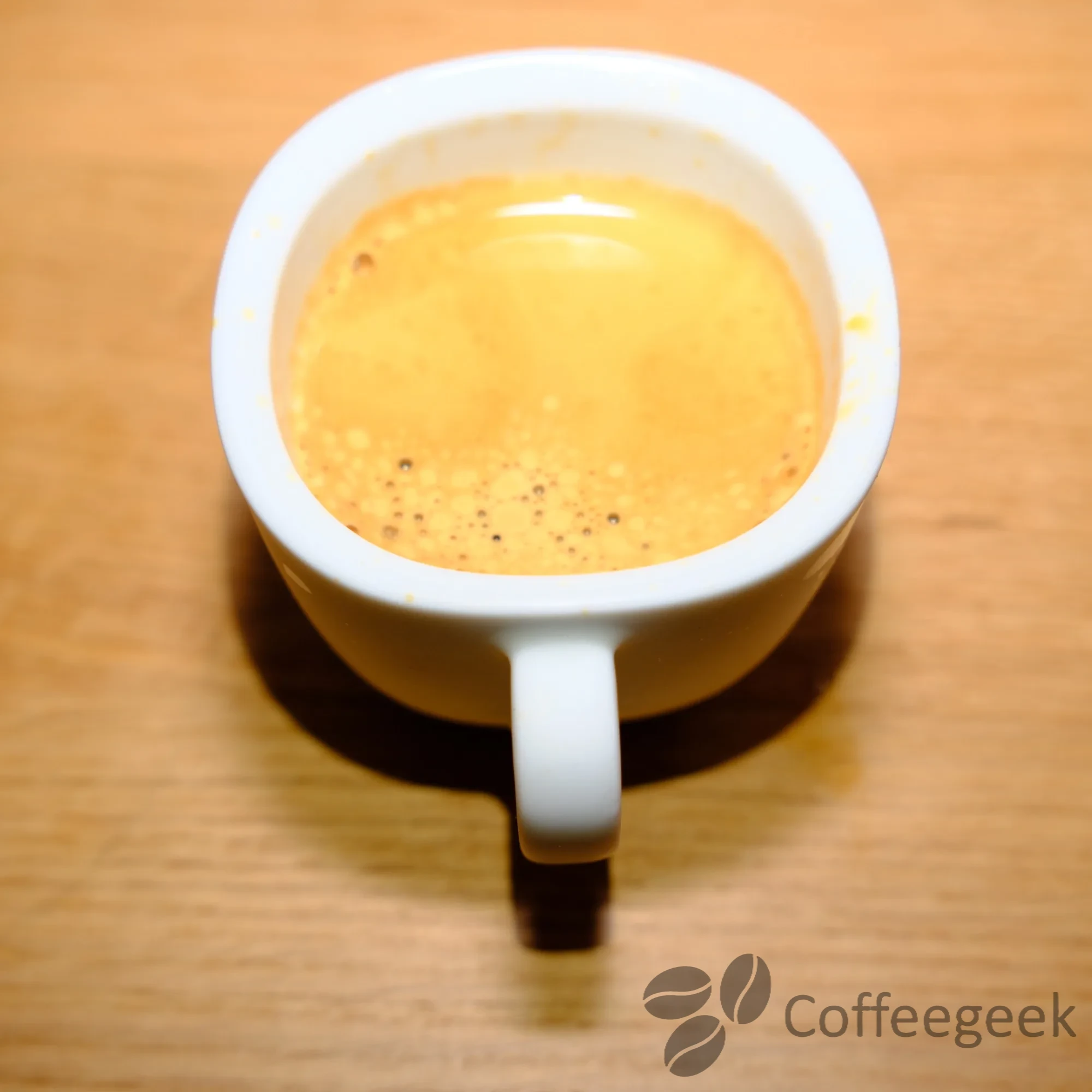
With the 14.5 µm clicks, I could dial in exactly the flow I wanted. I used a 14 g dose for a 28-second pull and 30 g in the cup. The espresso was syrupy, with a dense, tiger-striped crema: the finer adjustment really pays off for espresso. A first drawback: with its 38 mm burr, grinding is slow. It takes me about 1 min 30 s to grind 18 g of coffee for espresso.
I still give it only 4/5 for espresso. The extraction itself is good, despite the small burr. What bothered me most is something else: at fine settings, the lid lifts. It leaves a gap between the adjustment ring and the lid, wide enough to let coffee fragments escape.
Maintenance
Disassembly needs an Allen key, but it is not difficult. Reassembly is where I had some trouble getting back to my original setting.
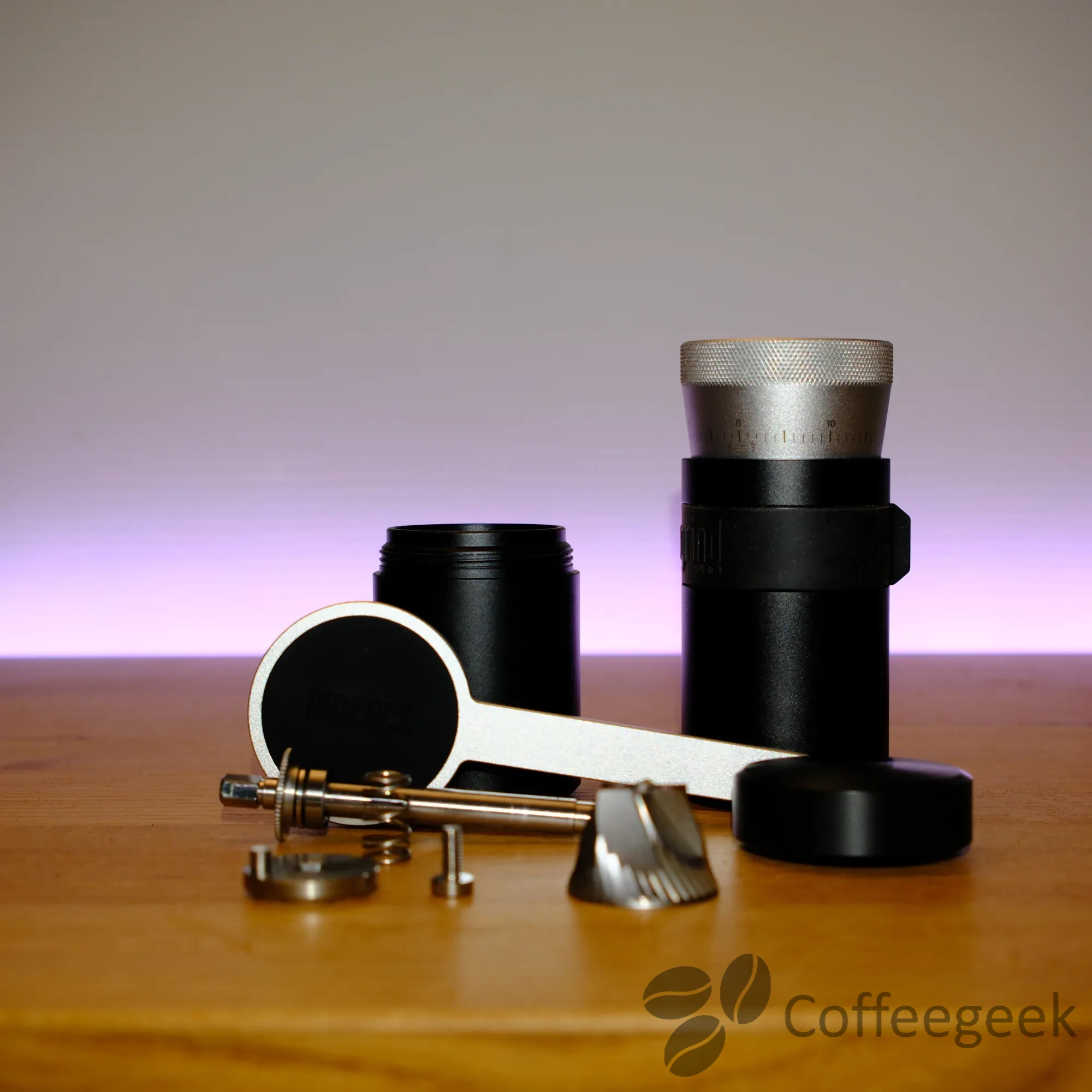
To get your setting back, you first have to find the grinder's zero:
-
Set the adjustment dial to zero
Turn the adjustment dial to its "zero" position.
-
Put the shaft and burr back in the grinder
-
Tighten the screw all the way
-
Turn the small dial until the burrs touch
The small dial sits on the burr shaft, at the top of the grinder. Screw it in until the burrs touch: you are now at zero.
-
Go back to your setting
Then unscrew the adjustment dial to your usual setting.
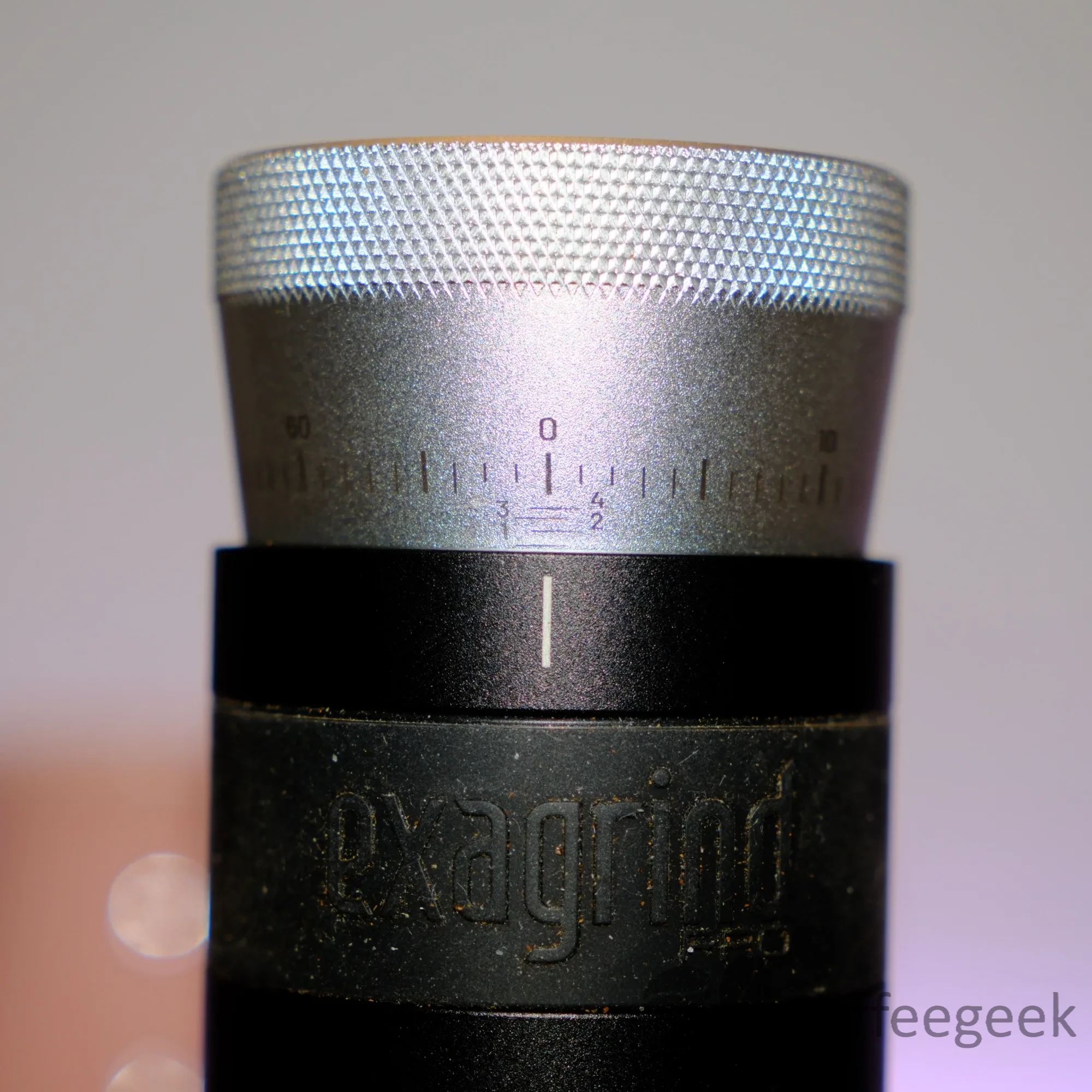
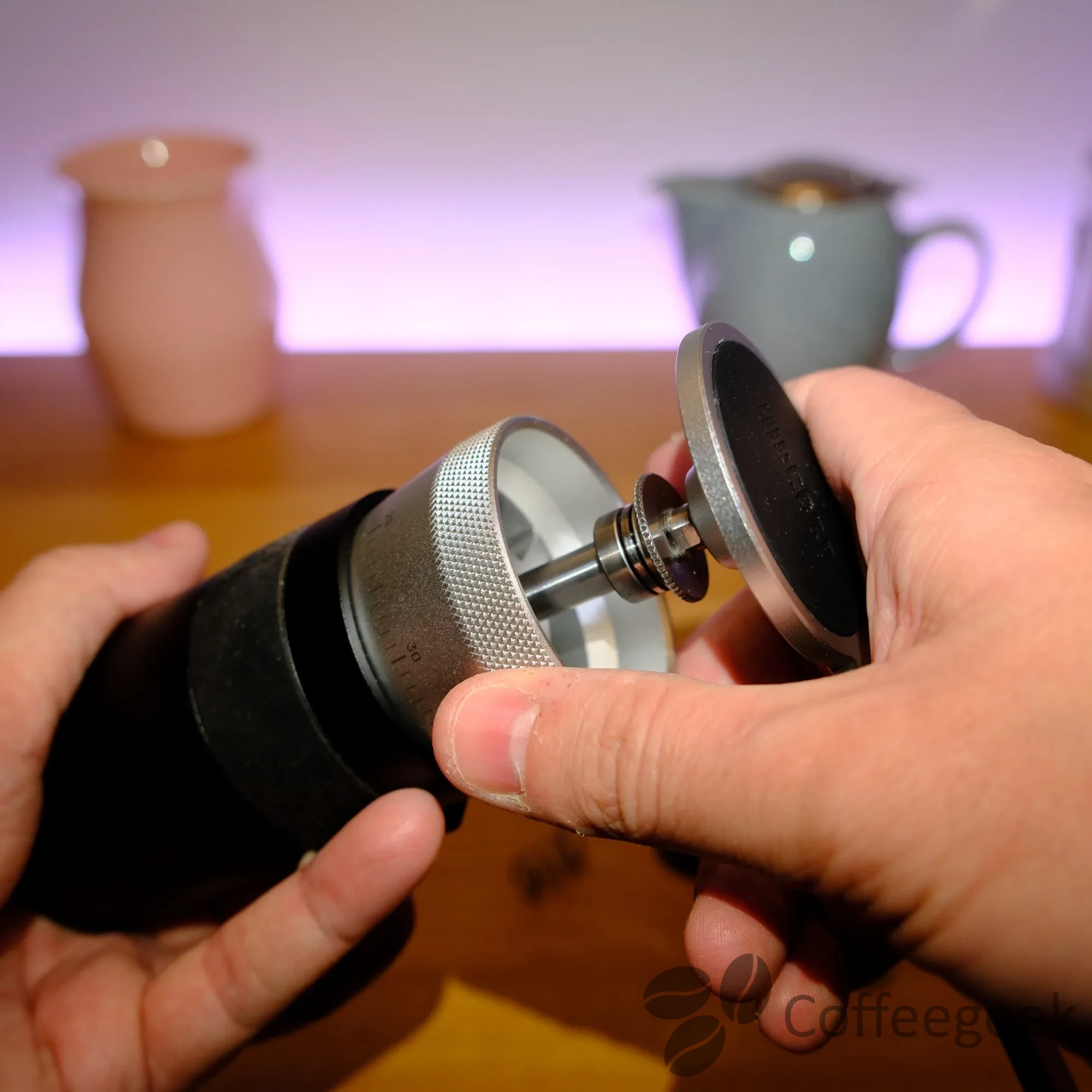
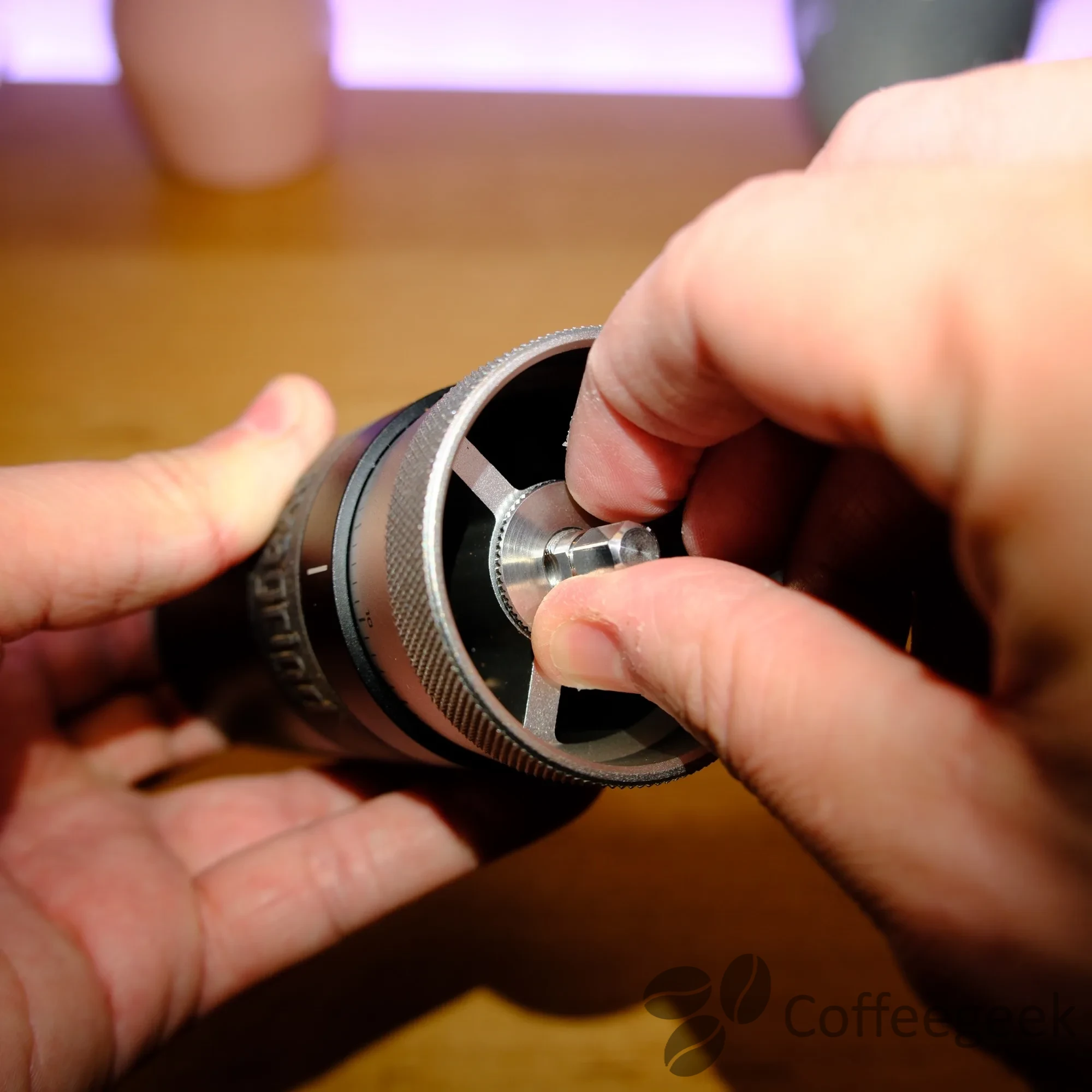
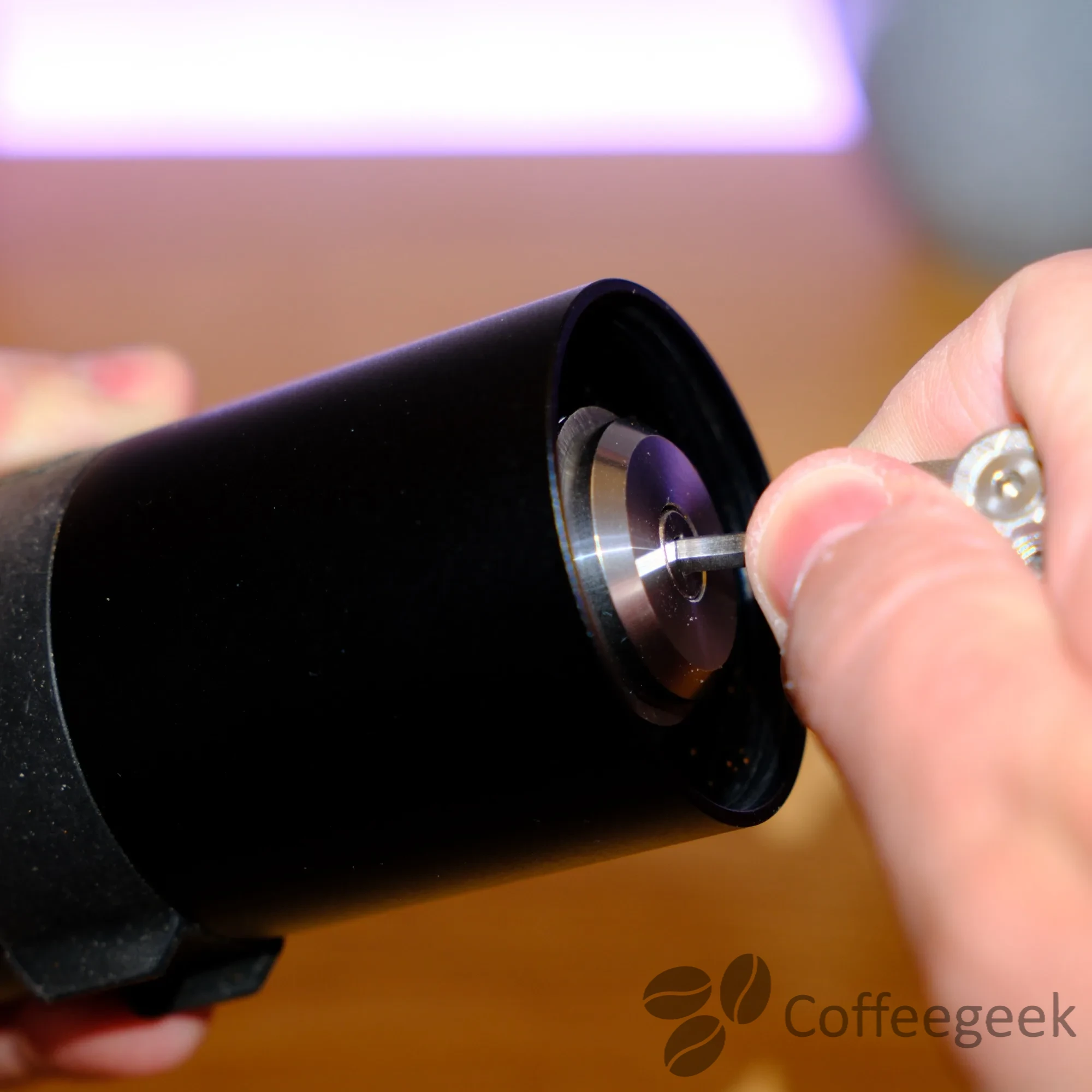
I find this reassembly a little more complicated than on other grinders, including the original Exagrind, where you just unscrew the dial to free the burr. For regular cleaning, a dry brush through the opening is enough, without taking everything apart.
Always dry-brush the burrs rather than washing them, to avoid corrosion around the shaft and bearings.
Side by side, the family resemblance with the original Exagrind is obvious, but the Pro-E feels like the more mature product. If you already own the original Wacaco Exagrind, the external adjustment alone justifies the upgrade if espresso matters to you.
Conclusion
After several weeks with immersion, pour-over and espresso, the Wacaco Exagrind Pro-E has found a permanent place in my travel bag. The external ring makes adjusting much simpler, and the burrs give an even grind well beyond what I expected at this price. Three things hold it back from a higher score: the flat knob, less comfortable than its competitors', a disassembly that needs an Allen key and a zero reset, and a lid that lifts at fine settings, letting coffee fragments escape.
It is not a grinder I recommend for espresso: its small 38 mm burr makes grinding slow. Its setting range still makes it fully compatible with this kind of extraction. Above all, it was designed for travel, and it fills that role with flying colors.
- External adjustment ring: 14.5 µm per click, 207 settings, no more unscrewing the catch cup to adjust
- CNC-machined aluminum unibody, solid and premium in the hand
- 38 mm conical burrs on dual bearings: smooth rotation and an even grind
- Very compact once the crank is folded flat, with a magnetic knob
- No retention thanks to the lip-free catch cup
- Reasonable price: around $99.90 for such a precise grinder
- Flat knob, less comfortable than the knobs on competing grinders, especially for espresso
- Tricky reassembly: you have to find zero again after taking it apart with an Allen key
- Slow espresso grinding: about 1 min 30 s for 18 g
- Lid lifts at fine settings: coffee fragments escape through the gap above the adjustment ring
Further Reading
Wacaco Exagrind Review: Compact Travel Coffee Grinder
Complete review of the Wacaco Exagrind: ultra-compact, foldable crank, optimized for filter brewing on the go. Verdict after real-world testing.
Read the article →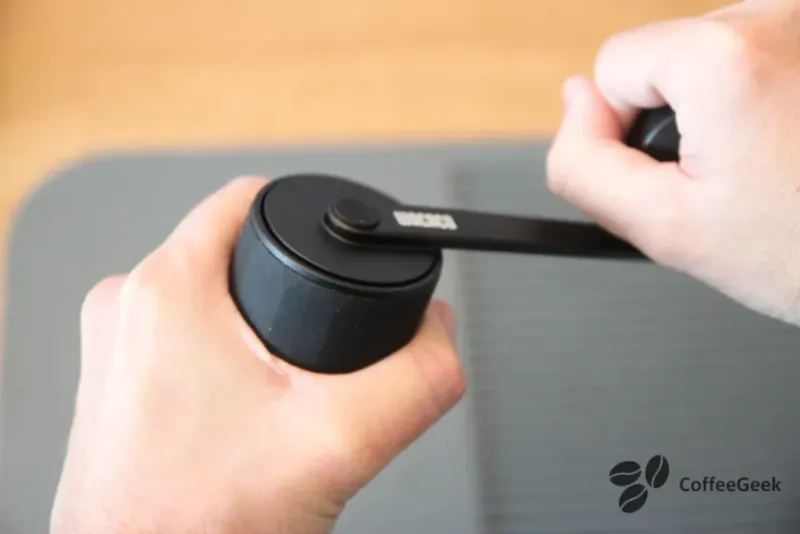
Timemore C5 ESP Pro Review: Next-Gen Manual Grinder
Complete review of the Timemore C5 ESP Pro: 42 mm burrs, 15 µm precision for espresso and filter. The next generation of Timemore manual grinders.
Read the article →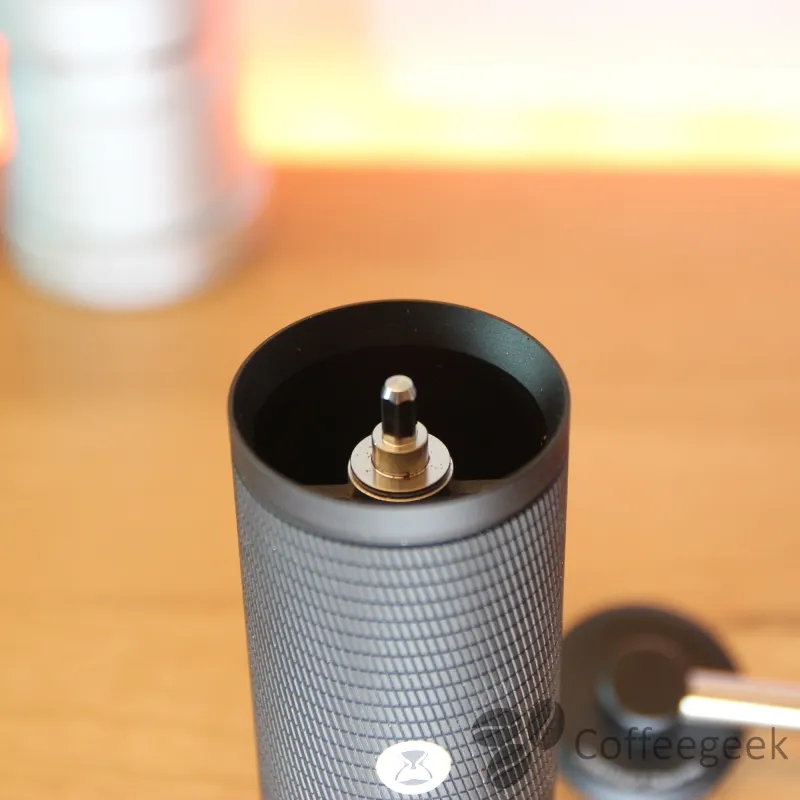
1Zpresso J-Ultra Review: Premium Manual Espresso Grinder
Review of the 1Zpresso J-Ultra: 48 mm burrs, 8 µm precision, retractable handle. The premium manual grinder for espresso - handling, grind quality, and verdict.
Read the article →