

Protect your coffee equipment from limescale with filter pitchers, with a focus on Brita's innovative glass model. This modern design offers effective filtration, surpassing older pitchers and products from other brands. In this article, I share the reasons that led me to choose Brita after disappointing experiences with a Philips pitcher. Forget buying bottled water and opt for a sustainable and aesthetic everyday solution!
Wanting to protect my coffee equipment from limescale and avoid the constant purchase of bottled water, I quickly turned to filter pitchers. Initially, I owned a Philips pitcher (which I will mention later in this review), but I replaced it with a Brita glass pitcher.
Water and Coffee: bottled water vs filter pitcher
Why water quality matters for coffee: comparing bottled water, tap water, and filter pitchers - and what a French purification scandal revealed.
Read the article →
Initially, I had opted for a Philips pitcher primarily because of its cost (indeed, this pitcher is significantly cheaper than Brita's). However, I found the Philips design inadequate and the water filtration unsatisfactory. Why? Because Brita has a proprietary system that slows down the water flow at the filter outlet. Thus, with the same filter, water is better filtered with Brita.
Brita glass pitcher: a design to discover
Brita offers us a beautiful design evolution with their new glass model. Compared to older generations, the new design is rounder and looks less like a traditional filter pitcher. Several improvements are worth noting.
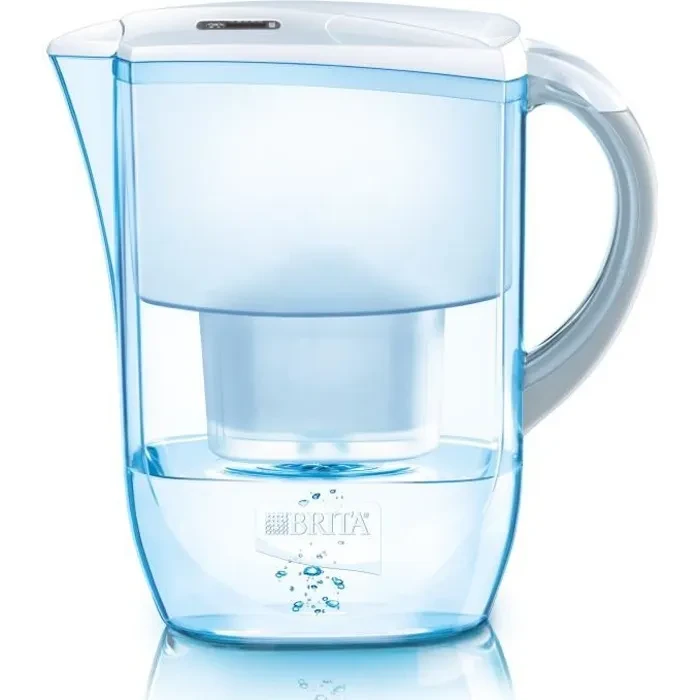
Old generation Brita: the Fjord model. The latter was entirely plastic with a less aesthetic design than the new generation.
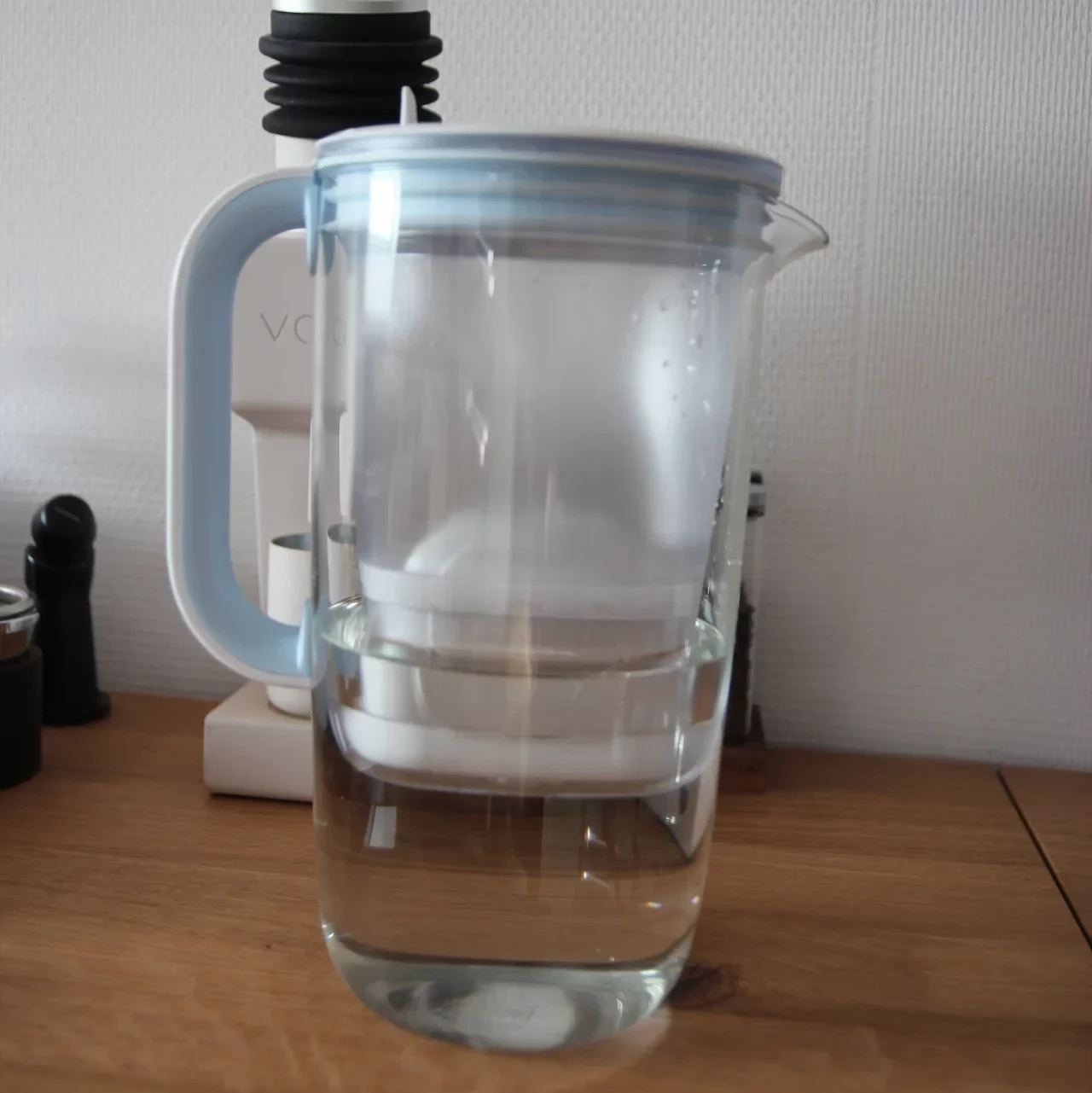
New generation Brita, the subject of this test, provides a better experience for preparing an espresso with quality filtered water, while adding an elegant design touch to your kitchen.
First innovation: the lid of the glass model
The Brita glass model features a small lid that lifts up to fill the water reservoir to be filtered. This lid can lock at the end of its travel, thus avoiding any inconvenience when pouring. The old plastic model did not have this system, and the lid would sink inward when pouring, which could lead to dust deposits in the reservoir. I prefer the lid of the glass model for this reason.
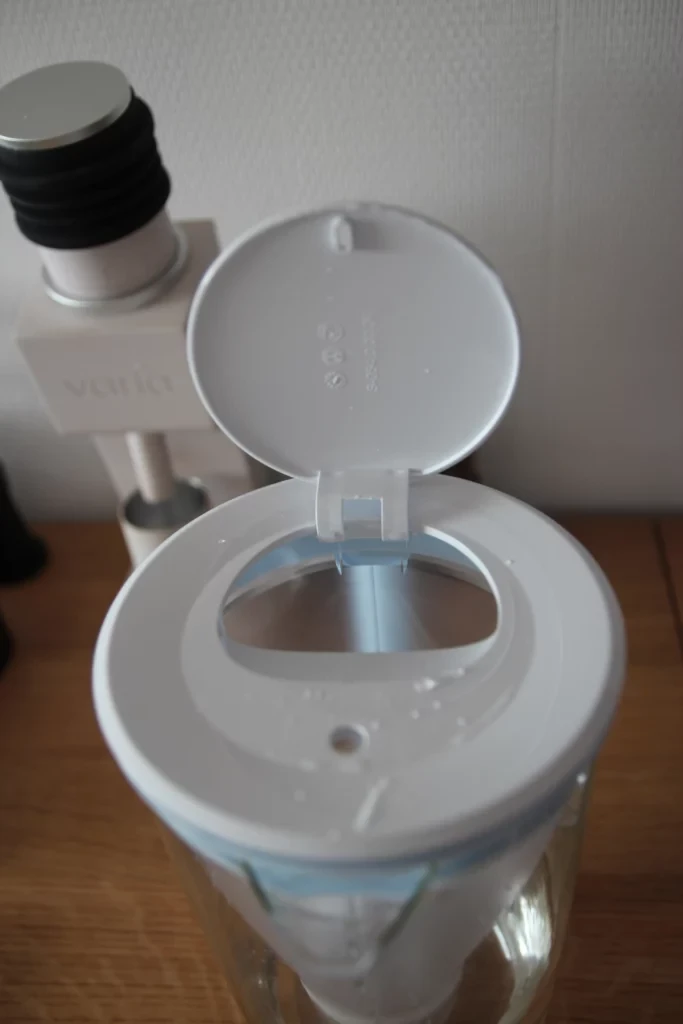
Another positive point is that you can completely tip over the jug to pour the water. The lid is watertight and does not let a single drop escape. This operation is impossible with plastic models from Brita or Philips, as they do not have a watertight lid. This innovation ensures that the water used for your espresso remains clean and filtered, offering better taste and protecting your machine from limescale.
Where to Get the Brita Glass Carafe
You can find this glass filtering carafe on Amazon:
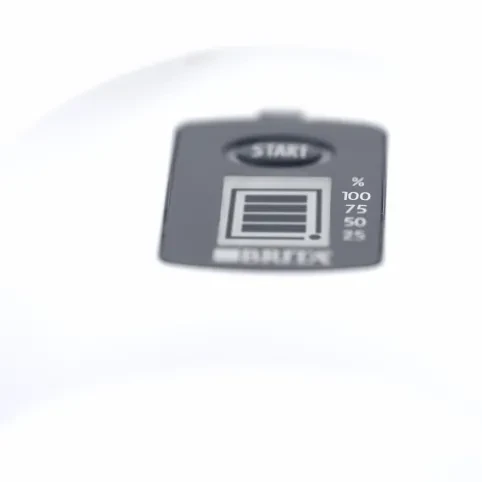
Another innovation: the old filter status indicator has disappeared on the new generation, making the carafe much more aesthetic and modern. This evolution does not compromise the filtration quality, essential for preparing espresso with perfectly filtered water.
New Indicator and Filter Compatibility
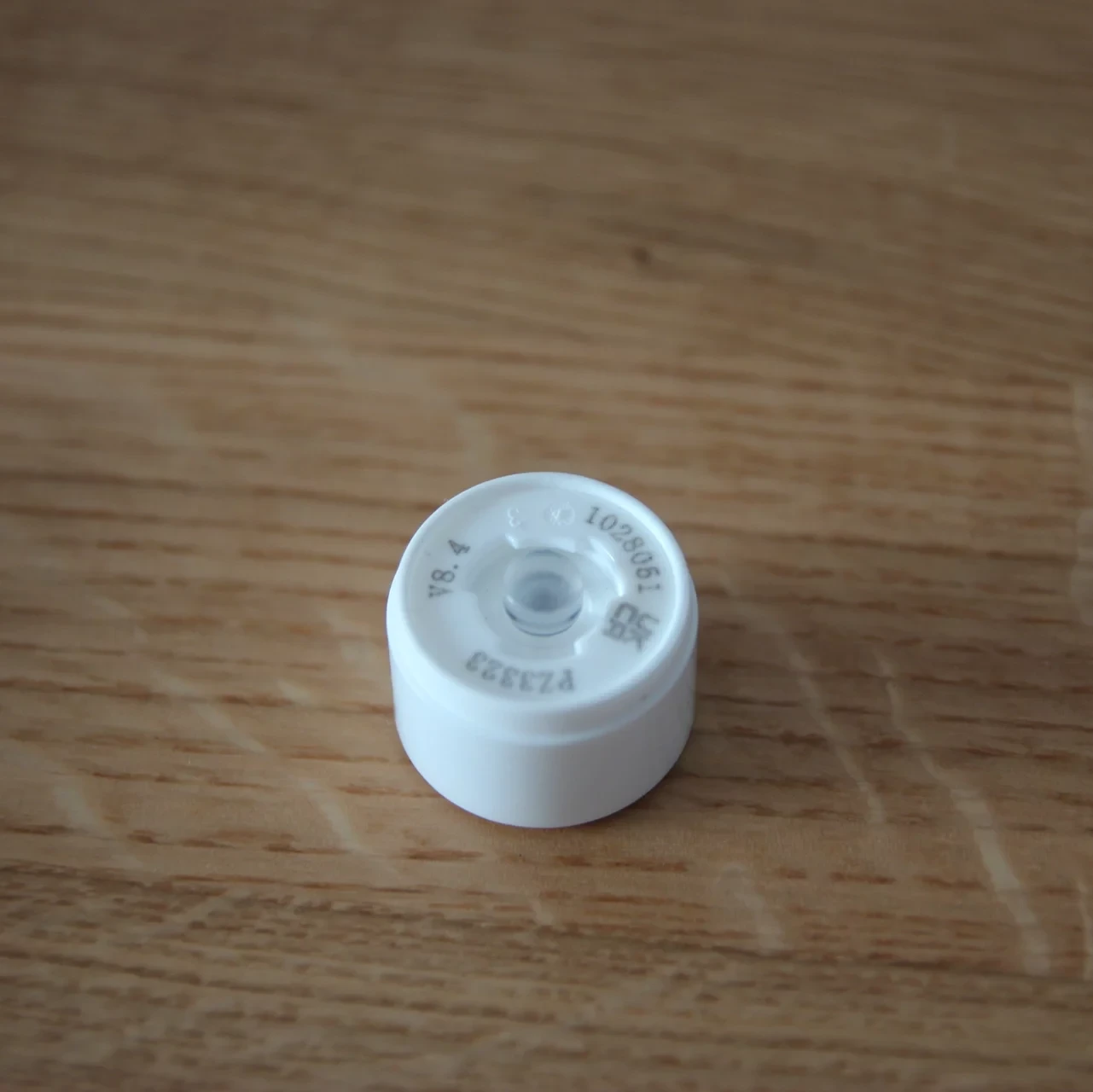
Finally, the famous little screen indicating when to replace the filter has been abandoned in this new model. Instead, a system with a small LED has been installed, integrating much better with the modern design of the carafe.
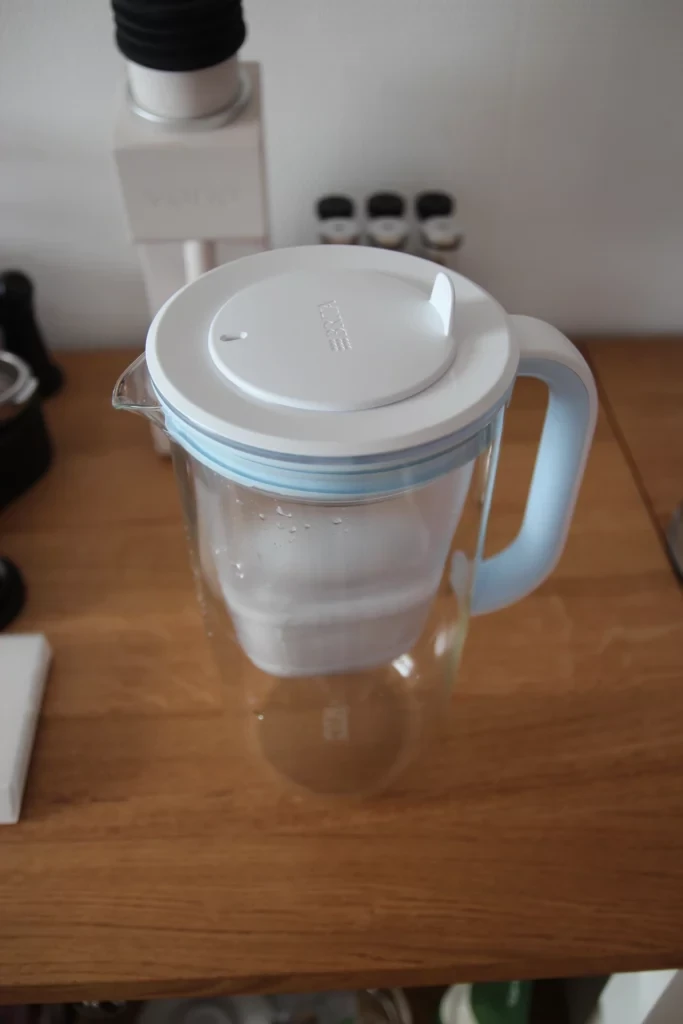
Good news for everyone who was wondering: yes, the Brita glass carafe is compatible with filters from other brands. I personally tested Philips filters, and they are compatible with Brita, filtering water very well. This guarantees perfectly filtered water for your espresso, while offering more flexibility and savings.
Filtration Efficiency and Options
I don't have a laboratory to measure and evaluate the effectiveness of the different filters. However, I can confirm that they are effective: filtered tap water has a distinct taste and my tea and coffee accessories show practically no trace of limescale.
Furthermore, two glass carafe models are available. Apart from the price, the only difference lies in the quantity of filters provided.
- First Brita glass carafe (one filter included), often on promotion, comes with one filter only.
- Second Brita glass carafe (three filters included) comes with three filters.
You can find Brita filters here.
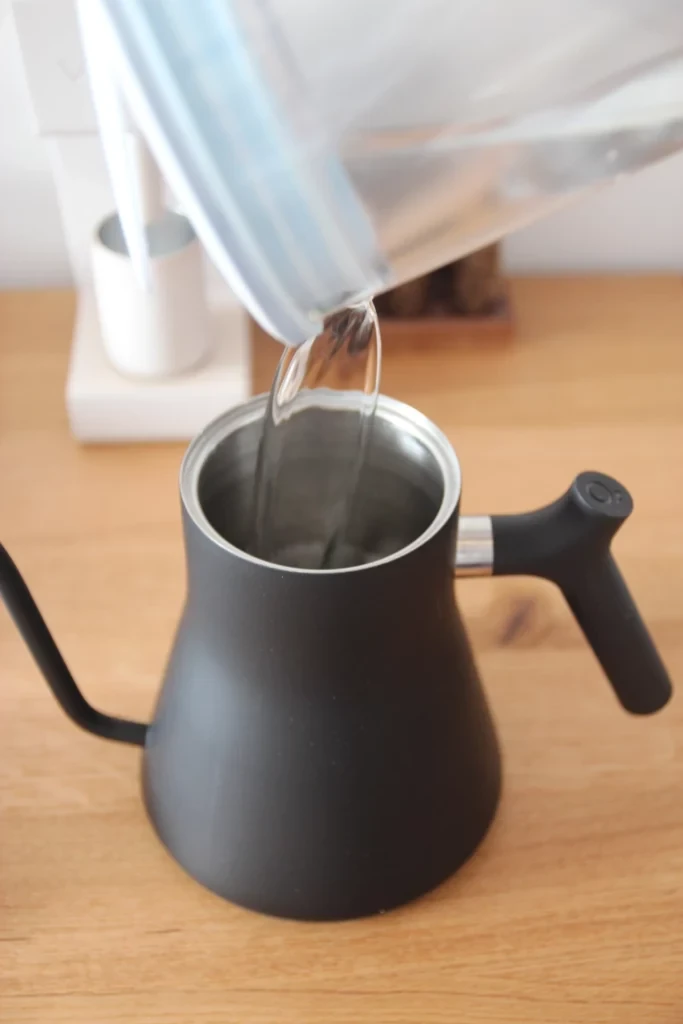
Daily use of the Brita glass filter carafe
At the beginning of the article, I already shared my feelings about this pitcher. It's an investment that's worth it. Beyond the filtration aspect, which mainly depends on the installed filter, I find this pitcher successful in both design and use. For example, the ability to tilt it at 45° to make the water flow faster is a real plus for preparing your espresso with perfectly filtered water.
In terms of materials, I'm more on the "let's avoid plastic when possible" team. Even if certain food-grade plastics are labeled "BPA free" (without endocrine disruptors), I remain cautious. Finally, glass makes the pitcher much easier to clean compared to plastic, ensuring water that's always pure for your hot beverages.
- Materials (largely glass)
- Pitcher compatibility with filters from other brands
- Design
- The price is still quite high