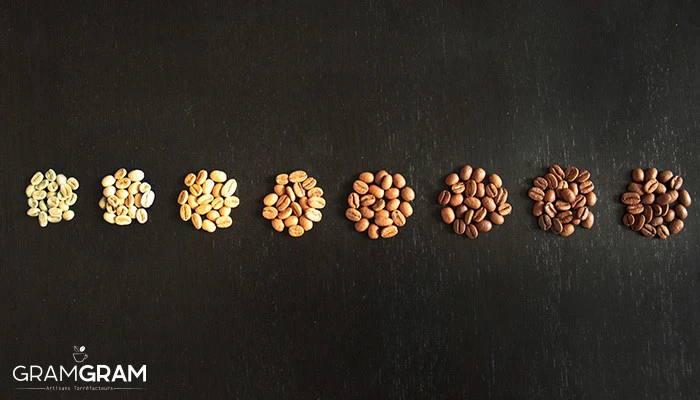

If you've ever smelled the heady aroma escaping from a roaster in full swing, you've smelled, without knowing it, the olfactory signature of the Maillard reaction. This chemical transformation, discovered by the French physician and chemist Louis-Camille Maillard in 1912, is not unique to coffee: it also occurs when browning meat, toasting bread, or caramelizing an onion. But in the coffee bean, it plays an absolutely central role, since it is responsible for generating the vast majority of the hundreds of aromatic compounds behind the flavor we love so much.
Understanding this reaction isn't just about satisfying scientific curiosity. It's also about giving yourself the tools to better read a roast profile, better choose a coffee based on the aromatic profile you're looking for, and better understand why two beans from the same origin can produce radically different cups. That's the subject of this article.
What exactly is the Maillard reaction?
The Maillard reaction is a chemical reaction that occurs between amino acids (the basic building blocks of proteins) and reducing sugars (such as glucose or fructose), under the effect of heat. Specifically, when the green coffee bean is heated in the roaster's drum, these two families of molecules, previously stable, begin to react with one another in a cascade of extremely complex reactions. The result of this cascade is the formation of hundreds, even thousands, of new compounds: melanoidins (responsible for the brown color), pyrazines, furans, thiophenes, and many other volatile molecules that make up the majority of the aromatic bouquet of roasted coffee.
It's important to understand that this reaction is not an isolated phenomenon that triggers at one precise moment and then stops. It is rather a continuum of reactions that gradually intensify as the temperature rises, and that continue to evolve in intensity and nature depending on the duration of heat exposure. This is what explains why the roast curve, that is, the way temperature evolves over time, has such a decisive impact on the final taste profile of a coffee. Two roasters using the same green bean but different curves will obtain very distinct aromatic results, simply because the Maillard chemistry will not have had time to produce the same molecules.
In the green coffee bean, which naturally contains sugars (about 6 to 9% reducing sugars and sucrose depending on origin) as well as free amino acids and proteins, all the conditions are in place for this reaction to occur as soon as the heat rises sufficiently. This is, moreover, one of the reasons why the biochemical composition of the green bean, which varies according to the botanical variety, the growing altitude, or the post-harvest processing method, directly influences the aromatic potential that a roast can reveal.
The Maillard reaction in the course of a roast
To situate the Maillard reaction within the overall roasting process, it must be placed between two well-known stages familiar to enthusiasts: the drying phase and the first crack. During the first few minutes, the bean mainly loses its residual moisture, without any major chemical transformation. It is only when the bean's temperature reaches approximately 140°C to 165°C that the Maillard reaction truly kicks in and becomes the main driver of the transformations under way, well before the bean audibly cracks.
This phase, sometimes called the "aromatic development phase" by roasters, is crucial because it is what builds the foundation of the flavor profile. The longer it is stretched out over time (sometimes referred to as "Maillard time" in professional roasters' jargon), the more opportunity the aromas have to develop in complexity, producing notes of toasted bread, hazelnut, honey, or cereal. Conversely, a temperature rise that is too fast through this zone tends to produce a coffee that is simpler on the palate, sometimes more acidic and less round, because the reactions have not had time to fully unfold.
Right after this phase comes the first crack, that characteristic little snap marking the moment when the internal pressure of the bean, caused by the water vapor and CO₂ produced, exceeds the structural resistance of the cell wall. To go further into this pivotal stage and what happens next up to the second crack, I refer you to the article dedicated to the first and second crack, which precisely details what happens physically and chemically inside the bean at that moment.
Maillard and Caramelization: Two Reactions Not to Be Confused
Many enthusiasts confuse the Maillard reaction with caramelization, which is understandable since both reactions occur simultaneously during roasting and both contribute to the brown color and certain sweet aromas of coffee. Yet these are two distinct chemical phenomena. Caramelization is the thermal decomposition of sugars alone, without the involvement of amino acids, and it generally requires higher temperatures (above 170°C for pure sucrose) than those at which the Maillard reaction begins.
The difference is not merely academic: it has concrete consequences for taste. Caramelization mainly produces sweet, caramelized notes, sometimes slightly bitter toward the end of the reaction, whereas the Maillard reaction generates a much broader palette including roasted, toasted, earthy, fruity, or even floral notes depending on the precise compounds formed. It is this molecular diversity unique to Maillard that explains coffee's extraordinary aromatic richness compared to other foods that are simply caramelized.
In practice, the two reactions are constantly intertwined throughout roasting, and it is precisely this combination, modulated by the duration and intensity of the heat, that shapes the final profile. An experienced roaster continually plays with this balance, adjusting the rate of temperature rise and the duration of each phase to favor at times the aromatic complexity of Maillard, at times the sweet roundness of caramelization, depending on the desired result for a given origin.
Why this chemistry determines the profile of your cup
If you've ever compared a light roast coffee with a dark roast coffee, you've directly tasted the effects of the duration of exposure to the Maillard reaction. A light coffee, where roasting is stopped early after the first crack, retains more of the acidity and the original characteristics of the green bean, because the Maillard reactions have had only a short time to deeply transform the bean's matrix. Conversely, a darker coffee, where roasting continues well beyond that point, has its sugars and amino acids largely consumed by the chemical reactions, which progressively erases the original fruity or floral notes in favor of more roasted, more bitter, even smoky notes if approaching the second crack.
This same chemistry also explains why a poorly roasted coffee can develop unpleasant taste defects. A roast that is too fast, "burning" the outside of the bean without giving the Maillard reaction time to develop harmoniously at the core, produces what is sometimes called a "baked" or unbalanced coffee, with flat acidity and little complexity. If you're looking to understand the more specific causes of a coffee that tastes bitter or unpleasant, the article on the common causes of bitter coffee covers several related factors, some of which indeed originate from poorly controlled roasting.
Finally, this understanding of bean chemistry also partly explains why freshly roasted coffee, and more broadly specialty-quality coffee, differs so much from standard industrial coffee. Artisan roasters adjust their curves with fine precision, bean by bean, batch by batch, to make the most of the aromatic potential specific to each origin, while industrial roasts often prioritize speed and consistency at the expense of this finesse. The topic is covered in more detail in the article comparing roaster coffee and supermarket coffee. If you feel like testing this chemistry yourself at home, know that it is entirely possible to roast your own coffee, as explained in this guide on home roasting, an excellent way to observe firsthand the moment when the Maillard reaction takes over from simple drying of the bean.
The Maillard reaction is therefore much more than a chemist's curiosity: it is literally the invisible engine that transforms a green, bland, and astringent seed into one of the most aromatically complex products in our diet. The next time you taste an espresso with hazelnut notes or a filter coffee with toasted bread aromas, you'll know exactly what you owe this pleasure to: a few minutes of organic chemistry carefully orchestrated in a drum heated to just the right temperature.
The steps of the Maillard reaction during roasting
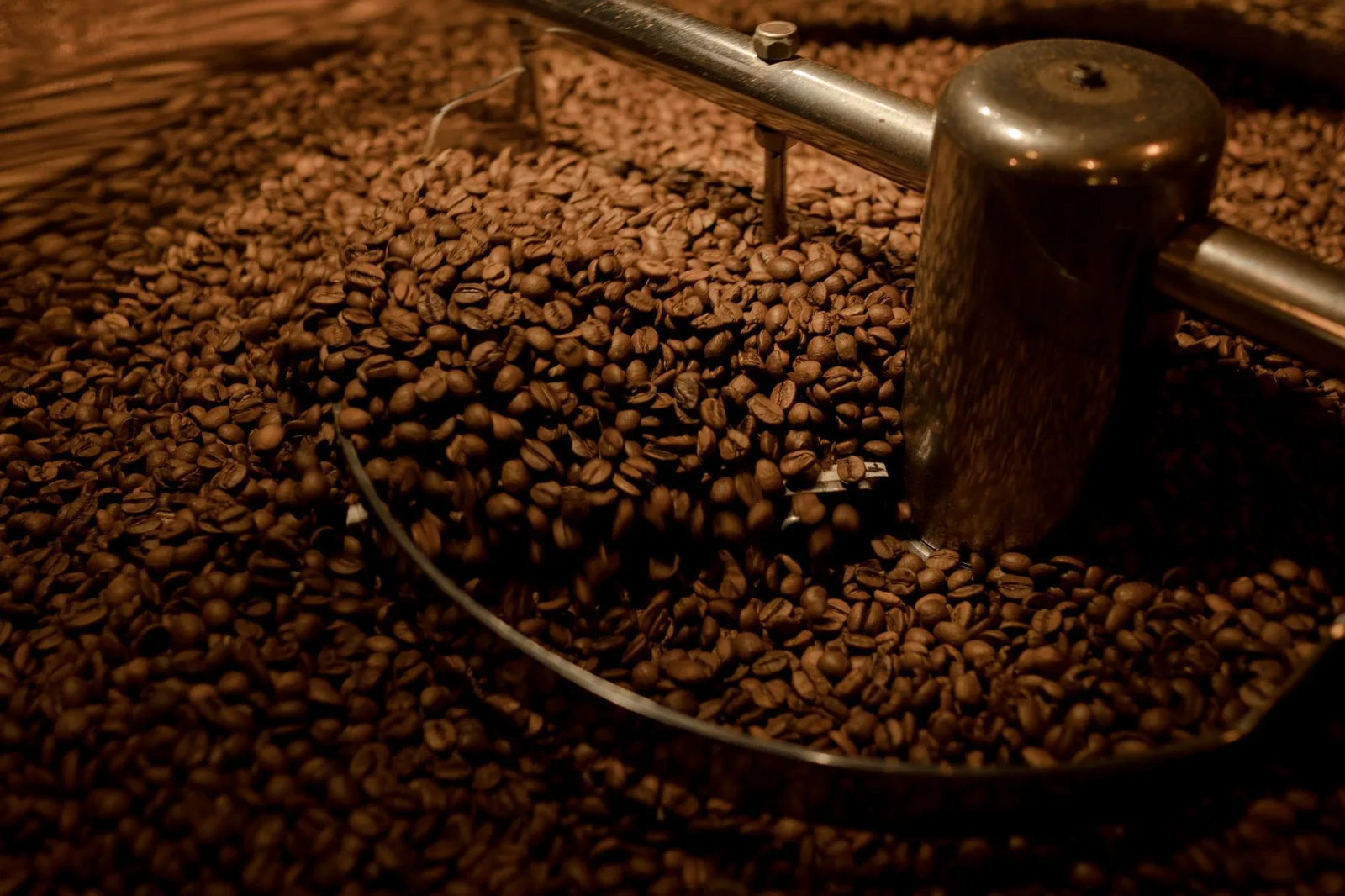
Step 1: Drying the green bean
It all starts with a phase without major chemical transformation: the bean loses its residual moisture under the effect of the drum's heat. The Maillard reaction hasn't kicked in yet at this stage, but this step prepares the bean to rise in temperature evenly. It's only once this moisture has been driven off that the aromatic chemistry can truly begin.
Step 2: Triggering the reaction (140°C to 165°C)
When the bean's temperature reaches approximately 140°C to 165°C, the amino acids and reducing sugars present in the bean begin to react with each other. This is the true starting point of the Maillard reaction, which then becomes the main driver of the ongoing transformations, well before the bean audibly cracks. Hundreds of new aromatic compounds, such as melanoidins, pyrazines, or furans, begin to form.
Step 3: The aromatic development phase ("Maillard time")
This phase, sometimes called "Maillard time" by professional roasters, is where the foundation of the flavor profile is built. The longer it is stretched out over time, the more the aromas have the opportunity to develop in complexity, producing notes of toasted bread, hazelnut, honey, or cereal. Conversely, a temperature rise that is too rapid through this zone tends to produce a coffee that is simpler in the cup, sometimes more acidic and less round.
Step 4: Coexistence with caramelization
As the temperature continues to climb, caramelization of the sugars adds itself to the Maillard reaction, generally starting from higher temperatures. The two reactions then constantly intertwine, the first contributing a wide range of roasted, toasted, or fruity notes, the second more simply sweet and caramelized notes. It is this combination, modulated by the duration and intensity of the heat, that shapes the final profile of the cup.
Step 5: The first crack and choosing the stopping point
Just after this phase comes the first crack, that characteristic crackling sound marking the moment when the internal pressure of the bean exceeds the resistance of its cellular shell. Depending on whether roasting is stopped quickly after this point or extended well beyond it, the sugars and amino acids are consumed to a greater or lesser extent, which determines whether the coffee will retain its original fruity and tangy notes or evolve toward more toasted, bitter, or even smoky notes.
Conclusion
The Maillard reaction is neither a technical detail reserved for roasters, nor a mere curiosity of organic chemistry: it is the mechanism that, more than any other, shapes what you find in the cup. Understanding how it works its onset between 140°C and 165°C, its intensification during the "Maillard time," its coexistence with caramelization provides concrete keys to interpreting a roasting profile, anticipating the aromatic profile of a coffee before even tasting it, or identifying the origin of a taste defect such as a "baked" or unbalanced coffee.
The next time you choose a light roast over a dark one, or try to understand why two seemingly similar origins produce such different cups, you'll know that the answer lies hidden in those few minutes of organic chemistry carefully orchestrated in a drum heated just right.
Going further
First crack, second crack: what happens inside the bean?
First crack and second crack: discover these two key moments in roasting that define the taste of your coffee. Clear explanations and method.
Read the article →
How to roast your own coffee?
Discover the art of roasting green coffee at home and enjoy a fresh and authentic taste, without requiring complex equipment.
Read the article →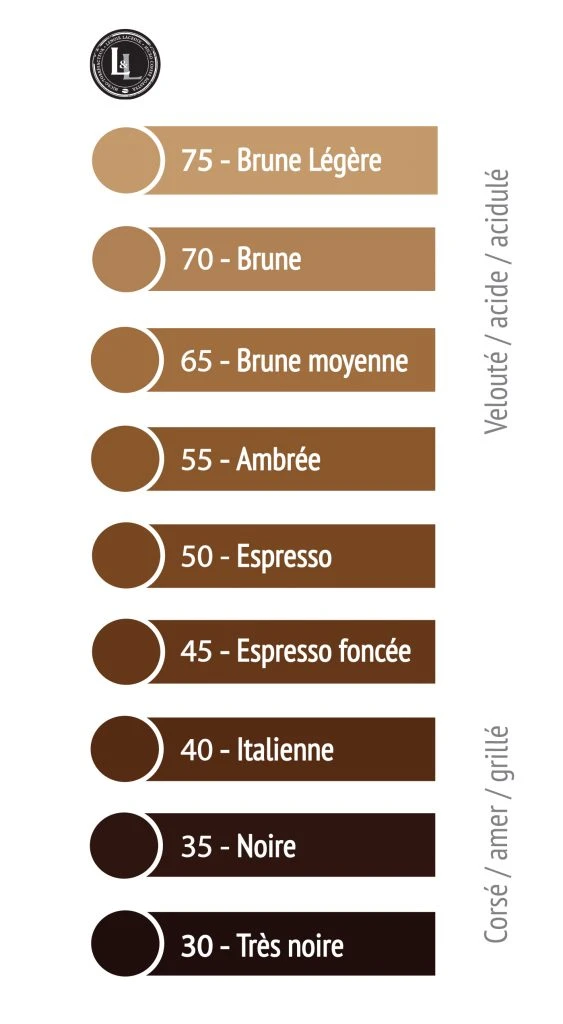
Roaster Coffee vs Supermarket Coffee: Key Differences
Why buy from a roaster instead of a supermarket? Compare origins, roasting methods, freshness, and aroma quality between artisan and industrial coffee.
Read the article →