

If you've ever opened a bag of freshly roasted coffee, you've probably noticed that slight swelling of the packaging, or even that characteristic little "pssht" sound when opening it. This phenomenon is not a defect quite the opposite: it is degassing, a natural and essential step that follows roasting. Yet many enthusiasts rush to brew their coffee as soon as they receive it, without realizing that they are about to miss out on a large part of its aromatic potential. In this article, we'll explore what actually happens inside the bean after roasting, why this trapped CO2 directly influences the quality of your cup, and how long you should really wait depending on the chosen brewing method.
What chemically happens inside the bean after roasting?
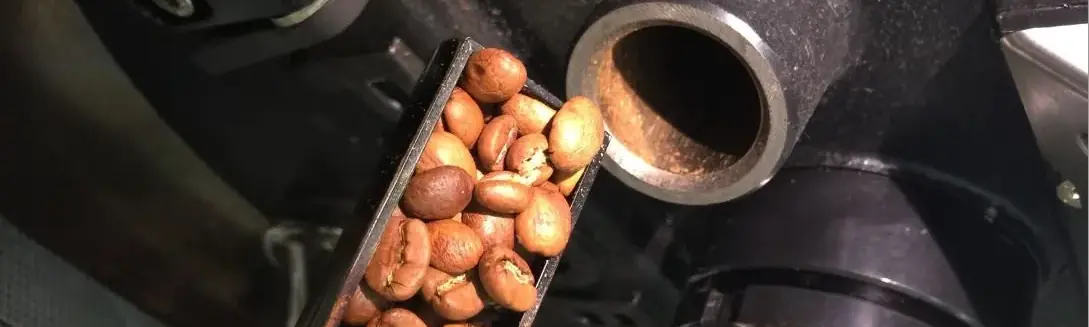
During roasting, the coffee bean undergoes a profound chemical transformation. Under the effect of heat, sugars and amino acids react with each other in the famous Maillard reaction, while the bean's cellular structures change in depth. It is also during this phase that the first crack and then, depending on the desired roast level, the second crack occur two steps we cover in greater depth in our article on the first crack and the second crack. These exothermic reactions generate a significant amount of carbon dioxide, which remains largely trapped inside the bean's porous structure.
This CO2 does not evaporate instantly. It continues to slowly escape from the bean for days, even weeks, after leaving the roaster. It is generally estimated that a freshly roasted coffee bean loses the majority of its carbon dioxide within the first two weeks, but the phenomenon continues residually for much longer. The speed of this degassing depends on several factors: the roast level (a darker roasted coffee generally contains more CO2 and degasses faster at first), the bean's density, its origin, and even the grind size once the coffee is ground, which considerably speeds up the release of gas by multiplying the surface area in contact with air.
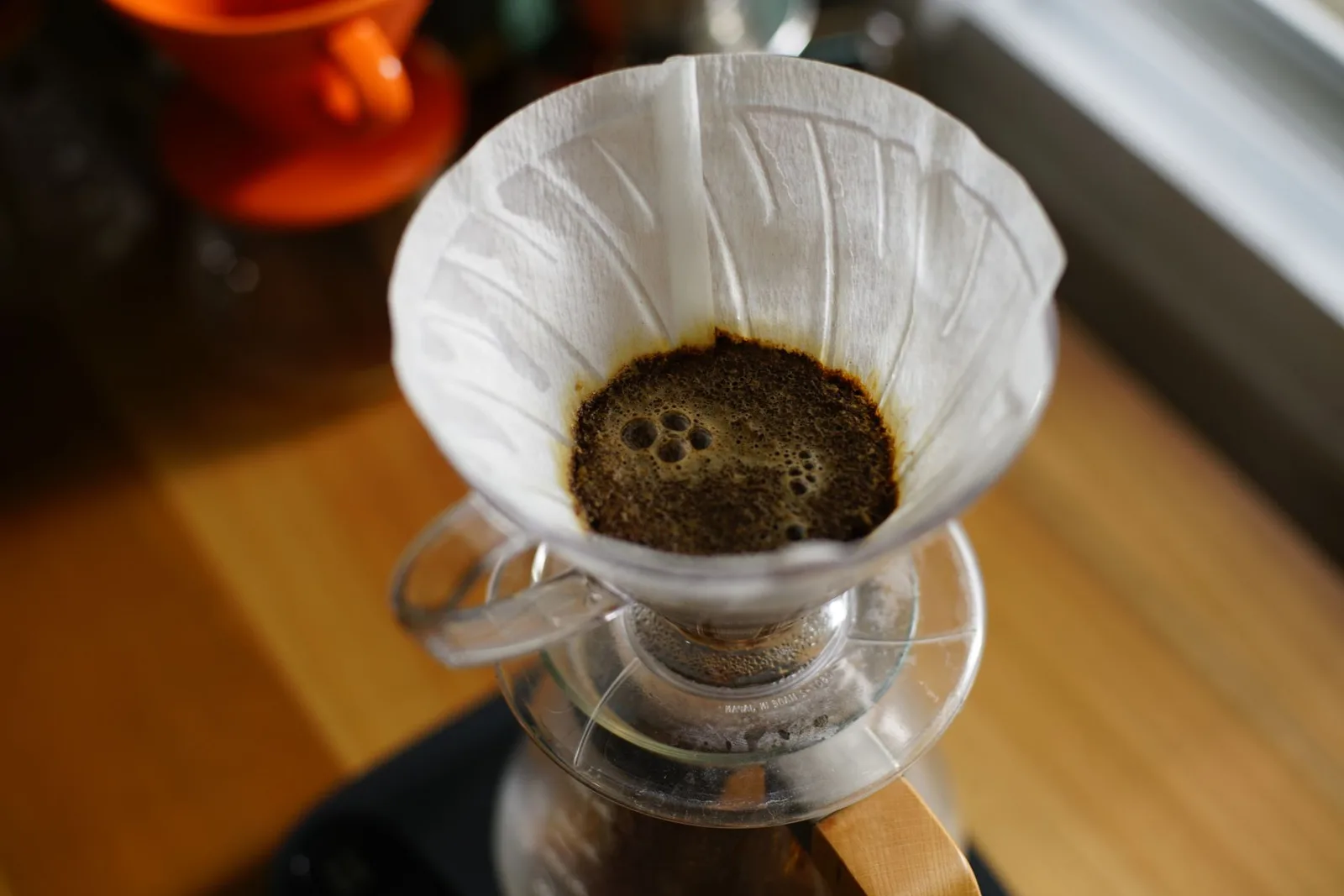
This is precisely the CO2 that explains the famous "bloom" observed with the pour-over method, when you pour a first small amount of hot water over the ground coffee and it swells while releasing bubbles. This gas release is healthy and expected, but it becomes problematic when it is too intense that is, when the coffee is still too young at the time of brewing. An excess of CO2 literally disrupts the contact between the water and the coffee, which harms a uniform extraction of the aromas.
Why does coffee that's too fresh give a disappointing result in the cup?
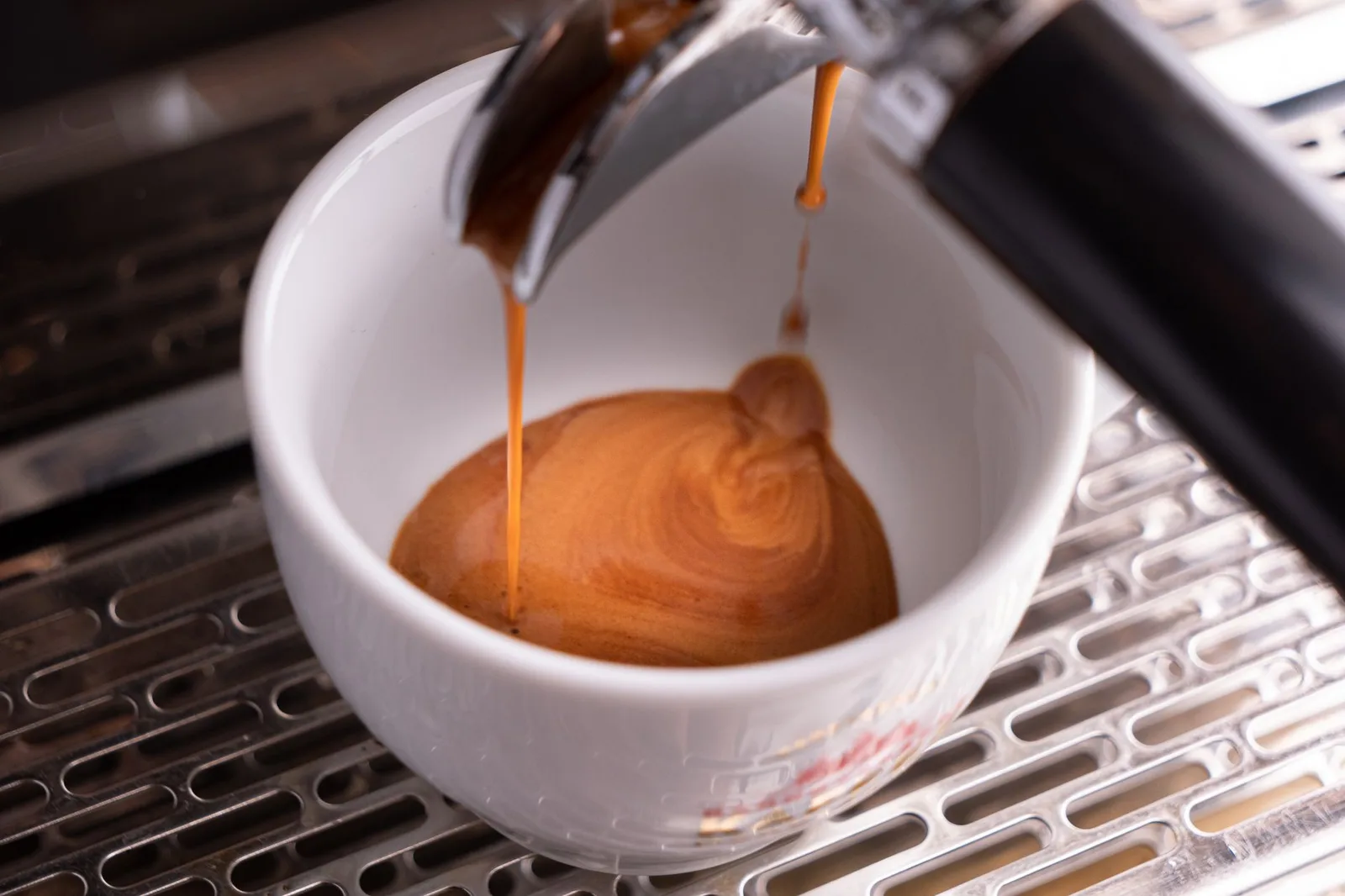
The most common mistake is believing that "the fresher, the better." In reality, coffee brewed within 24 to 48 hours of roasting often produces a chaotic extraction. In espresso, the excess CO2 pushes the water away instead of letting it penetrate the coffee puck uniformly, which results in a thick, foamy, and unstable crema, preferential channels in the puck, and a completely unpredictable extraction time. If you're already struggling with channeling on a bottomless portafilter, know that coffee that's too young only makes the problem worse: our article on anti-channeling tips also addresses this dimension.
With the pour-over method, the symptoms are just as characteristic. Coffee that's too fresh will bubble excessively during the bloom, sometimes even forming a small volcano of foam that overflows the filter. This chaotic bubbling can disrupt the water flow, create air pockets that prevent uniform contact between the water and the grounds, and ultimately deliver a cup that is both under-extracted in some areas and over-extracted in others. The resulting taste is often described as "hollow," with a sharp, unbalanced acidity that masks the aromatic notes the roaster specifically sought to bring out. If you encounter recurring extraction issues with filter coffee, our article on the 5 reasons your filter coffee could be better details other causes to look into in addition to degassing.
Beyond the technical aspect of extraction, CO2 also has an effect on aromatic perception itself. As long as the bean is saturated with gas, certain volatile aromatic compounds remain partly masked or fail to release properly during brewing. Coffee that has had time to degas properly generally reveals cleaner aromas, better-defined tasting notes, and a rounder body. This is why most specialty roasters indicate a roast date on their bags rather than a conventional expiration date: it's this date that should guide your tasting schedule, not the purchase date.
How long should you actually wait depending on the method?
Espresso: a rest period of 4 to 10 days
For espresso, the optimal resting window is generally between 4 and 10 days after roasting, with a peak in quality often observed around the seventh day for most light to medium roasts. Since this method is particularly sensitive to pressure and flow rate, excess CO2 has a disproportionate impact on the final result compared to gentler methods. If your extraction is too fast, with an erratic flow despite a fine grind, it's very likely that your coffee is still too young rather than poorly ground.
Gentle methods: patience for up to two weeks
For the V60, Chemex, or Aeropress, you can generally afford to wait a little longer, between 7 and 14 days, depending on the roast and the coffee's origin. Light roast coffees, which are denser and contain more still-undissolved compounds, often benefit from a longer rest than darker roasts. On this point, the advice on slow, steady pouring mentioned in pour-over troubleshooting resources applies particularly well: a coffee that is still slightly gassy requires an even more delicate pour to avoid stalling or, conversely, too rapid a flow.
It's worth keeping in mind, however, that coffee doesn't improve indefinitely with time. After a certain period, generally between three and six weeks depending on storage conditions, the coffee starts to lose its aromatic qualities through oxidation rather than lack of degassing. The goal, then, is not to wait as long as possible, but to find the optimal freshness window, specific to each coffee and each brewing method.
The durations given above are general guidelines, not universal rules: depending on origin, bean density, and roast level, some coffees degas faster, others more slowly. The most reliable approach is to refer to your roaster's recommendations when provided, or simply to test it yourself (a calm, even bloom, without excessive bubbling, signals a coffee ready to be brewed). In any case, never wait several months before using a coffee, even if you feel degassing is incomplete: after a few weeks, it's oxidation that degrades the aromas, not residual CO2.
Properly storing your coffee during the degassing phase
Storage plays a decisive role during this resting period. An airtight container fitted with a one-way degassing valve remains the most effective solution: it allows CO2 to escape without letting in ambient oxygen and moisture, which are the true enemies of coffee freshness. This is exactly the principle used by roasters on their professional bags, and it's entirely possible to replicate this system at home with a suitable airtight box, such as the Airscape container, a simple and effective solution for preserving aromas during this phase. For a more advanced system (active vacuum storage rather than simple sealing), the Fellow Atmos offers an even better result, at a higher price. We cover all the best storage practices in detail, including the question of the freezer and opaque containers, in our complete guide on coffee storage.
It's also important to avoid transferring your coffee into a completely airtight container without a valve during the first few days after purchase, at the risk of seeing the bag or jar dangerously swell under the pressure of released CO2. Conversely, leaving coffee exposed to open air for too long accelerates its oxidation and causes it to quickly lose its most volatile aromas. The balance between "letting it breathe" and "protecting it from oxygen" is therefore the key to successful storage during this delicate phase.
Steps to properly manage your coffee's degassing
Step 1: Identify the roast date
First and foremost, check the roast date printed on the bag rather than the purchase date or any standard best-before date. This is the date that should guide your entire tasting schedule, since it marks the true starting point of degassing. Most specialty roasters display it precisely for this reason.
Step 2: Let the coffee rest according to the extraction method
The optimal resting time depends directly on the method you'll be using. For espresso, generally allow between 4 and 10 days, with peak quality often observed around day seven. For gentler methods like the V60, the Chemex, or the Aeropress, the coffee may need a longer rest, between 7 and 14 days, especially for light roasts and denser coffees.
Step 3: Choose a suitable container during the resting phase
While CO2 continues to escape, store your coffee in an airtight container fitted with a one-way degassing valve, which lets gas out without letting oxygen or moisture in an Airscape canister fills this role perfectly for everyday use. On the other hand, avoid transferring a freshly roasted coffee into a completely airtight jar without a valve, at the risk of seeing it dangerously swell under the pressure of released gas. Our guide on coffee storage covers all these best practices in detail.
Step 4: Adjust grind size and pre-infusion if the coffee is still young
If you still need to brew a coffee that hasn't had time to fully degas, opt for a slightly coarser grind and a longer pre-infusion time. This gives residual CO2 more time to escape before the main extraction phase and limits the negative effects of excessive bubbling or channeling, whether for espresso or filter coffee.
Step 5: Taste within the optimal freshness window
Once the initial rest period has been respected, don't wait too long before drinking your coffee: after roughly three to six weeks, depending on storage conditions, the aromatic qualities begin to decline due to oxidation rather than insufficient degassing. The goal, then, is not to wait as long as possible, but to aim for the window where the coffee has degassed enough without yet starting to oxidize.
If you receive a coffee and need to use it quickly, opt for a slightly coarser grind and a longer pre-infusion time: this gives residual CO2 more time to escape before the main extraction phase, and limits the negative effects of a coffee that's still too young.
Understanding degassing ultimately means understanding an essential part of coffee's journey between roasting and the cup. It's not a trivial detail reserved for purists, but rather a decisive factor in achieving a stable extraction and fully expressed aromas, whether you're more into espresso or gentler methods. The next time you receive a bag of freshly roasted coffee, resist the temptation to open it right away, and instead give it a few days of patience before running it through your grinder.
Going further
How to properly store your coffee?
Optimize your coffee storage to preserve its aromas and avoid common mistakes - containers, light, temperature, and humidity explained.
Read the article →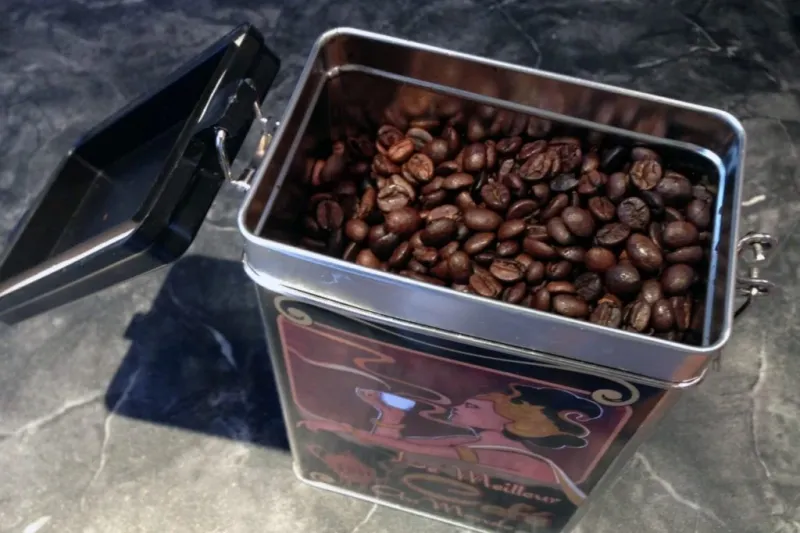
5 Reasons Your Filter Coffee Isn't Perfect (Fix It)
Fix 5 common filter coffee mistakes - pouring, grind, filters, dripper, and dense beans - with practical solutions from coffee specialist Asser Christensen.
Read the article →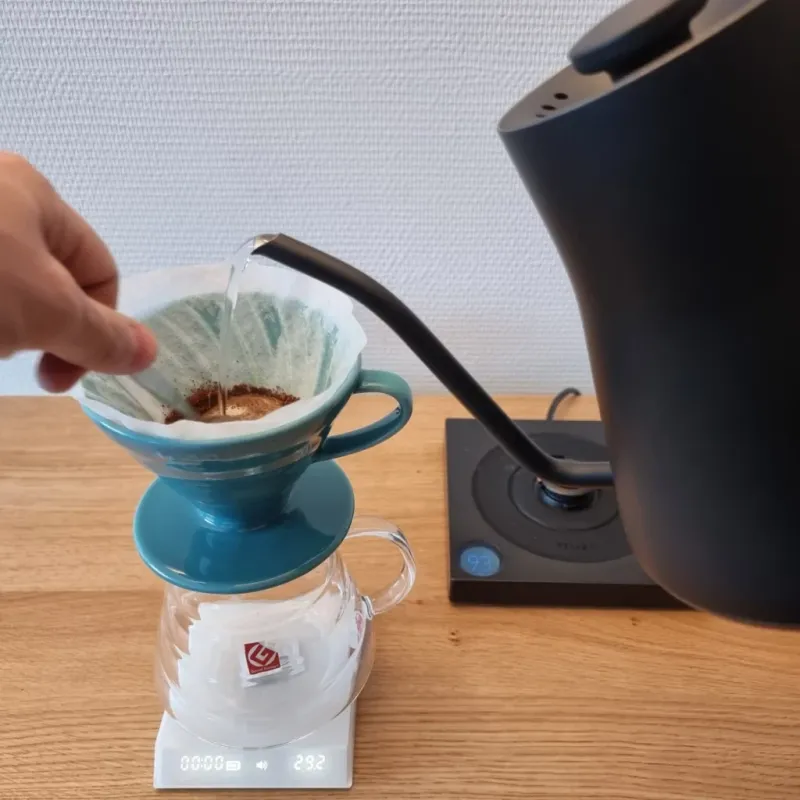
First crack, second crack: what happens inside the bean?
First crack and second crack: discover these two key moments in roasting that define the taste of your coffee. Clear explanations and method.
Read the article →